How the LinkedIn Algorithm in 2026 Shapes Your Feed
The LinkedIn algorithm in 2026 determines what appears in your feed by evaluating content quality, network proximity, professional relevance, and active user engagement signals to balance viral reach with niche, expertise-driven discus...
The LinkedIn algorithm in 2026 determines what appears in your feed by evaluating content quality, network proximity, professional relevance, and active user engagement signals to balance viral reach with niche, expertise-driven discussions.
Contents
Understanding how the LinkedIn algorithm shapes your feed requires looking beyond simple chronological timelines or vanity metrics. Over the years, professional networking platforms have shifted from basic chronological sorting to complex machine learning architectures. These systems are designed to filter out noise, reduce unsolicited self-promotion, and elevate genuinely insightful commentary from verified practitioners.
To master your professional visibility or optimize your consumption habits, you must understand the underlying mechanics of how posts are classified, scored, tested, and ultimately distributed across millions of personalized feeds.
The Core Mechanics: How LinkedIn Evaluates Content
When you publish a post or scroll through your homepage, LinkedIn’s underlying ranking systems process millions of data points in real time. The goal is to match professional content with the professionals most likely to benefit from it. This process generally follows a multi-stage filtering and scoring pipeline.
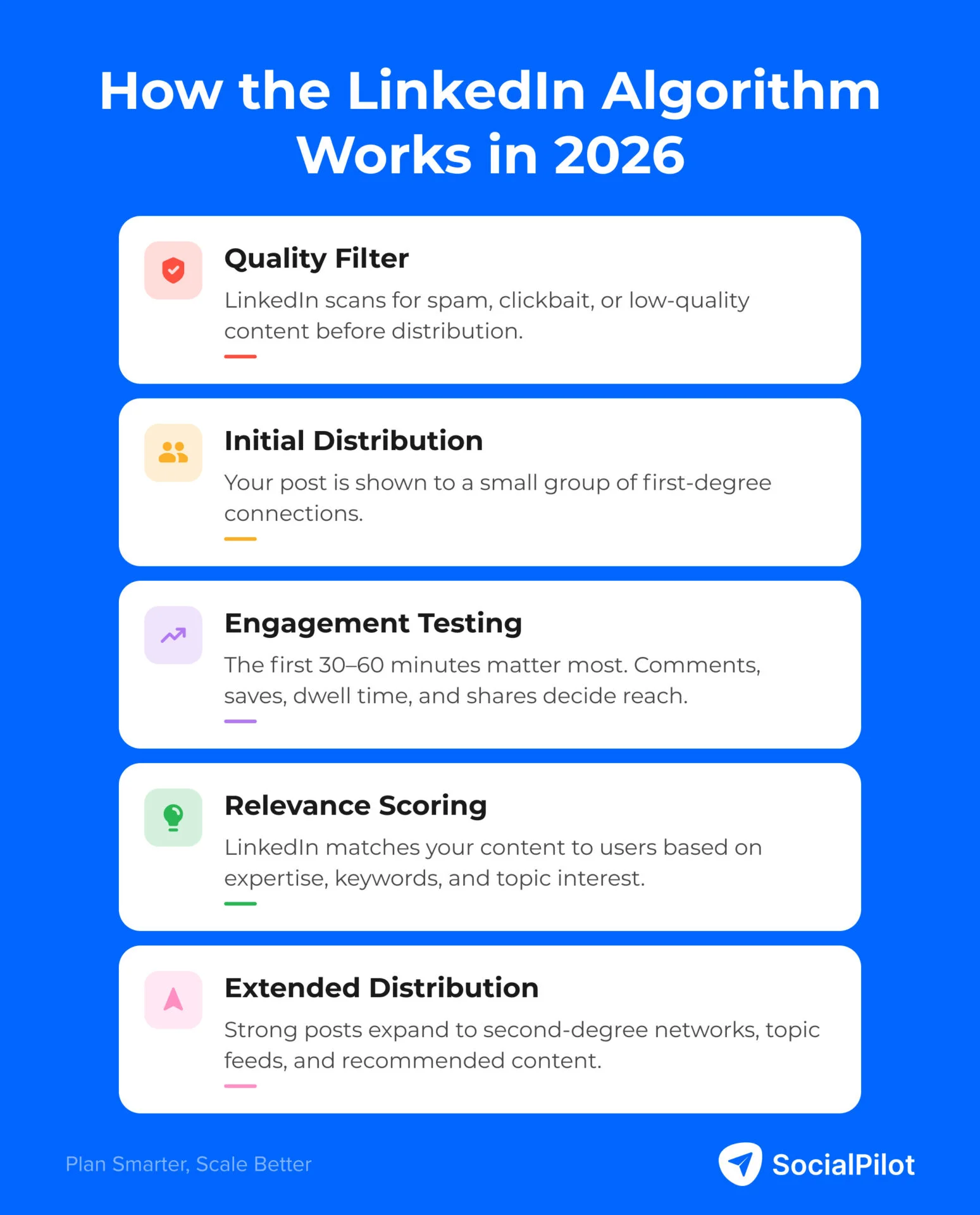
1. Initial Automated Quality Filtering
The moment your post goes live, automated security and quality filters examine it. The system categorizes content into one of three buckets:
- High Quality: Original insights, professional anecdotes, industry analysis, and clean formatting.
- Low Quality: Clickbait, aggressive self-promotion, excessive tagging of unrelated accounts, or poorly formatted text walls.
- Spam: Outright policy violations, scam links, scraping patterns, or unauthorized commercial solicitation.
Content flagged as low quality or spam is immediately throttled, severely limiting its distribution before it ever reaches human eyes. Conversely, clean, well-structured posts pass smoothly into the next phase.
2. The Initial Test Batch and Engagement Velocity
Once a post clears the automated filter, LinkedIn typically tests it on a small, representative sample of your immediate network and followers. The algorithm closely monitors how this initial cohort interacts with the post within the first 60 to 90 minutes—often referred to as the "golden hour" of engagement velocity.
The system looks at distinct types of interactions, weighting them differently based on user intent:
- Meaningful Comments: Long-form, thoughtful replies that spark multi-person discussions carry the highest positive weight.
- Reposts with Thoughts: Sharing a post while adding original commentary signals high endorsement and deep professional value.
- Reactions (Likes, Celebrate, Support): While easier to accumulate, standard reactions offer lower signal strength compared to substantive commentary.
- Dwell Time: Even if a user does not like or comment, stopping to read a text post or watch a video for an extended period tells the algorithm that the content commands attention.
3. The Professional Relevance Graph
Beyond raw engagement, the algorithm assesses semantic relevance. It scans the text, hashtags, and linked articles to map the topic to specific industries, skills, and job titles. If you are a software engineer posting about cloud architecture, the system checks whether your immediate connections and wider network possess matching or adjacent professional interests.
Network Proximity and the Balance of "In-Network" vs. "Out-of-Network" Content
Your feed is not just a reflection of who you follow; it is an active curation of what LinkedIn believes will advance your career or spark professional dialogue. The platform explicitly balances content across three distinct relationship tiers.
| Relationship Tier | Description | Algorithm Weight |
|---|---|---|
| 1st-Degree Connections | People you are directly connected with, including colleagues and close peers. | High priority for updates, career milestones, and personal announcements. |
| 2nd-Degree Connections | Connections of your connections; people within your extended professional circle. | High priority for thought leadership, industry insights, and viral discussions. |
| Interest-Based Creators | Accounts you do not follow directly, but whose content matches your indicated skills and reading habits. | Moderate to high priority for niche educational content and specialized industry commentary. |
By blending these tiers, the platform prevents echo chambers while ensuring that users are not overwhelmed by total strangers. If a 2nd-degree connection comments on a post, that post may surface in your feed because the shared interaction bridges the gap between your networks.
Key Signals That Influence Your Personal Feed Curation
If you want to understand why certain posts dominate your feed while others vanish, you must look at the specific behavioral signals the platform tracks. The algorithm builds a dynamic profile of your professional interests based on your daily actions.
- Explicit Feedback: Clicking the three dots on a post and selecting "I don't want to see this" or "Why am I seeing this?" actively trains the recommendation engine to suppress similar topics or authors.
- Content Formats: The system tracks whether you frequently engage with short text updates, long-form articles, native documents (PDF carousels), or external links. If you routinely swipe through carousels, the algorithm will prioritize similar visual formats in your feed.
- Search and Profile Visits: Regularly searching for specific terms or visiting profiles in a particular sector signals active research intent, causing the feed to surface adjacent industry news and commentary.
- Active Messaging and Collaboration: If you frequently converse with specific connections via LinkedIn Messaging, the algorithm infers a strong professional bond and ranks their public posts higher in your feed.
Common Misconceptions and Algorithmic Myths
Over the years, numerous myths have circulated regarding how to "beat" the professional network's distribution system. Recognizing these misconceptions helps you focus your efforts on sustainable practices rather than chasing outdated tricks.
- Myth 1: External Links Always Kill Reach. While older versions of the algorithm penalized external links to keep users on-platform, modern iterations focus primarily on user engagement and retention. If an external link leads to a genuinely useful, high-authority resource that prompts discussion, it can still perform well.
- Myth 2: Editing a Post Ruins Its Score. Making minor typographical corrections immediately after publishing does not trigger a penalty. However, drastically altering the core text or swapping media files after the initial test batch can confuse the quality filters.
- Myth 3: Hashtag Stuffing Amplifies Visibility. Adding twenty broad hashtags (#Success, #Motivation, #Business) no longer fools the system. In fact, excessive tagging is often flagged as spam behavior. Using three to five highly specific, topic-relevant hashtags is far more effective.
Practical Steps to Optimize Your Content Strategy
To align your publishing efforts with how the algorithm shapes feeds, focus on clarity, substance, and community engagement.
- Write Strong Hooks: The first two lines of your post determine whether scrollers click "see more." State a compelling insight, pose a sharp professional question, or share a counterintuitive lesson immediately.
- Prioritize Originality and Depth: Share firsthand experiences, quantitative data from your projects, or nuanced takes on industry trends. Generic summaries of news articles without personal analysis rarely gain traction.
- Foster Genuine Conversations: Do not just drop a link and walk away. Respond to early comments thoughtfully, ask follow-up questions, and encourage healthy debate in the comment section to signal ongoing activity to the algorithm.
- Maintain Consistent Activity: Posting sporadically makes it difficult for the recommendation engine to categorize your expertise. A steady cadence of two to three high-value posts per week builds stronger algorithmic affinity.
Frequently Asked Questions
Why am I suddenly seeing posts from people I am not connected to?
LinkedIn intentionally injects out-of-network content—often from industry experts or creators—into your feed to broaden your professional horizons. The platform selects these based on your profile skills, industry, and past reading habits. You can minimize this by adjusting your feed preferences or hiding specific creator topics.
Does tagging multiple people help a post get more views?
Tagging people who are not actively involved in your post or conversation is counterproductive. If tagged users ignore the notification or mark it as irrelevant, it serves as a negative signal to the quality filters, actively reducing your content's distribution. Only tag individuals when their direct input genuinely adds value to the discussion.
How does dwell time affect my feed ranking?
Dwell time measures the exact amount of time a user pauses scrolling to read your post. The algorithm interprets longer dwell times as a sign of high-value, engaging content, even if the reader forgets to click "like." Writing well-paced, structured paragraphs naturally encourages readers to pause and absorb your insights.
Can I reset my LinkedIn feed if it becomes cluttered with irrelevant content?
While there is no single "reset" button, you can retrain your feed rapidly. Use the three-dot menu on unwanted posts to select "I don't want to see this," unfollow accounts that no longer serve your professional goals, and actively engage with content from peers whose expertise you value. The algorithm adapts to your new behavioral patterns within a few days.
Next Steps to Take Today
Review your recent feed activity and publishing habits. If your feed is cluttered with irrelevant updates, spend ten minutes curating your connections and adjusting your content preferences. If you are a creator or professional looking to build thought leadership, audit your last five posts: ensure they feature clear hooks, original industry insights, and active engagement with your audience in the comments rather than hollow promotional hype.
Image Gallery