Exploring the Voice Cast of Disney’s The Jungle Book (2016)
The 2016 live-action reimagining of Disney’s The Jungle Book features a world-class ensemble of voice actors including Bill Murray as Baloo, Ben Kingsley as Bagheera, Idris Elba as Shere Khan, and Scarlett Johansson as Kaa. This cast w...
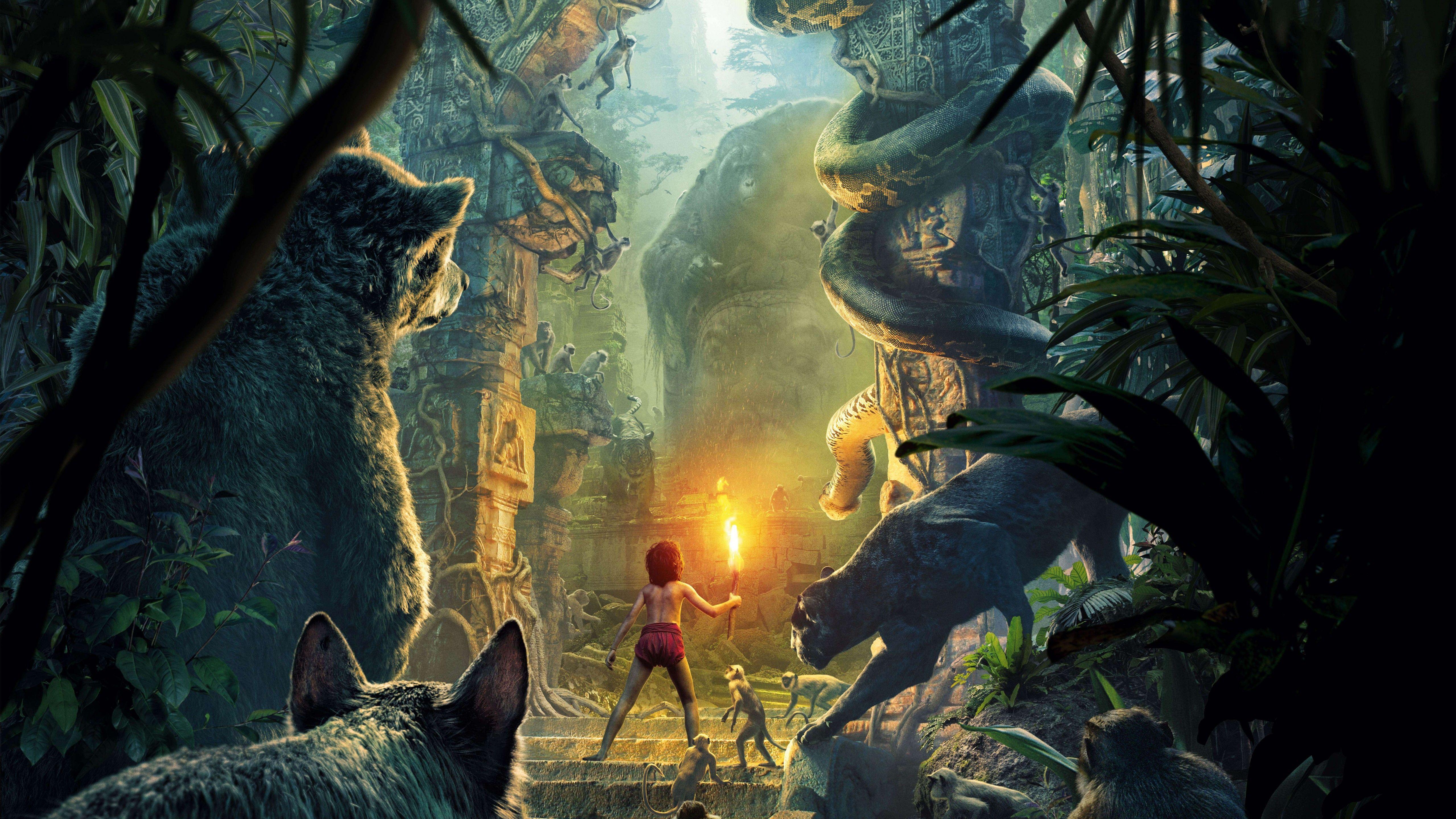
The 2016 live-action reimagining of Disney’s The Jungle Book features a world-class ensemble of voice actors including Bill Murray as Baloo, Ben Kingsley as Bagheera, Idris Elba as Shere Khan, and Scarlett Johansson as Kaa. This cast was instrumental in transforming photorealistic CGI animals into emotionally resonant characters, blending traditional voice acting with subtle performance capture to ground the film’s high-stakes narrative.
Contents
When Jon Favreau set out to remake the 1967 animated classic, the challenge was twofold: the film needed to honor the nostalgic charm of the original while providing a visceral, realistic experience for modern audiences. Central to this success was the "Voices for Jungle Book 2016" lineup—a group of A-list actors who provided more than just audio; they provided the soul of the jungle. As we look back from the perspective of 2026, a decade after the film's initial release, the casting remains a gold standard for how to integrate celebrity star power with character-driven storytelling in digital cinema.
The Strategy Behind the 2016 Casting Choices
Unlike many animated features that record actors in isolation, Favreau often had his actors interact in the booth or on a "blue screen" stage. This approach was designed to capture the natural chemistry between characters. For instance, the camaraderie between Mowgli (Neel Sethi) and Baloo (Bill Murray) felt authentic because the actors spent time together developing their rhythm.
The casting also reflected a shift toward diversity and modern interpretation. By casting Scarlett Johansson as Kaa—a character traditionally voiced by men—the film introduced a different kind of seduction and menace. Similarly, bringing in Idris Elba to voice Shere Khan gave the antagonist a grounded, physical presence that felt far more threatening than the more theatrical 1967 version.
The Mentor and the Free Spirit: Bagheera and Baloo
The heart of The Jungle Book lies in the ideological tug-of-war between Bagheera and Baloo over Mowgli’s future. The 2016 film perfectly captured this through the vocal performances of Ben Kingsley and Bill Murray.
Ben Kingsley as Bagheera
Sir Ben Kingsley brought a sense of "military discipline" to the role of the black panther. In this iteration, Bagheera is not just a protector; he is a stern educator who believes that Mowgli’s survival depends on his ability to act like a wolf. Kingsley’s voice carries a weight of authority and hidden trauma, suggesting a deep history with the jungle's laws. His performance is measured and precise, providing a necessary anchor to the film’s more chaotic sequences.
Bill Murray as Baloo
If Kingsley is the anchor, Bill Murray is the sail. Casting Murray as the "sloth bear" was perhaps the most celebrated decision of the production. Murray’s natural comedic timing and laid-back persona were perfect for a character who survives on his wits and his ability to manipulate others into doing his work. However, Murray also brought a surprising amount of pathos to the role. As the film progresses, his Baloo evolves from a lazy opportunist into a devoted guardian who is willing to sacrifice his lifestyle—and his life—for the man-cub.
The Antagonists: Shere Khan and King Louie
A hero is only as great as his villain, and the 2016 film provided Mowgli with two of the most formidable antagonists in Disney’s history.
Idris Elba as Shere Khan
Idris Elba’s Shere Khan is a masterclass in vocal intimidation. Rather than playing the tiger as a mustache-twirling villain, Elba voiced him as a victim of "man" who has turned his scars into a source of absolute power. The deep, gravelly resonance of Elba’s voice was enhanced by the sound design to ensure that every word he spoke felt like a physical threat. His Shere Khan is a politician and a predator, using fear to control the wolf pack before resorting to violence.
Christopher Walken as King Louie
In a departure from the 1967 film, King Louie was reimagined as a Gigantopithecus—an extinct species of massive ape. Christopher Walken provided the voice and facial performance for this "Jungle Mafia" boss. Walken’s unique cadence and unpredictable delivery made Louie feel genuinely dangerous. The scene where he sings "I Wanna Be Like You" is transformed from a jazzy dance number into a dark, coercive interrogation. Walken’s ability to pivot from charming to monstrous in a single sentence added a layer of psychological horror to the film’s second act.
Supporting the Pack: Raksha and Akela
The emotional stakes of the film are rooted in Mowgli’s relationship with his adoptive wolf family. Without a strong vocal foundation for the wolves, Mowgli’s desire to stay in the jungle would lack conviction.
- Lupita Nyong'o as Raksha: As the mother wolf, Nyong'o provided the film's emotional core. Her performance had to convey a fierce maternal instinct that could stand up to Shere Khan. Nyong'o’s voice is warm yet firm, embodying the "Law of the Jungle" as a protective force rather than just a set of rules.
- Giancarlo Esposito as Akela: The leader of the wolf pack needed to sound like a statesman. Esposito, known for his roles as calculated leaders, brought a sense of weary wisdom to Akela. His voice represented the stability of the pack, making his eventual confrontation with Shere Khan all the more impactful.
Technical Execution: Voice Meets Performance Capture
While the 2016 Jungle Book is often called a live-action film, it is almost entirely digital, with the exception of Neel Sethi (Mowgli) and the immediate environments he touches. The actors didn't just stand in a recording booth; they often wore motion-capture suits to provide "reference" for the animators.
This is particularly evident in the performance of Scarlett Johansson as Kaa. Her movements were tracked to ensure that the python's hypnotic swaying matched the seductive, airy quality of her voice. By using the actors' facial expressions as a guide, the animators at MPC (Moving Picture Company) and Weta Digital were able to avoid the "Uncanny Valley"—the point where digital characters look almost real but feel unsettlingly fake. Instead, the animals in The Jungle Book feel like sentient beings capable of complex thought.
Comparison of Key Voice Roles (2016 vs. 1967)
| Character | 2016 Voice Actor | 1967 Voice Actor | Performance Style (2016) |
|---|---|---|---|
| Baloo | Bill Murray | Phil Harris | Laid-back, witty, soulful |
| Bagheera | Ben Kingsley | Sebastian Cabot | Disciplined, regal, protective |
| Shere Khan | Idris Elba | George Sanders | Menacing, scarred, powerful |
| Kaa | Scarlett Johansson | Sterling Holloway | Seductive, hypnotic, mysterious |
| King Louie | Christopher Walken | Louis Prima | Intimidating, mob-boss style |
| Raksha | Lupita Nyong'o | Junior Paton (as 'Mother Wolf') | Fiercely maternal, emotional |
| Akela | Giancarlo Esposito | John Abbott | Authoritative, principled |
The Enduring Legacy of the 2016 Cast
Ten years later, in 2026, the performances in The Jungle Book (2016) are still cited as a turning point in digital filmmaking. The film proved that audiences would accept hyper-realistic talking animals if the vocal performances were grounded in human emotion rather than cartoonish exaggeration.
The success of this cast paved the way for subsequent Disney remakes, such as The Lion King (2019), although many critics argue that the 2016 Jungle Book remains superior because of its more balanced blend of realism and character personality. The "Voices for Jungle Book 2016" were not just chosen for their fame, but for their ability to inhabit characters that are, by definition, larger than life.
Frequently Asked Questions
Did the actors record their lines together?
Yes, in several instances. Director Jon Favreau preferred having the actors interact to capture natural dialogue rhythms. Notably, Bill Murray and Neel Sethi recorded scenes together to build the chemistry between Baloo and Mowgli, which helped the young actor react more naturally to a character that wasn't physically there on set.
Why was Kaa's gender changed for the 2016 film?
Jon Favreau felt that the original 1967 cast was too male-heavy. By casting Scarlett Johansson as Kaa, the production introduced a different energy to the film. The change also allowed for a more "hypnotic and seductive" interpretation of the character, which contrasted well with the more overtly aggressive villains like Shere Khan.
Is Christopher Walken actually singing in the film?
Yes, Christopher Walken performed a new version of "I Wanna Be Like You." The song was updated with new lyrics to reflect his character being a Gigantopithecus rather than an orangutan. Walken’s background in musical theater allowed him to bring a rhythmic, spoken-word quality to the song that fit the darker tone of the 2016 movie.
How did they make the animals' mouths look so real when talking?
The production used a combination of sophisticated muscle-simulation software and "performance capture." Animators studied the facial movements of the voice actors and blended them with the actual anatomy of the animals. This ensured that when Shere Khan spoke, the movement of his muzzle felt physically plausible for a tiger while still conveying Idris Elba's specific emotional delivery.
Recommendation for Viewers
If you are revisiting The Jungle Book in 2026, it is highly recommended to watch the "Behind the Scenes" features regarding the voice recording sessions. Seeing Bill Murray and Ben Kingsley in the booth provides a deeper appreciation for how much of their physical essence was translated into the digital animals. For the best experience, seek out the 4K Ultra HD version, which highlights the intricate detail that the voice performances helped bring to life.
Image Gallery