When Was the Zeppelin Invented and Why It Matters
The Zeppelin was invented in 1900, with its maiden flight taking place on July 2 of that year over Lake Constance near Friedrichshafen, Germany. This innovation matters because it introduced the world's first successful rigid airship,...
The Zeppelin was invented in 1900, with its maiden flight taking place on July 2 of that year over Lake Constance near Friedrichshafen, Germany. This innovation matters because it introduced the world's first successful rigid airship, revolutionizing long-distance aviation, setting early standards for commercial passenger transport, and shaping the strategic landscape of military reconnaissance well before heavier-than-air airplanes dominated the skies.
Contents
The Genesis of Rigid Airships: Understanding the Invention
To understand when the Zeppelin was invented, one must examine the engineering efforts of Count Ferdinand von Zeppelin. While non-rigid airships and balloons had seen rudimentary military use throughout the 19th century, they suffered from structural instability, lacking the framework necessary to maintain shape under aerodynamic pressure or to scale up in size for heavy payloads.
Count von Zeppelin began officially developing his concept for a rigid airship in the late 1880s, retiring from the military to dedicate his fortune and engineering team to the project. The defining characteristic of his invention was its rigid framework—constructed initially of aluminum alloy—which separated the outer aerodynamic envelope from the internal gas cells holding the lifting gas, typically hydrogen. This structural integrity allowed the airship to become much larger than any previous aircraft, carrying multiple engines, heavy control cars, and substantial payloads.
The culmination of these years of design, calculation, and prototyping occurred in the summer of 1900. On July 2, 1900, the Luftschiff Zeppelin 1 (LZ 1) lifted off from a floating assembly shed on Lake Constance. Although the first flight lasted only about 18 minutes and revealed various technical shortcomings regarding structural flexing and steering, it successfully demonstrated that a rigid airship could sustain controlled flight with a motorized propulsion system.
The Engineering Anatomy of Early Zeppelins
The technical architecture of the early Zeppelin was a marvel of turn-of-the-century mechanical engineering. Understanding why the invention mattered requires looking closely at how these vessels were constructed and operated.
The Rigid Framework and Materials
Unlike blimps, which rely entirely on internal gas pressure to maintain their shape, the Zeppelin utilized a skeletal framework of longitudinal girders and transverse rings. For the LZ 1 and subsequent early models, Count von Zeppelin utilized a newly developed, lightweight aluminum alloy. This material provided the necessary rigidity without adding prohibitive dead weight, a critical factor for aviation physics.
Gas Cells and Propulsion
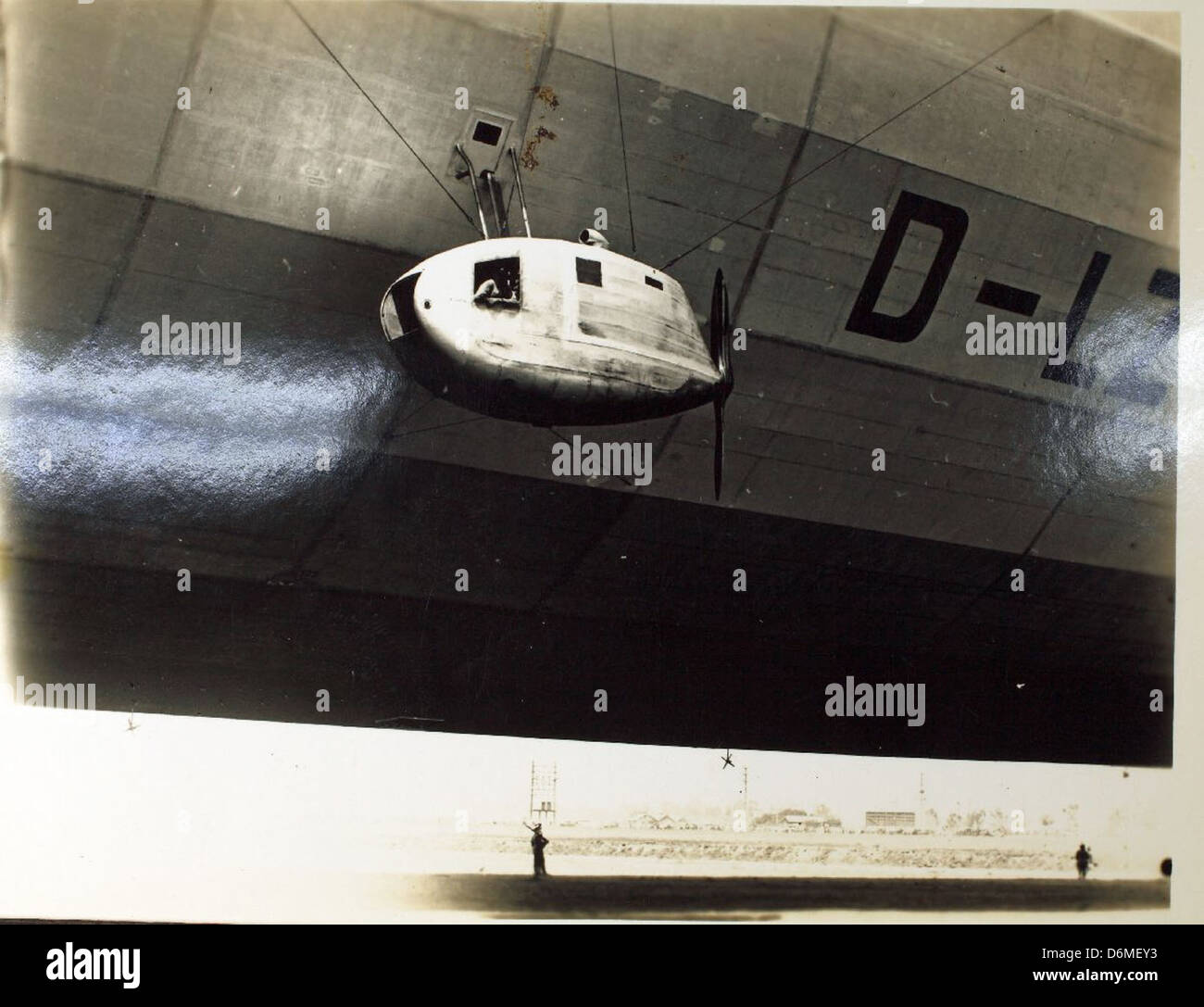
Inside the aluminum skeleton sat a series of separate, un-pressurized gas bags made of rubberized cotton fabric, filled with hydrogen. Separating the gas bags from the outer fabric envelope reduced friction and gas loss. Propulsion was provided by internal combustion engines—specifically Daimler gasoline engines—which turned propellers mounted on outriggers attached to the frame.
| Component | Function in Early Zeppelins | Material Significance |
|---|---|---|
| Framework | Maintained structural shape and aerodynamic profile | Lightweight aluminum alloy for weight reduction |
| Gas Cells | Provided buoyancy via hydrogen lift | Rubberized cotton fabric to minimize leakage |
| Engines | Provided thrust and forward propulsion | Daimler internal combustion engines for reliability |
| Control Car | Housing for pilots, navigators, and flight instruments | Suspended rigidly below the hull for stability |
Why the Invention Matters: Historical and Technological Significance
The invention of the Zeppelin mattered profoundly for several distinct historical, economic, and technological reasons. It fundamentally altered human perception of distance and introduced the era of practical, powered aerial navigation.
Pioneering Commercial Air Travel
Before fixed-wing commercial aviation became viable for long-range international routes, Zeppelins demonstrated the potential of global air transit. In the 1920s and 1930s, the Deutsche Luftschiffahrts-Aktiengesellschaft (DELAG) and the subsequent company operating the famous LZ 127 Graf Zeppelin and LZ 129 Hindenburg proved that regular, scheduled intercontinental passenger service was possible. Passengers crossed the Atlantic Ocean in relative luxury, experiencing quiet, stable flight compared to the noisy, turbulent multi-engine seaplanes of the era.
Military Reconnaissance and Strategic Impact
During World War I, the German military utilized Zeppelins for long-range naval reconnaissance and strategic bombing raids over Great Britain and the Eastern Front. While the military utility of airships rapidly declined due to their vulnerability to incendiary ammunition and anti-aircraft artillery, the Zeppelin forced nations to develop the first integrated air defense networks, searchlights, and night-fighter interception tactics.
Advancements in Materials Science and Aerodynamics
The rigorous mathematical modeling, wind-tunnel testing, and metallurgical research required to build safe rigid airships pushed the boundaries of 20th-century engineering. The demand for lightweight, high-strength aluminum alloys accelerated industrial metallurgy, and the aerodynamic data gathered from airship operations laid foundational principles for modern aeronautical engineering.
The Operational Limitations and Safety Challenges
While the invention was a technical triumph, examining why it matters requires an honest assessment of its inherent vulnerabilities. These limitations ultimately restricted the long-term viability of the technology.
- Vulnerability to Weather: Airships possess a massive surface area, making them exceptionally susceptible to crosswinds, squalls, and atmospheric turbulence during ground handling and flight operations.
- Lifting Gas Risks: The reliance on hydrogen—chosen for its superior lifting capacity compared to helium—presented a severe fire hazard. The flammability of hydrogen contributed to catastrophic disasters, most notably the Hindenburg crash in Lakehurst, New Jersey, on May 6, 1937.
- Economic Inefficiency: Operating and housing a rigid airship required massive infrastructure, including specialized giant hangars, mooring masts, and ground crews numbering in the dozens or hundreds, making them economically difficult to sustain against the rapidly advancing airplane.
Modern Revival and Legacy of the Rigid Airship
Though mass commercial passenger transport by rigid airship ceased in the late 1930s, the legacy of Count von Zeppelin's invention persists today. Modern aerospace engineering has revisited the concept of lighter-than-air flight, albeit with significant technological updates.
Today, modern semi-rigid airships and hybrid aircraft utilize non-flammable helium rather than hydrogen. Companies and research groups develop these modern vessels for specialized industrial tasks such as heavy lift cargo transport to remote regions, atmospheric research, aerial surveillance, and low-altitude tourism. These modern applications inherit the foundational thermodynamic and structural principles first established in the workshops of Friedrichshafen at the turn of the 20th century.
Frequently Asked Questions
When was the first Zeppelin built and flown?
The first Zeppelin, designated LZ 1, was completed in the summer of 1900 and made its maiden flight on July 2, 1900, over Lake Constance near Friedrichshafen, Germany.
Who invented the Zeppelin?
The Zeppelin was invented by German general and aviation pioneer Count Ferdinand von Zeppelin, who patented the design for a rigid airship in the 1890s and established the manufacturing facilities to produce them.
What is the difference between a Zeppelin and a blimp?
A Zeppelin features a rigid internal metal framework that maintains its shape and supports the structural loads. A blimp is a non-rigid airship that relies entirely on internal gas pressure to maintain its aerodynamic form.
Why did Zeppelin operations end as commercial transport?
Commercial passenger Zeppelin operations ended primarily due to severe safety incidents—most notably the Hindenburg disaster in 1937—combined with the rapid technological advancement, speed, and economic efficiency of fixed-wing airplanes.
Are Zeppelins still used today?
Traditional rigid passenger Zeppelins are no longer in commercial service, but modern non-rigid and semi-rigid airships utilizing safe helium gas are used for advertising, scientific research, and specialized surveillance roles.
Conclusion and Next Actions
The invention of the Zeppelin in 1900 marked a monumental milestone in aviation history, proving that human beings could engineer large-scale, powered vessels capable of traversing the skies. To deepen your understanding of this era, examine primary historical records regarding early 20th-century aeronautical engineering, visit aerospace museums featuring airship exhibitions, or study modern advancements in hybrid lighter-than-air cargo transport technology.
Image Gallery