Best Men’s Shoes for Lower Back Pain in 2026: A Comprehensive Guide
The best men’s shoes for lower back pain prioritize exceptional shock absorption, anatomical arch support, and structural stability to align the kinetic chain. Footwear like the Hoka Bondi series, Brooks Adrenaline GTS, and specialized...
The best men’s shoes for lower back pain prioritize exceptional shock absorption, anatomical arch support, and structural stability to align the kinetic chain. Footwear like the Hoka Bondi series, Brooks Adrenaline GTS, and specialized orthotic brands like Orthofeet are leading choices in 2026 for reducing lumbar strain and improving spinal posture.
Contents
Lower back pain is rarely just a "back problem." For many men, the root cause—or at least a significant contributor—lies in the foundation of the body: the feet. When your footwear fails to provide adequate support or cushioning, the impact of every step travels upward through the ankles, knees, and hips, eventually settling in the lumbar spine. This phenomenon, known as the kinetic chain, dictates that a misalignment at the bottom inevitably causes compensation at the top.
In 2026, footwear technology has advanced to the point where "orthopedic" no longer means "unattractive." Modern materials like nitrogen-infused foams and 3D-printed lattices offer unprecedented pressure relief. This guide explores the engineering behind the best men's shoes for lower back pain and provides specific recommendations to help you regain mobility.
The Connection Between Footwear and Lumbar Health
To understand why a specific pair of shoes can alleviate back pain, one must understand the biomechanics of walking. Each time your heel strikes the ground, a force equivalent to 1.5 to 3 times your body weight is sent through your skeleton.
If you have flat feet (overpronation), your feet roll inward excessively. This rotation forces the lower leg to turn inward, tilting the pelvis forward and increasing the curvature of the lower spine (lumbar lordosis). Conversely, if you have high arches (supination), your feet are poor shock absorbers, sending the full force of the impact directly into your joints and vertebrae.
The right shoes act as a mechanical intervention. By correcting the gait cycle and absorbing ground reaction forces, they prevent the repetitive micro-trauma that leads to chronic lower back inflammation and disc compression.
Key Features to Look For in 2026
When shopping for shoes to mitigate back pain, ignore marketing jargon and focus on these four verified technical specifications:
1. Superior Shock Absorption
Look for mid-soles constructed from high-quality EVA (Ethylene Vinyl Acetate), PU (Polyurethane), or the newer bio-based thermoplastic elastomers popular in 2026. These materials dissipate energy before it reaches your hips. "Maximalist" cushioning is often preferred for those who spend long hours standing on hard surfaces like concrete.
2. Contoured Arch Support
Support is not one-size-fits-all. A shoe must match your specific arch height to distribute weight evenly across the plantar surface of the foot. Proper support prevents the collapse of the medial longitudinal arch, which is the primary cause of gait-related pelvic tilting.
3. Heel Stability and Torsional Rigidity
A shoe for back pain should be difficult to twist or fold in half. A firm heel counter (the back part of the shoe that holds your heel) prevents excessive lateral movement. This stability ensures that your foot remains in a neutral position throughout the transition from heel-strike to toe-off.
4. Appropriate Heel-to-Toe Drop
The "drop" is the difference in height between the heel and the forefoot. While "zero-drop" shoes are popular in minimalist circles, men with lower back pain often benefit from a moderate drop (8mm to 12mm). This slight elevation can take the strain off the posterior chain, including the calves and hamstrings, which are often tight in back pain sufferers.
Top Recommended Men's Shoes for Back Pain by Category
The following selections represent the gold standard in 2026 for combining medical-grade support with daily wearability.
Best for Daily Walking: New Balance Fresh Foam 880 Series
New Balance has refined its Fresh Foam X technology to provide a balance of softness and rebound. The 880 series is a perennial favorite because of its wide range of widths (from Narrow to 4E). For men with back pain, the consistent platform and secure midfoot wrap provide a stable base that prevents the wobbling that leads to hip fatigue.
Best for Maximum Cushioning: Hoka Bondi 8/9
The Hoka Bondi remains the king of "maximalist" footwear. It features an early-stage Meta-Rocker—a curved sole design that creates a fulcrum effect. This encourages a smooth roll through the gait cycle, reducing the amount of force the lower back has to "muscle" through during each step. It is particularly effective for those with degenerative disc disease or spinal stenosis.
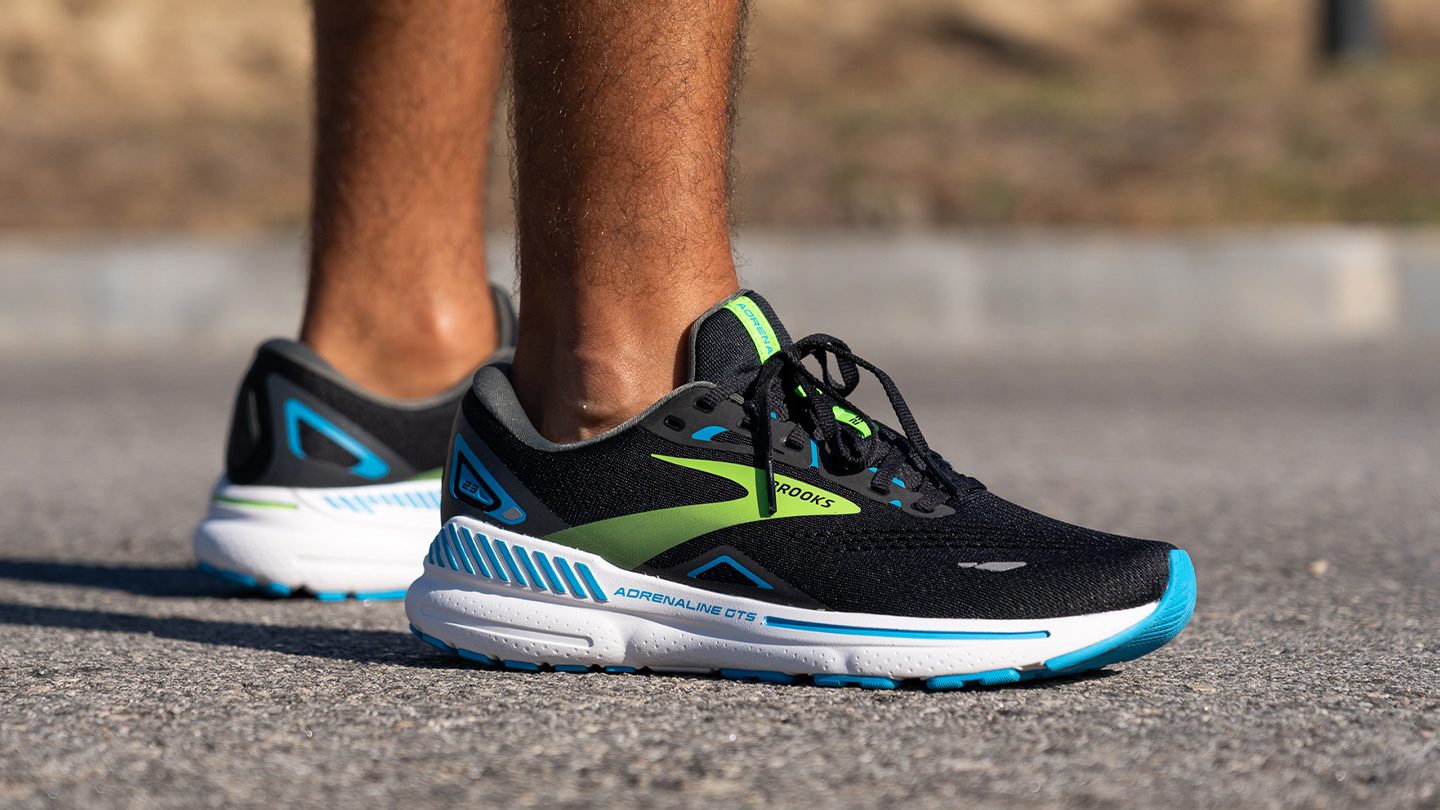
Best for Overpronation: Brooks Adrenaline GTS
The "GTS" stands for Go-To Support. Brooks utilizes GuideRails technology, which acts like bowling alley bumpers. Rather than forcing the foot into a position, it only intervenes when your foot moves outside its natural path of motion. This prevents the internal tibial rotation that frequently causes sharp lower back twinges during long walks.
Best Dress Shoes for the Office: Ecco Helsinki 2
Men often find their back pain worsens at work due to flat, hard-soled dress shoes. The Ecco Helsinki 2 uses "Fluidform" technology, which bonds the upper to the sole without glue or stitching, creating a more anatomical fit. It offers the aesthetic of a classic derby but with the internal cushioning of a high-end sneaker.
Best for Specialized Relief: Orthofeet Corsair
Orthofeet remains a leader in therapeutic footwear. Their shoes come with a multi-layered orthotic insole that features anatomical arch support and a padded heel seat. Their "Bio-Step" sole design is specifically engineered to alleviate strain on the joints for individuals with sensitive feet or chronic mobility issues.
Comparison of Leading Footwear Technologies
| Shoe Model | Support Type | Cushioning Level | Best Use Case |
|---|---|---|---|
| Hoka Bondi | Neutral | Maximum | Long periods of standing; high-impact walking. |
| Brooks Adrenaline GTS | Stability | Balanced | Correcting overpronation; flat feet. |
| New Balance Fresh Foam X | Neutral | Plush | All-day versatile wear; wide feet. |
| Ecco Helsinki 2 | Neutral/Contoured | Moderate | Professional/Office environments. |
| Orthofeet Corsair | Orthotic/Stability | High | Chronic LBP; plantar fasciitis; medical needs. |
| ASICS Gel-Kayano 32 | Maximum Stability | Firm/Responsive | Heavy-set frames; severe overpronation. |
The Role of Aftermarket Orthotics and Insoles
Even the best shoes may require additional customization. In 2026, medical-grade, over-the-counter insoles have become highly sophisticated. If you have a favorite pair of shoes that lacks support, adding a structured insole like those from Superfeet or Powerstep can transform the shoe's impact on your back.
However, be cautious with "pillowy" gel inserts. While they feel soft initially, they often lack the structural integrity to support the arch. For lower back pain, structural support is always superior to mere softness. If your pain is severe or asymmetrical, consulting a podiatrist for custom-molded orthotics is a recommended next step.
Complementary Strategies for Back Pain Relief
While the right shoes are foundational, they work best as part of a holistic approach:
- Replace Shoes Regularly: The foam in most high-quality shoes loses its structural integrity after 300 to 500 miles (or roughly 6-12 months of daily use). Even if the tread looks fine, the internal support may have collapsed.
- Stretching the Posterior Chain: Tight hamstrings and calves pull on the pelvis, exacerbating back pain regardless of what you wear. Daily stretching can "unlock" the benefits of your footwear.
- Vary Your Footwear: Avoid wearing the exact same pair of shoes every single day. Rotating between two different models with slightly different drop heights can prevent repetitive strain on specific muscle groups.
Frequently Asked Questions
Can wearing "minimalist" or barefoot shoes help lower back pain?
For some, minimalist shoes can strengthen the intrinsic muscles of the foot. However, for most men currently experiencing lower back pain, the lack of shock absorption and arch support usually worsens the condition. Transitioning to minimalist footwear should only be done under the guidance of a physical therapist and after the acute back pain has subsided.
Why does my back hurt more when I wear flat flip-flops or boat shoes?
Flat shoes like traditional flip-flops or deck shoes provide zero arch support and very little heel cushioning. This forces your feet to "grip" the shoe with your toes, altering your gait and causing the pelvis to tilt, which puts direct pressure on the L4-L5 lumbar discs.
How do I know if my shoes are worn out?
Check the "midsole crease." If you see heavy horizontal wrinkles in the foam on the side of the shoe, the material has likely "bottomed out" and is no longer providing shock absorption. Another test is to place the shoe on a flat table; if it tilts to one side, the structure is compromised.
Should I choose a firm or a soft shoe for back pain?
A combination is best. A shoe that is too soft (like a memory foam slipper) offers no stability, while a shoe that is too hard offers no shock absorption. Look for "responsive" cushioning—material that compresses to absorb impact but immediately returns to its original shape to support your weight.
Final Recommendation
If you are struggling with persistent lower back pain, your first action should be to audit your current footwear. If your daily shoes are flat, worn out, or overly flexible, consider a stability-oriented shoe like the Brooks Adrenaline GTS or a maximalist option like the Hoka Bondi.
Professional Advice Limitation: This guide is for informational purposes only and does not constitute medical advice. Lower back pain can be caused by various underlying conditions, including herniated discs, sciatica, or kidney issues. If your pain is accompanied by numbness, weakness, or fever, consult a healthcare professional immediately.
Image Gallery