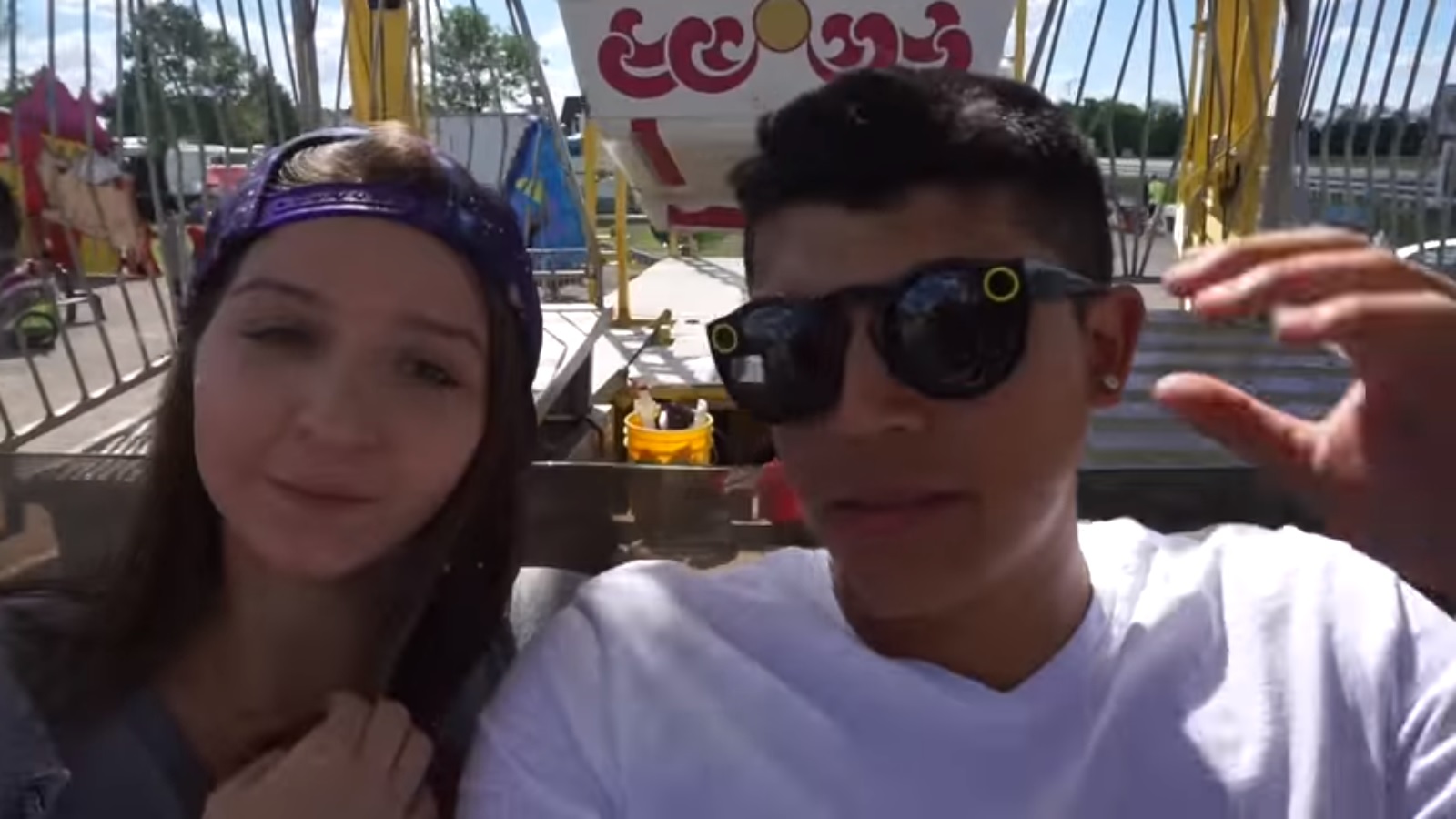
The Tragic 2017 YouTube Stunt: Monisa Perez, Pedro Ruiz III, and the Fatal Book Shooting Case
In June 2017, 19-year-old Monisa Perez accidentally shot and killed her 22-year-old boyfriend, Pedro Ruiz III, in Halstad, Minnesota, during a botched viral stunt. Ruiz held a 1.5-inch hardcover book to his chest, believing it would bl...
In June 2017, 19-year-old Monisa Perez accidentally shot and killed her 22-year-old boyfriend, Pedro Ruiz III, in Halstad, Minnesota, during a botched viral stunt. Ruiz held a 1.5-inch hardcover book to his chest, believing it would block a bullet from a .50-caliber Desert Eagle handgun. Perez pleaded guilty to second-degree manslaughter in late 2017.
Contents
Timeline and Circumstances of the Incident
The event occurred on the evening of June 26, 2017, in Halstad, a small city located in Norman County, Minnesota. Monisa "Moniq" Perez and Pedro Ruiz III were a young couple with a young daughter, and Perez was pregnant with their second child. To build a broad online following and monetize their content, the couple had created a YouTube vlog channel documenting their daily lives, family activities, and escalating pranks.
In the days leading up to the incident, Ruiz conceived an idea for a high-risk stunt aimed at generating massive view counts: he would hold a thick hardcover book against his chest while Perez shot at the book from close range. Ruiz believed the paper density of the heavy volume would absorb the kinetic energy of the bullet, leaving him unharmed. To convince Perez, who initially expressed hesitation, Ruiz reportedly showed her a separate book that he had previously shot, where the projectile allegedly failed to pass completely through.
Hours before the incident, Perez shared a post on Twitter expressing apprehension regarding the planned stunt:
"Me and Pedro are probably going to shoot one of the craziest videos ever. HIS idea not MINES."
Around 5:30 p.m. on June 26, the couple set up two cameras in the yard of their home to capture the event from multiple angles. Family members and neighbors, including the couple’s three-year-old daughter, were nearby. Standing approximately one foot away, Perez aimed a .50-caliber Desert Eagle semi-automatic handgun—one of the most powerful commercial handguns available—directly at the 1.5-inch (approx. 3.8 cm) encyclopedia held against Ruiz’s chest.
When Perez pulled the trigger, the heavy high-velocity round perforated the book effortlessly, penetrating Ruiz’s chest and inflicting a severe single gunshot wound. Paramedics and medical helicopter personnel responded rapidly after emergency services were called, attempting resuscitation. However, Ruiz suffered cardiac arrest from severe internal damage and was pronounced dead at the scene.
Ballistic Reality vs. Myth: Why the Hardcover Book Failed
The primary technical cause of this fatal accident was a severe misunderstanding of basic ballistics, terminal projectile mechanics, and the physical limitations of paper as armor.
Kinetic Energy and Projectile Dynamics of the .50 AE
The weapon used in the stunt was a Desert Eagle chambered in .50 Action Express (.50 AE). The .50 AE is a massive handgun cartridge designed primarily for big-game hunting and metallic silhouette shooting.
- Muzzle Velocity: A standard 300-grain (19.4 gram) .50 AE bullet exits the barrel at approximately 1,400 to 1,500 feet per second (fps).
- Muzzle Energy: The round generates between 1,400 and 1,600 foot-pounds (ft-lbs) of kinetic energy at the muzzle. By comparison, a standard 9mm Parabellum handgun round delivers roughly 350 to 450 ft-lbs of muzzle energy.
- Bullet Construction: Most .50 AE ammunition features full metal jacket (FMJ) or heavy jacketed hollow point (JHP) construction engineered to penetrate deep tissue and bone.
| Caliber / Cartridge | Bullet Weight | Muzzle Velocity | Muzzle Energy |
|---|---|---|---|
| 9mm Parabellum | 115 to 124 grain | 1,150 to 1,200 fps | 350 to 400 ft-lbs |
| .45 ACP | 230 grain | 830 to 860 fps | 350 to 400 ft-lbs |
| .44 Remington Magnum | 240 grain | 1,300 to 1,400 fps | 900 to 1,100 ft-lbs |
| .50 Action Express | 300 grain | 1,400 to 1,500 fps | 1,400 to 1,600 ft-lbs |
Material Resistance: Cellulose vs. Ballistic Armor
For a barrier to stop a projectile, it must absorb or dissipate the projectile's kinetic energy across its surface area faster than the bullet can sheer through the material. Bound paper, composed of compressed cellulose fibers, offers very little structural shear resistance against high-energy centerfire handgun rounds.
- Inadequate Thickness: Ballistic research indicates that stopping even a medium-powered handgun round (such as a 9mm or .40 S&W) requires hundreds of pages of dense, uncompressed paper measuring at least 4 to 6 inches thick. To stop a .50 AE round, several feet of tightly bound paper would be required.
- Lack of Tensile Strength: Unlike modern synthetic armors (such as Kevlar or Ultra-High-Molecular-Weight Polyethylene), paper fibers do not possess high tensile strength. When struck by a .50-caliber round, paper suffers immediate local shearing rather than dispersing the shockwave across the rest of the object.
- Distance Factor: Firing from a distance of roughly one foot maximized the kinetic energy delivery, giving the round zero loss of velocity prior to impact.
Legal Consequences and Court Proceedings
Following the incident, local law enforcement seized the video cameras, the firearm, and related evidence. Monisa Perez was arrested and charged by the Norman County Attorney's Office under Minnesota law.
Criminal Charges and Minnesota Manslaughter Statute
Perez was charged with Second-Degree Manslaughter under Minnesota Statutes § 609.205(1). Under Minnesota state law, a person commits second-degree manslaughter if they cause the death of another by "culpable negligence whereby the person creates an unreasonable risk, and consciously takes chances of causing death or great bodily harm to another."
The charge of second-degree manslaughter does not require prosecutors to prove an intent to kill or harm. Instead, it focuses on the reckless disregard for human life and extreme deviation from the standard of care that a reasonable person would exercise under similar circumstances.
Plea Agreement and Sentencing
In December 2017, Perez entered a guilty plea to second-degree manslaughter as part of a negotiated plea agreement. The plea aimed to balance accountability for the negligent death with the context that Perez was coerced into the stunt by Ruiz and was left as the sole surviving parent of two very young children.
In March 2018, District Court Judge Jeffrey Remick sentenced Monisa Perez. The key provisions of her sentence included:
- Jail Time: A total of 180 days (6 months) in local jail, structured to allow her to care for her children. The sentence was divided into 30-day increments served annually over three years, with options for home confinement during portions of the term.
- Probation: 10 years of supervised probation.
- Firearm Prohibition: A lifetime ban on owning, possessing, or using firearms, pursuant to state and federal felons-in-possession statutes.
- Financial Restrictions: Explicit legal prohibitions preventing Perez from capitalizing on or profiting financially from the video recording, media interviews, or rights to the story.
Summary of Case Parameters and Legal Outcomes
The table below outlines the core parameters, physical details, and legal determinations of the case.
| Parameter | Details / Specifications |
|---|---|
| Location | Halstad, Norman County, Minnesota |
| Date of Incident | June 26, 2017 |
| Primary Individuals Involved | Pedro Ruiz III (Deceased, age 22), Monisa Perez (Shooter, age 19) |
| Weapon Used | .50-caliber Desert Eagle semi-automatic pistol |
| Barrier Tested | 1.5-inch hardcover encyclopedia / book |
| Shooting Distance | Approximately 1 foot (30 cm) |
| Criminal Charge | Second-Degree Manslaughter (Minnesota Statutes § 609.205) |
| Final Legal Disposition | Guilty plea; 180 days staggered jail time, 10 years probation |
| Civic & Financial Penalties | Lifetime firearm ban; permanent prohibition from profiting off stunt media |
Social Media Incentives and Content Creator Safety
The tragedy served as a landmark case in debates surrounding digital content monetization, online algorithmic incentives, and content creator safety.
The Pursuit of Virality
During the late 2010s, algorithmic recommendations on platforms like YouTube, Facebook, and Instagram prioritized high engagement metrics—clicks, shares, and watch time. This structure incentivized content creators to perform increasingly sensationalized, shocking, or dangerous stunts to stand out in a saturated market.
In the case of Ruiz and Perez, evidence presented during investigations indicated that their channel had a modest subscriber base, and the couple believed that executing an extreme, attention-grabbing trick was necessary to break into lucrative creator tiers. The drive for online visibility overshadowed objective risk assessments and basic physical safety precautions.
Platform Policy Changes and Enforcement
Following this incident and several other high-profile incidents involving dangerous pranks, major video sharing platforms adjusted their Terms of Service and Community Guidelines regarding dangerous content:
- Prohibition of Harmful Stunts: Platforms explicitly updated guidelines to ban pranks or stunts that create a risk of serious physical injury, death, or severe psychological harm.
- Demonetization and Channel Termination: Channels uploading content featuring unsafe handling of weapons, extreme physical hazards, or dangerous challenges face immediate ad demonetization, content removal, or permanent account termination.
- Policy Training and Content Moderation: Social media companies expanded automated computer-vision tools and human moderation teams to flag weapon-related stunts and dangerous physical challenges prior to algorithmic amplification.
Fundamental Rules of Firearm Safety Violated
The incident is routinely cited by firearm safety instructors, law enforcement agencies, and range safety officers as a textbook example of neglecting the universal rules of gun safety. Understanding these rules highlights how multiple systemic failures led to the fatality.
Rule 1: Always Treat Every Firearm as If It Is Loaded
Even when a firearm is known to be loaded, it must be handled with the highest level of care. Assuming that a mechanical barrier will neutralize a loaded firearm introduces unacceptable human error and lethal risk.
Rule 2: Never Point a Firearm at Anything You Are Not Willing to Destroy
This is the cardinal rule of gun safety. A firearm should never be pointed at a human being outside of lawful self-defense scenarios. Aiming a high-powered handgun directly at a person's torso—regardless of any intervening object—guarantees catastrophic consequences if the barrier fails.
Rule 3: Be Sure of Your Target and What Is Beyond It
Target verification requires understanding the penetrating capabilities of the ammunition being used. A shooter is legally and morally responsible for where the bullet stops. Firing into an untested barrier with a human body directly behind it violates the requirement to ensure a safe backstop.
Rule 4: Keep Your Finger Off the Trigger Until Ready to Shoot
In stunt setups where individuals feel pressured or hesitant, improper trigger discipline can lead to premature discharges. In this case, even deliberate firing was performed without evaluating ballistics or safe operating environments.
Frequently Asked Questions
What weapon was used in the fatal book shooting stunt?
The weapon used was a .50-caliber Desert Eagle handgun chambered in .50 Action Express (.50 AE). It is one of the most powerful semi-automatic commercial handguns in the world, capable of penetrating multiple inches of dense material.
Did Monisa Perez go to prison for the death of Pedro Ruiz III?
Monisa Perez was sentenced to 180 days (6 months) in local jail, which the judge permitted her to serve in 30-day increments over three years to accommodate childcare duties. She was also placed on 10 years of supervised probation and received a lifetime ban on owning firearms.
Why did Pedro Ruiz believe a hardcover book would stop a bullet?
Ruiz had reportedly shot a different book in a previous, informal trial and claimed the bullet did not pass all the way through. However, he failed to account for variations in bullet type, angle, distance, book thickness, and the extreme kinetic energy of the .50 AE round.
Was the video of the fatal shooting released to the public?
While local law enforcement reviewed the footage as primary evidence during the criminal investigation, official authorities withheld the exact moment of the fatal shot from public release to prevent graphic media exploitation and respect the victim's family.
Can content creators be held criminally liable for accidents during video stunts?
Yes. Performing dangerous or negligent actions that result in injury or death subjects creators to criminal prosecution, including charges of involuntary manslaughter, reckless endangerment, or criminally negligent homicide, regardless of whether the participant gave consent.
Key Takeaways and Critical Guidance
The tragic incident involving Monisa Perez and Pedro Ruiz III highlights critical lessons regarding legal liability, digital platform ethics, and physical safety:
- Physical Reality vs. Content Goals: Never substitute theatrical assumptions or social media ambitions for empirical physics and established ballistics data. Paper, wood, and improvised household objects do not function as body armor.
- Consent Does Not Absolve Negligence: Legally, an individual cannot consent to be the victim of a reckless, life-threatening act involving deadly weapons. Co-signing or proposing a dangerous stunt does not shield the person pulling the trigger from criminal manslaughter prosecution.
- Strict Adherence to Safety Standards: Universal firearm safety rules are absolute and non-negotiable. Firearms must never be used as props in pranks, tricks, or unverified demonstrations.
Image Gallery