SAP HANA Meaning: Definition, Architecture, and Role in Modern Enterprise
SAP HANA stands for High-performance ANalytic Appliance. It is a multi-model, in-memory relational database management system (RDBMS) that accelerates data-driven insights by processing information in RAM rather than on traditional dis...
SAP HANA stands for High-performance ANalytic Appliance. It is a multi-model, in-memory relational database management system (RDBMS) that accelerates data-driven insights by processing information in RAM rather than on traditional disks. This architecture allows for real-time analytics, high-speed transactions, and advanced data processing within a single, unified platform.
Contents
In the landscape of 2026, SAP HANA has evolved from a niche database into the foundational "brain" for the majority of large-scale enterprise resource planning (ERP) systems worldwide. While its name originally emphasized its role as an "appliance"—a specific combination of hardware and software—the "meaning" of HANA today encompasses a massive cloud-native ecosystem that powers artificial intelligence, machine learning, and global supply chains.
The Etymology and Evolution of SAP HANA
To understand the meaning of SAP HANA, one must look at its dual history. Officially, the acronym stands for High-performance ANalytic Appliance. However, in the early stages of its development at the Hasso Plattner Institute, it was often informally referred to as "Hasso’s New Architecture."
Launched in 2010, the platform was a response to the "data explosion" of the late 2000s. Traditional databases, such as those from Oracle or IBM, were primarily designed for disk-based storage, which created significant bottlenecks during complex analytical queries. SAP’s goal was to collapse the wall between OLTP (Online Transactional Processing) and OLAP (Online Analytical Processing).
Before HANA, businesses typically ran their operations on one database and then "extracted, transformed, and loaded" (ETL) that data into a separate data warehouse for reporting. This meant that business reports were often based on day-old or week-old data. SAP HANA changed the definition of enterprise data by allowing both transactions and analytics to happen simultaneously on a single copy of the data.
Core Technical Pillars of SAP HANA
The technical meaning of SAP HANA is defined by four distinct architectural innovations that set it apart from legacy database systems.
1. In-Memory Computing
Traditional databases store the "master" copy of data on hard drives or Solid State Drives (SSDs) and only pull small portions into the computer's memory (RAM) when needed. SAP HANA reverses this. It keeps the entire database in RAM. Because RAM access is roughly 10,000 times faster than spinning disk access, the latency for data retrieval is virtually eliminated. In 2026, with the maturation of Persistent Memory (PMEM) and advanced cloud scaling, HANA can handle petabytes of data with sub-millisecond response times.
2. Columnar Data Storage
Most traditional databases store data in rows (like a spreadsheet). This is efficient for writing a single record (e.g., creating one sales order). However, for analytics (e.g., calculating the average price of all sales in 2025), a row-based system must read every single piece of data in the table.
SAP HANA uses columnar storage, which stores data by column. If a query only asks for "Price," the database only reads the "Price" column, skipping all other irrelevant data. This not only speeds up queries but also allows for massive data compression, as repetitive values in a column can be stored more efficiently.
3. Parallel Processing
Modern servers contain dozens or even hundreds of CPU cores. Legacy databases were often written in an era where single-core performance was the focus. SAP HANA was built from the ground up to utilize massively parallel processing (MPP). It can split a single query into multiple tasks and execute them across all available CPU cores simultaneously, drastically reducing the time required for complex calculations.
4. Data Tiering and Persistence
A common misconception is that because HANA is "in-memory," data is lost if the power goes out. This is false. HANA maintains a Persistence Layer where every transaction is logged to a disk-based storage volume. Furthermore, modern versions of SAP HANA use "Data Tiering" (such as Native Storage Extension) to move older, "cold" data to cheaper disk storage while keeping "hot" operational data in RAM, balancing performance with cost.
Why SAP HANA is Essential for Modern Business
The "meaning" of SAP HANA for a CEO or CFO is different from that of an IT Administrator. For the business leader, HANA represents agility.
Elimination of Data Redundancy
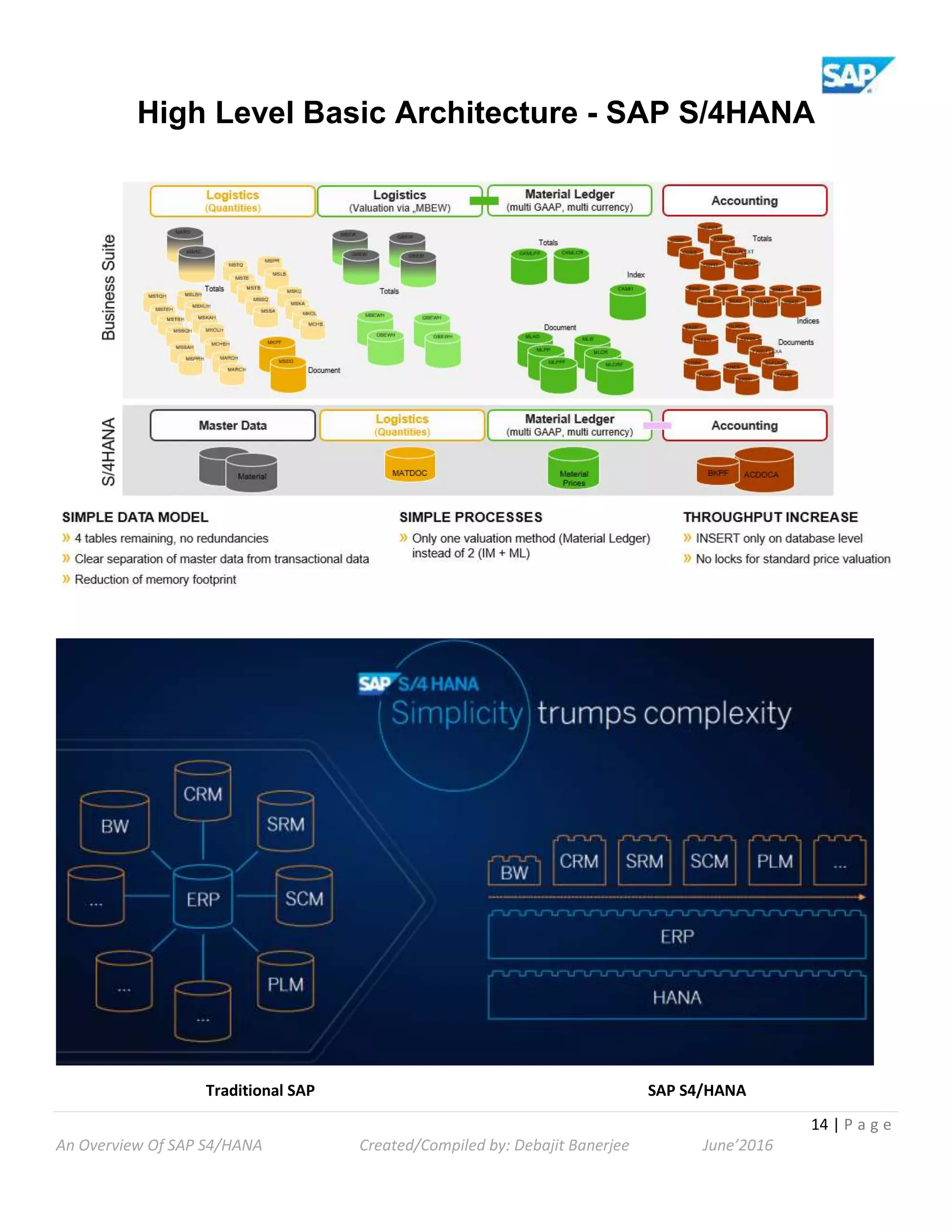
In older systems, to make reports run faster, developers had to create "aggregates" and "indexes"—essentially pre-calculated summaries of data. These summaries took up extra space and had to be updated constantly. Because SAP HANA is fast enough to calculate these totals on the fly (on the "fly" calculation), these redundant tables are no longer necessary. This simplifies the data model and reduces the total footprint of the database.
Real-Time Decision Making
In 2026, global supply chains move at the speed of light. SAP HANA allows for "Live Business." A retailer can see an inventory shortage in a specific region the moment it happens and trigger an automated reorder process. This real-time capability is the prerequisite for modern AI applications, such as SAP Joule, which require instant access to fresh data to provide accurate generative insights.
Advanced Processing Engines
Beyond being a simple database, SAP HANA includes built-in engines for:
- Spatial Processing: Analyzing geographic and mapping data.
- Graph Processing: Analyzing complex relationships between entities (useful for fraud detection).
- Predictive Analytics: Using built-in libraries to forecast future trends based on historical data.
SAP HANA vs. Traditional Databases
| Feature | Legacy RDBMS (Disk-Based) | SAP HANA (In-Memory) |
|---|---|---|
| Primary Storage | Hard Drive / SSD | RAM (Random Access Memory) |
| Data Format | Row-based | Column-oriented (Optimized) |
| Processing Style | Serial / Limited Parallelism | Massively Parallel Processing |
| Aggregates | Required for performance | Virtually eliminated |
| Reporting | Delayed (via ETL to Data Warehouse) | Real-time (on live data) |
| Footprint | High (due to indexes/redundancy) | Low (due to high compression) |
The Current Landscape: SAP HANA Cloud and S/4HANA
By 2026, the discussion around SAP HANA has shifted largely to SAP HANA Cloud. This is a Platform-as-a-Service (PaaS) offering that provides the full power of HANA with the elasticity of the cloud. It serves as the data foundation for the SAP Business Technology Platform (BTP).
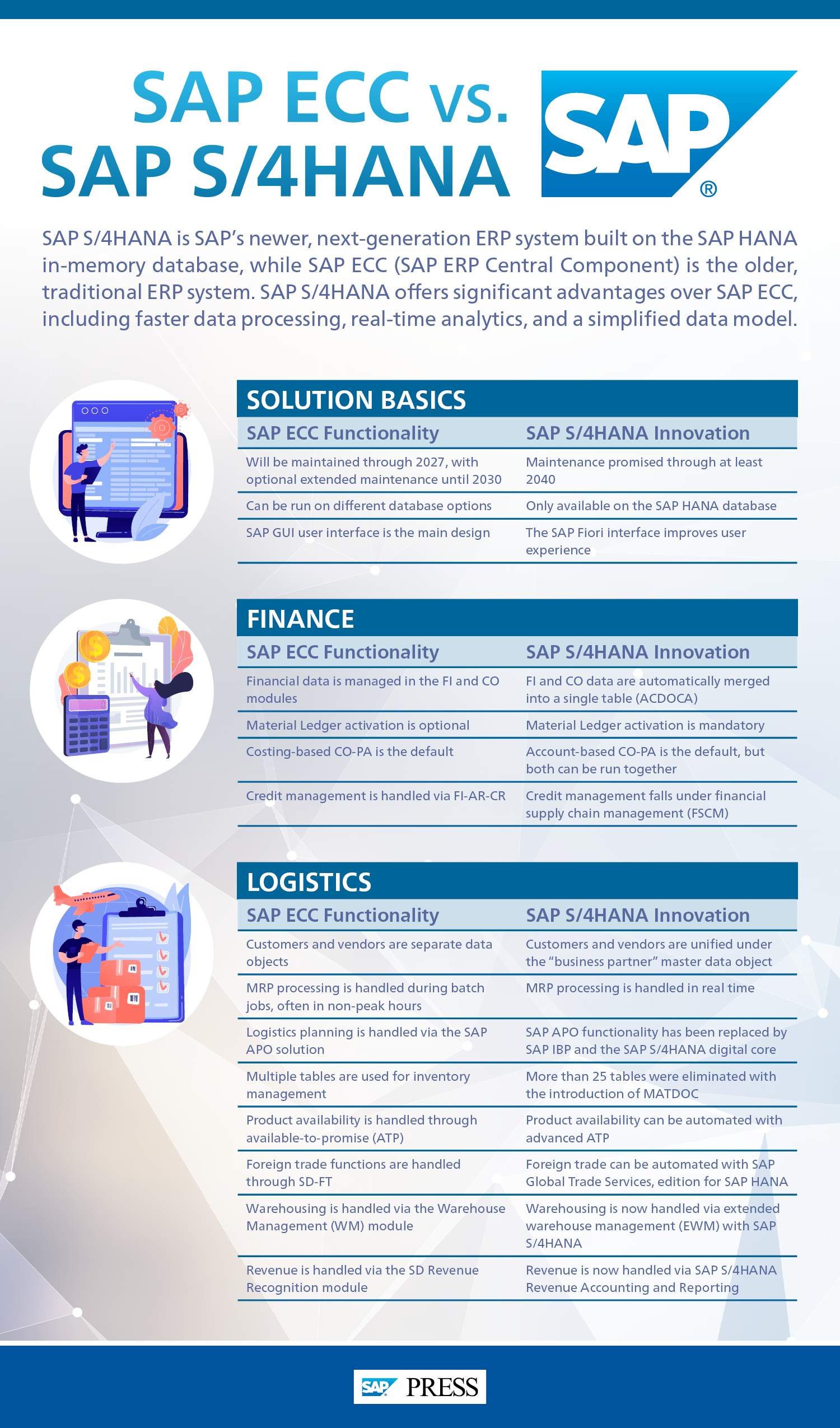
The most famous application of HANA is SAP S/4HANA, the latest generation of SAP's ERP software. Unlike previous versions (like SAP ECC), which could run on Oracle, DB2, or SQL Server, S/4HANA only runs on SAP HANA. This is because the software code is specifically optimized to take advantage of HANA’s in-memory speed and columnar structure.
Deployment Options in 2026
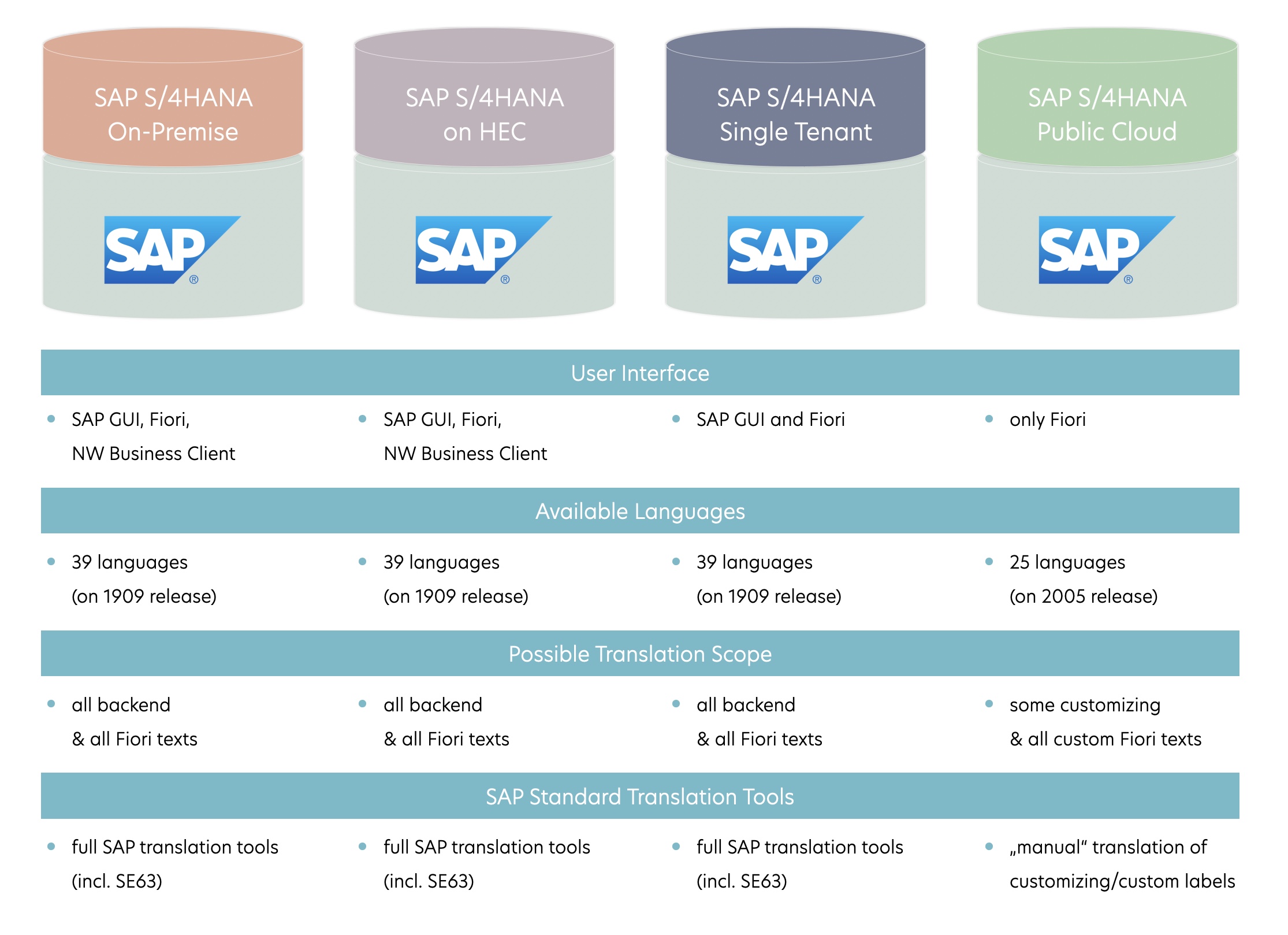
Businesses looking to implement SAP HANA have three primary paths:
- On-Premise (Appliance): The customer buys pre-configured hardware from partners like HPE, Dell, or Lenovo with SAP HANA pre-installed.
- On-Premise (TDI): Tailored Data Center Integration (TDI) allows customers to use their existing storage and network infrastructure, provided it meets SAP’s performance certifications.
- Cloud: This includes "RISE with SAP," where the database is managed by SAP on hyperscalers like AWS, Microsoft Azure, or Google Cloud.
Common Misconceptions About SAP HANA
- "It’s just a database": While it is a database, it is also an application server (via XS Advanced) and an integration hub. It can host web applications directly and connect to non-SAP data sources.
- "It’s too expensive": While RAM is more expensive than disk storage, the Total Cost of Ownership (TCO) is often lower because the database size is smaller (compression), management is simplified, and no separate data warehouse is needed for basic analytics.
- "It’s only for SAP data": SAP HANA is an open platform. Many companies use it as a high-performance sidecar to store and analyze data from custom applications, IoT sensors, and third-party systems.
Frequently Asked Questions
1. What does the "Appliance" part of HANA mean?
Originally, "Appliance" meant that SAP HANA was sold as a locked-down bundle of hardware and software. This was necessary because the performance was so dependent on specific CPU and RAM configurations. Today, while it is still available as an appliance, it is more commonly used as a cloud service or a software-defined database (TDI).
2. How does SAP HANA handle Big Data?
SAP HANA uses a "Data Lake" approach. It keeps the most critical, frequently accessed data in RAM. For massive datasets (petabytes) that are rarely accessed, it integrates with SAP HANA Cloud Data Lake or Hadoop-based systems, allowing users to query all data as if it were in one place.
3. Can I run SAP HANA on any hardware?
No. Because SAP HANA relies on extreme performance, it must run on certified hardware or certified virtual machine types on cloud providers. SAP provides a Certified and Supported SAP HANA Hardware Directory to ensure stability.
4. What is the difference between SAP HANA and SAP S/4HANA?
This is the most common point of confusion. SAP HANA is the database (the engine). SAP S/4HANA is the suite of business applications (the car) that runs on top of that database. You can have SAP HANA without S/4HANA, but you cannot have S/4HANA without SAP HANA.
5. Does SAP HANA support SQL?
Yes. SAP HANA is fully SQL-compliant. Developers can use standard SQL queries to interact with the data, and it supports standard interfaces like ODBC and JDBC for connecting to other software tools.
Summary and Next Actions
SAP HANA is the definitive engine of the modern enterprise. Its meaning has shifted from a specialized analytic tool to a comprehensive platform that enables companies to act in the moment. By combining in-memory speed, columnar efficiency, and advanced processing libraries, it allows for a "single version of the truth" across the entire organization.
Recommendations for Next Steps:
- For Professionals: If you are new to the ecosystem, consider the "SAP Certified Associate - SAP HANA" certification to validate your technical understanding.
- For Businesses: Conduct a Data Assessment to determine which parts of your landscape would benefit most from in-memory processing. If you are still on a legacy ERP, explore a migration to S/4HANA via the "RISE with SAP" program to leverage the full benefits of the HANA architecture.
- For Developers: Explore the SAP BTP Free Tier, which includes instances of SAP HANA Cloud, allowing you to build and test applications using real-time data processing for free.
Image Gallery