Driver Requirements for Listing on Auto Insurance Policy
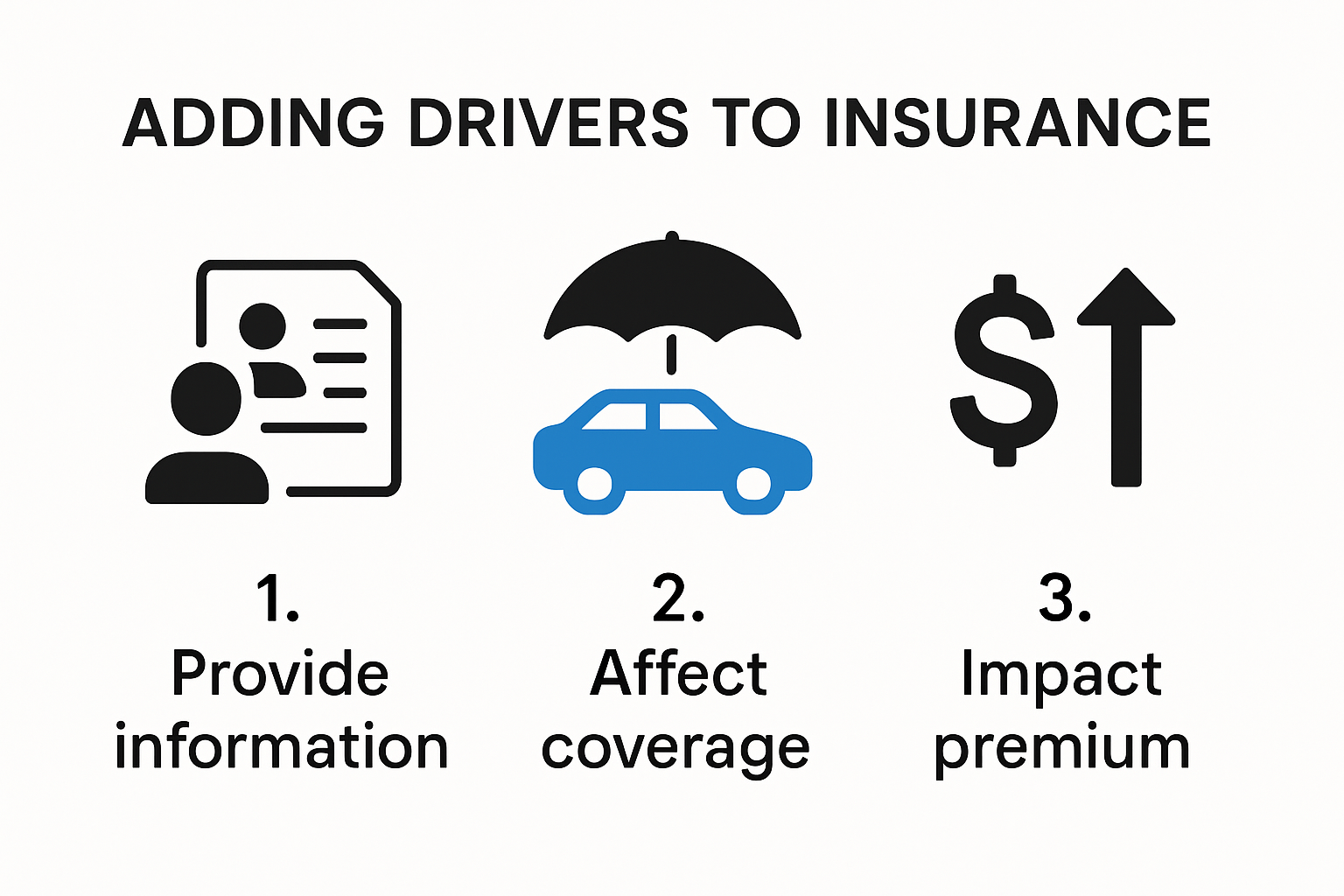
To list a driver on an auto insurance policy, insurers typically require their full legal name, date of birth, driver’s license number, and social security number. Requirements also include proof of residency or regular vehicle use. Al...
To list a driver on an auto insurance policy, insurers typically require their full legal name, date of birth, driver’s license number, and social security number. Requirements also include proof of residency or regular vehicle use. All household members of driving age must generally be listed or explicitly excluded to maintain valid coverage and avoid claim denials.
Contents
Understanding driver requirements for listing on an auto insurance policy is essential for maintaining legal compliance and ensuring financial protection. In 2026, insurance underwriting has become more sophisticated, utilizing real-time data integration to verify driver history, but the fundamental requirements for adding a driver remain anchored in risk assessment and contract law. Whether you are adding a teen driver, a spouse, or a long-term guest, failing to meet these requirements can lead to "material misrepresentation," a condition that allows insurers to void a policy or deny a claim after an accident.
Who Must Be Listed on an Auto Insurance Policy?
The primary rule followed by most insurance carriers in 2026 is that the policy must reflect the actual risk associated with the vehicle's operation. This means the insurer needs to know everyone who has regular access to the keys.
Household Residents
Standard personal auto policies (PAPs) require that all licensed drivers residing in your household be listed. This includes spouses, domestic partners, children of driving age, and even roommates. Insurers assume that if a person lives under your roof, they have constructive access to your vehicle. Even if a roommate has their own car and insurance, many carriers still require them to be listed as a "deferred" driver or an "insured non-operator" to account for the possibility of them using your vehicle in an emergency.
Regular Operators
A regular operator is someone who does not live in your household but uses your vehicle frequently. While "frequent" can be defined differently by various carriers, a common threshold is anyone who drives the car more than once a week or more than 12 to 15 times a year. This often applies to nannies, caregivers, or significant others who live elsewhere but commute using your vehicle or use it during visits.
Students Away at School
If you have a child who is away at college but returns home during breaks, they generally must remain listed on your policy. Some insurers offer "resident student" discounts if the school is more than 100 miles away and the student does not have a vehicle with them, but they are still considered a listed driver because they will operate the vehicle when visiting home.
Technical Documentation and Information Requirements
When you prepare to add a driver to your policy, you must provide specific data points that allow the insurer to pull "consumer reports" and "motor vehicle records" (MVRs). As of 2026, much of this is handled via encrypted digital portals, but the core data requirements remain consistent.
Personal Identification Data
- Full Legal Name: This must match the name on the individual’s government-issued identification.
- Date of Birth: Age is one of the most significant variables in actuarial risk; younger and older drivers typically carry higher premiums.
- Social Security Number (SSN): While not always mandatory, providing an SSN allows the insurer to more accurately run a credit-based insurance score, which can influence the rate in states where this practice is legal.
- Driver’s License Number and State: This is the primary key used to access the MVR.
Driving History and Risk Profile
The insurer will investigate the prospective driver’s history, usually looking back three to five years. You will be required to disclose (and the insurer will verify):
- Moving Violations: Speeding tickets, reckless driving, or failures to yield.
- At-Fault Accidents: Any collisions where the driver was more than 50% responsible.
- DUI/DWI Convictions: These are high-risk indicators that may require an SR-22 or FR-44 filing.
- License Status: The driver must have a valid, non-suspended, and non-revoked license.
Relationship to the Policyholder
You must define the relationship (e.g., child, spouse, ward, or unrelated). This helps the insurer determine if the individual has an "insurable interest" in the vehicle or if they fall under the standard household definitions.
Eligibility Standards and Underwriting Guidelines
Meeting the information requirements is only the first step. The driver must also meet the insurer’s specific underwriting guidelines to be successfully listed.
Licensing Status
The most basic requirement is a valid driver's license. If a household member has a learner's permit, they must still be disclosed to the insurance company. Most carriers do not charge an additional premium for a driver with a permit until they become fully licensed, but the disclosure is mandatory to ensure coverage begins the moment they pass their road test.
Age and Experience
Insurers look at "years of licensed driving experience." A 25-year-old who just received their first license may be rated similarly to a 16-year-old because they lack a documented history of safe driving. Conversely, elderly drivers may face additional scrutiny or requirements for medical self-certification in some jurisdictions to ensure they meet the safety standards for listed operators.
Impact of Telematics and Digital Verification
By 2026, many policies incorporate telematics—technology that monitors driving behavior via smartphone apps or plug-in devices. When adding a new driver, the insurer may require the new driver to install the carrier's monitoring app. The data collected (braking habits, speed, time of day) can influence the premium associated with that specific driver.
Comparing Driver Designations and Requirements
Not every person who drives your car needs to be listed in the same way. The following table outlines the different statuses an individual can hold on your policy.
| Driver Status | Description | Requirement | Premium Impact |
|---|---|---|---|
| Named Insured | The policy owner/vehicle owner. | Full disclosure & primary responsibility. | High (Base Rate) |
| Additional Listed Driver | Household members or regular operators. | Full MVR and personal data disclosure. | Variable (Based on risk) |
| Permissive User | Occasional users (e.g., a friend borrowing the car once). | No prior listing required; must have a valid license. | None (Unless an accident occurs) |
| Excluded Driver | A household member explicitly barred from driving. | Signed "Driver Exclusion Endorsement." | None (But NO coverage if they drive) |
| Deferred Driver | Household member with their own insurance. | Proof of other active insurance policy. | Minimal to None |
The Difference Between Listed Drivers and Permissive Use
One of the most common points of confusion in auto insurance is the distinction between a "listed driver" and "permissive use."
Permissive use is a provision in most auto policies that extends coverage to individuals who do not live with you and only use your car occasionally with your explicit permission. For example, if a friend borrows your truck to move furniture once a year, they are covered under permissive use.
However, if that friend starts borrowing the truck every Friday, they transition from a permissive user to a regular operator. If you do not list them as such, and an accident occurs, the insurer may argue that you concealed a regular risk. In 2026, insurance investigators use digital footprints and automated license plate recognition (ALPR) data to identify vehicles frequently parked at different residences, making it easier for carriers to spot unlisted regular operators.
The Consequences of Failing to Meet Listing Requirements
If you fail to list a driver who meets the household or regular operator criteria, you risk several severe consequences:
- Claim Denial: If an unlisted household member crashes the car, the insurer may deny the claim entirely, leaving you personally liable for damages and injuries.
- Policy Rescission: The insurer may void the policy back to its inception date for "material misrepresentation," effectively acting as if the insurance never existed.
- Rate Readjustment: If the insurer discovers an unlisted driver, they may back-bill you for the premium that should have been charged from the date that driver joined the household.
- Non-Renewal: Discovering unlisted drivers is a common reason for an insurance company to refuse to renew your policy at the end of the term.
Excluded Drivers: A Strategic Alternative
Sometimes, a household member has such a poor driving record (e.g., multiple DUIs or major accidents) that listing them would make your insurance premiums unaffordable or cause your policy to be canceled. In such cases, you may be able to use a Named Driver Exclusion.
By signing an exclusion endorsement, you and the insurance company agree that the specific individual is not covered under the policy under any circumstances. If the excluded driver operates the vehicle and gets into an accident, there is zero coverage—no collision coverage for your car and no liability coverage for the other party. In some states, driver exclusions are restricted or prohibited by law to ensure that there is always some level of victim compensation available.
Frequently Asked Questions
Do I need to list my roommate if they never drive my car?
Yes, most insurers require all licensed household residents to be disclosed. You can often list them as "deferred" or "insured elsewhere" by providing proof of their own insurance policy, which typically removes the premium impact while satisfying the disclosure requirement.
What happens if I forget to add a teen who just got their license?
You should notify your agent or carrier immediately. Most policies have a small window (often 30 days) to add a newly licensed driver. However, if an accident occurs before you notify the company, the claim could be scrutinized or denied based on the "all household members" clause.
Does adding a driver with a foreign license meet the requirements?
Yes, but it is more complex. Insurers will require the driver's foreign license details and may charge a higher rate until the driver obtains a state-issued license, as they cannot easily verify the driver's international MVR.
Can I list a driver who doesn't live with me?
Yes, if they are a "regular operator." If your significant other drives your car frequently but maintains a separate residence, listing them ensures that the "permissive use" ambiguity does not lead to a claim denial.
Are the requirements different for commercial auto policies?
Yes. Commercial policies often require a more stringent "Driver Agreement" and a review of the individual's commercial driving record. Employees must usually meet specific safety criteria set by the insurer's commercial underwriting department.
Practical Recommendations
To ensure your coverage remains intact, conduct a "household audit" every six months. Identify if any children have reached driving age, if roommates have moved in or out, or if anyone has started using your vehicle on a weekly basis. When adding a driver, have their driver's license and social security number ready to speed up the verification process. Always opt for full disclosure; while adding a high-risk driver may increase your premium, it is significantly less expensive than facing a six-figure lawsuit without insurance coverage due to a misrepresentation of your household's drivers.
Image Gallery