The Resilience of the Abyss: How Life Thrives at Deep-Sea Hydrothermal Vents
Life at deep-sea vents thrives through chemosynthesis, a biological process where specialized bacteria convert inorganic chemicals—primarily hydrogen sulfide—into organic energy. Unlike surface ecosystems powered by sunlight, these hig...
Life at deep-sea vents thrives through chemosynthesis, a biological process where specialized bacteria convert inorganic chemicals—primarily hydrogen sulfide—into organic energy. Unlike surface ecosystems powered by sunlight, these high-pressure, superheated environments rely on the Earth’s internal chemical energy to support complex communities, including giant tube worms, eyeless shrimp, and specialized crabs.
Contents
Deep-sea hydrothermal vents represent some of the most extreme environments on Earth, yet they host some of the planet's most productive ecosystems. Located primarily along mid-ocean ridges where tectonic plates pull apart, these vents act as geysers on the ocean floor. They discharge mineral-rich water heated by underlying magma to temperatures that can exceed 400°C (750°F). Despite the crushing pressure, total darkness, and toxic chemical cocktails, life here is not just surviving; it is flourishing.
The Geological Foundation of Vent Ecosystems
To understand how life thrives in such an alien environment, one must first understand the geological engine that powers it. Hydrothermal vents are formed when cold seawater (roughly 2°C) seeps through cracks in the ocean floor. As this water descends toward the mantle, it is heated by molten rock. This intense heat triggers chemical reactions that strip oxygen and magnesium from the water while loading it with minerals like iron, zinc, copper, and hydrogen sulfide.
The resulting fluid becomes buoyant and erupts back into the ocean. When the superheated, mineral-laden "vent fluid" hits the near-freezing seawater, the minerals precipitate out, often forming tall chimneys known as "black smokers." These structures provide the physical substrate for life and the chemical fuel necessary for the entire food web.
The discovery of these vents in 1977 near the Galápagos Rift fundamentally changed our understanding of biology. Prior to this, it was assumed that all life ultimately depended on the sun. The existence of thriving communities miles below the reach of any photon proved that life could decouple from the solar cycle, relying instead on the geothermal energy of the planet itself.
The Engine of Life: Chemosynthesis
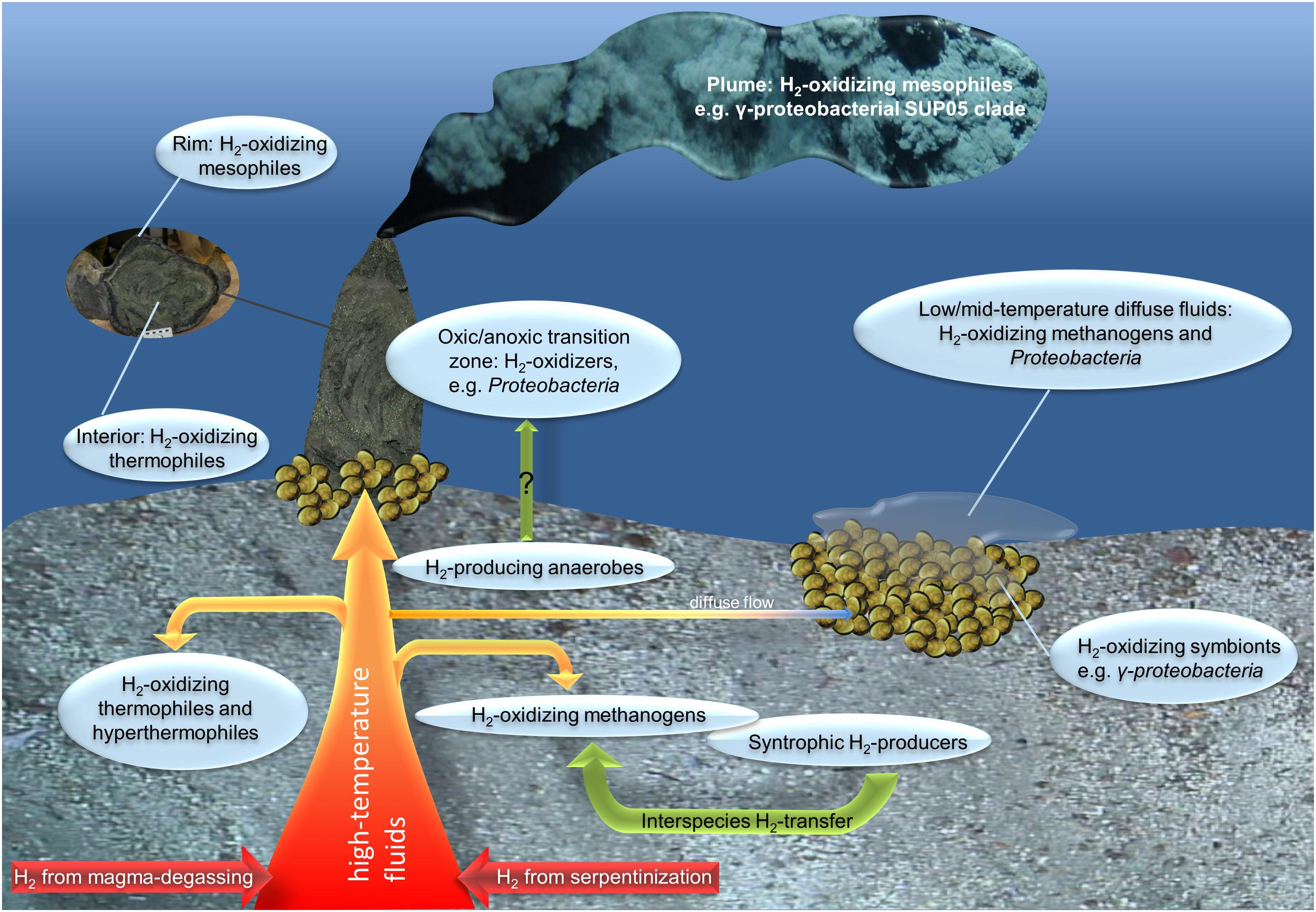
The primary reason life can exist at these depths is chemosynthesis. In the absence of sunlight, primary production—the conversion of inorganic carbon into organic matter—is carried out by lithotrophic (stone-eating) bacteria and archaea.
The Chemical Reaction
While photosynthesis uses light to split water and fix carbon dioxide into glucose, chemosynthesis uses the energy released from chemical reactions. The most common reaction at hydrothermal vents involves the oxidation of hydrogen sulfide ($H_2S$). The bacteria take the energy released by breaking these chemical bonds and use it to synthesize sugar from carbon dioxide and water.
This process is highly efficient but comes with a cost: hydrogen sulfide is incredibly toxic to most "normal" life forms because it interferes with mitochondrial respiration. Organisms living at the vents have evolved sophisticated physiological mechanisms to transport or neutralize these toxins, often turning them into the very fuel that sustains them.
Symbiosis: The Secret to Evolutionary Success
In the vent environment, the most successful organisms are those that have entered into a symbiotic relationship with chemosynthetic microbes. This partnership allows larger animals to access chemical energy that they cannot process on their own.
The Case of the Giant Tube Worm (Riftia pachyptila)
The giant tube worm is perhaps the most iconic resident of the deep-sea vent. These organisms can grow up to two meters long, yet they possess no mouth, no gut, and no anus. They are entirely dependent on billions of symbiotic bacteria living inside a specialized organ called the trophosome.
The tube worm uses its bright red plume—colored by a unique type of hemoglobin—to absorb oxygen, carbon dioxide, and hydrogen sulfide from the surrounding water. Its hemoglobin is specifically adapted to bind both oxygen and sulfide simultaneously without allowing the sulfide to poison its tissues. It transports these chemicals to the trophosome, where the bacteria perform chemosynthesis and provide the worm with the organic carbon it needs to grow at rates of up to 30 inches per year.
The Yeti Crab and Bacterial "Farming"
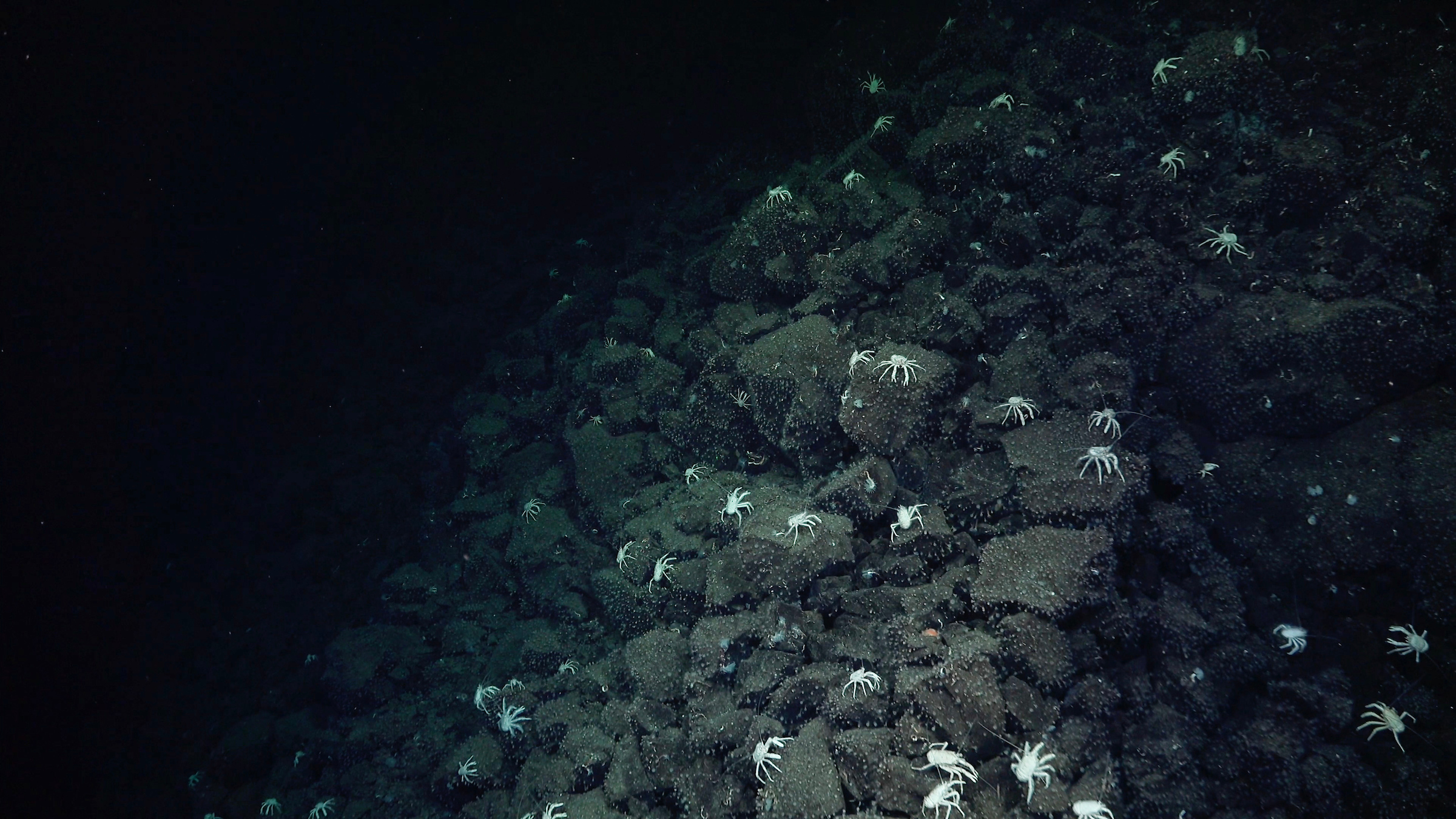
Another fascinating example of adaptation is the Yeti crab (Kiwa hirsuta). These crustaceans are covered in hair-like structures called setae on their claws and chests. These hairs are not for warmth; they serve as a substrate for growing mats of bacteria. The crab "farms" these microbes, waving its claws in the nutrient-rich vent flow to ensure the bacteria have enough chemicals to thrive. The crab then uses specialized mouthparts to scrape the bacteria off its hairs and consume them.
Comparing Biological Powerhouses: Photosynthesis vs. Chemosynthesis
The following table highlights the fundamental differences between the two primary methods of sustaining life on Earth as understood in 2026.
| Feature | Photosynthesis (Surface) | Chemosynthesis (Deep Sea) |
|---|---|---|
| Primary Energy Source | Solar Radiation (Photons) | Chemical Bonds (e.g., $H_2S$, $CH_4$) |
| Primary Producers | Plants, Algae, Cyanobacteria | Extremophile Bacteria and Archaea |
| Carbon Source | Atmospheric/Dissolved $CO_2$ | Dissolved $CO_2$ or Bicarbonate |
| Byproducts | Oxygen ($O_2$) | Solid Sulfur, Sulfates, or Water |
| Environment | Photic zone (top 200m of ocean) | Aphotic zone (Abyssal/Hadal depths) |
| Temperature Range | Typically -2°C to 45°C | 2°C to 122°C (for microbes) |
Biodiversity and Specialized Adaptations
Life at the vent is not just about the "primary producers" and their hosts. A complex ecosystem of scavengers and predators has evolved to fill every available niche.
- Vent Shrimp (Rimicaris exoculata): These shrimp often lack functional eyes in the traditional sense. Instead, they possess a specialized "dorsal eye" or light-sensitive organ on their backs that can detect the faint infrared glow emitted by the superheated vent water. This allows them to navigate near the hot fluid without being cooked.
- Thermophilic Microbes: Some archaea found at these vents are "hyperthermophiles," capable of reproducing at temperatures as high as 122°C. These organisms define the upper thermal limits of life.
- Zoarcid Fish: These top predators are eel-like fish that prowl the edges of the vent communities, feeding on snails, limpets, and small crustaceans. Their metabolism is significantly slower than surface fish, adapted for the high-pressure environment.
The Lifecycle of a Vent Community
Hydrothermal vents are not permanent features. They are ephemeral, often lasting only decades before the underlying volcanic plumbing shifts and the vent "shuts off." When a vent dies, the source of hydrogen sulfide disappears, and the entire community—the tube worms, the crabs, the specialized bacteria—perishes.
This raises a significant biological question: How does life find a new vent? Deep-sea vents are like islands in a vast, cold desert. Scientists have observed that vent larvae can travel hundreds of miles using deep-ocean currents. Some species use "whale falls" (carcasses of dead whales) or sunken driftwood as stepping stones, where decomposing organic matter creates a temporary sulfide-rich environment that allows vent-adjacent species to survive while searching for a new geological vent.
Scientific Significance and the Search for Extra-Terrestrial Life
The study of life at deep-sea vents has profound implications for 2026 and beyond. First, it offers clues about the origin of life on Earth. Many scientists believe that the first self-replicating molecules may have formed in the mineral-rich, energy-dense environments of hydrothermal vents rather than in a "primordial soup" on the surface.
Second, these ecosystems are the primary models for astrobiology. Icy moons in our solar system, such as Jupiter’s Europa and Saturn’s Enceladus, are known to have subsurface oceans and likely have hydrothermal activity on their rocky seafloors. If life can thrive in the dark, high-pressure depths of Earth's oceans without sunlight, it is highly probable that similar life exists elsewhere in the universe.
Modern Threats and Conservation
As we move through 2026, the primary threat to these unique ecosystems is deep-sea mining. Hydrothermal vents create massive sulfide deposits rich in copper, gold, silver, and rare earth minerals essential for green energy technologies. However, the destruction of these vents could lead to the extinction of species we are only beginning to understand. International bodies, such as the International Seabed Authority (ISA), are currently navigating the complex legal and environmental framework required to balance mineral demand with the preservation of these biological "hotspots."
FAQs
What happens to vent life if the vent stops flowing?
When the geological activity shifts and the flow of mineral-rich water stops, the chemosynthetic bacteria lose their energy source and die. Without the bacteria, the symbiotic organisms like tube worms starve. The community quickly collapses, leaving behind "ghost chimneys" of mineral deposits and empty shells.
How do vent animals survive the extreme pressure?
Deep-sea organisms do not have air-filled spaces like lungs that would collapse under pressure. Their bodies are composed mostly of water and incompressible solids. On a cellular level, they have specialized proteins and "piezolytes"—small molecules that prevent their cell membranes and enzymes from being crushed or deactivated by high pressure.
Is it true that some vent water is hot enough to melt lead?
Yes. Water exiting "black smoker" chimneys can reach temperatures over 400°C (750°F). However, because of the extreme pressure at those depths (over 250 atmospheres), the water does not boil; it stays in a liquid or "supercritical" state.
How was life at deep-sea vents first discovered?
It was discovered in 1977 by researchers using the submersible Alvin at the Galápagos Rift. Scientists were expecting to find a barren seafloor but instead found a lush "oasis" of life. This remains one of the most significant biological discoveries of the 20th century.
Can humans visit hydrothermal vents?
Direct human visits are rare and restricted to specialized research submersibles like Alvin or Jiaolong. Most modern exploration is conducted via Remotely Operated Vehicles (ROVs) or Autonomous Underwater Vehicles (AUVs) which can stay submerged for much longer periods to collect data and samples.
Practical Recommendation
For those interested in the future of deep-sea biology, the most critical next step is to follow the proceedings of the International Seabed Authority (ISA) regarding the Mining Code. As of 2026, the regulations surrounding the extraction of minerals from vent sites are at a critical junction. Supporting marine protected areas (MPAs) that specifically include hydrothermal vent fields is essential for ensuring that these evolutionary laboratories remain intact for future generations.
Image Gallery