Why a Supercar Crash Tests Auto Insurance Limits
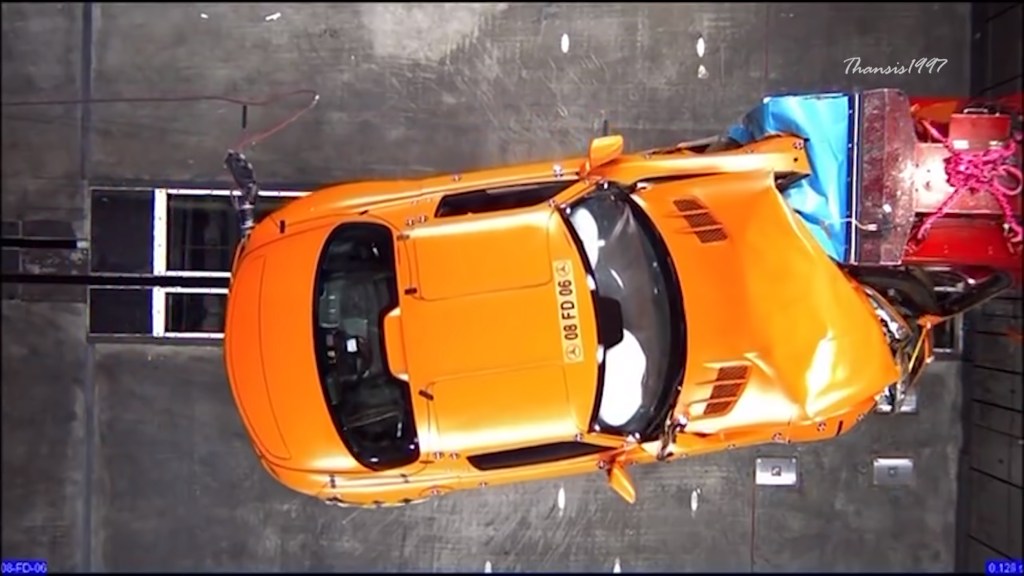
A supercar crash tests auto insurance limits because standard consumer policies max out far below the multi-million-dollar replacement costs, specialized parts expenses, and extreme third-party liability liabilities inherent to ultra-h...
A supercar crash tests auto insurance limits because standard consumer policies max out far below the multi-million-dollar replacement costs, specialized parts expenses, and extreme third-party liability liabilities inherent to ultra-high-performance vehicles.
Contents
The intersection of extreme automotive engineering and personal finance creates a distinct set of challenges for vehicle owners. When a standard automobile is involved in a severe accident, the financial ecosystem established by mainstream auto insurance carriers is typically equipped to handle the damages. However, the dynamics shift fundamentally when the vehicle in question is a modern hypercar or supercar. Vehicles engineered by manufacturers such as Bugatti, Ferrari, Koenigsegg, McLaren, or Pagani introduce replacement costs, repair logistics, and liability exposures that routinely shatter the financial boundaries of standard insurance policies.
Understanding why a supercar crash tests auto insurance limits requires a deep dive into the specialized economics of high-end automotive underwriting, the astronomical cost of exotic components, the complexities of specialized logistics, and the rigorous legal frameworks governing liability. For owners, brokers, and underwriters, navigating these risks demands specialized financial products that transcend conventional auto coverage.
The Anatomy of Supercar Valuation and Underwriting
Standard auto insurance policies are built on actuarial tables derived from mass-market vehicle data. Underwriters evaluate risk based on historical crash frequencies, average repair costs, driver demographics, and safety ratings of conventional sedans, SUVs, and standard sports cars. When a policy is written for a supercar, standard actuarial models break down due to low sample sizes and extreme financial variance.
Agreed Value Versus Actual Cash Value
Most standard auto policies operate on Actual Cash Value (ACV), which accounts for depreciation over time. In contrast, supercars and limited-production exotics often appreciate or retain their value differently due to scarcity, historical significance, or bespoke specifications.
- Actual Cash Value Pitfalls: If a standard policy assesses a vehicle's value based on depreciation schedules, a total loss payout will fall catastrophically short of the market price required to replace a rare vehicle.
- Stated Amount Policies: Many standard carriers utilize stated amount clauses, which cap payouts at a pre-determined limit that may no longer reflect current market appreciation.
- Agreed Value Contracts: High-net-worth insurers require agreed value contracts, where the insurer and the insured agree upon a fixed valuation at the inception of the policy. Even with agreed value, the sheer size of the payout—often ranging from $300,000 to well over $3,000,000—immediately strains standard policy limits.
High-Net-Worth Underwriting Criteria
Because of the disproportionate financial risk, underwriting a supercar is closer to insuring commercial property or fine art than writing a standard personal auto policy. Underwriters evaluate the owner's overall net worth, driving history, collection size, and security infrastructure. Specialized high-net-worth carriers often require telematics, secure climate-controlled storage facilities, and proof of advanced driver training before agreeing to bind coverage.
Specialized Engineering and the Cost of Components
The primary driver of severe repair bills—and the reason a minor fender bender can result in a six-figure claim—lies in the exotic materials and specialized manufacturing techniques required to build modern supercars.
Carbon Fiber Monocoques and Structural Integrity
Unlike mass-market vehicles built on stamped steel unibody frames, most modern supercars utilize carbon fiber monocoques or aluminum space frames. Carbon fiber is chosen for its exceptional strength-to-weight ratio and torsional rigidity, but it possesses unique damage-tolerance characteristics.
- Non-Repairability: Unlike steel or aluminum, which can often be straightened, sectioned, and welded, structural carbon fiber cannot typically be repaired once compromised. A localized impact that causes micro-fractures in the resin matrix or weaves of a monocoque often necessitates the complete replacement of the structural tub.
- Factory-Only Procedures: Replacing a carbon fiber tub is not a task for a local collision repair center. The powertrain, suspension, and electronics must be completely stripped from the chassis, and the vehicle frequently must be shipped back to the factory in Maranello, Woking, or Sant'Agata Bolognese.
Proprietary Metallurgy and Powertrains
Supercar engines and drivetrains feature exotic alloys, titanium components, and hand-built precision tolerances. A blown engine or damaged transmission casing resulting from a low-speed impact can easily surpass $100,000 in parts alone. Furthermore, specialized diagnostic equipment and proprietary software—accessible only to factory-certified technicians—inflate labor costs far beyond standard hourly repair rates.
| Component / Expense Category | Standard Vehicle Average | Supercar / Hypercar Average | Impact on Insurance Limits |
|---|---|---|---|
| Chassis Material | Stamped Steel / Aluminum | Carbon Fiber Monocoque | Forces complete structural replacement rather than localized repair. |
| Front Bumper Assembly | $800 – $2,500 | $15,000 – $50,000 | Consumes a significant fraction of standard property damage limits. |
| Paint and Finishing | Standard factory clear coat | Multi-layer bespoke tints / exposed carbon | Requires specialized cleanrooms and master technicians. |
| Logistics and Transport | Local tow truck | Enclosed air-ride trailer to factory | Adds thousands in transport and customs fees for international transit. |
Third-Party Liability and Catastrophic Exposure
While physical damage to the insured vehicle (collision coverage) represents a massive financial exposure, third-party liability is where a supercar accident truly threatens to bankrupt standard auto insurance limits.
Property Damage and Public Infrastructure
Standard personal auto policies frequently carry property damage liability limits of $50,000, $100,000, or perhaps $250,000. While these limits are generally sufficient for collisions involving conventional vehicles, they are dangerously inadequate when a high-performance vehicle loses control on public roads.
- A multi-vehicle pileup caused by excessive speed or loss of control can easily result in total property damage exceeding hundreds of thousands of dollars.
- Striking commercial property, high-end storefronts, or municipal infrastructure can trigger massive subrogation claims from corporate entities and city governments.
Bodily Injury and Litigation Risks
The human toll of a severe accident involving a high-speed vehicle can result in catastrophic injuries or fatalities. When a wealthy individual or executive is involved in an accident with a supercar, plaintiffs' attorneys often target the driver and owner with aggressive lawsuits, assuming deep pockets and substantial assets.
- Standard liability limits of $250,000 or $500,000 are exhausted almost immediately in catastrophic injury litigation.
- Medical bills, long-term rehabilitation, lost earning capacity, and pain and suffering awards routinely reach millions of dollars, exposing the owner's personal assets—such as homes, savings accounts, and business investments—to direct seizure or court-mandated judgments.
The Role of Excess Liability and Umbrella Policies
To bridge the chasm between standard policy caps and the true financial exposure of owning a high-performance exotic, vehicle owners must utilize specialized high-net-worth insurance structures.
Personal Umbrella Policies and Underlying Limits
A personal umbrella policy provides an extra layer of liability protection over and above standard auto and homeowners insurance policies. However, underwriters of umbrella policies typically require strict underlying limits—often $500,000 on primary auto policies—before they will extend coverage. Furthermore, standard umbrella policies may contain exclusions for exotic or high-performance vehicles, or they may cap coverage based on vehicle horsepower and top speed.
Specialized High-Net-Worth Carriers
Specialized insurers—such as Chubb, PURE, Cincinnati Insurance, and AIG Private Client—understand the unique risk profile of exotic car collections. These carriers offer tailored policies that combine:
- Agreed Value Coverage: Eliminating disputes over depreciation during a total loss.
- Higher Liability Limits: Providing primary and excess liability limits ranging from $5,000,000 to $50,000,000 or more.
- Worldwide Coverage Extensions: Ensuring protection during international track days, rallies, or transport.
- OEM Parts Guarantees: Mandating that repairs are performed using original equipment manufacturer parts by factory-authorized technicians.
Common Misconceptions Regarding Exotic Car Insurance
Many first-time exotic car buyers make critical errors when structuring their insurance portfolios, assuming that standard consumer-facing insurance products will adapt to their new asset class.
Assuming Standard Policies Apply Universally
A common pitfall is adding a newly purchased supercar to an existing multi-car family policy alongside commuter sedans. Standard personal lines carriers often have internal underwriting guidelines that automatically prohibit vehicles exceeding a specific horsepower threshold or market value. If an accident occurs while a vehicle is misclassified or underinsured, the carrier may deny coverage entirely for material misrepresentation or breach of contract.
Overlooking Track Day Exclusions
Most standard and even many high-end auto policies contain strict exclusions for timed events, competitive driving, racing, and high-performance driver education (HPDE) track days. Owners who take their supercars onto closed circuits without specialized track day insurance or a policy endorsement discover too late that a high-speed crash on a racetrack is entirely uninsured.
Frequently Asked Questions
Why do standard auto insurance policies fail to cover supercar accidents adequately?
Standard auto insurance policies are designed around mass-market actuarial data, capping property damage and liability limits at levels sufficient for ordinary vehicles. They rely on actual cash value rather than agreed value, and their standard repair guidelines cannot accommodate the specialized engineering, carbon fiber replacement costs, and international freight required for exotic cars.
What is the difference between Actual Cash Value and Agreed Value?
Actual Cash Value (ACV) deducts depreciation from the vehicle's market worth at the time of the loss, often resulting in a payout far below market replacement cost. Agreed Value is a predetermined sum established when the policy is written, ensuring that the owner receives the full insured amount in the event of a total loss without depreciation disputes.
How do carbon fiber monocoques impact the cost of insurance claims?
Carbon fiber structural components cannot be straightened or patched like steel or aluminum. When structural damage occurs, the entire chassis tub often must be replaced, requiring the vehicle to be disassembled and shipped back to the manufacturer, driving repair costs into hundreds of thousands of dollars.
Do standard umbrella policies cover high-performance supercar liabilities?
Many standard personal umbrella policies feature exclusions for high-performance vehicles, exotic cars, or vehicles exceeding specific horsepower limits. High-net-worth owners typically require specialized umbrella policies that explicitly schedule their exotic vehicles and provide multi-million-dollar limits.
Are track days and high-performance driving events covered by standard auto insurance?
No. Nearly all standard personal auto insurance policies explicitly exclude coverage for accidents that occur on race tracks, during timed events, or at high-performance driving education schools. Owners must purchase specialized track-day insurance riders for coverage during circuit driving.
Practical Next Actions for Exotic Vehicle Owners
Securing appropriate coverage for a high-performance vehicle requires a proactive, professional approach. Owners should immediately review their existing declarations pages to verify underlying liability limits and confirm whether their insurer officially recognizes and covers exotic vehicle classes. Consulting an independent broker specializing in high-net-worth private client services is essential to establish an agreed-value policy backed by robust excess liability limits and genuine OEM repair guarantees, ensuring that a single incident on the road does not compromise personal financial security.
Image Gallery