Understanding Insurance Requirements for Leased Vehicles
Leased cars do not come with built-in auto insurance, meaning lessees are legally required to purchase their own comprehensive and collision coverage before driving the vehicle off the dealership lot. While dealerships retain ownership...
Leased cars do not come with built-in auto insurance, meaning lessees are legally required to purchase their own comprehensive and collision coverage before driving the vehicle off the dealership lot. While dealerships retain ownership of the car throughout the lease term, standard consumer lease agreements obligate the driver to maintain high-limit liability, collision, and comprehensive insurance policies to protect the physical asset against damage, theft, and liability claims.
Contents
Navigating the financial and legal obligations of vehicle financing often brings up fundamental questions about ownership responsibilities. When an individual enters into a car lease agreement, they are essentially renting the vehicle from a leasing company or financial institution for a set period, typically between 24 and 36 months. Because the leasing company remains the legal owner of the title, they have a vested financial interest in ensuring the vehicle is fully protected against physical damage, total loss, and third-party liability claims. Consequently, securing appropriate auto insurance coverage is a mandatory prerequisite for taking delivery of any leased automobile.
The Fundamental Mechanics of Leased Car Insurance
When acquiring a vehicle through a traditional purchase or auto loan, the owner dictates their preferred level of risk exposure. If a vehicle is fully paid off, state minimum liability insurance is often the only legal requirement. However, leased vehicles operate under a completely different paradigm. Because the leasing company retains ownership, their primary objective is to safeguard their capital asset from depreciation, accidents, total loss, and uninsured motorists.
To achieve this protection, leasing contracts stipulate strict minimum coverage limits that far exceed standard state-mandated minimums. A lessee cannot simply rely on basic liability insurance. They must secure a comprehensive policy that lists the leasing company as an "additional insured" or "loss payee." This designation ensures that in the event of a major accident or total write-off, insurance payouts are directed first to the financial institution to satisfy the remaining balance of the vehicle's value, rather than directly to the driver.
Understanding this distinction prevents costly misunderstandings at the dealership. Drivers transitioning from a financed or owned vehicle to a lease must contact their insurance provider before signing the paperwork to adjust their policy limits and add the leasing company's mandatory loss payee clauses. Failure to do so can delay vehicle delivery or result in default on the lease contract.
Mandatory Coverage Types Required for Leased Vehicles
Leasing companies enforce stringent insurance requirements to shield themselves from financial loss. While exact coverage limits vary depending on the lessor (such as captive finance companies like Ford Credit or Toyota Financial Services, or independent banks), standard lease agreements universally mandate three core types of coverage.
Liability Insurance (Bodily Injury and Property Damage)
Liability insurance covers injuries to other people and damage to their property when the lessee is at fault in an accident. Lease agreements typically require much higher liability limits than state minimums. A common requirement is 100/300/50, which translates to:
- $100,000 for bodily injury per person.
- $300,000 for bodily injury per accident total.
- $50,000 for property damage per accident.
Failing to maintain these high thresholds violates the lease contract, giving the leasing company the right to repossess the vehicle or force-place expensive insurance coverage on the driver's behalf.
Comprehensive Coverage
Comprehensive insurance protects the leased vehicle against non-collision-related incidents. This includes theft, vandalism, fire, animal strikes (such as hitting a deer), falling tree branches, windshield cracks, and weather events like hail, floods, or hurricanes. Because the leasing company owns the car, they require this coverage to ensure that acts of nature or criminal activity do not completely wipe out the value of their asset without financial recourse.
Collision Coverage
Collision coverage pays for repairs to the leased vehicle if it is damaged in a crash with another vehicle or stationary object, regardless of fault. Whether the driver slides into a guardrail on an icy road or is rear-ended in heavy traffic, collision coverage ensures the vehicle is repaired back to its factory specifications using approved parts.
| Coverage Type | What It Protects Against | Typical Lease Requirement |
|---|---|---|
| Liability | Injuries and property damage caused to others | High limits (e.g., $100k/$300k/$50k) |
| Comprehensive | Theft, vandalism, weather, fire, animal strikes | Mandatory (usually with low deductibles) |
| Collision | Accidents with other cars or stationary objects | Mandatory (usually with low deductibles) |
| Gap Insurance | The financial gap between actual cash value and loan balance | Frequently mandatory or included by lessor |
The Critical Role of Gap Insurance in Leased Vehicles
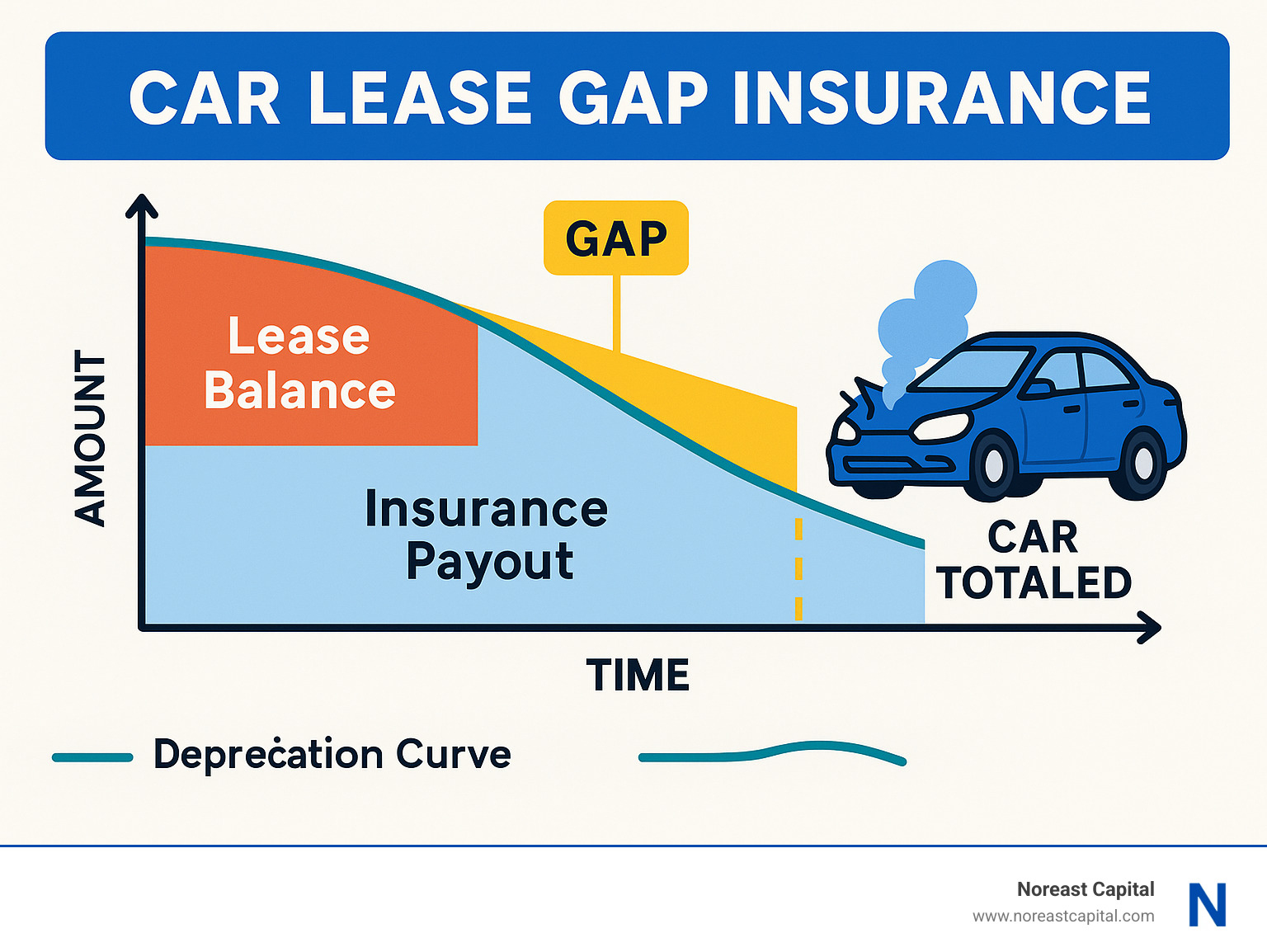
One of the most vital financial safeguards associated with a leased vehicle is Guaranteed Asset Protection (GAP) insurance. New cars experience rapid depreciation, often losing 20% to 30% of their value within the first year of ownership.
If a leased car is totaled in a severe accident or stolen and never recovered early in the lease term, standard auto insurance only pays out the Actual Cash Value (ACV) of the vehicle at the time of the loss. Because the ACV is often lower than the remaining payoff amount on the lease agreement, a significant financial shortfall can occur.
For example, if the remaining lease balance is $28,000, but the insurance company values the totaled car at $23,000, the driver would owe a $5,000 out-of-pocket balance to the leasing company. GAP insurance covers this exact difference. Many leasing companies automatically include GAP protection within the lease acquisition fee or monthly payment, but drivers must verify this. If it is not included, the lessee must purchase GAP coverage through their auto insurance provider or run the risk of immense debt over a car they no longer drive.
Financial Responsibilities and Cost Considerations
Insuring a leased vehicle is frequently more expensive than insuring an older, paid-off car. Several distinct factors drive these costs higher:
- Newer Vehicle Value: Leases are almost exclusively for brand-new or late-model used cars with advanced safety technology, expensive sensors, aluminum body panels, and complex electronics. Repairing these components after a minor fender-bender costs significantly more than fixing older vehicles, which raises insurance premiums.
- Higher Policy Limits: Because lessors require elevated liability limits and low deductibles (often $500 or $1,000 maximum), the baseline cost of the policy increases.
- Mandatory Full Coverage: A driver cannot opt out of comprehensive or collision coverage to save money, a strategy sometimes used by owners of older cars.
Lessee budgeting must account for these elevated insurance premiums alongside the monthly lease payment, routine maintenance, and local registration fees. Shopping around for competitive quotes from multiple national and regional insurers before visiting the dealership is essential for securing manageable monthly expenses.
What Happens If You Fail to Insure a Leased Car?
Failing to maintain continuous, compliant auto insurance on a leased vehicle triggers severe contractual penalties. Insurance companies routinely notify the leasing company if a policy lapses, is canceled for non-payment, or falls below the agreed-upon coverage limits.
Once notified, the leasing company will typically enact force-placed insurance (also known as creditor-placed insurance). This is a policy purchased by the lessor to protect their financial interest in the vehicle. Force-placed insurance comes with several severe drawbacks:
- Significantly Higher Rates: Force-placed premiums are often double or triple the cost of standard consumer-purchased auto insurance.
- Limited Protection: Force-placed insurance generally only protects the leasing company's asset. It usually does not provide liability coverage for bodily injury, property damage, or personal injury protection for the driver, leaving the motorist legally exposed.
- Contract Default: Force-placed insurance is treated as a breach of the lease agreement, which can lead to immediate vehicle repossession and severe damage to the consumer's credit score.
Frequently Asked Questions
Can I use the same auto insurance company I already have for a new lease?
Yes. In most cases, you can keep your existing insurance provider when leasing a vehicle. You simply need to contact your agent before picking up the car to update the policy, adjust the coverage limits to meet the lessor's requirements, and add the leasing company as a loss payee or additional insured.
Is GAP insurance always included in a car lease?
Not always. While many captive finance companies include GAP protection automatically in their lease contracts, third-party leasing institutions and banks may exclude it. It is critical to review the lease contract carefully and purchase separate GAP coverage from your auto insurer if it is not explicitly provided.
What deductible levels do leasing companies prefer?
Leasing companies typically require deductibles of no more than $500 or $1,000 for both comprehensive and collision coverage. High deductibles (such as $2,000 or $2,500) are generally prohibited because they increase the financial risk that a lessee might skip necessary vehicle repairs after an accident.
What is a "loss payee" clause, and why do leasing companies require it?
A loss payee clause designates the leasing company as the primary beneficiary for physical damage insurance payouts. If the car is totaled or stolen, the insurance payout goes directly to the leasing company to clear the outstanding balance, ensuring they recover their capital investment before any remaining funds are distributed to the driver.
Does a leased car require personal injury protection (PIP)?
Personal injury protection requirements depend entirely on the state where the vehicle is registered, rather than the lease agreement itself. In "no-fault" insurance states, PIP is legally mandatory for all registered vehicles, regardless of whether they are owned, financed, or leased.
Next Actions and Practical Recommendations
Before signing a lease agreement, obtain a written copy of the lessor's specific insurance guidelines. Contact your current insurance carrier to run a quote using the Vehicle Identification Number (VIN) of the target car, ensuring you account for high liability limits and GAP protection. Keeping your policy active, updating your loss payee information promptly, and maintaining clean driving records will ensure a smooth, compliant leasing experience from pickup to vehicle return.
Image Gallery