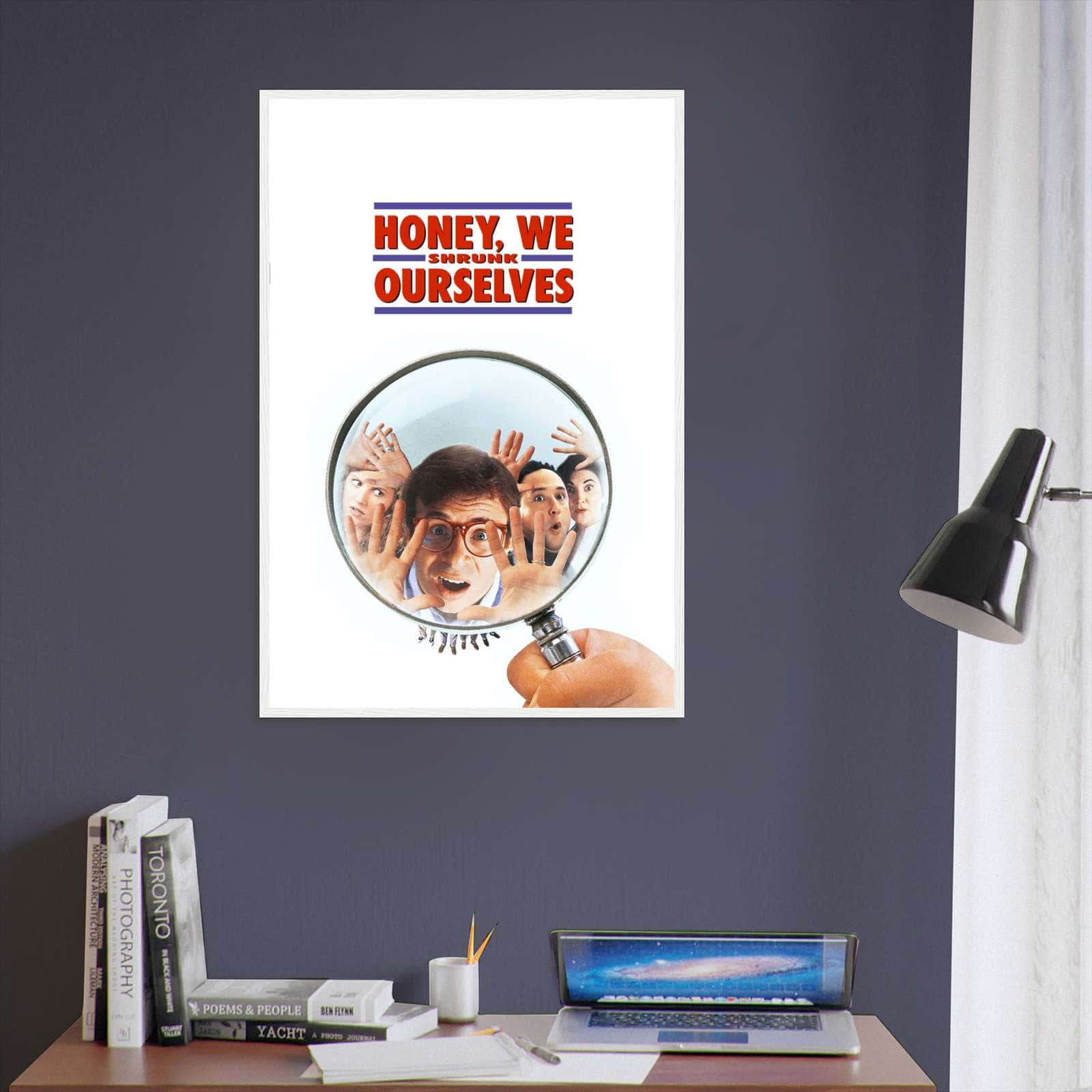
Why the Honey, We Shrunk Ourselves Story Matters
The story of Honey, We Shrunk Ourselves matters because it represents a pivotal shift in Disney’s distribution strategy as its first live-action direct-to-video feature, while serving as the final live-action performance of Rick Morani...
The story of Honey, We Shrunk Ourselves matters because it represents a pivotal shift in Disney’s distribution strategy as its first live-action direct-to-video feature, while serving as the final live-action performance of Rick Moranis before his long hiatus. Narratively, it concludes the Szalinski trilogy by flipping the franchise’s power dynamics, forcing parents to literally and figuratively see the world from their children’s perspective.
Contents
The Historical Context: A Milestone in Home Media
To understand why Honey, We Shrunk Ourselves (1997) holds significance in 2026, one must look at the landscape of the late 1990s film industry. During this era, the "Direct-to-Video" (DTV) label was often synonymous with low-quality "mockbusters" or cheap animation. However, Disney chose this film to be its vanguard for high-quality, live-action DTV sequels.
This move was a calculated business experiment. Following the massive success of animated DTV sequels like The Return of Jafar, Disney sought to determine if live-action franchises could sustain profitability without the massive overhead of a theatrical release. By bypassing cinemas, the studio saved millions in marketing and distribution costs while capitalizing on the booming rental market of the time. This paved the way for the modern "streaming original" model we see today. The film proved that a recognizable brand and a returning lead actor could drive significant revenue through home sales alone, fundamentally changing how studios viewed the longevity of their intellectual properties.
The Rick Moranis Legacy: A Quiet Farewell
Perhaps the most poignant reason the story matters is its place in the career of Rick Moranis. In the late 20th century, Moranis was the quintessential "everyman" nerd, a comedic powerhouse who brought heart to high-concept sci-fi. Honey, We Shrunk Ourselves marked his final live-action appearance for over two decades.
The story’s focus on parental responsibility and the struggle to connect with growing children mirrored Moranis’s real-life transition. Shortly after the film's release, Moranis stepped away from the spotlight to focus on raising his children following the passing of his wife. When we watch Wayne Szalinski in this film—a man who is literally shrinking away from his responsibilities and his children’s lives—there is an unintended but powerful subtext. Moranis’s performance remains grounded and sincere, ensuring that the film isn't just a collection of visual gags, but a legitimate character study of a father trying to bridge a widening generational gap.
The Narrative Flip: Shrinking the Adults
While the first film focused on the wonder and terror of childhood from a bug's-eye view, and the second dealt with the chaos of an oversized toddler, the third film focuses on the parents. By shrinking Wayne and Diane Szalinski, along with Gordon and Patti, the story forces a confrontation between the "authority figures" and the "subjects" of their parenting.
Seeing Through a Child's Eyes
The central conflict of the film isn't just surviving the household hazards; it is the parents listening to their children’s unfiltered conversations. This narrative device allows the parents to realize that their children are becoming independent individuals with their own anxieties and secrets.
- The Secret Party: The parents observe their kids throwing a party, which serves as a catalyst for realizing they have been too overbearing or disconnected.
- The Health Scare: Wayne overhears his son’s concerns about his own health and interests, leading to a much-needed emotional reconciliation once they return to normal size.
- The Power Shift: For the first time in the trilogy, the children are the protectors and the adults are the vulnerable ones. This reversal of roles is a classic storytelling trope that highlights the necessity of mutual respect in a family unit.
The Subtext of Aging and Obsolescence
In 2026, we can view the film’s themes of technological obsession through a modern lens. Wayne Szalinski is a man obsessed with his inventions, often to the detriment of his interpersonal relationships. His shrinking is a physical manifestation of his shrinking influence over his family as his children grow older. The story matters because it addresses the universal fear of becoming "small" or irrelevant in the eyes of those we love.
Technical Execution and the Dean Cundey Influence
Despite being a DTV release, the film was directed by Dean Cundey, the legendary cinematographer behind Jurassic Park, Back to the Future, and The Thing. Cundey’s involvement is a major reason the film’s "story" remains visually effective. He brought a level of technical sophistication to the project that was rarely seen in non-theatrical releases.
The use of oversized sets rather than just digital compositing gave the film a tactile, "real" feeling. Even in 2026, where CGI can create anything, the physical presence of a giant Hot Wheels track or a massive bubble bath provides a sense of scale that resonates more deeply than purely digital effects. The film stands as a testament to the era of "practical-first" filmmaking, where the limitations of the medium forced creative solutions that enhanced the storytelling.
Comparative Analysis of the "Honey" Trilogy
The following table illustrates how the focus and distribution of the franchise evolved, highlighting why the third installment was a radical departure from its predecessors.
| Feature | Honey, I Shrunk the Kids (1989) | Honey, I Blew Up the Kid (1992) | Honey, We Shrunk Ourselves (1997) |
|---|---|---|---|
| Primary Target | The Kids (Shrunk) | The Toddler (Enlarged) | The Adults (Shrunk) |
| Release Type | Theatrical | Theatrical | Direct-to-Video |
| Core Theme | Survival and Adventure | Responsibility and Chaos | Communication and Perspective |
| Visual Style | Practical Sets / Macro-Photography | Forced Perspective / Blue Screen | Hybrid Practical and Early Digital |
| Director | Joe Johnston | Randal Kleiser | Dean Cundey |
| Narrative Goal | Returning Home | Containing the Giant | Reconnecting with Children |
Why the Story Matters for Modern Audiences in 2026
As we look back from 2026, the film serves as a time capsule of 1990s family dynamics and the dawn of the digital home-entertainment era. It reminds us that the "scale" of a story isn't determined by its budget or the size of the screen it's viewed on, but by the emotional stakes of the characters.
Practical Lessons for Parents
The film remains relevant because it tackles the "helicopter parenting" and "absentee professional" archetypes. Wayne Szalinski is so "big" in his professional world that he becomes "small" at home. The literal shrinking is a necessary humbling of the patriarch. It teaches that listening is the most important part of parenting—a lesson that is timeless regardless of the technology or decade.
The Evolution of the Nerd Archetype
In the original 1989 film, being a scientist made Wayne an outcast. By the third film, he is a successful entrepreneur. The "Honey" story arc tracks the cultural shift where the "geek" became the leader of industry. However, the third film warns that even successful "nerds" can lose their way if they prioritize their gadgets over their human connections.
Common Pitfalls and Misconceptions
When discussing why this story matters, critics often dismiss it as a "lesser" sequel. However, this overlooks its structural integrity. A common mistake is comparing its budget directly to the first film. Instead, it should be viewed as a standalone experiment in character-driven comedy.
Another misconception is that the film was a failure because it didn't go to theaters. In reality, it was a massive financial success for Disney's home video division, proving that a dedicated fan base would follow a story to a different medium. This proved vital for the later development of streaming services, where "theatrical quality" stories are now regularly delivered directly to the home.
Frequently Asked Questions
Is Rick Moranis in all three movies?
Yes, Rick Moranis is the only lead actor to appear in all three live-action films of the "Honey" franchise. His portrayal of Wayne Szalinski is the anchor that holds the disparate tones of the trilogy together, providing a consistent emotional core from the first theatrical release to the final direct-to-video installment.
Why wasn't Honey, We Shrunk Ourselves released in theaters?
Disney opted for a direct-to-video release to capitalize on the burgeoning home-media market. At the time, sequels often saw diminishing returns at the box office, but high "sell-through" rates on VHS. By choosing a DTV release, Disney maximized profit margins and pioneered a new distribution model for live-action sequels.
How does the story connect to the "Honey, I Shrunk the Kids" TV show?
While the TV show (which also debuted in the late 90s) expanded on the inventions and daily life of the Szalinski family, the movie Honey, We Shrunk Ourselves is considered the canonical conclusion to the original film trilogy. The show featured a different cast, whereas the film brought back Moranis, maintaining the continuity of the original character's journey.
What happened to the kids from the original movie?
By the time of Honey, We Shrunk Ourselves, the original children (Amy and Nick) had grown up. The third film introduces a new generation and focuses on Wayne's younger son, Adam (who was the "giant" baby in the second film), and his cousins. This allowed the story to explore different age-related parenting challenges.
Does the film hold up in 2026?
Technically, the practical effects hold up surprisingly well, as they don't suffer from the "uncanny valley" of early CGI. Thematically, the story’s focus on the importance of parents listening to their children remains a universal and evergreen topic, making it a relevant watch for families today.
Final Recommendation
To truly appreciate why the Honey, We Shrunk Ourselves story matters, viewers should watch the trilogy in sequence. Observe the evolution of Wayne Szalinski from a frantic, misunderstood inventor to a successful but disconnected father. For those interested in film history, research the production techniques of Dean Cundey to see how "budget" films can still achieve high visual standards. Ultimately, the film is a reminder that sometimes we need to change our perspective—literally—to see the people who matter most.
Image Gallery