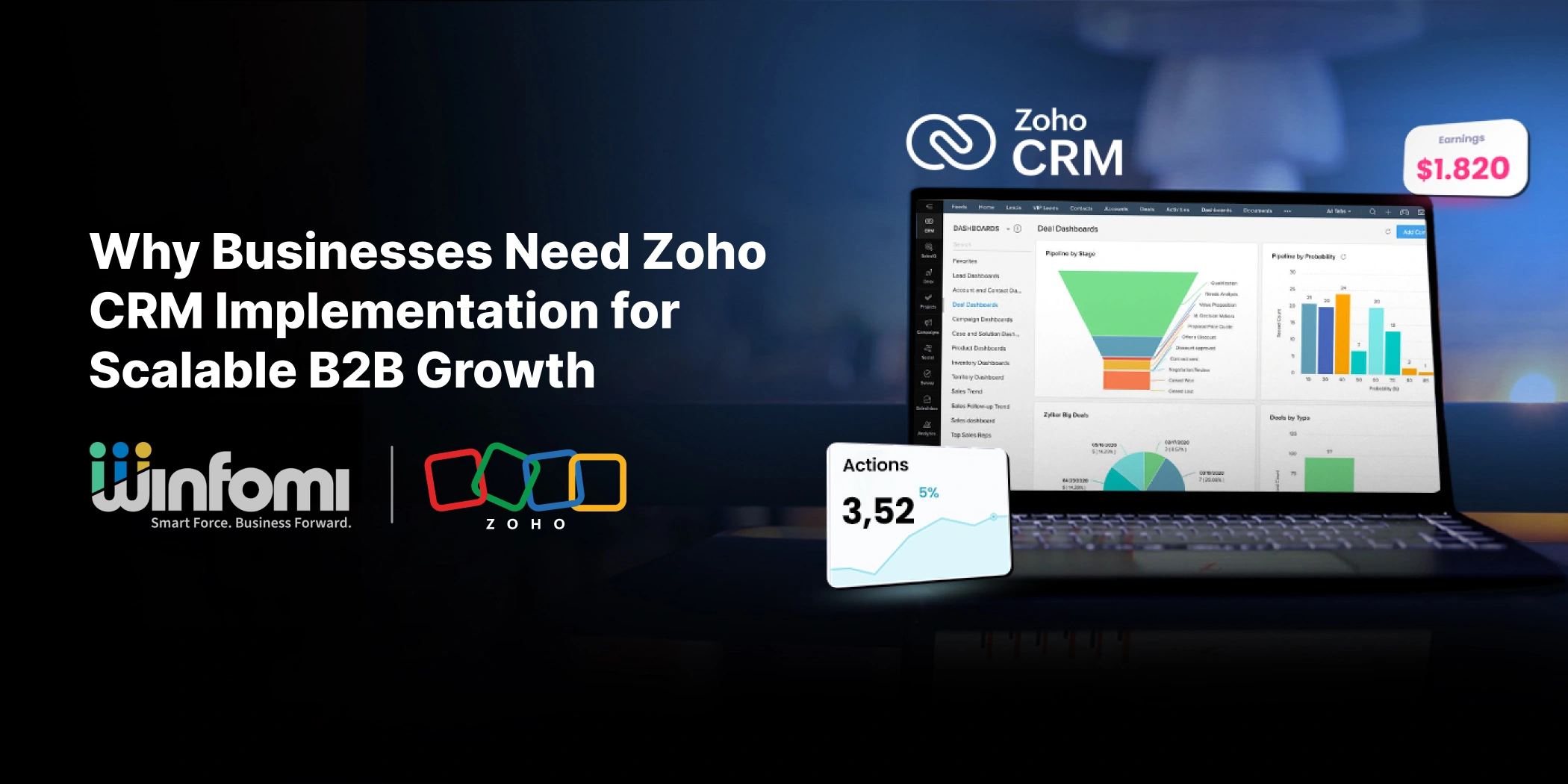
Zoho CRM Entregate: An Overview of B2B Software Ecosystems
Zoho CRM facilitates business-to-business (B2B) growth by providing a centralized platform for managing customer lifecycles, sales pipelines, and automated outreach. For organizations evaluating their software stack in 2026, understand...
Zoho CRM facilitates business-to-business (B2B) growth by providing a centralized platform for managing customer lifecycles, sales pipelines, and automated outreach. For organizations evaluating their software stack in 2026, understanding how Zoho CRM integrates with broader B2B enterprise suites is essential for optimizing data flow, improving cross-departmental collaboration, and enhancing the precision of lead conversion strategies.
Contents
The Role of Zoho CRM in Modern B2B Operations
In the B2B landscape, the sales cycle is rarely linear. It involves multiple stakeholders, long-term relationship building, and complex verification processes. Zoho CRM functions as the "system of record" for these interactions. Unlike B2C environments where volume and velocity are the primary drivers, B2B software architectures prioritize data integrity, historical tracking, and the seamless movement of information between marketing, sales, and support departments.
The term "entregate"—often associated with the integration of external data streams and internal workflows—refers to the capacity of the Zoho ecosystem to ingest, process, and act upon B2B signals. By utilizing the Zoho suite, companies can ensure that a lead captured through an integrated webinar platform is immediately scored, assigned to the correct account manager, and enriched with firmographic data without manual intervention.
Core Features Supporting B2B Workflows
Zoho CRM provides several specific features designed to handle the complexity of enterprise B2B sales:
- Blueprint: A process-management tool that guides sales representatives through defined stages. This ensures that every member of the team adheres to company policies during negotiation or contract finalization.
- Zia (AI Assistant): In 2026, Zoho’s AI, Zia, provides predictive analytics for deal forecasting, sentiment analysis for customer emails, and anomaly detection to identify stalled accounts.
- Omnichannel Communication: B2B buyers expect interaction across email, phone, social media, and internal portals. Zoho centralizes these touchpoints into a unified timeline view, preventing communication silos.
- Canvas Design Studio: This feature allows businesses to customize the CRM interface to match the specific needs of their sales teams, ensuring that high-priority fields are front-and-center for complex deal tracking.
Integrating the Wider Zoho Ecosystem
The true power of Zoho for B2B enterprises lies in its "operating system for business" philosophy. Zoho CRM does not exist in a vacuum; it functions as a node within a larger ecosystem. For instance, the integration between Zoho CRM and Zoho Books ensures that the sales team has visibility into a client's invoice status, preventing awkward renewal conversations with delinquent accounts.
Similarly, integration with Zoho Campaigns allows for automated, segmented marketing journeys. If a lead clicks a high-intent link in a whitepaper email, the CRM record is automatically updated, and a notification can be triggered for the assigned account executive. This deep level of interoperability reduces the technical debt usually associated with "Frankenstein" software stacks—where companies must pay for expensive third-party middleware to keep their tools in sync.
Comparison Table: B2B Software Integration Benchmarks
| Integration Point | Benefit to B2B Operations | Data Sync Frequency |
|---|---|---|
| Zoho Books | Real-time financial status visibility | Instant |
| Zoho Projects | Post-sale handoff to delivery team | Trigger-based |
| Zoho Campaigns | Lead nurturing and attribution | Real-time |
| Zoho Analytics | Cross-departmental business intelligence | Scheduled/Real-time |
Prerequisites for Successful Implementation
Deploying Zoho CRM within an enterprise B2B environment requires more than simply activating an account. To derive maximum utility from the platform, organizations should focus on the following prerequisites:
- Data Cleaning: Before migration or integration, audit existing customer data. Duplicate records are the primary cause of failed B2B sales execution.
- Defined Sales Taxonomy: Standardize naming conventions for deal stages, lead sources, and customer industries. If the CRM language differs from the company’s internal vernacular, user adoption will suffer.
- Role-Based Access Control (RBAC): B2B environments often house sensitive contract and pricing data. Establish strict permission hierarchies to ensure that team members access only what is necessary for their specific functions.
- API Strategy: While native Zoho integrations are robust, enterprises often have legacy tools. Define the requirements for custom API connections early to avoid performance bottlenecks.
Addressing Common Challenges
While the platform is powerful, users often face hurdles regarding complexity and configuration. The most frequent issue is "feature bloat," where organizations attempt to implement every available module simultaneously, leading to a cluttered user experience.
To mitigate this, adopt a phased rollout. Begin by stabilizing the core CRM functionality, then integrate adjacent tools like Zoho Desk or Zoho Projects only after the sales team has achieved proficiency. Additionally, ensure that your CRM administrator is regularly trained on updates. Zoho frequently releases enhancements, and failing to monitor the "What’s New" documentation can lead to the underutilization of tools that could otherwise solve existing process gaps.
Strategic Decision Making: Is Zoho the Right Fit?
When choosing between Zoho CRM and other enterprise-grade solutions, consider the long-term cost of ownership. Zoho generally offers a more predictable pricing model compared to competitors that charge premium fees for every additional integration or seat type. However, the requirement for technical oversight is higher. If your company lacks an internal administrator to manage configurations and custom workflows, the "entregate" potential of the platform may remain untapped.
Frequently Asked Questions
1. Can Zoho CRM handle complex B2B sales cycles involving multiple stakeholders? Yes. Zoho CRM uses an "Account" and "Contact" structure that allows you to map multiple decision-makers, influencers, and technical buyers to a single organization, providing a 360-degree view of the entire buying committee.
2. How does Zoho CRM handle lead scoring for B2B prospects? The system uses rule-based scoring and AI-driven insights to assign points to leads based on firmographic data (e.g., job title, company size) and behavioral data (e.g., website visits, email engagement), prioritizing leads that are most likely to convert.
3. Is it possible to integrate Zoho CRM with non-Zoho software? Absolutely. Zoho provides a comprehensive REST API and a robust Marketplace. Many common B2B tools, such as Microsoft 365, Google Workspace, and various third-party ERP systems, have pre-built integrations available for immediate deployment.
4. How do I ensure data security within the CRM? Zoho CRM includes enterprise-grade security, including IP restriction, multi-factor authentication, and encryption at rest. Administrators can define fine-grained security policies to restrict access based on geography, role, or time of day.
5. What is the difference between Zoho CRM and Zoho One? Zoho CRM is a standalone product focused on sales management. Zoho One is a bundle that includes CRM along with over 45 other applications (like finance, HR, and marketing tools), offering a more holistic enterprise-level software strategy.
6. Does Zoho provide support for large enterprise migrations? Zoho offers specialized migration services and support packages for enterprises. Organizations are encouraged to leverage the partner network for custom implementation if they possess highly specific, non-standard workflow requirements.
Next Actions for Your Implementation
If you are currently evaluating your B2B software architecture, start by mapping your existing customer journey from lead generation to post-sale support. Identify the points where manual data entry currently slows down your team. Once these "friction points" are identified, perform a pilot test using a specific module of Zoho CRM to see how it resolves those bottlenecks. For enterprise stakeholders, the goal in 2026 is not to collect software, but to build a cohesive, automated system that supports long-term revenue growth.
Image Gallery