Hair Transplant in Gujarat: Costs, Techniques, and Clinical Selection Guide
Hair transplantation in Gujarat offers advanced surgical hair restoration—primarily via Follicular Unit Extraction (FUE) and Direct Hair Implantation (DHI)—performed by certified dermatologists and plastic surgeons. With key medical hu...
Hair transplantation in Gujarat offers advanced surgical hair restoration—primarily via Follicular Unit Extraction (FUE) and Direct Hair Implantation (DHI)—performed by certified dermatologists and plastic surgeons. With key medical hubs in Ahmedabad, Surat, and Vadodara, patients access high-quality clinical care at competitive rates, typically ranging from ₹25 to ₹60 per graft depending on the chosen technique, scalp complexity, and surgeon expertise.
Contents
Medical Disclaimer: This guide is intended for informational and educational purposes only and does not constitute formal medical advice. Hair transplantation is a surgical procedure requiring specialized medical evaluation. Consult a board-certified dermatologist or plastic surgeon registered with the National Medical Commission (NMC) to discuss individual candidacy, surgical risks, and post-operative care.
Understanding Hair Transplantation: Core Surgical Techniques in Gujarat
Hair transplantation relies on the concept of donor dominance: hair follicles harvested from the occipital and temporal regions of the scalp (the back and sides) are genetically resistant to dihydrotestosterone (DHT), the hormone responsible for androgenetic alopecia (pattern baldness). When transplanted to balding areas, these follicles retain their genetic resistance and continue to grow naturally over a patient's lifetime.
Clinics across Gujarat offer three primary surgical methods for follicular harvesting and implantation, each suited to different patterns of hair loss and patient preferences.
- Donor Scalp (DHT-Resistant Zone)
- Strip Harvesting
- FUT
- Individual Graft Extraction
- Standard FUE
- DHI
- Strip Harvesting
1. Follicular Unit Extraction (FUE) and Sapphire FUE
FUE has become the standard hair restoration technique across Gujarat’s leading clinics. In standard FUE, individual follicular units (containing 1 to 4 hairs) are harvested directly from the donor area using a motorized micro-punch ranging from 0.7 mm to 0.9 mm in diameter.
A refined variation widely adopted in top-tier centers in Ahmedabad and Surat is Sapphire FUE. Instead of traditional steel blades, surgeons use blades crafted from synthetic sapphire gemstone to create recipient site channels. Sapphire blades produce finer micro-incisions, reducing trauma to surrounding tissue, minimizing post-operative scabbing, and allowing higher graft placement density per square centimeter.
- Key Advantages: No linear scarring, faster recovery time (7–10 days), minimal post-operative discomfort, and suitability for short hairstyles.
- Ideal Candidates: Patients requiring small-to-moderate graft numbers (1,500 to 3,500 grafts), those prone to hypertrophic scarring, or individuals preferring shorter hair.
2. Direct Hair Implantation (DHI)
Direct Hair Implantation is a specialized modification of the FUE technique. While standard FUE requires premade recipient channels prior to insertion, DHI utilizes a specialized hollow-needle instrument (often referred to as a Choi Implanter Pen). The extracted follicular graft is loaded into the implanter pen and inserted directly into the scalp tissue in a single step.
This single-step insertion allows the operating surgeon precise control over the angle, depth, and direction of each transplanted follicle. Because grafts spend less time outside the body, survival rates can be optimized.
- Key Advantages: Reduced out-of-body time for grafts, eliminated need for prior channel creation, high precision in hairline architecture, and reduced bleeding during recipient site work.
- Ideal Candidates: Patients seeking maximum density in localized areas (such as the temporal hairline or crown) or those undergoing un-shaven hair restoration procedures.
3. Follicular Unit Transplantation (FUT / Strip Method)
Though less common today than FUE, Follicular Unit Transplantation (FUT) remains a valid clinical option for advanced cases of androgenetic alopecia. In FUT, the surgeon removes a thin strip of hair-bearing scalp from the donor region, closes the wound using microscopic closure techniques (such as trichophytic closure), and dissects the donor strip under high-powered stereomicroscopes into individual follicular units.
- Key Advantages: Allows harvesting a large number of grafts (3,500 to 5,000+) in a single session without over-harvesting the donor area; lower cost per graft compared to advanced FUE/DHI.
- Key Disadvantages: Leaves a permanent fine linear scar across the back of the head, requires a longer recovery period (14–21 days), and carries a slightly higher risk of post-operative tightness or discomfort.
- Ideal Candidates: Patients requiring high-volume graft counts (Norwood Stage 5–7) who do not intend to wear extremely short haircuts.
Cost Breakdown of Hair Transplants in Gujarat
The cost of a hair transplant in Gujarat is primarily calculated on a per-graft basis, though many clinics offer package rates for procedures exceeding 2,500 to 3,000 grafts. On average, pricing ranges between ₹25 and ₹60 per graft for standard FUE, while specialized techniques like Sapphire FUE or DHI may cost between ₹45 and ₹90 per graft.
Graft Estimation by Loss Severity (Norwood Scale)
| Hair Loss Stage (Norwood Scale) | Description of Hair Loss | Estimated Grafts Required | Estimated Cost Range (INR) | Estimated Cost Range (USD) |
|---|---|---|---|---|
| Stage 2 | Mild hairline recession at temples | 1,000 – 1,500 grafts | ₹30,000 – ₹60,000 | $380 – $750 |
| Stage 3 | Deep temple recession, hairline rollback | 1,500 – 2,500 grafts | ₹45,000 – ₹1,10,000 | $560 – $1,350 |
| Stage 4 | Extensive frontal loss and thinning crown | 2,500 – 3,500 grafts | ₹75,000 – ₹1,75,000 | $930 – $2,150 |
| Stage 5 | Significant frontal and vertex loss, thin bridge | 3,500 – 4,500 grafts | ₹1,05,000 – ₹2,25,000 | $1,300 – $2,800 |
| Stage 6 / 7 | Severe hair loss; donor area optimization needed | 4,500+ grafts (Multi-session) | ₹1,50,000 – ₹3,00,000+ | $1,850 – $3,700+ |
Factors Influencing the Total Surgical Cost
- Surgeon Qualifications and Experience: Board-certified plastic surgeons (M.Ch / DNB) or qualified dermatologists (MD / DNB) with extensive hair restoration experience command higher fees than general practitioners or technician-led operations.
- Surgical Technique Employed: Standard motorized FUE is generally more budget-friendly than manual punch FUE, Sapphire FUE, or DHI, which require costly specialized consumables (e.g., single-use implanter needles or sapphire blades).
- Donor Source: If scalp donor density is insufficient, harvesting body hair (beard or chest hair) requires advanced technical skill and increases the overall cost per graft.
- Clinic Infrastructure and Accreditation: Facilities equipped with dedicated, sterile minor operation theaters (OTs), emergency monitoring equipment, and specialized holding solutions (such as HypoThermosol or chilled Ringer's lactate) maintain higher operational overheads, reflecting in their pricing.
- Post-Operative Inclusions: Comprehensive packages often include immediate post-op medications, specialized shampoos, follow-up washes, and supportive treatments such as Platelet-Rich Plasma (PRP) or Growth Factor Concentrate (GFC) sessions.
Comparative Overview: Technical Selection Matrix
Selecting the appropriate surgical method depends on clinical candidacy, donor area characteristics, budget, and aesthetic goals.
| Feature / Criteria | Follicular Unit Extraction (FUE) | Direct Hair Implantation (DHI) | Follicular Unit Transplantation (FUT) |
|---|---|---|---|
| Extraction Tool | Motorized micro-punch (0.7–0.9 mm) | Motorized micro-punch | Surgical scalpel excision of scalp strip |
| Implantation Method | Premade recipient channels + Forceps | Direct insertion via Choi Implanter Pen | Premade recipient channels + Forceps |
| Donor Area Scarring | Micro-dot scars (virtually unnoticeable) | Micro-dot scars (virtually unnoticeable) | Permanent linear scar across occipital scalp |
| Maximum Grafts per Session | 3,000 – 4,000 grafts | 2,500 – 3,500 grafts | 4,000 – 5,000+ grafts |
| Graft Survival Rate | 85% – 95% | 90% – 98% | 85% – 95% |
| Initial Recovery Window | 7 – 10 days | 5 – 7 days | 14 – 21 days |
| Average Cost per Graft | ₹25 – ₹45 | ₹45 – ₹80 | ₹20 – ₹35 |
Major Healthcare Hubs for Hair Transplantation in Gujarat
Gujarat’s medical infrastructure has expanded significantly, making it a prominent destination for both domestic medical travelers and Non-Resident Indians (NRIs). Four primary cities host the majority of accredited cosmetic and hair restoration centers:
1. Ahmedabad
As the economic center of Gujarat, Ahmedabad holds the highest concentration of super-specialty hospitals and dedicated hair restoration clinics. The city's medical hubs—primarily located in areas like Satellite, Bodakdev, C.G. Road, and SG Highway—house board-certified plastic surgeons and dermatologists. Clinics in Ahmedabad often feature modern diagnostic equipment, such as digital trichoscopy analysis, micro-cameras, and specialized holding environments for high-volume graft cases.
2. Surat
Surat has emerged as a major destination for cosmetic procedures, offering modern aesthetic clinics equipped with Sapphire FUE and robotic-assisted extraction systems. Clinics in areas like Ghoddod Road and Vesu cater to a high volume of regional and international patients seeking high-density hairline reconstruction at competitive price points.
3. Vadodara
Vadodara provides a balance of high clinical standards and affordable pricing. Medical centers situated around Alkapuri and Race Course Circle offer comprehensive diagnostic evaluations, standardized FUE procedures, and structured post-operative maintenance protocols supported by local dermatological societies.
4. Rajkot
Serving the Saurashtra region, Rajkot has seen steady growth in medical aesthetic practices. Clinics here primarily focus on FUE and PRP/GFC therapies, offering accessible surgical solutions for local residents who prefer not to travel to larger metros.
Regulatory Guidelines and Clinical Safety in India
To ensure patient safety, the National Medical Commission (NMC) of India issued formal guidelines regarding aesthetic surgery practices, including hair transplantation. Prospective patients evaluating clinics in Gujarat must understand these mandatory medical standards:
- NMC Compliance Checkpoints
- Lead Surgeon Credentials
- M.D. Dermatology OR
- M.S. / M.Ch. Plastic Surgery
- Valid NMC / State Council Registration
- Facility & OT Standards
- Dedicated Sterile Minor OT
- Oxygen, Resuscitation Equipment
- Formal Patient Consent Protocols
- Lead Surgeon Credentials
- Practitioner Qualifications: Hair transplantation is a surgical procedure. According to NMC directives, it must be performed by or conducted under the direct physical supervision of qualified medical specialists—specifically M.D. / DNB in Dermatology or M.S. / M.Ch. in Plastic Surgery. Procedures performed entirely by non-medical technicians without direct physician involvement violate regulatory standards.
- Operating Room Standards: The procedure must take place in a dedicated, sterile minor operation theater equipped with adequate lighting, sterilization autoclaves, emergency oxygen supply, resuscitation kits, and monitoring equipment to handle adverse drug reactions or local anesthetic toxicity.
- Informed Consent and Evaluation: Qualified clinics conduct pre-operative screening, including blood investigations (complete blood count, bleeding/clotting profile, viral markers, fasting blood glucose) and a thorough scalp examination using digital trichoscopy to rule out conditions like Alopecia Areata, Lichen Planopilaris (LPP), or active scalp infections that contraindicate surgery.
Step-by-Step Patient Journey and Recovery Timeline
Understanding the surgical workflow and recovery process helps set realistic expectations and ensures smooth healing.
Pre-Operative Preparation (2 Weeks Prior)
- Medical Screening: Blood testing and baseline trichoscopic mapping to measure donor hair caliber and follicle density per square centimeter.
- Medication Adjustment: Patients must avoid blood-thinning medications, aspirin, non-steroidal anti-inflammatory drugs (NSAIDs), and vitamin E supplements under medical guidance.
- Lifestyle Modifications: Smoking and alcohol consumption must be discontinued at least 7–10 days before surgery, as nicotine constricts blood capillaries, reducing local tissue perfusion and compromising graft uptake.
The Surgical Day
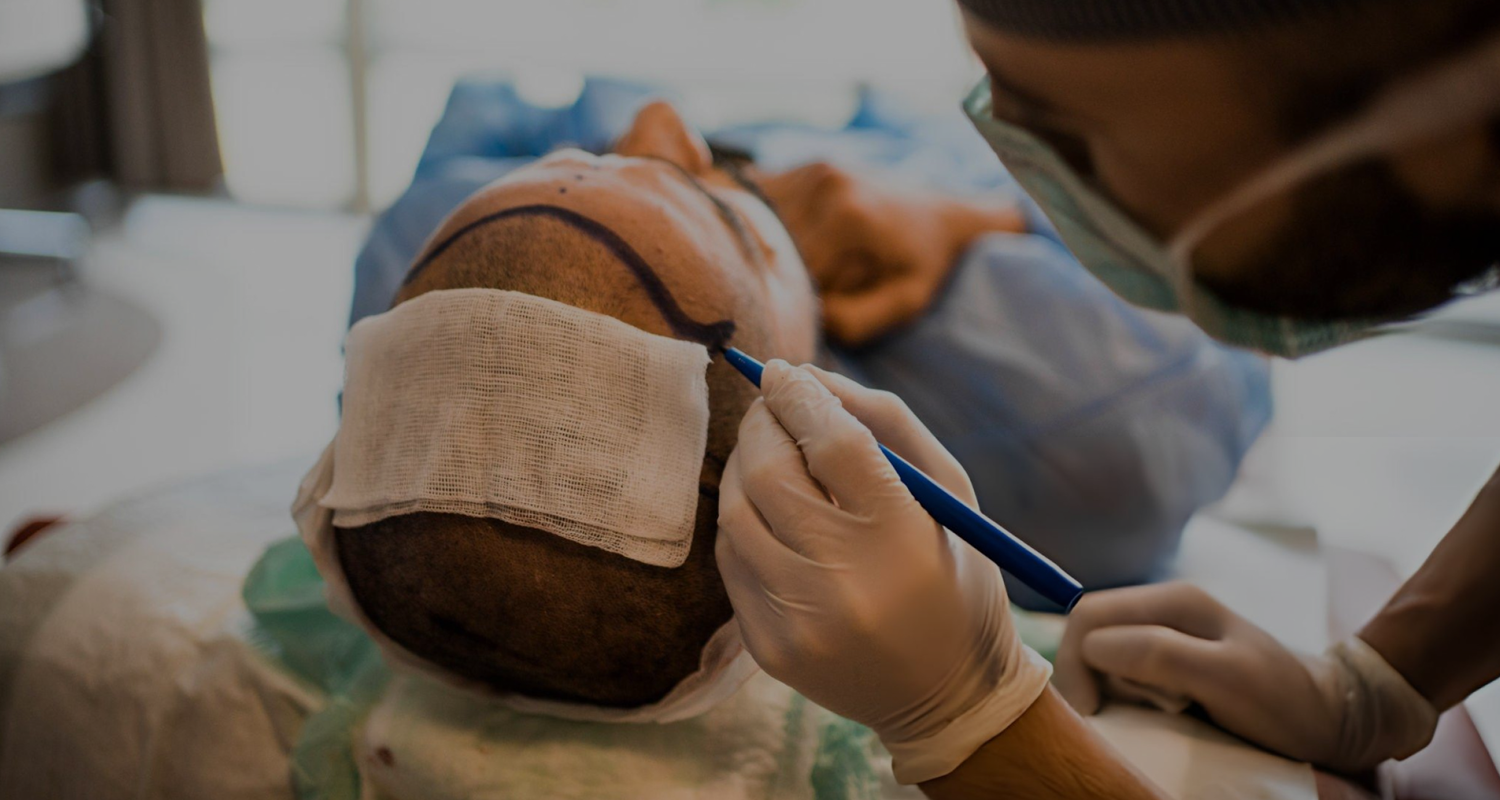
Hairline Design & Mapping: The surgeon draws the prospective hairline, accounting for facial symmetry, age-appropriate recession, and available donor density.
Local Anesthesia: The donor and recipient areas are numbed using local anesthetics (e.g., Lignocaine/Bupivacaine with Epinephrine) to ensure a painless experience.
Graft Extraction: Follicular units are harvested individually (FUE) or removed via strip (FUT). Extracted grafts are immediately stored in a chilled preservation solution.
Channel Creation & Implantation: Recipient micro-channels are angled to match the natural angle and exit direction of existing hair, after which grafts are carefully placed.
Post-Procedure Dressing: The donor site is dressed with sterile gauze and antibiotic ointment, while the recipient site is left un-bandaged to avoid graft displacement.
Surgery Day: Procedure Complete
Days 1–3: First Wash & Care (Grafts Anchor)
Days 10–14: Scab Removal (Scalp Clears)
Months 1–3: Shock Loss Phase (Temporary Shed)
Months 4–6: New Hair Growth (Initial Results)
Months 12–18: Final Density (Full Outcome)
Post-Operative Recovery Timeline
- Days 1 – 3 (Anchoring Phase): The newly transplanted grafts anchor into the dermal layer. Mild swelling across the forehead and periorbital area is common and typically peaks on day 3 before resolving naturally. Spraying normal saline onto the recipient scalp every 2–3 hours prevents crust drying.
- Days 7 – 14 (Crust Removal): Scabs form around the micro-incisions. Around day 10 to 14, gentle washing techniques using a doctor-prescribed mild shampoo soften and remove these scabs without dislodging the underlying roots.
- Weeks 3 – 8 (Anagen Effluvium / "Shock Loss"): Patients experience temporary shedding of the transplanted hair shafts. This is a normal physiological response to surgical stress; the hair follicle root remains healthy beneath the scalp surface in its resting phase.
- Months 3 – 4 (Re-emergence): New hair growth begins as fine, unpigmented hair shafts emerge from the scalp.
- Months 6 – 9 (Density Development): Hair shafts thicken, gain natural texture, and become noticeably denser. Approximately 60% to 70% of the visible result is apparent by month 9.
- Months 12 – 18 (Final Result): The full density, direction, and mature texture of the hair transplant are complete.
How to Select a Qualified Hair Transplant Clinic in Gujarat
To ensure surgical safety and natural-looking aesthetic outcomes, evaluate potential clinics using the following objective criteria:
1. Verify Surgical Credentials
Confirm that the operating surgeon holds an M.D. in Dermatology or an M.S./M.Ch. in Plastic Surgery and is registered with the Gujarat Medical Council or the National Medical Commission. Memberships in recognized professional bodies—such as the International Society of Hair Restoration Surgery (ISHRS) or the Association of Hair Restoration Surgeons India (AHRS-India)—demonstrate ongoing professional development.
2. Inspect Before-and-After Portfolios
Request high-resolution, unedited photos and video documentation of past patients. Pay attention to:
- Hairline Design: Does the hairline look natural for the patient's age and facial structure, or is it drawn straight across?
- Temporal Angle Work: Are the lateral temporal points restored naturally to blend with the hairline?
- Density Distribution: Is the density consistent across recipient zones without visible patchy spots?
3. Evaluate Clinic Infrastructure and Protocols
Ensure the clinic operates out of a clean, dedicated surgical facility rather than a makeshift consultation room. Confirm that the clinic strictly uses single-use disposable FUE punches, sterile single-use implanter needles, and maintains proper autoclaving standards for reusable surgical instruments.
4. Watch for Common Red Flags
- Technician-Only Surgeries: Avoid facilities where non-medical staff perform micro-punches or channel incisions without direct, continuous supervision by a registered surgeon.
- Unrealistic Graft Guarantees: Be cautious of clinics promising "100% density" or an unlimited number of grafts in a single session without evaluating donor scalp limitations.
- Vague Pricing Models: Ensure all post-operative costs (PRP sessions, medication kits, follow-up washes, tax breakdowns) are clearly disclosed in writing before paying a deposit.
Frequently Asked Questions
Is a hair transplant procedure permanent?
Yes. Transplanted follicles are harvested from the donor zone (back and sides of the scalp), which is genetically programmed to resist dihydrotestosterone (DHT). Once successfully integrated into the recipient area, these follicles retain their genetic resistance and continue to grow for a lifetime. However, non-transplanted existing hair in untreated balding areas may continue to thin over time, requiring ongoing medical management (e.g., finasteride or minoxidil).
How painful is a hair transplant procedure?
The procedure is performed under local anesthesia, making the surgery itself pain-free. Patients may feel mild discomfort or a stinging sensation for a few minutes during the administration of the local anesthetic injections. Post-operative pain is typically mild and easily managed with prescribed oral analgesics for 2–3 days following surgery.
How many grafts will I need for a natural-looking hairline?
The required graft count depends on the extent of hair loss, donor hair caliber, hair-to-skin color contrast, and target placement area. Mild hairline restoration (Norwood Stage 2–3) generally requires between 1,500 and 2,500 grafts. Comprehensive coverage for advanced balding (Norwood Stage 4–5) typically ranges between 3,000 and 4,500 grafts. A digital trichoscopy evaluation by a dermatologist provides an exact calculation.
When can I return to work and resume exercise after surgery?
Most patients undergoing FUE or DHI can return to routine office work within 3 to 5 days post-procedure. However, strenuous physical activities, heavy weightlifting, swimming, sauna sessions, and direct sun exposure must be avoided for at least 14 days to prevent graft displacement, elevated blood pressure bleeding, or infection.
Does insurance cover hair transplant surgery in India?
In most cases, hair transplantation is classified as an elective cosmetic procedure and is not covered by standard health insurance policies in India. However, if hair loss is the direct result of trauma, burn injuries, or reconstructive surgery following tumor excision, partial medical insurance coverage may apply depending on your policy terms and provider authorization.
Actionable Next Steps for Prospective Patients
- Schedule Diagnostic Consultations: Book in-person or virtual evaluations with at least two or three certified dermatologists or plastic surgeons in major Gujarati medical hubs (Ahmedabad, Surat, or Vadodara).
- Obtain a Trichoscopy Report: Request a digital scalp analysis to measure your donor area density (follicles per $\text{cm}^2$) and assess hair shaft thickness before agreeing to a specific graft count.
- Verify Physician Credentials: Search the surgeon's full name on the National Medical Commission (NMC) Indian Medical Register to confirm their medical degree and active registration status.
- Establish a Post-Op Care Plan: Discuss long-term preventive therapy (such as oral/topical medications or GFC/PRP treatments) with your doctor to maintain non-transplanted hair and preserve overall scalp health.
Image Gallery