Bookkeeping Entries Explained: A Comprehensive Guide to Recording Financial Transactions
Bookkeeping entries are the foundational records of every financial transaction a business undertakes, typically organized using the double-entry system where every debit to an account requires an equal and opposite credit to another....
Bookkeeping entries are the foundational records of every financial transaction a business undertakes, typically organized using the double-entry system where every debit to an account requires an equal and opposite credit to another. These entries form the accurate historical data required to generate essential financial statements like the balance sheet and income statement.
Contents
Understanding the Fundamentals of Bookkeeping Entries
Every business transaction changes the financial position of an enterprise. To capture these changes systematically, bookkeepers rely on structured records known as bookkeeping entries. These entries provide an unalterable audit trail, ensuring that management, investors, tax authorities, and lenders can verify the financial health of the organization at any given time.
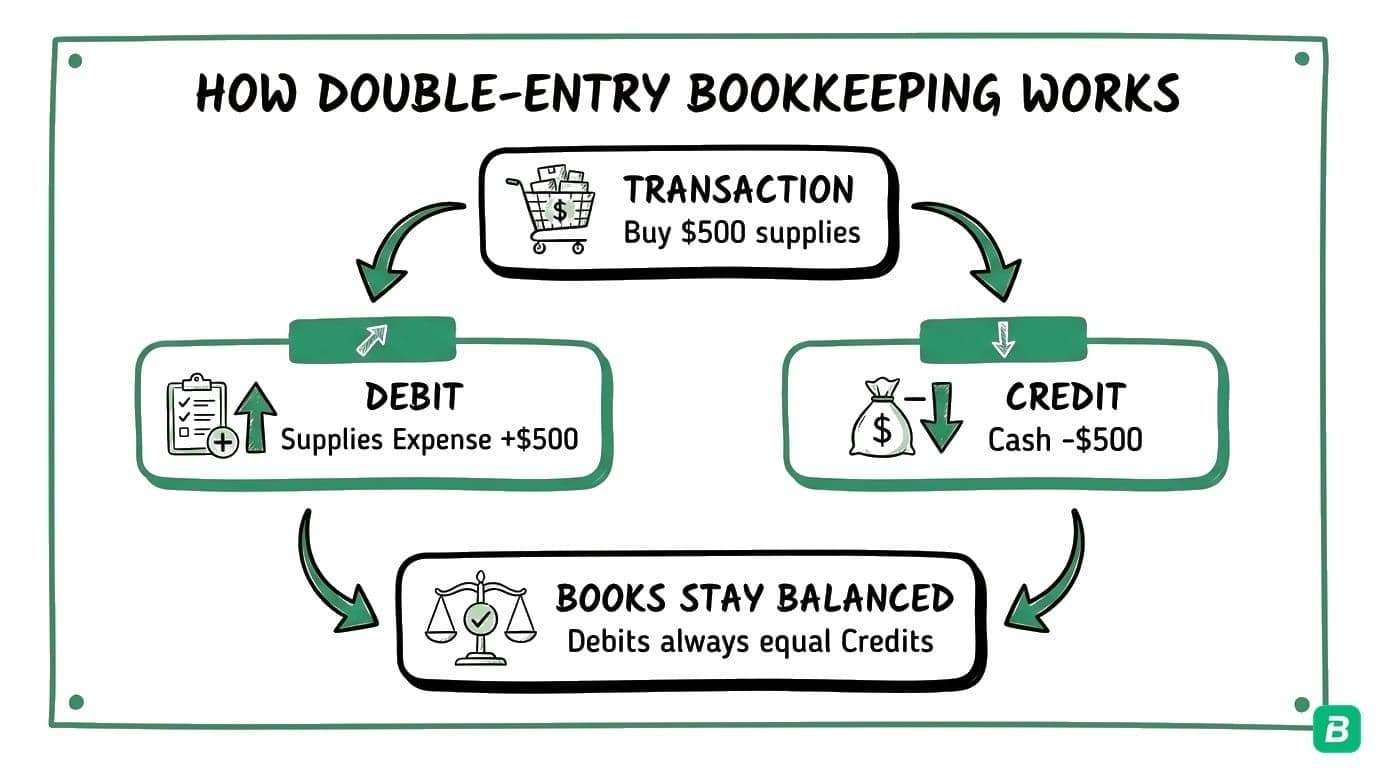
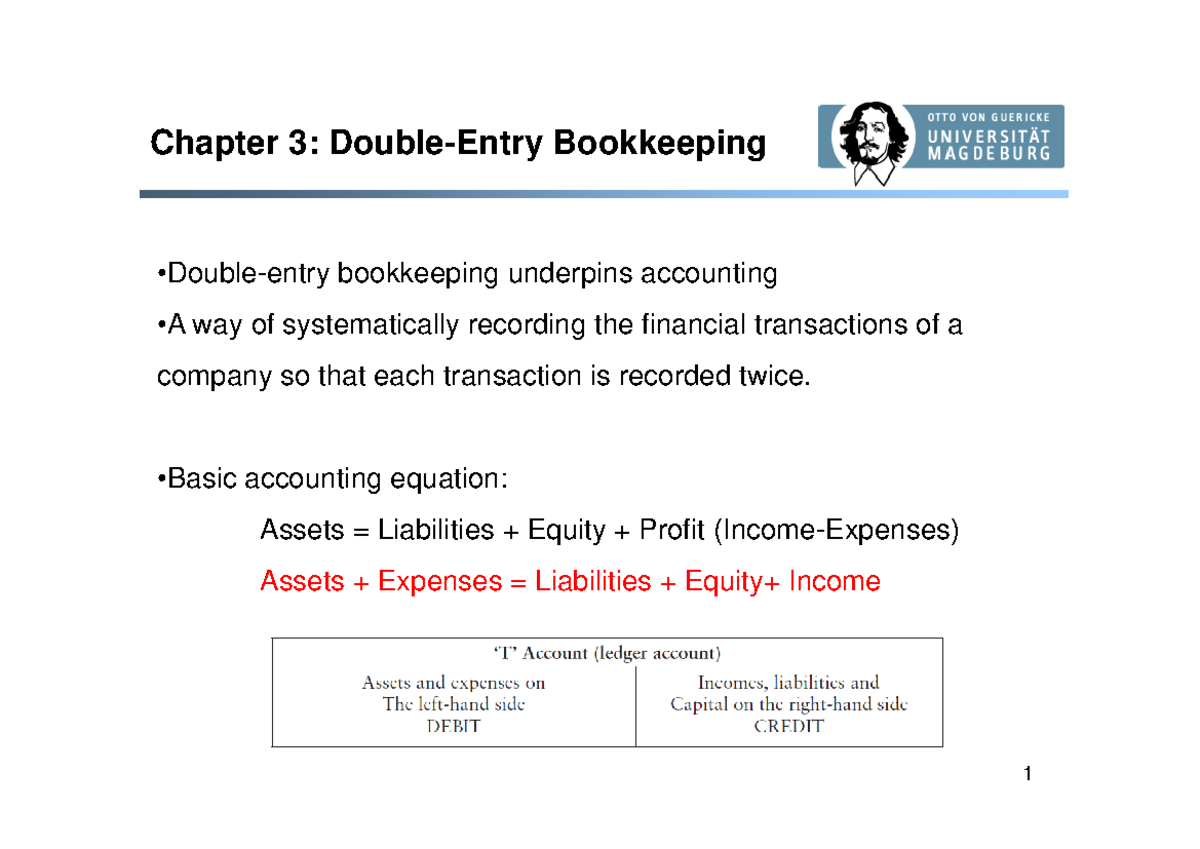
At the core of modern accounting is the double-entry bookkeeping method. Invented centuries ago and refined through modern accounting standards, this system dictates that every financial event affects at least two accounts. By recording both the source and the destination of funds, businesses maintain internal consistency and mathematical accuracy across their entire ledger.
The Accounting Equation: Assets, Liabilities, and Equity
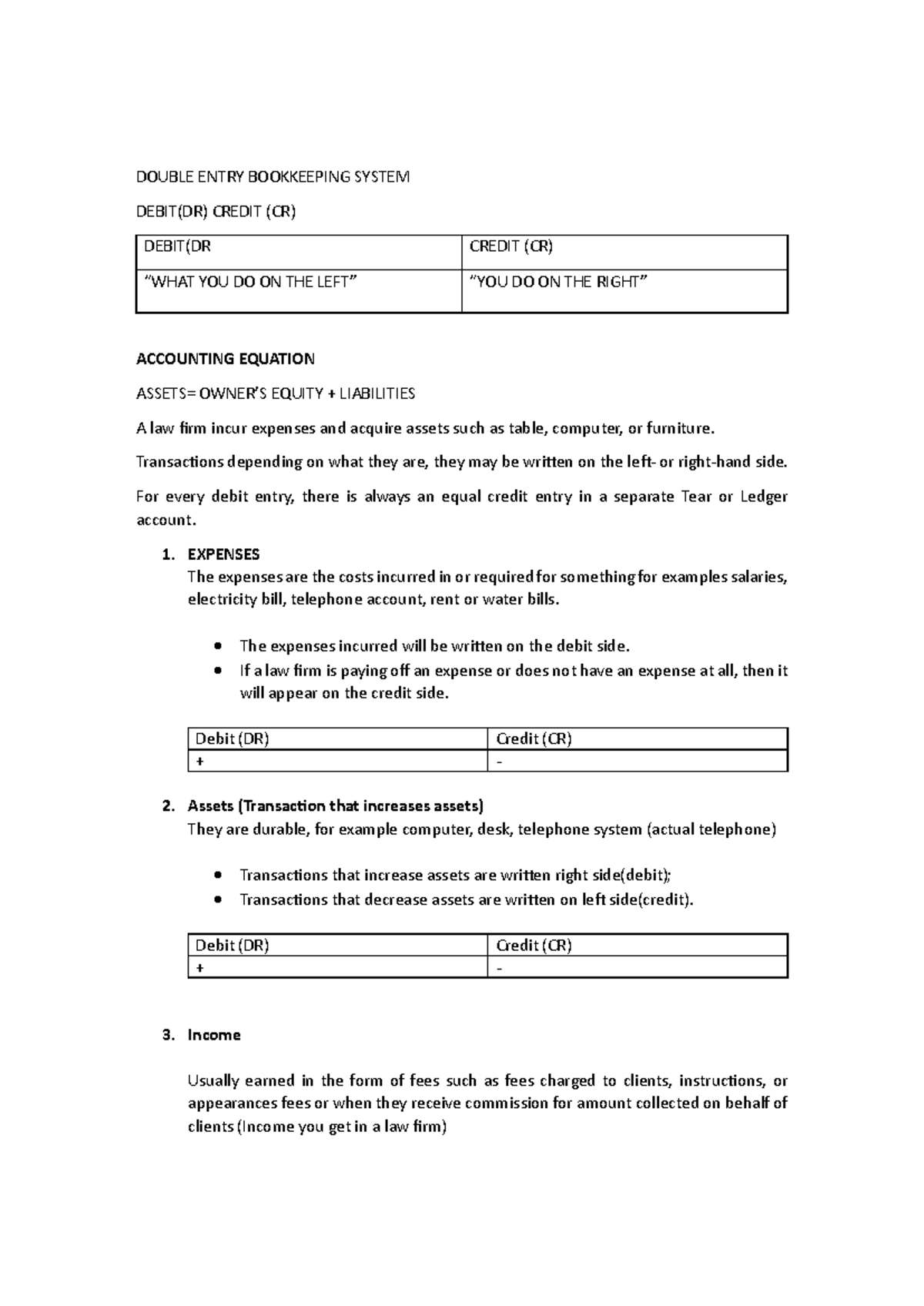
Before recording a single entry, you must understand the bedrock of all accounting systems: the basic accounting equation. This equation must always remain in balance after every transaction:
$$\text{Assets} = \text{Liabilities} + \text{Owner's Equity}$$
- Assets: Resources owned or controlled by the business that hold economic value, such as cash, accounts receivable, inventory, equipment, and buildings.
- Liabilities: Obligations or debts owed to outside parties, such as accounts payable, loans, wages payable, and taxes due.
- Owner's Equity (or Stockholder's Equity): The residual interest in the assets of the business after deducting liabilities, representing the owner's stake plus retained earnings.
When revenues and expenses enter the equation, they ultimately flow into equity. Revenues increase equity, while expenses decrease it.
The Mechanics of Debits and Credits
The terms "debit" and "credit" often confuse beginners because their everyday usage differs sharply from their accounting definitions. In bookkeeping, debit and credit simply indicate the left and right sides of a general ledger account, respectively. They do not inherently mean "good" or "bad," "increase" or "decrease."
Whether a debit increases or decreases an account depends entirely on the account type. The standard normal balances across the five major account categories govern how entries are written.
Normal Balances Across Account Categories
Every account type has a "normal balance," which is the side (debit or credit) where increases are recorded.
| Account Type | Increases With | Decreases With | Normal Balance |
|---|---|---|---|
| Assets | Debit | Credit | Debit |
| Expenses | Debit | Credit | Debit |
| Liabilities | Credit | Debit | Credit |
| Equity | Credit | Debit | Credit |
| Revenue | Credit | Debit | Credit |
Memorizing this table is essential for constructing accurate journal entries. For instance, because cash is an asset, receiving cash requires a debit, whereas paying out cash requires a credit. Conversely, because a bank loan is a liability, receiving loan funds requires a credit, while paying it down requires a debit.
Step-by-Step Anatomy of a Journal Entry
A journal entry is the chronological record of a business transaction before it is posted to the general ledger. Every complete journal entry contains specific components organized in a standardized format.
- Date: The exact date the transaction occurred.
- Debit Account(s): The account name(s) being debited, listed on the top line(s) against the left margin.
- Credit Account(s): The account name(s) being credited, listed below the debits and indented to the right.
- Monetary Amounts: Equal numeric values in the debit and credit columns.
- Explanation (Memo): A brief, descriptive sentence explaining the business purpose of the transaction.
Practical Example: Cash Purchase of Equipment
Imagine your small business purchases office equipment for $2,000 in cash on June 10, 2026. This single transaction affects two asset accounts: equipment increases, and cash decreases.
- Account to Debit: Equipment (Asset) increases by $2,000.
- Account to Credit: Cash (Asset) decreases by $2,000.
Journal Entry Format:
Date: June 10, 2026 Dr. Equipment .................... $2,000.00 Cr. Cash .................................... $2,000.00 (To record the purchase of new office equipment for cash)
Because both accounts are assets, one asset increases via a debit while another asset decreases via a credit, keeping the accounting equation perfectly balanced without changing total liabilities or equity.
The Full Accounting Cycle: From Transaction to Financial Statements
Bookkeeping entries do not exist in a vacuum. They are part of a continuous operational rhythm known as the accounting cycle. Understanding this pipeline helps clarify why meticulous entry-keeping matters.
- Identify Transactions
- Record in Journal (Journal Entries)
- Post to General Ledger
- Prepare Unadjusted Trial Balance
- Record Adjusting Entries
- Generate Financial Statements
1. Identifying Transactions
Every source document—such as vendor invoices, customer receipts, bank statements, and payroll summaries—triggers the need for a bookkeeping entry.
2. Recording and Posting
Transactions are first entered into the general journal in chronological order. Periodically, these journal entries are "posted" (transferred) to the general ledger, which maintains a categorized, running balance for every individual account (e.g., Cash, Accounts Payable, Sales Revenue).
3. Trial Balance and Adjusting Entries
At the end of an accounting period (usually monthly or annually), accountants generate a trial balance to ensure total debits equal total credits. Once verified, adjusting entries are made for accruals, prepayments, depreciation, and deferrals to ensure revenues and expenses match the period in which they actually occurred, adhering to the matching principle of accrual accounting.
Common Bookkeeping Entries Every Business Owner Should Know
While businesses vary widely in operations, certain standard transactions appear in almost every ledger. Reviewing these templates clarifies how complex financial events translate into double-entry bookkeeping.
Recording Revenue on Account (Credit Sales)
When you provide services or deliver goods to a client on credit (meaning they will pay later), you have earned revenue, but cash has not yet changed hands.
- Debit: Accounts Receivable (Asset) increases.
- Credit: Service Revenue (Revenue) increases.
When the client eventually pays their invoice weeks later, a separate entry is made:
- Debit: Cash (Asset) increases.
- Credit: Accounts Receivable (Asset) decreases, clearing out the open balance.
Purchasing Inventory on Credit
Purchasing goods for resale without paying immediately creates a liability known as accounts payable.
- Debit: Inventory (Asset) increases.
- Credit: Accounts Payable (Liability) increases.
Paying Monthly Operating Expenses
Expenses like rent, utilities, and advertising require regular cash outlays. Paying rent for the current month involves:
- Debit: Rent Expense (Expense) increases.
- Credit: Cash (Asset) decreases.
Common Mistakes and How to Avoid Them
Even experienced business owners and junior bookkeepers occasionally make errors that throw financial records out of balance or misstate profitability. Recognizing these pitfalls helps maintain ledger integrity.
- Transposition Errors: Swapping digits within a number (such as writing $540 instead of $450) creates an error divisible by 9. If your trial balance is out of balance by a number divisible by 9, look closely for transposed figures.
- Omitting Transactions: Forgetting to record a recurring expense or a cash sale leaves gaps in your financial reporting, leading to inaccurate tax filings and poor management decisions.
- Confusing Cash and Accrual Basis: Mixing up cash-basis methods (recording revenue only when cash arrives) with accrual-basis methods (recording revenue when earned) distorts financial performance metrics.
- Misclassifying Accounts: Recording a capital asset purchase (like a delivery truck) as a regular operating expense temporarily tanks reported net income and distorts asset valuations on the balance sheet.
Frequently Asked Questions
What is the difference between single-entry and double-entry bookkeeping?
Single-entry bookkeeping resembles a checkbook register, recording only cash inflows and outflows for income and expenses. It is simple but fails to track assets, liabilities, or accounts receivable. Double-entry bookkeeping records every transaction with offsetting debits and credits across at least two accounts, providing a complete, self-balancing picture of overall financial health.
Why do debits and credits sometimes feel counterintuitive?
Debits and credits feel counterintuitive because people often conflate banking terminology with accounting terminology. In banking, a "debit" takes money out of your account, which feels like a reduction to you. In accounting, "debit" simply means the left side of an account ledger. Because expense and asset accounts increase on the left side, spending money requires a debit to an expense account, even though your bank balance goes down.
What is a trial balance, and why is it important?
A trial balance is an internal report that lists the ending debit or credit balance of every account in the general ledger at a specific point in time. Its primary purpose is to prove that total debits equal total credits, catching mathematical errors before financial statements are prepared. However, a balanced trial balance does not guarantee zero errors, as it won't catch omitted transactions or misposted accounts.
How do adjusting entries differ from regular journal entries?
Regular journal entries record everyday business transactions as they occur throughout the month (such as paying bills or making sales). Adjusting entries are made exclusively at the end of an accounting period to account for unrecorded economic activity, such as accrued wages, prepaid insurance expiration, or equipment depreciation, ensuring financial statements comply with accrual accounting principles.
Do I need specialized accounting software to manage bookkeeping entries?
While manual bookkeeping using spreadsheets is possible for very simple micro-businesses, modern cloud-based accounting software automates posting to general ledgers, reconciles bank feeds, tracks accounts receivable, and generates trial balances instantly. Using reputable software significantly reduces human error and saves considerable administrative time.
Conclusion and Next Actions
Mastering bookkeeping entries transforms financial record-keeping from a stressful tax-season chore into a strategic operational advantage. By consistently applying the rules of the accounting equation, respecting normal balances, and verifying ledger accuracy through trial balances, you ensure your financial statements are reliable and audit-ready.
To take your next step, review your current chart of accounts to ensure every transaction category is clearly defined. If your transaction volume is growing or financial complexity is increasing, consult a certified public accountant (CPA) or professional bookkeeper to establish a robust, customized chart of accounts tailored to your industry.
Image Gallery