Understanding What Stand-Alone Non-Owned Auto Insurance Actually Covers
Stand-alone non-owned auto insurance provides liability coverage for drivers who do not own a vehicle but occasionally drive borrowed or rented cars. In 2026, it primarily covers third-party bodily injury and property damage expenses....
Stand-alone non-owned auto insurance provides liability coverage for drivers who do not own a vehicle but occasionally drive borrowed or rented cars. In 2026, it primarily covers third-party bodily injury and property damage expenses. It does not cover physical damage to the vehicle being driven, nor does it cover vehicles owned by the policyholder's household.
Contents
Non-owned auto insurance is often misunderstood as a "full coverage" solution for those without cars. However, its scope is specific and limited. Whether you are an individual driver looking to maintain continuous coverage or a business owner protecting against employee-related road risks, understanding the granular details of these policies is essential for financial protection.
What is Stand-Alone Non-Owned Auto Insurance?
Stand-alone non-owned auto insurance is a liability-only policy designed for individuals who do not own a vehicle but require insurance protection. The term "stand-alone" distinguishes it from an endorsement or "rider" added to a Commercial General Liability (CGL) policy. For an individual, this is a primary policy that follows the person rather than a specific vehicle.
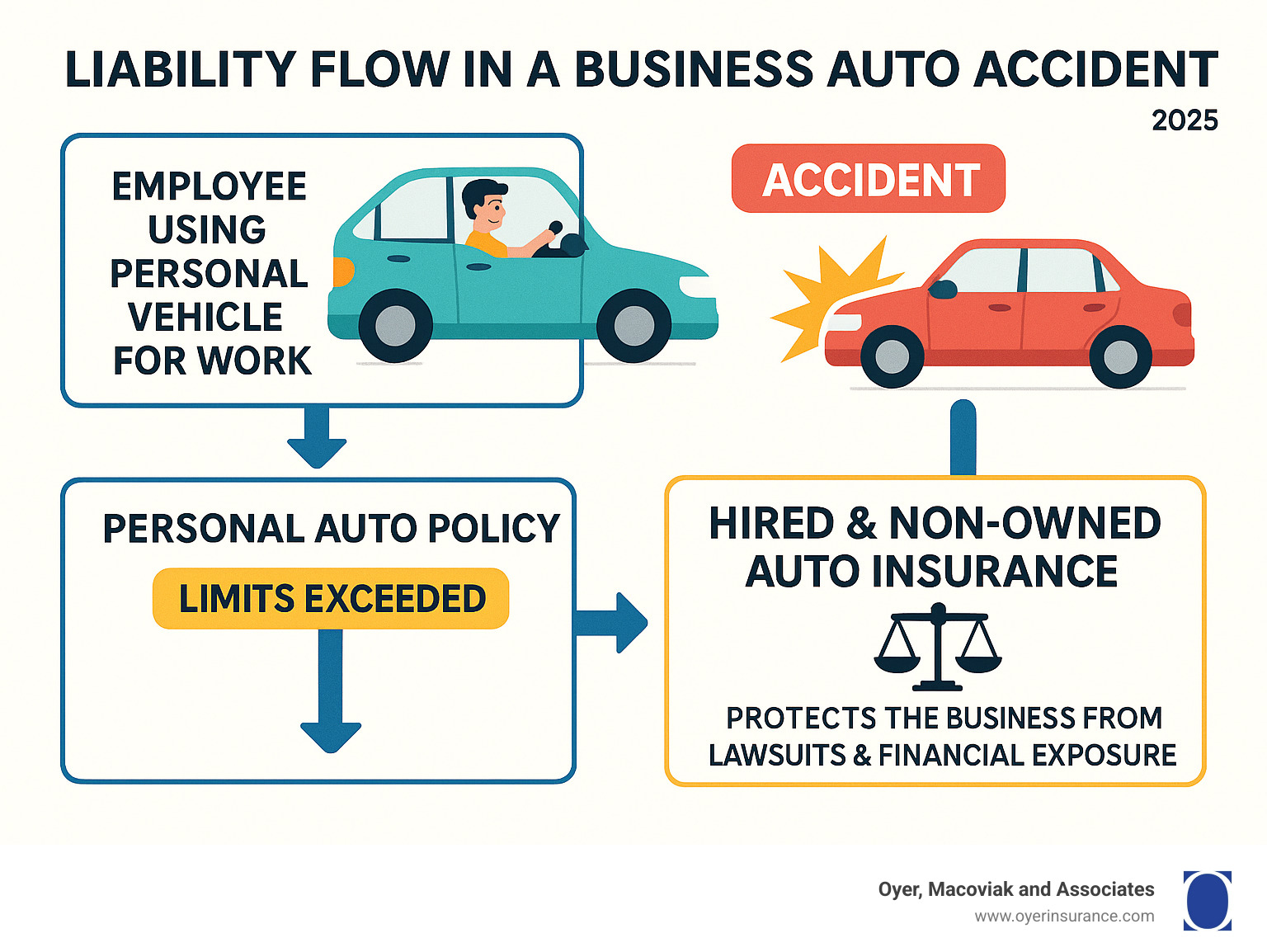
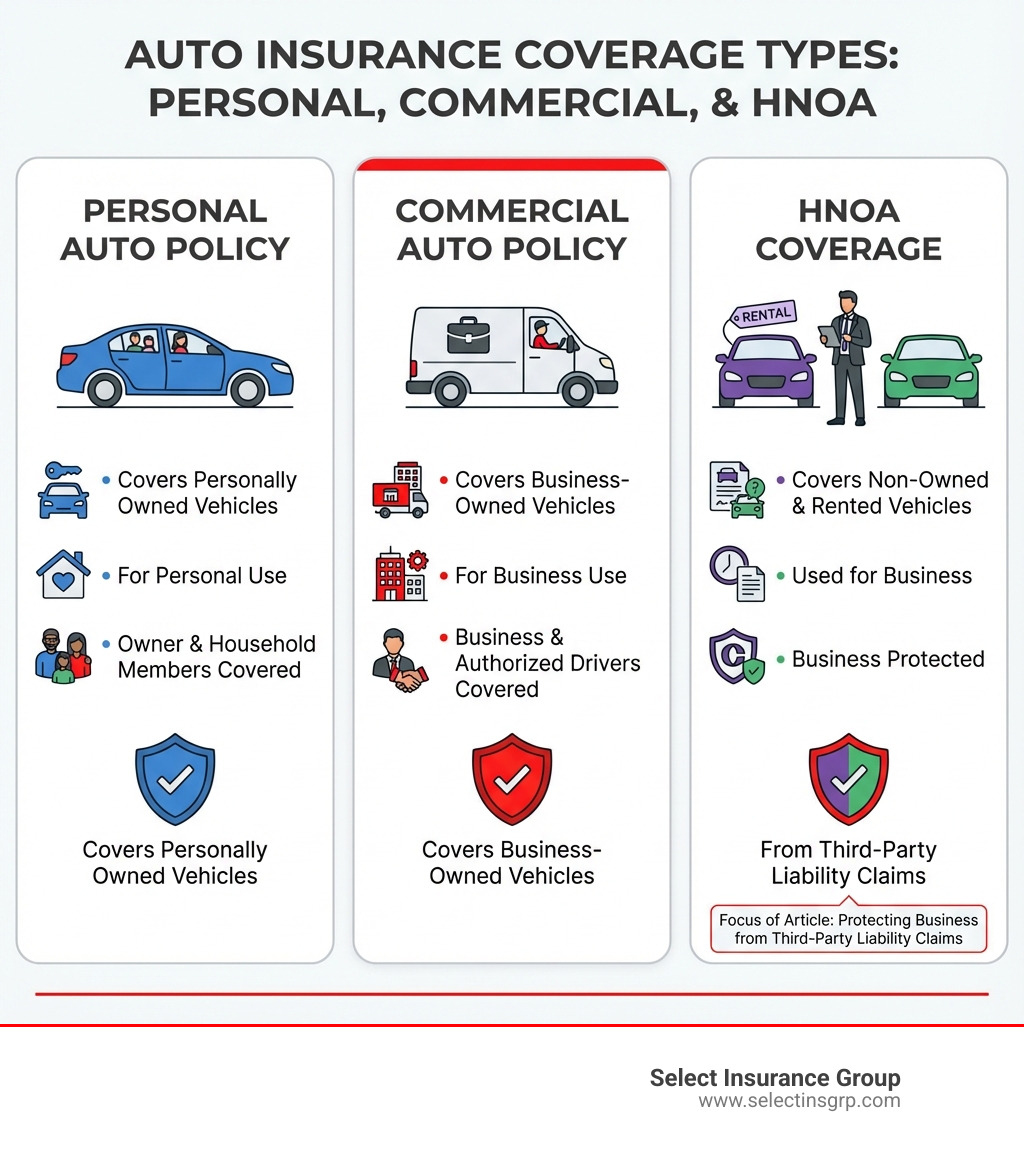
As of 2026, the insurance market categorizes these policies into two distinct streams: personal non-owner policies and Hired and Non-Owned Auto (HNOA) policies for businesses. While both share the "non-owned" label, their applications differ significantly. A personal policy protects you when borrowing a friend’s car or renting a vehicle for personal use. A business policy protects the company if an employee gets into an accident while driving their personal vehicle for company business.
The Core Coverage: Third-Party Liability
The fundamental purpose of a non-owned policy is to provide liability protection. If you are at fault in an accident while driving a vehicle you do not own, the policy helps pay for the damages you cause to others.
Bodily Injury Liability
If you injure another person in an accident, bodily injury liability covers their medical expenses, rehabilitation costs, and lost wages. In the event of a lawsuit, this coverage also pays for your legal defense and any settlements or judgments up to the policy limit. In 2026, with rising medical costs, insurance experts often recommend limits higher than the state-mandated minimums to prevent personal asset seizure following a catastrophic accident.
Property Damage Liability
This covers the cost of repairing or replacing another person’s property. While this usually refers to the other driver's vehicle, it also extends to stationary objects such as fences, buildings, or utility poles. It is important to note that this does not cover the vehicle you are currently driving; it only covers the property of third parties.
Legal Defense Costs
One of the most valuable aspects of a stand-alone non-owned policy is the "duty to defend" clause. If you are sued following an accident, the insurance company is typically obligated to provide a legal defense. These costs—including attorney fees and court filings—are usually covered outside of the policy's liability limits, meaning they do not deplete the funds available to pay for damages.
How the "Excess" Nature of Coverage Works
In most jurisdictions, auto insurance follows the car first and the driver second. This means that if you borrow a friend's car and cause an accident, your friend's insurance is the primary coverage.
Your stand-alone non-owned policy acts as excess coverage. If the damages exceed the limits of the vehicle owner’s policy, your non-owned policy kicks in to cover the remaining balance, up to your specific policy limits. This prevents a "coverage gap" that could otherwise leave you personally liable for thousands of dollars in damages.
However, if the vehicle owner has no insurance at all—which is an increasing risk in 2026—your non-owned policy may move into the primary position, depending on the specific language of your contract and local state laws.
What Stand-Alone Non-Owned Insurance Does NOT Cover
Misconceptions about this insurance can lead to significant financial loss. To understand what the policy "actually covers," one must be equally clear about its exclusions.
- Physical Damage to the Driven Vehicle: If you crash a borrowed car, this policy will not pay to fix that car. There is no Collision or Comprehensive coverage included in a standard non-owned policy. The owner of the car (or their insurance) is responsible for the vehicle's repairs.
- Vehicles Owned by Household Members: Most policies strictly exclude vehicles owned by anyone living in your household, such as a spouse, parent, or roommate. This is because insurance companies expect household vehicles to be listed on a standard personal auto policy.
- Business Use (for Personal Policies): If you have a personal non-owned policy, it generally will not cover you if you are driving for work-related purposes, such as delivering food or transporting clients.
- Medical Payments (MedPay) or PIP: While some states allow for the addition of Personal Injury Protection (PIP) or Medical Payments to a non-owned policy, many standard versions exclude these, focusing solely on the other party’s injuries.
- Regularly Used Vehicles: These policies are intended for "occasional" use. If you have regular, unrestricted access to a specific vehicle, the insurer may deny a claim, arguing that you should have been listed as a driver on the vehicle owner's primary policy.
Comparison of Coverage Types
The following table outlines the differences between a standard Personal Auto Policy (PAP) and a Stand-Alone Non-Owned Policy.
| Feature | Standard Personal Auto Policy | Stand-Alone Non-Owned Policy |
|---|---|---|
| Asset Covered | A specific vehicle (VIN) | The individual driver |
| Liability (BI/PD) | Included | Included (Primary or Excess) |
| Collision/Comprehensive | Available | Not Available |
| Uninsured Motorist | Available | Often Available (State dependent) |
| Household Vehicles | Covered | Excluded |
| Rental Car Coverage | Often extends to rentals | Liability only (No physical damage) |
| Primary Use Case | Car owners | Frequent borrowers/renters |
Why Drivers Opt for Stand-Alone Coverage in 2026
There are several strategic reasons why individuals and businesses maintain these policies even without owning a fleet or a personal vehicle.
Maintaining Continuous Coverage
Insurance companies view "gaps" in insurance history as a sign of high risk. If you sell your car and wait six months to buy a new one, your premiums will likely spike when you return to the market. A stand-alone non-owned policy serves as a "bridge," keeping your insurance history active and your future rates lower.
High-Risk Requirements (SR-22/FR-44)
In many states, drivers who have had their licenses suspended due to DUIs or multiple at-fault accidents are required to file an SR-22 form to prove financial responsibility. If these individuals do not own a car, a non-owned policy is often the only way to satisfy the legal requirement to get their license reinstated.
Supplementing Rental Insurance
While rental car companies offer Liability Insurance Supplements (LIS), these are often expensive on a per-day basis. Frequent travelers in 2026 often find it more cost-effective to carry a stand-alone non-owned policy year-round, which provides a consistent secondary layer of liability protection across all domestic rentals.
The Business Perspective: Hired and Non-Owned Auto (HNOA)
For businesses, "stand-alone" non-owned insurance is a critical risk management tool. Many companies operate under the false assumption that an employee’s personal auto insurance will protect the company in the event of a work-related accident.
If an employee is driving their own car to pick up office supplies or meet a client and causes a major accident, the victim's lawyers will likely sue both the driver and the employer. The employee’s personal policy will likely have low limits that are easily exhausted. An HNOA policy provides the business with its own set of liability limits to cover legal fees and settlements, ensuring that a single car accident doesn't bankrupt the enterprise.
Frequently Asked Questions
Does non-owned auto insurance cover rental car damage?
No. While it provides liability coverage (damage to others) while you are in a rental, it does not cover "Loss of Use" or physical damage to the rental vehicle itself. For that, you would need to rely on a credit card benefit, purchase the rental company’s Collision Damage Waiver (CDW), or have a separate policy that specifically includes physical damage for rentals.
Can I get a non-owned policy if I have a car registered in my name?
Generally, no. Insurance carriers design these policies specifically for those who do not own a vehicle. If the DMV or MVA records show a vehicle registered to you, you will usually be required to purchase a standard personal auto policy.
Is stand-alone non-owned insurance cheaper than regular insurance?
Yes, typically. Because the policy does not include Comprehensive or Collision coverage—and because the insurer isn't insuring a specific high-value asset—the premiums are significantly lower than a standard policy. However, the cost will still be influenced by your driving record and the liability limits you select.
Does this policy cover me if I am driving a U-Haul or large moving truck?
Most personal non-owned policies have weight limits. They are designed for passenger cars, SUVs, and light trucks. Large commercial vehicles or box trucks over a certain Gross Vehicle Weight (GVW) are usually excluded. You should check the "Definitions" section of your policy to see the weight or vehicle type restrictions.
Does it cover me in other countries?
Standard non-owned policies issued in the United States typically cover you within the U.S., its territories, and often Canada. Coverage rarely extends to Mexico or overseas. For international travel in 2026, specialized travel insurance or local rental coverage is required.
Practical Recommendation
Before purchasing a stand-alone non-owned auto insurance policy, verify your specific needs against the policy exclusions. If your primary goal is to protect the vehicle you are borrowing, this policy will not suffice. You should ensure the vehicle owner has a robust policy that includes you as a permissive user.
For those using the policy to maintain continuous coverage or fulfill an SR-22 requirement, ensure the limits you choose are high enough to protect your current net worth. In 2026, a minimum-limit policy is often insufficient to cover the costs of a multi-vehicle accident or serious medical injury. Always request a "Letter of Experience" from your insurer when you eventually transition back to a standard owner's policy to ensure you receive the loyalty and continuous-coverage discounts you've earned.
Image Gallery