Understanding and Utilizing Charity 990 Forms for Transparency and Compliance
Charity 990 forms are official annual information returns filed by tax-exempt organizations with the Internal Revenue Service, providing the public and regulators with comprehensive data on a nonprofit's finances, governance, activitie...
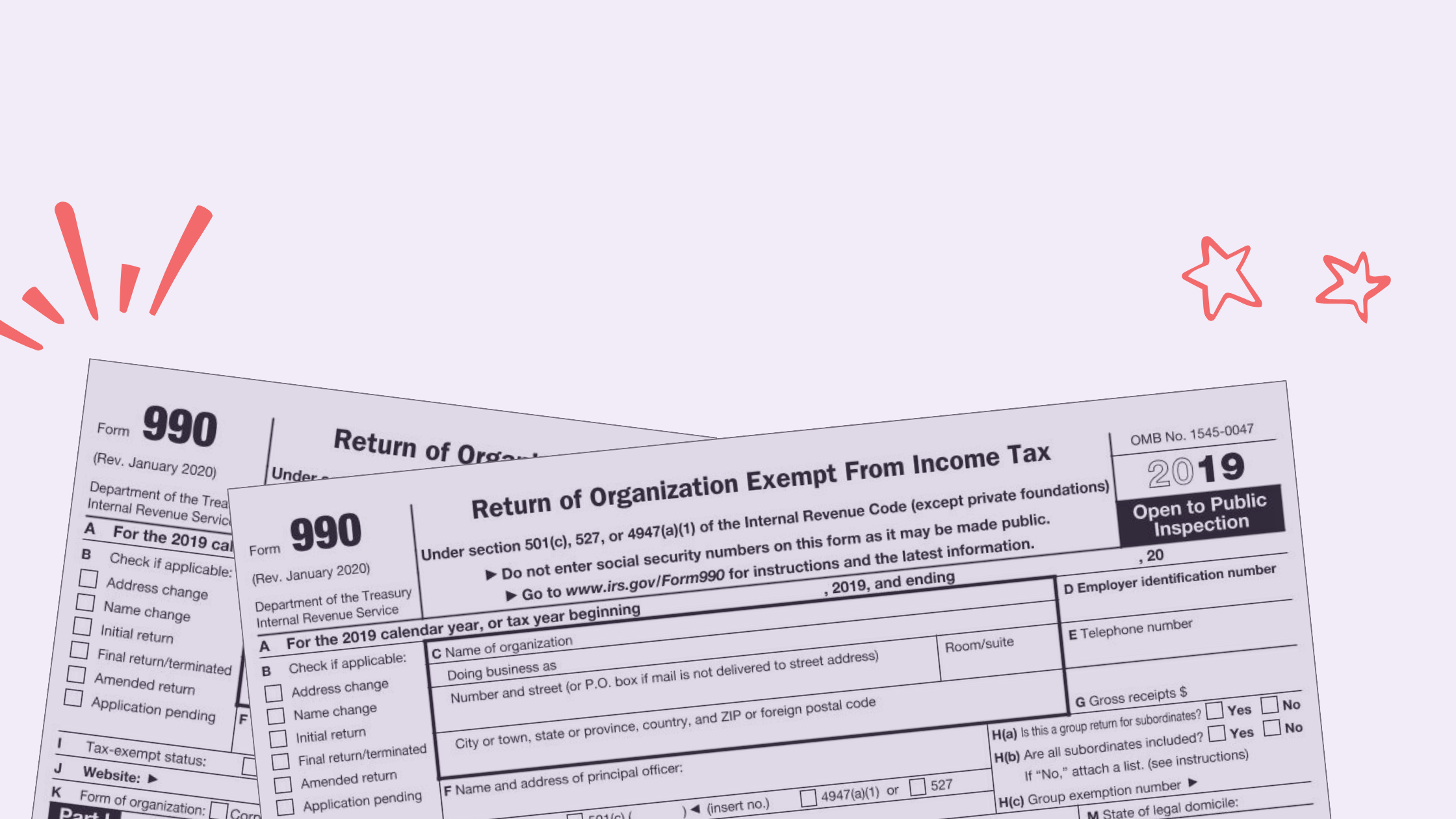
Charity 990 forms are official annual information returns filed by tax-exempt organizations with the Internal Revenue Service, providing the public and regulators with comprehensive data on a nonprofit's finances, governance, activities, and compliance. These documents serve as the primary tool for financial transparency in the charitable sector, allowing donors, researchers, and government agencies to evaluate how an organization utilizes its resources.
Contents
What is a Charity 990 Form and Why Does It Matter?
The Internal Revenue Service Form 990 series is a collection of reporting documents that tax-exempt organizations must submit annually. Unlike for-profit corporations that report earnings to shareholders, public charities, foundations, and other Section 501(c) organizations use Form 990 to report their financial health to the federal government and the public. Because these entities enjoy tax-exempt status—meaning they do not pay federal income tax on exempt-purpose revenue—the public has a legal right to inspect these filings.
For donors and grantmakers, the Form 990 is an indispensable due diligence instrument. It cuts through marketing language to reveal hard financial realities: executive compensation structures, program spending ratios versus administrative overhead, fundraising expenses, and investment portfolios. Regulators, including the Internal Revenue Service and state charity officials, rely on these forms to monitor compliance with tax laws, ensure that organizations do not engage in prohibited political activities, and verify that they continue to serve a valid public interest.
Furthermore, researchers and watchdog organizations aggregate Form 990 data to study the economic impact of the nonprofit sector. Understanding how to read and interpret these filings empowers stakeholders to make informed decisions about where to invest their philanthropic dollars, ensuring that funds reach efficient and accountable organizations.
Different Variations of the IRS Form 990
Organizations vary widely in size, revenue structure, and operational complexity, which is why the Internal Revenue Service provides several versions of the Form 990. Choosing the correct form depends on an organization's gross receipts and total assets at the end of the tax year. Using the appropriate version ensures proper compliance while avoiding unnecessary burdens on smaller entities.
Form 990-N (e-Postcard)
Designed for the smallest tax-exempt organizations, Form 990-N is a simple electronic notice rather than a full financial return.
- Eligibility: Organizations with normal annual gross receipts that are normally $50,000 or less.
- Requirements: Filers must provide basic identifying information, such as the organization's legal name, mailing address, Employer Identification Number (EIN), principal officer details, and confirmation that the organization's annual gross receipts are still under the threshold.
- Filing Method: Must be submitted electronically through the official Internal Revenue Service portal or approved providers.
Form 990-EZ
Form 990-EZ is a shorter version of the standard return, tailored for mid-sized organizations.
- Eligibility: Organizations with gross receipts less than $200,000 and total assets less than $500,000 at the end of the tax year.
- Requirements: Requires more financial detail than the 990-N, including balance sheets, revenue statements, and functional expense breakdowns, but remains less complex than the full Form 990.
Form 990 (Standard Long Form)
The standard Form 990 is a comprehensive reporting instrument required for larger organizations.
- Eligibility: Organizations with gross receipts of $200,000 or more, or total assets of $500,000 or more.
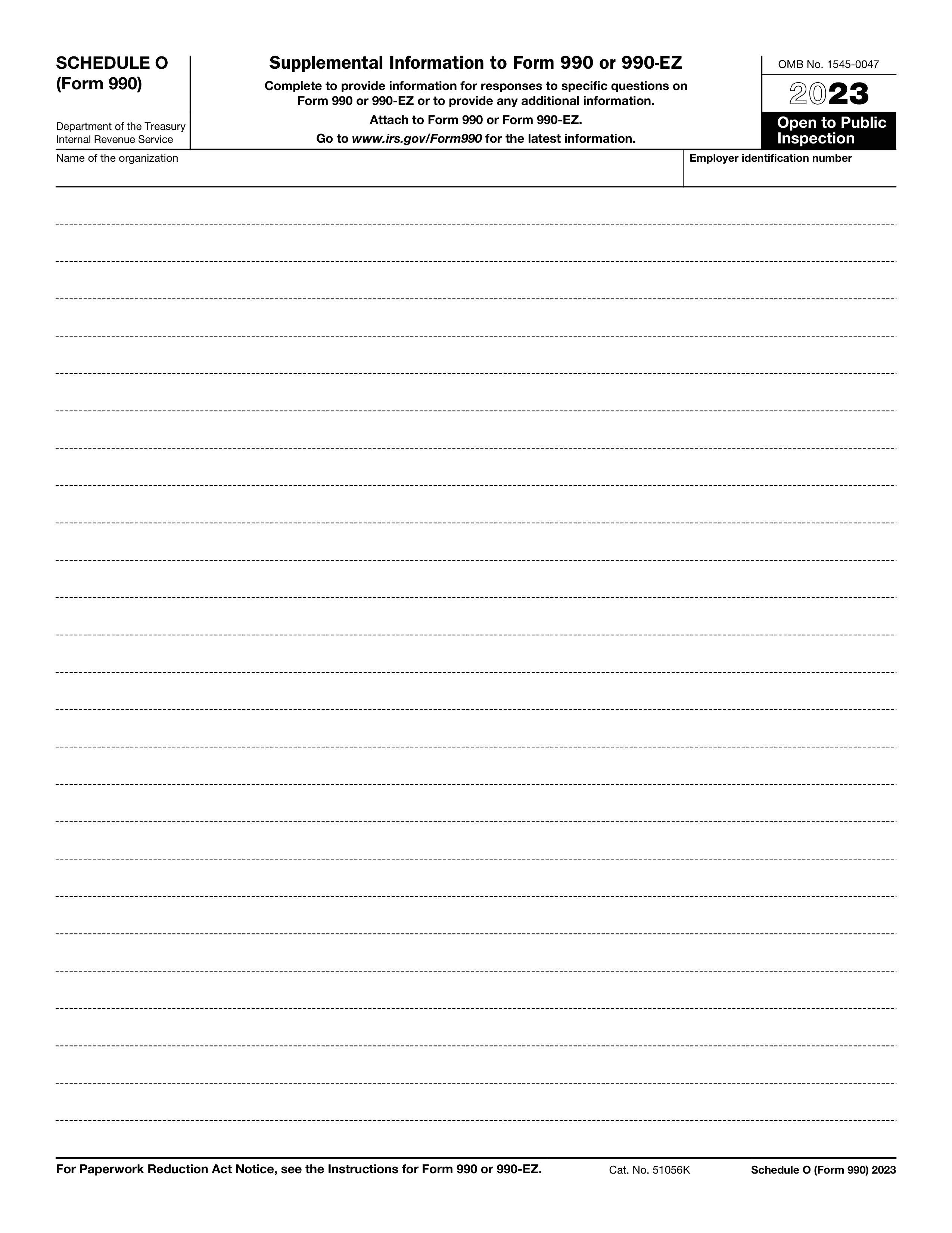
- Requirements: A multi-page document consisting of a core form and up to 16 specialized schedules. It captures deep insights into governance, independent board members, whistleblower policies, conflict of interest disclosures, and detailed executive compensation.
Form 990-PF and Form 990-T
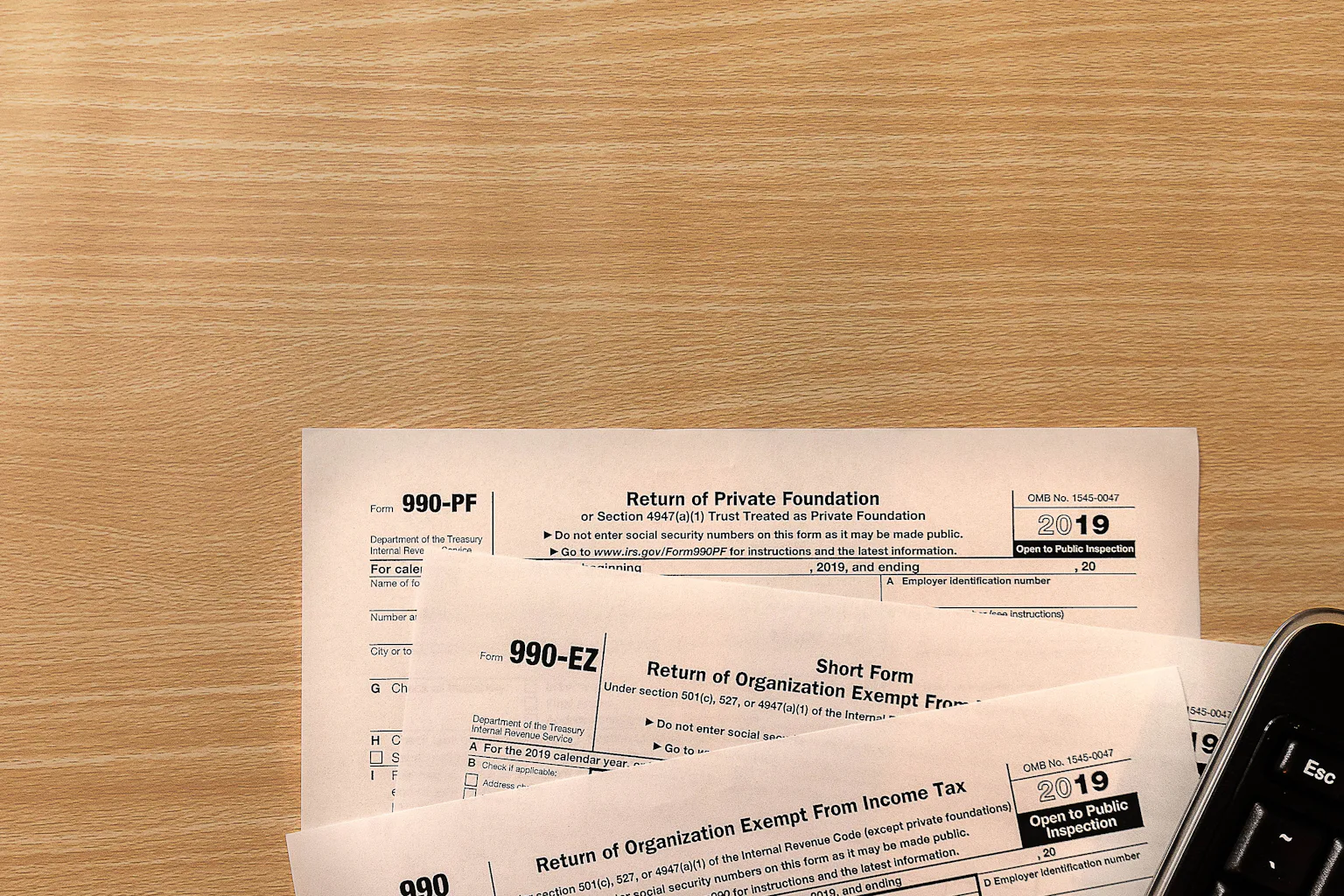
- Form 990-PF: Specifically for private foundations, regardless of their financial size. It calculates the net investment income tax and tracks qualifying distributions.
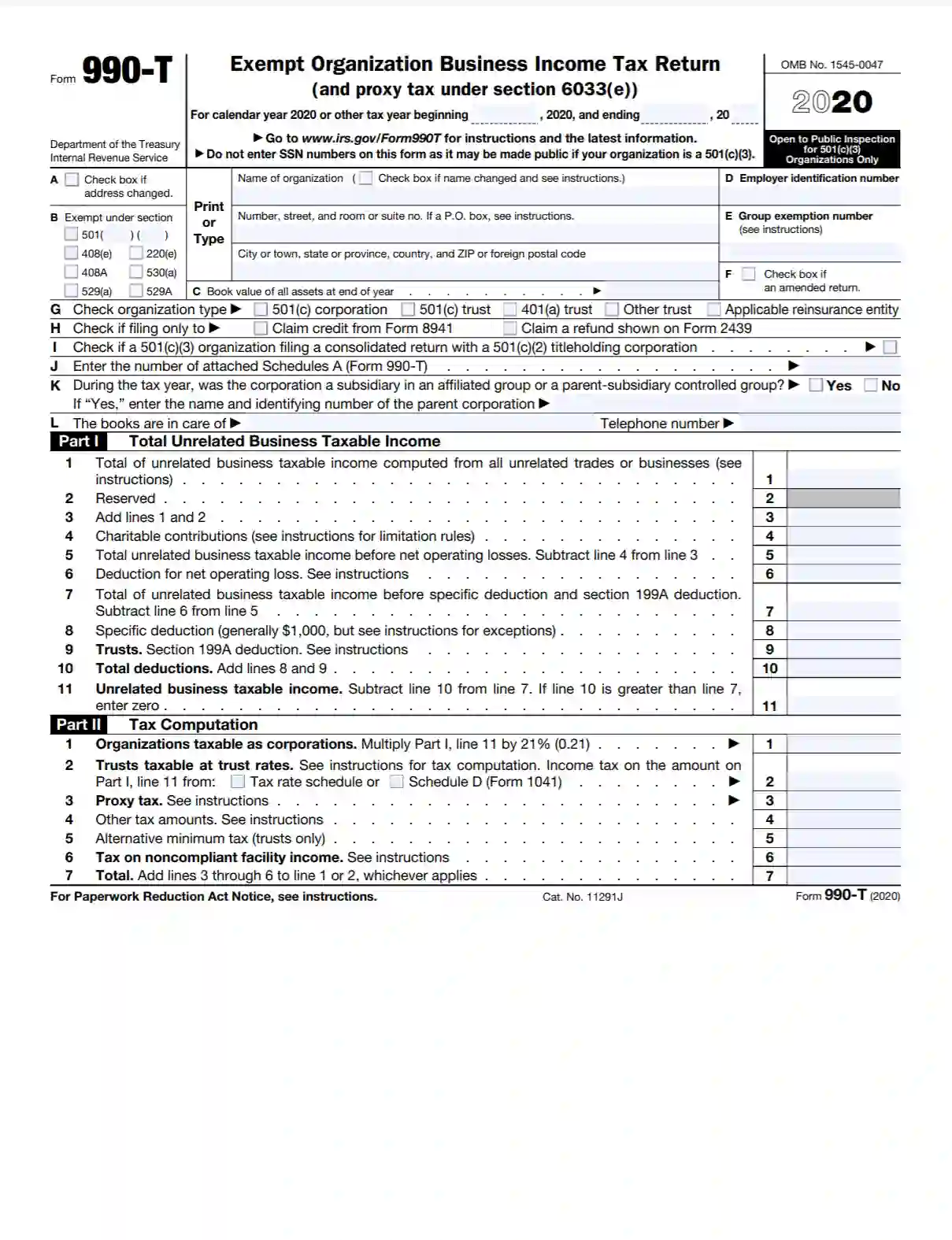
- Form 990-T: Used by tax-exempt organizations to report unrelated business income tax (UBIT) when they engage in trade or business activities unrelated to their exempt purpose.
| Form Type | Gross Receipts Threshold | Total Assets Threshold | Primary Use Case |
|---|---|---|---|
| Form 990-N | Normally $50,000 or less | Not strictly capped | Small organizations filing electronic notices |
| Form 990-EZ | Less than $200,000 | Less than $500,000 | Mid-sized nonprofits requiring simplified reporting |
| Form 990 | $200,000 or more | $500,000 or more | Large public charities requiring comprehensive disclosures |
| Form 990-PF | N/A | N/A | Private foundations regardless of asset size |
Key Components and Anatomy of a Standard Form 990
A standard Form 990 is structured to provide a holistic view of an organization's operations. Navigating the document requires understanding its core sections, which transition from high-level summaries into granular accounting schedules.
Part I: Summary
Part I provides a high-level overview of the organization's mission, current-year versus prior-year revenues and expenses, total asset and liability counts, and employee headcounts. This section is ideal for a quick snapshot of financial stability. Readers can immediately see whether an organization operated at a surplus or deficit and how much revenue was derived from contributions versus program services.
Part II: Signature Block
This section requires the signature of an authorized officer, such as the president, executive director, or treasurer, certifying under penalties of perjury that the return is true, correct, and complete. It also includes information on paid preparers if an external CPA firm compiled the return.
Part III: Statement of Program Service Accomplishments
Nonprofits exist to fulfill a mission rather than generate profit for owners. Part III details the organization's primary exempt achievements during the year. Organizations must list their top three program services, detailing the expenses incurred, grants issued, and outputs or services delivered to beneficiaries.
Part IV: Checklist of Required Schedules
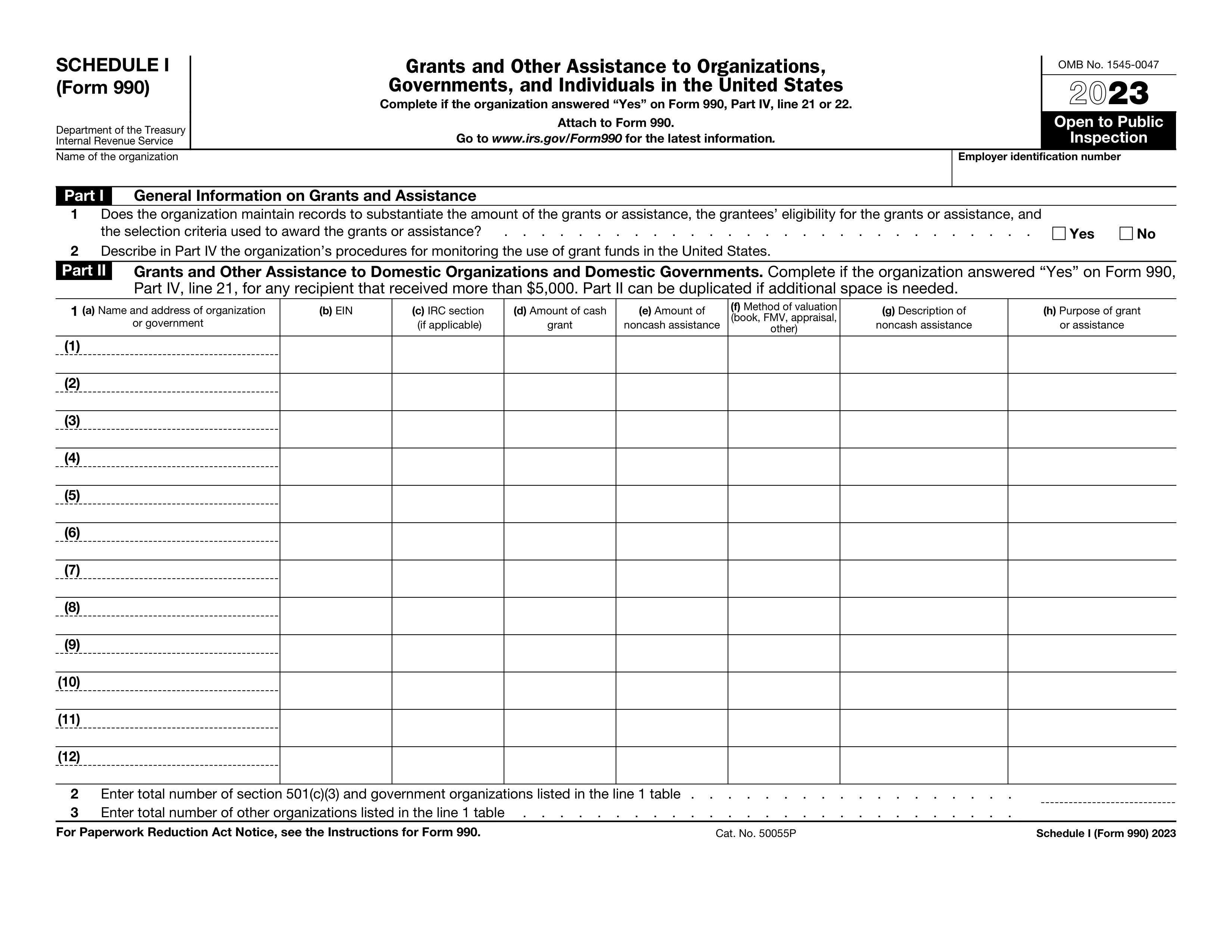
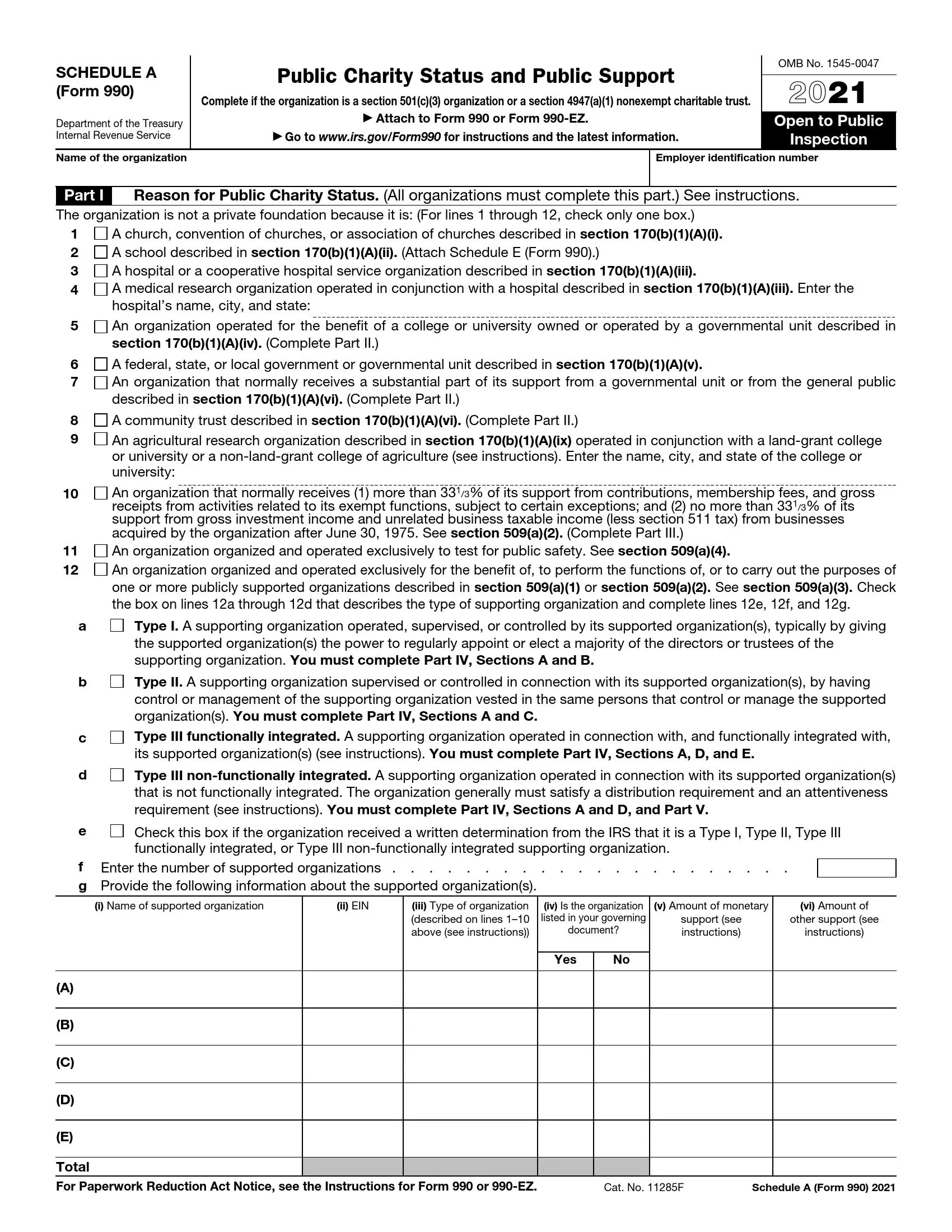
Acting as a diagnostic table, Part IV asks a series of "Yes/No" questions to determine which supplemental schedules the organization must attach. For example, if an organization engaged in lobbying, received foreign grants, or operated fundraising events, Part IV directs the filer to specific lettered schedules (Schedule A through Schedule O).
Part V and VI: Other IRS Filings and Governance
- Part V: Tracks compliance with other tax reporting rules, such as payroll tax withholdings and payments of backup withholding.
- Part VI: Focuses on governance, management, and disclosure. It evaluates whether the board of directors is independent, whether minutes are recorded for meetings, and whether the organization enforces specific policies like conflict-of-interest, document retention, and whistleblower protection.
Part VII: Compensation of Officers, Directors, Trustees, and Key Employees
Transparency advocates pay close attention to Part VII, which lists the compensation paid to current officers, directors, trustees, key employees, and highest-compensated independent contractors. This section details base compensation, bonus payments, retirement plan contributions, and non-taxable benefits.
How to Access and Verify Charity 990 Forms
Accessing charity 990 forms is straightforward due to federal transparency mandates. Because these documents are public records, several reliable pathways exist for retrieving them.
Official Internal Revenue Service Sources
The Internal Revenue Service maintains electronic data files of all digitally filed Form 990 returns. These raw datasets can be accessed through official tax database portals. However, raw data files often require specialized software or programming tools to parse effectively.
Reputable Nonprofit Watchdog Platforms
Several trusted platforms aggregate, digitize, and display Form 990 data in user-friendly formats:
- GuideStar (by Candid): One of the largest repositories of nonprofit information. Users can create a free account to view digitized Form 990 filings for almost any registered U.S. charity.
- ProPublica Nonprofit Explorer: A free database that allows users to search millions of tax filings, view summary metrics, and download complete PDF copies of historical returns dating back multiple years.
- Charity Navigator: Evaluates charities using financial health and accountability metrics derived directly from their Form 990 filings.
Direct Requests to the Organization
Federal regulations mandate that tax-exempt organizations must provide copies of their three most recent annual information returns and their original application for tax-exempt status (Form 1023 or Form 1024) to any individual who requests them. Requests can be made in person or in writing. Organizations may charge a reasonable copying fee for physical delivery, but digital copies provided via email or downloaded from their website must generally be made available without charge.
Common Mistakes and Compliance Pitfalls in Form 990 Preparation
Filing an accurate Form 990 requires meticulous bookkeeping and cross-functional collaboration between executive leadership, board members, and certified public accountants. Errors can trigger Internal Revenue Service audits, delay tax processing, or damage public trust.
Late Filing and Automatic Revocation
Meeting the filing deadline is critical. For calendar-year organizations, Form 990 is typically due on the 15th day of the 5th month following the close of the tax year (May 15th). Organizations can request a single automatic 6-month extension by filing Form 8868 before the original deadline. Failing to file a required Form 990 or 990-N for three consecutive years results in the automatic revocation of the organization's tax-exempt status under federal law.
Misclassification of Expenses
Nonprofits often struggle with allocating expenses accurately across three categories: program services, management and general, and fundraising. Watchdog organizations scrutinize these ratios. Artificially inflating program expenses while burying fundraising costs violates accounting standards and misleads donors. Accurate timesheets, expense reports, and overhead allocations are necessary to substantiate Part IX functional expense reporting.
Incomplete Governance Disclosures
Many compliance penalties stem from incomplete disclosures regarding governance policies in Part VI. If an organization states that it has a conflict of interest policy but fails to enforce or document annual disclosures, it risks regulatory penalties and reputational harm. Transparency regarding board independence is equally critical; familial relationships among board members must be fully disclosed.
Frequently Asked Questions About Charity 990 Forms
Are all charities required to file a Form 990?
Most 501(c) organizations must file a Form 990, 990-EZ, or 990-N annually. However, certain exceptions exist. Churches, integrated auxiliaries of churches, and conventions or associations of churches are generally exempt from filing Form 990, regardless of their revenue. Additionally, certain state-level or governmental instrumentalities that hold tax-exempt status may not be required to file.
What happens if a charity fails to file its Form 990 on time?
The Internal Revenue Service assesses financial penalties for late filings, which scale based on the organization's gross receipts. For organizations with gross receipts under $1,000,000, the penalty is typically $20 per day for each day the failure continues, up to a maximum of $10,000 or 5 percent of the organization's gross receipts, whichever is less. For larger organizations, the daily penalty is higher. Most importantly, failing to file for three consecutive years results in automatic revocation of tax-exempt status.
How can a donor use a Form 990 to spot financial red flags?
Donors should examine several key indicators on a Form 990. First, look at the program expense ratio (program expenses divided by total expenses); a very low ratio indicates heavy spending on overhead. Second, review Part VII to check if executive compensation is reasonable relative to the organization's overall budget. Third, check Part VI to see if the board is comprised mostly of independent members who are not financially related to the executive director. Finally, review balance sheet trends in Parts X to ensure liabilities do not exceed assets.
Is Form 990 data available to the general public for free?
Yes. Federal law requires tax-exempt organizations to make their annual returns and exemption applications available for public inspection. Furthermore, digital platforms like ProPublica Nonprofit Explorer and GuideStar provide free public access to downloadable PDF copies of Form 990 filings for hundreds of thousands of organizations across the United States.
Can the public request a copy of a charity's Form 990 directly from the organization?
Yes. Under Internal Revenue Service regulations, organizations must fulfill public inspection requests promptly. If a request is made in person, copies must be provided that same day. If requested in writing, the organization generally has 30 days to provide copies. Organizations are permitted to charge a reasonable fee for reproduction and actual postage costs, but they cannot charge search fees.
Practical Next Steps for Evaluating Nonprofits
When interacting with charity 990 forms for research or compliance purposes, follow a structured workflow to maximize efficiency. Begin by identifying the exact legal name and Employer Identification Number of the target organization to avoid confusion with similarly named entities. Next, navigate to a reliable repository like ProPublica or GuideStar to download the three most recent filings, allowing you to track multi-year financial trends rather than relying on a single isolated year. Review Part I for revenue health, Part III for mission alignment, Part VI for governance integrity, and Part VII for compensation transparency. If discrepancies or questions arise, contact the organization directly or consult a qualified nonprofit tax professional for guidance.
Image Gallery