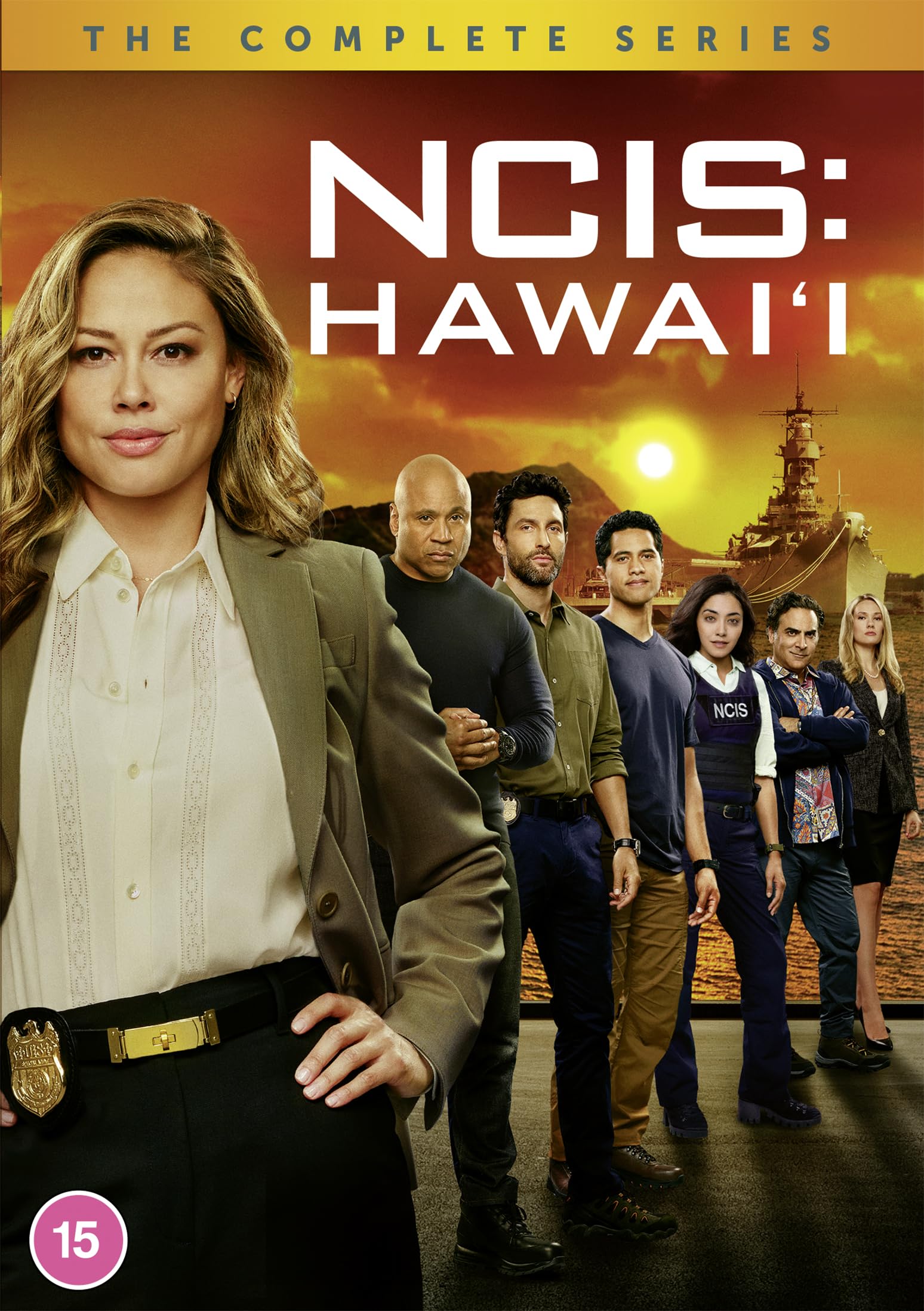
Why NCIS: Hawaiʻi Was Cancelled: Factors Behind the Decision
The cancellation of NCIS: Hawaiʻi stemmed primarily from a combination of shifting corporate strategies at CBS, high production costs associated with on-location filming in the islands, and a tightening network schedule that left littl...
The cancellation of NCIS: Hawaiʻi stemmed primarily from a combination of shifting corporate strategies at CBS, high production costs associated with on-location filming in the islands, and a tightening network schedule that left little room for aging or expensive bubble shows. Despite maintaining a stable linear viewership and a dedicated fan base, the series did not align with the network's long-term financial and programming outlook for the 2024–2025 television season.
Contents
The television landscape undergoes continuous evolution, influenced by corporate mergers, changing consumer habits, and the financial pressures of modern production economics. When CBS announced the cancellation of NCIS: Hawaiʻi in April 2024 after three seasons, it sent shockwaves through its loyal audience and the entertainment industry alike. As part of a sprawling, multi-decade franchise, the series held a unique place as the first installment to feature a female lead. Understanding why NCIS: Hawaiʻi was cancelled requires a deep dive into network television economics, studio ownership dynamics, and the broader shifts reshaping broadcast media.
The Broadcast Economics of Modern Network Television
To understand why network executives decide to cancel a show that appears to pull in respectable ratings, one must examine the fundamental business model of broadcast television. Unlike streaming platforms that evaluate success based on subscriber acquisition and global engagement metrics, traditional broadcast networks rely heavily on advertising revenue, live-plus-same-day viewership, and syndication potential.
By the time NCIS: Hawaiʻi reached its third season, television economics had grown increasingly hostile toward expensive procedural dramas. Networks face declining linear television audiences as viewers migrate to subscription video-on-demand services. Consequently, advertising revenues fail to scale at the same pace as production expenses, squeezing profit margins for network executives. Shows that do not own their intellectual property outright or secure highly lucrative international distribution deals often struggle to justify their budgets, regardless of how stable their domestic ratings appear on paper.
Production Costs and the Logistical Realities of Filming in Hawaiʻi
Location filming is inherently expensive, and shooting a weekly network procedural on location in the Hawaiian Islands introduces massive logistical hurdles and financial overhead. Unlike shows filmed on soundstages in Los Angeles or regional production hubs with generous tax incentives, NCIS: Hawaiʻi had to absorb the high costs of transporting cast and crew, shipping specialized equipment across the Pacific Ocean, and managing local housing and operational logistics.
These geographical realities inflate per-episode budgets significantly compared to mainland-based productions. While state tax credits and incentives provided some financial relief, they were not enough to offset the compounding expenses of a 22-episode or truncated 10-episode broadcast order entirely. As networks face corporate mandates to trim budgets and improve operational efficiency, high-overhead location shoots become prime targets for cancellation when compared to more easily replicated studio environments.
Corporate Strategy and Schedule Real Estate at CBS
During the 2023–2024 television cycle, CBS faced an unprecedented scheduling bottleneck. The network boasted a lineup of highly stable, top-performing series and had already committed to launching new properties, such as Matlock and Watson, alongside franchise extensions like Tracker and NCIS: Origins.
Network schedules are finite real estate. To bring in new programming that could potentially capture younger demographics or open up fresh advertising avenues, executives had to make difficult cuts. Within the NCIS universe, CBS chose to invest in NCIS: Origins—a prequel series exploring a young Leroy Jethro Gibbs—and to maintain flagship anchors like the original NCIS. NCIS: Hawaiʻi found itself squeezed out of the schedule simply because the network ran out of open time slots and preferred to diversify its portfolio with fresh concepts.
| Factor | Impact on Cancellation | Description |
|---|---|---|
| Production Costs | High | Location filming in Hawaiʻi significantly increased transportation, shipping, and operational expenses per episode. |
| Schedule Real Estate | Severe | CBS faced a crowded lineup with incoming series like Matlock and NCIS: Origins, leaving zero open time slots. |
| Studio Ownership Dynamics | Unfavorable | The series was produced by CBS Studios, but shifting international sales and licensing models made profitability harder to sustain. |
| Syndication Milestones | Reached/Approaching | Having crossed the three-season threshold, the show had accumulated enough episodes for localized syndication, reducing urgent network pressure to renew. |
Studio Ownership and Syndication Pressures
Another critical factor in network renewal decisions involves studio ownership and the pursuit of the magical syndication threshold—historically around 80 to 100 episodes. NCIS: Hawaiʻi concluded its run with 54 episodes across three seasons. While this is a substantial library for cable syndication and streaming licensing, it sits below the traditional threshold that guarantees maximum long-term profitability for the studio.
Furthermore, CBS Studios co-produced the series alongside CBS Entertainment. In an era where traditional syndication markets have weakened due to the dominance of proprietary streaming services, the financial calculus of keeping a mid-tier procedural alive just to reach syndication numbers no longer holds the same weight. If a show's licensing fees and international sales do not comfortably outpace its rising production costs—which typically increase with cast contract renewals after three seasons—the studio has a financial incentive to pull the plug.
Fan Backlash, Save Campaigns, and the Industry Response
The cancellation announcement immediately triggered widespread disappointment among viewers, prompting coordinated fan campaigns, petitions, and social media blitzes under banners like #SaveNCISHawaii. Cast members, including lead actor Vanessa Lachey, publicly expressed their shock and heartbreak over the abrupt end to a series that had broken important ground for representation on prime-time television.
Despite impassioned fan efforts and discussions between production entities to shop the series to other networks or streaming platforms, no alternative home emerged. Finding a secondary buyer for an established, high-budget procedural is exceptionally rare due to prohibitive licensing costs, existing ownership rights, and the financial mismatch between broadcast budgets and streaming platforms' willingness to rescue cancelled network shows. Consequently, the series finale served as a permanent conclusion rather than a cliffhanger leading to a revival.
Frequently Asked Questions
Why did CBS cancel NCIS: Hawaiʻi despite stable ratings?
While the show maintained respectable ratings, broadcast renewals depend on a complex mix of advertising revenue, rising production costs, and schedule availability. High location expenses in Hawaiʻi and a crowded CBS development slate made it difficult for the network to justify the financial commitment for another season.
Was NCIS: Hawaiʻi shopped to other networks or streaming services?
Producers explored potential rescue options following the cancellation announcement. However, high production budgets and complex rights ownership structures presented significant barriers, and no streaming service or cable network stepped forward to pick up the series.
How many seasons and episodes did NCIS: Hawaiʻi complete?
The series ran for three seasons, comprising a total of 54 episodes broadcast between September 2021 and May 2024 on CBS.
Did budget cuts affect other CBS shows at the same time?
Yes. The television industry experienced a broader contraction following post-pandemic adjustments, strikes, and declining linear ad revenue. CBS and other major networks pruned multiple bubble shows and expensive productions to streamline operations.
Will there be other spin-offs in the NCIS franchise?
Yes. CBS continues to expand the franchise with projects like NCIS: Origins, focusing on the early career of Leroy Jethro Gibbs, demonstrating that the network prefers to pivot toward fresh intellectual property within the same universe.
Summary and Final Perspective
The cancellation of NCIS: Hawaiʻi highlights the relentless financial and logistical realities of modern television production. Driven by the mounting expenses of location shooting, corporate cost-cutting measures, and a congested broadcast schedule, CBS opted to redirect its resources toward new programming and franchise expansions. Although fans mobilized quickly to protest the decision, the economic framework of contemporary network television ultimately dictated the show's conclusion.
Image Gallery