Boeing 777 Economy Class Comfort Unveiled: What Passengers Can Actually Expect
The Boeing 777 economy class experience offers a balanced mix of spatial engineering and airline-customized configurations, typically featuring a 3-4-3 or 2-5-2 seating layout depending on the carrier, standard 17-to-18-inch seat width...
The Boeing 777 economy class experience offers a balanced mix of spatial engineering and airline-customized configurations, typically featuring a 3-4-3 or 2-5-2 seating layout depending on the carrier, standard 17-to-18-inch seat widths, and modern inflight entertainment systems designed to maximize long-haul passenger comfort.
Contents
The Boeing 777 has remained the backbone of long-haul international aviation for decades. As airlines continually update their cabins to meet rising passenger expectations, understanding the realities of flying in economy class aboard this iconic widebody aircraft requires looking past airline marketing materials. From seat geometry and cabin pressurization to layout variations and noise levels, the economy experience on a Boeing 777 varies significantly depending on which carrier you fly and how they have chosen to configure their aircraft.
Understanding the Boeing 777 Cabin Architecture
To truly grasp economy class comfort on the Boeing 777, one must first examine the aircraft's physical dimensions. The twin-engine widebody jet features a cabin cross-section designed with flexibility in mind. Originally, airlines operated the 777 with a standard nine-abreast seating arrangement in economy, structured as a 2-5-2 or 3-3-3 configuration. This setup provided generous aisle widths and, in the case of the 2-5-2 layout, minimized the number of middle seats for passengers traveling together.
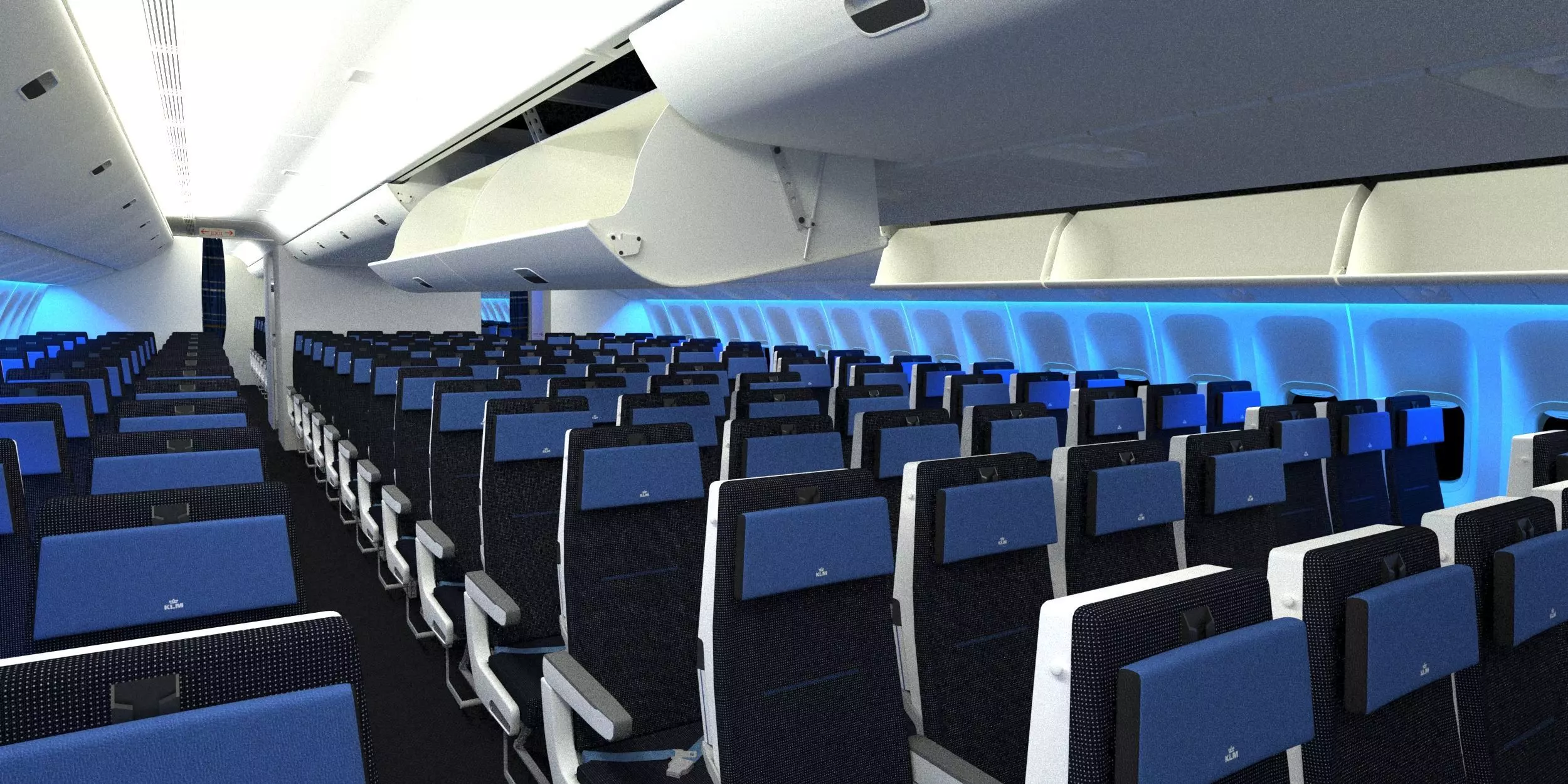
However, industry economics shifted over time. As fuel costs fluctuated and airlines sought to maximize revenue per square foot, the ten-abreast configuration (3-4-3 seating) became the dominant standard across most major international carriers operating the 777-200, 777-300, and the newer 777X family.
- The 3-4-3 Configuration: This layout increases density by narrowing individual seats—typically reducing seat width from roughly 18.5 inches down to 17 inches—and narrowing the aisles slightly to accommodate an extra passenger per row.
- The 3-3-3 Configuration: Retained by select premium-focused carriers, this layout offers noticeably wider seats and more spacious aisles, significantly reducing shoulder-to-shoulder friction on long flights.
Seat Dimensions, Pitch, and Ergonomics
Seat comfort in economy is dictated by three primary measurements: pitch, width, and recline. Understanding how these metrics play out on a Boeing 777 helps passengers set realistic expectations for journeys spanning eight to fourteen hours.
Seat Pitch
Seat pitch refers to the distance from a point on one seat to the exact same point on the seat in front of it. On a Boeing 777, economy seat pitch typically ranges from 31 to 32 inches on standard legacy carriers, though some low-cost or charter operators may squeeze this down to 29 or 30 inches. Premium long-haul carriers may offer up to 33 or 34 inches of pitch. Taller passengers should pay careful attention to these numbers, as knee clearance can vary drastically between airlines operating the exact same aircraft model.
Seat Width and Armrests
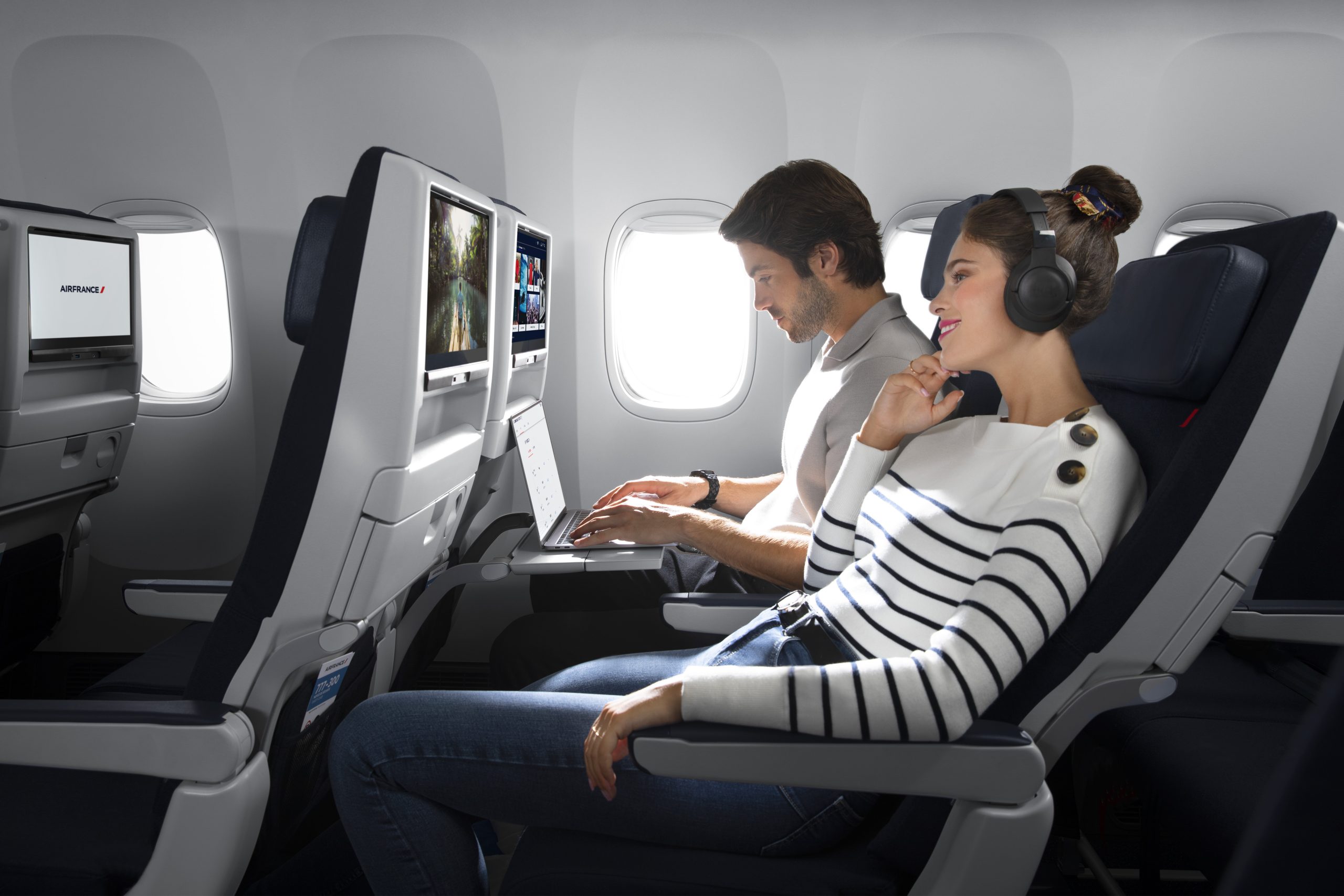
In a 3-4-3 cabin layout, seat widths generally hover around 17 inches. While this is standard for modern long-haul widebody aircraft, it requires careful seat selection—particularly avoiding middle seats if possible. Armrests on modern 777 economy seats are often articulated to fold completely flush with the seatback, though fixed aisle armrests are common to protect the aisle structure from cart damage during meal services.
Ergonomic Support and Cushioning
Modern 777 economy cabins frequently feature slimline seats. While slimline seats save physical space to allow for slightly better legroom without changing the pitch, their cushioning is often firmer than older generation seats. Look for adjustable headrests with foldable wings, which provide crucial lateral neck support during sleep.
| Configuration Style | Typical Seat Width | Aisle Width | Pros | Cons |
|---|---|---|---|---|
| 3-3-3 Layout | 18.0 - 18.5 inches | Generous | Wider personal space, fewer middle seats | Less common on modern high-density fleets |
| 3-4-3 Layout | 17.0 - 17.2 inches | Standard | Higher seat availability, competitive pricing | Narrower seats, tighter shoulder room |
| Bulkhead / Exit Rows | Standard | Varies | Maximum legroom, no recline into your space | Fixed armrests, tray tables in armrests, proximity to galleys |
Inflight Entertainment (IFE) and Connectivity
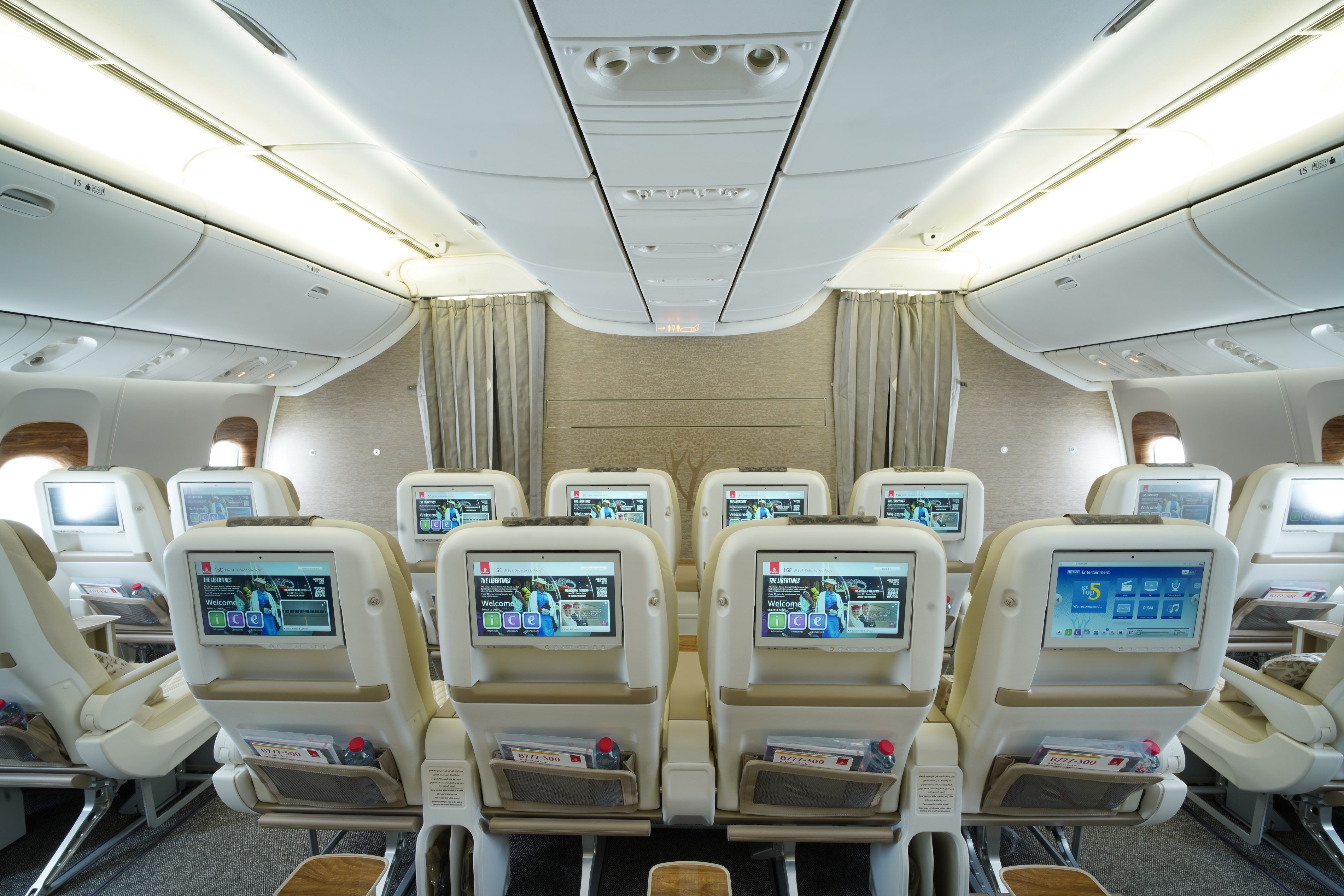
The digital infrastructure of a Boeing 777 economy cabin has evolved dramatically. Modern retrofits and factory-fresh deliveries feature advanced AVOD (Audio Video On Demand) systems embedded in the seatbacks.
- Screen Technology: High-definition capacitive touchscreens ranging from 9 to 11 inches are standard on most updated 777 fleets, offering responsive navigation, wide viewing angles, and anti-glare coatings.
- Power and Charging: USB-A and USB-C charging ports, alongside universal AC power outlets shared between seats, ensure devices remain charged throughout transoceanic flights.
- Connectivity: Many airlines equip their 777 fleets with satellite-based Wi-Fi. While streaming-grade connectivity is increasingly common, speeds and pricing models vary widely by airline, ranging from free messaging tiers to expensive hourly data caps.
Cabin Environment: Noise, Air Quality, and Lighting
Passenger fatigue on long-haul flights is heavily influenced by environmental factors inside the aircraft cabin, areas where the Boeing 777 performs quite well due to its engineering pedigree.
Cabin Noise Levels
Twin-engine widebody aircraft like the 777 are generally quieter than older four-engine jets. However, acoustic comfort varies by row. Seats located forward of the wing are noticeably quieter, while seats situated directly adjacent to or behind the engine exhaust plume experience a higher decibel hum. Furthermore, proximity to aft galleys and lavatories introduces high foot-traffic noise throughout the flight.
Cabin Pressure and Air Quality
The Boeing 777 maintains a cabin altitude pressure equivalent to approximately 6,000 to 8,000 feet, depending on the specific operational profile set by the airline. Advanced HEPA (High-Efficiency Particulate Air) filtration systems refresh the cabin air every two to three minutes, removing dust, allergens, and bacteria while maintaining regulated humidity levels to mitigate dehydration.
Lighting Systems
Many modern 777 cabins feature dynamic LED lighting systems (such as Boeing's Signature Interior or customized airline mood lighting). These systems simulate natural sunrise and sunset cycles across different time zones, helping to reduce the physiological impacts of jet lag during ultra-long-haul journeys.
Practical Strategies for Maximizing Comfort
Securing a comfortable journey in a Boeing 777 economy cabin requires proactive planning long before boarding begins.
- Strategic Seat Selection: Use seat-mapping resources like SeatGuru or the airline's interactive booking map to identify your aircraft's specific configuration. Avoid seats directly in front of emergency exits (which may lack recline) and rows immediately abutting lavatories.
- Invest in Travel Ergonomics: Bring a supportive travel pillow that stabilizes your neck to prevent head-bobbing in standard 17-inch seats. Compression socks are also highly recommended to promote circulation during flights exceeding six hours.
- Manage Hydration and Nutrition: Cabin air has low natural humidity. Drink plenty of water before and during the flight, and limit alcohol and caffeine intake, which accelerate dehydration at cruising altitudes.
- Pack Noise-Isolating Gear: While airlines provide basic disposable earbuds, bringing active noise-canceling headphones significantly cuts down the constant low-frequency drone of the turbofan engines, vastly improving sleep quality.
Frequently Asked Questions
Is the Boeing 777 economy seat wider than the Boeing 787?
It depends entirely on the airline's chosen configuration. Both aircraft share a flexible cabin cross-section. If an airline configures a Boeing 777 in a 3-4-3 layout and a Boeing 787 in a 3-3-3 layout, the 787 will typically offer slightly wider individual seats (around 17.2 to 18.3 inches). However, if both are in high-density ten-abreast layouts, the seat widths are comparable.
Which rows should I avoid in Boeing 777 economy?
You should generally avoid the last two rows of any cabin section, as they are typically right next to the galleys and lavatories, resulting in constant light pollution, conversational noise, and passenger traffic. Additionally, avoid seats in the final row of economy blocks where recline may be mechanically restricted by bulkheads.
Do all Boeing 777 economy seats have power outlets?
No. While the vast majority of modern and retrofitted Boeing 777 aircraft feature universal power outlets and USB ports in economy, some older regional or charter configurations may lack in-seat power. Checking the amenities list on your airline's booking portal before departure is strongly recommended.
How does the Boeing 777-300ER economy experience differ from the 777X?
The upcoming 777X family features wider cabin interiors, larger windows, and improved cabin altitude pressurization compared to the older 777-300ER generation. However, ultimate economy comfort still heavily depends on whether the operating airline chooses a nine-abreast or ten-abreast seating density.
Are bulkhead seats worth the extra fee in 777 economy?
Bulkhead seats offer exceptional legroom with no passengers reclining into your personal space, making them ideal for taller travelers. However, they frequently feature fixed armrests to house tray tables and entertainment screens, resulting in slightly narrower hip room. They are also often located near bassinet positions, increasing the likelihood of sitting near infant travelers.
Conclusion
The Boeing 777 remains a workhorse of international aviation, delivering a reliable and structurally sound long-haul experience. While the widespread adoption of ten-abreast seating has reduced individual seat width across many carriers, careful aircraft research, strategic seat selection, and smart packing allow economy passengers to carve out a comfortable journey. Always verify your specific airline's layout, prioritize ergonomic accessories, and select your seat well in advance to optimize your time in the air.
Image Gallery