The Origin and Nature of the Possession of Christine
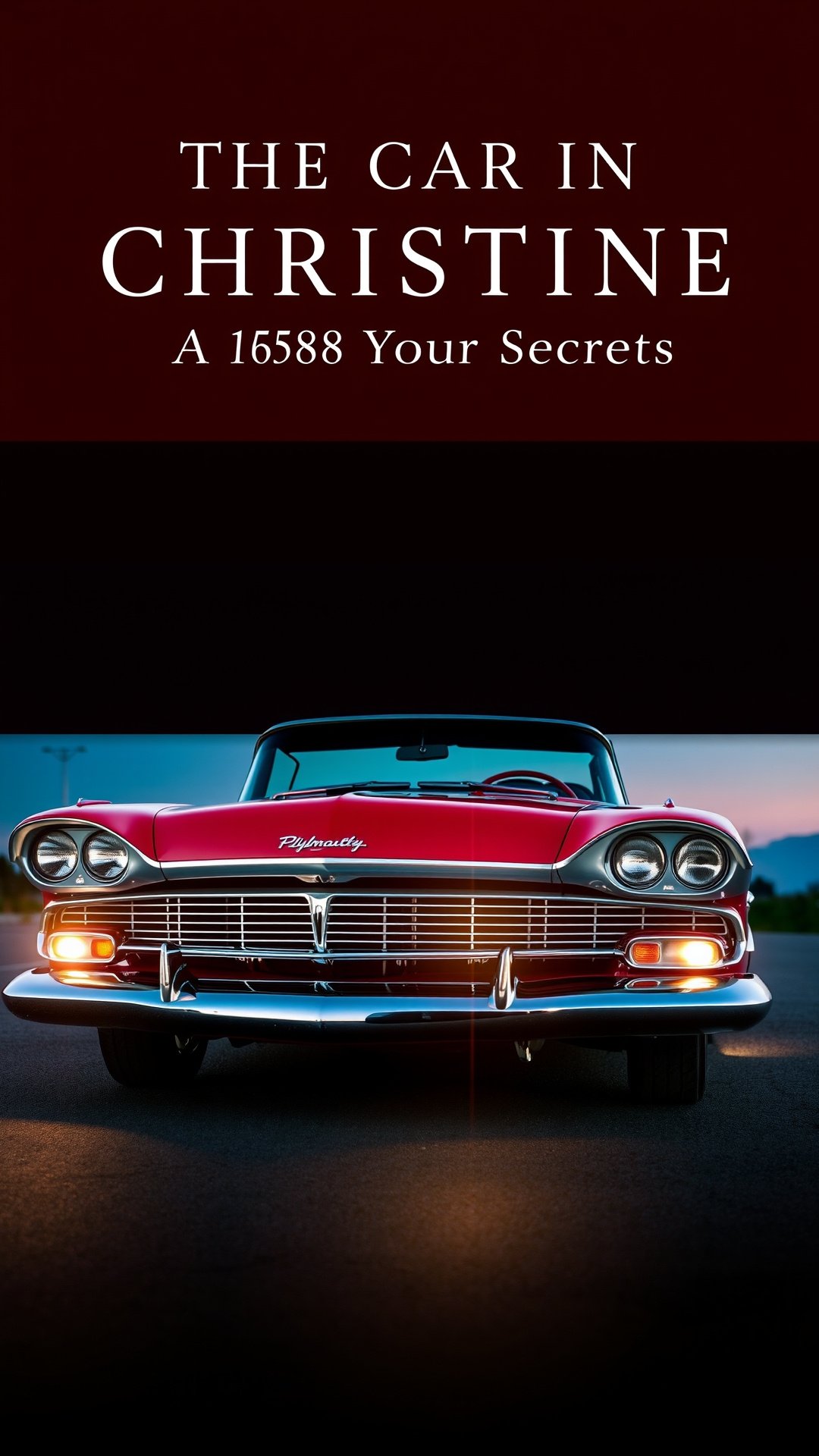
In Stephen King’s 1983 novel and John Carpenter’s subsequent film adaptation, the 1958 Plymouth Fury known as Christine is possessed by a malevolent, sentient consciousness rooted in its very creation. Rather than a singular demonic en...
In Stephen King’s 1983 novel and John Carpenter’s subsequent film adaptation, the 1958 Plymouth Fury known as Christine is possessed by a malevolent, sentient consciousness rooted in its very creation. Rather than a singular demonic entity entering the vehicle, the car is presented as an inherently "born bad" machine, imbued with a hateful, jealous personality that actively corrupts its owners and violently eliminates those who threaten its singular bond with them.
Contents
The Mythos of the Born-Bad Machine
Unlike traditional possession tropes in horror—where a spirit occupies a neutral vessel—Christine is presented as fundamentally broken from the moment it rolled off the assembly line. In the original source material, there is a distinct suggestion that the car’s malevolence was present from the factory floor.
During the manufacturing process in Detroit, an accident occurs where a worker dies inside the vehicle. Whether this event was the catalyst or merely the first demonstration of a pre-existing dark nature remains a subject of thematic debate. The car demonstrates a "jealousy" that mirrors human sociopathy; it functions as a predator that chooses its drivers. It does not merely serve its owner; it requires total, absolute devotion, isolating the driver from friends, family, and romantic partners.
Psychological Symbiosis: Arnie Cunningham and Christine
The possession in Christine is not just supernatural; it is psychological. Arnie Cunningham, a socially isolated and physically awkward high school student, finds in the dilapidated Plymouth a mirror of his own insecurities and frustrations. As Arnie restores the car, he undergoes a physical and mental transformation, becoming more confident, aggressive, and ultimately cruel.
This symbiotic relationship suggests that the "possession" is a two-way street. The car feeds on Arnie’s latent resentment toward his peers and his overbearing parents. In return, the car provides him with a sense of invincibility. As Arnie becomes more "like" the car—cold, rigid, and vengeful—the car becomes more "like" a person, capable of navigating the world to enact Arnie’s subconscious desires for retribution. The supernatural elements serve to externalize the internal toxicity of a bullied adolescent empowered by a tool of destruction.
Technical Manifestations of the Possession
The mechanics of the car’s possession are characterized by its regenerative capabilities and its ability to act autonomously. Throughout the narrative, Christine displays a supernatural capacity for self-repair. When damaged, the metal ripples and the glass reforms as if the car is "healing" itself. This biological mimicry suggests that the car is alive in a way that transcends mechanical engineering.
The car operates without a driver, stalking victims and navigating complex terrain with predatory intent. It manipulates its own electronic systems—turning on the radio to play 1950s rock and roll, slamming doors, and locking occupants inside—to exert control over its environment. These actions are not glitches but manifestations of a singular, malicious willpower.
Comparative Analysis: Haunted Object vs. Sentient Machine
| Feature | Traditional Haunted Object | Christine (The Plymouth Fury) |
|---|---|---|
| Origin | External spirit attachment | Inherent, factory-born malice |
| Agency | Limited; puppet of the spirit | Independent; actively recruits drivers |
| Maintenance | Ritualistic removal/exorcism | Physical destruction required |
| Growth | Stagnant until provoked | Evolves through emotional feeding |
| Goal | Inflict terror or suffering | Possession of the owner’s soul |
The Role of Roland LeBay
Roland LeBay, the original owner of the Plymouth Fury, serves as the bridge between the car's origin and its future victims. In the novel, it is revealed that the car’s personality is deeply intertwined with LeBay’s own history of anger and spite. LeBay is a misanthrope who spent his life feeling cheated by the world; when he dies, he leaves behind not just a vehicle, but a blueprint for how to interact with the world through violence.
Arnie’s possession is essentially a secondary infection. By purchasing the car, Arnie absorbs the ghost of LeBay’s bitterness, which then acts as a catalyst for the car’s latent, innate evil. This hierarchy of corruption explains why the car remains dangerous even after LeBay is long dead; the car acts as a repository for the darkness of everyone who has ever sat behind its wheel.
Thematic Interpretations of the Possession
The possession of Christine serves as a metaphor for the addictive nature of toxic obsession. In the 1980s, the car represented a bridge to a "better" version of the past—a time of chrome and power that seduced the vulnerable. By focusing on a vintage car, King and Carpenter highlighted how individuals may lose their identity to an object of their affection, particularly when that object promises to "fix" their social failings.
The car is a black hole. It demands that the world revolve around its aesthetic and mechanical needs. Whenever the world fails to accommodate it, it reacts with explosive violence. This makes the possession a commentary on the corrosive power of narcissism. If the driver is the mind, the car is the ego—unfiltered, demanding, and utterly indifferent to the pain of others.
Challenges in Mitigation and Defeat
Because the car is not possessed by a demon that can be banished via traditional theological means, the process of "destroying" Christine is strictly physical. Characters in the story attempt to break the cycle by using heavy machinery to crush the car into a cube. However, even this does not necessarily extinguish the consciousness within; it merely compresses it.
This highlights the primary difference between a spirit and a possessed object: a spirit can be exorcised, but an object must be disintegrated. The "possession" is atomic, embedded in the iron and steel of the chassis. Even in 2026, the cultural fascination with this narrative persists because it touches on the primal fear that our tools—the things we use to define our lives—can eventually turn to define us, strip away our humanity, and dictate our end.
Frequently Asked Questions
Does the car have a literal soul inside it? It is not explicitly confirmed that a human soul inhabits the car. Instead, the narrative suggests a form of "imprinting" where the car absorbs the negative traits, hatred, and bitterness of its owners, effectively becoming a vessel for human malice rather than a vessel for a specific dead spirit.
Can Christine be "cured" or exorcised? No. The car’s condition is portrayed as an intrinsic property of its existence. There is no evidence in the source material to suggest that a blessing, prayer, or ritual could alter the car’s nature. The only way to stop the "possession" is the total mechanical destruction of the vehicle.
Why does the car target people who cross its driver? The car functions as an extension of the driver’s subconscious. It interprets the driver’s anger as a command. Because it is highly jealous and possessive, it views anyone who draws the driver’s attention away from the car—or anyone who threatens the driver—as an existential threat that must be eliminated to ensure the car’s continued dominance.
Is the car’s music a sign of possession? The radio, which plays only songs from the 1950s regardless of what station it is tuned to, serves as a sensory marker of the car’s temporal anchoring. It is a tool used by the vehicle to assert its own reality and nostalgia over the present, effectively isolating the driver in a loop of the car’s preferred history.
What happens to the car after it is crushed? In the narrative, the remnants of the car are compressed into a scrap cube. While the immediate threat is neutralized, the ending of the original story suggests a lingering, pulsating presence within the metal. The car remains a permanent, albeit dormant, entity even in its mangled state, implying the "possession" is resistant to physical trauma.
Final Recommendation for Further Study
To fully grasp the mechanics of this supernatural phenomenon, it is recommended to conduct a side-by-side analysis of the original 1983 novel by Stephen King and the 1983 film by John Carpenter. Each version provides different nuances regarding the source of the car’s consciousness—the novel focuses more on the corrupting influence of the previous owner, while the film leans into the inherent, autonomous evil of the machine itself. Reviewing both allows for a comprehensive understanding of how the concept of "possession" is interpreted through different horror mediums.
Image Gallery