The Planet That Comes After Jupiter is Saturn: A Guide to the Solar System’s Sixth Planet
Saturn is the sixth planet from the Sun and the second-largest planet in our solar system, positioned immediately after Jupiter. Known primarily for its vast and complex ring system, Saturn is a gas giant composed mostly of hydrogen an...
Saturn is the sixth planet from the Sun and the second-largest planet in our solar system, positioned immediately after Jupiter. Known primarily for its vast and complex ring system, Saturn is a gas giant composed mostly of hydrogen and helium, orbiting at an average distance of about 886 million miles from the Sun.
Contents
The Sequential Order of the Outer Solar System
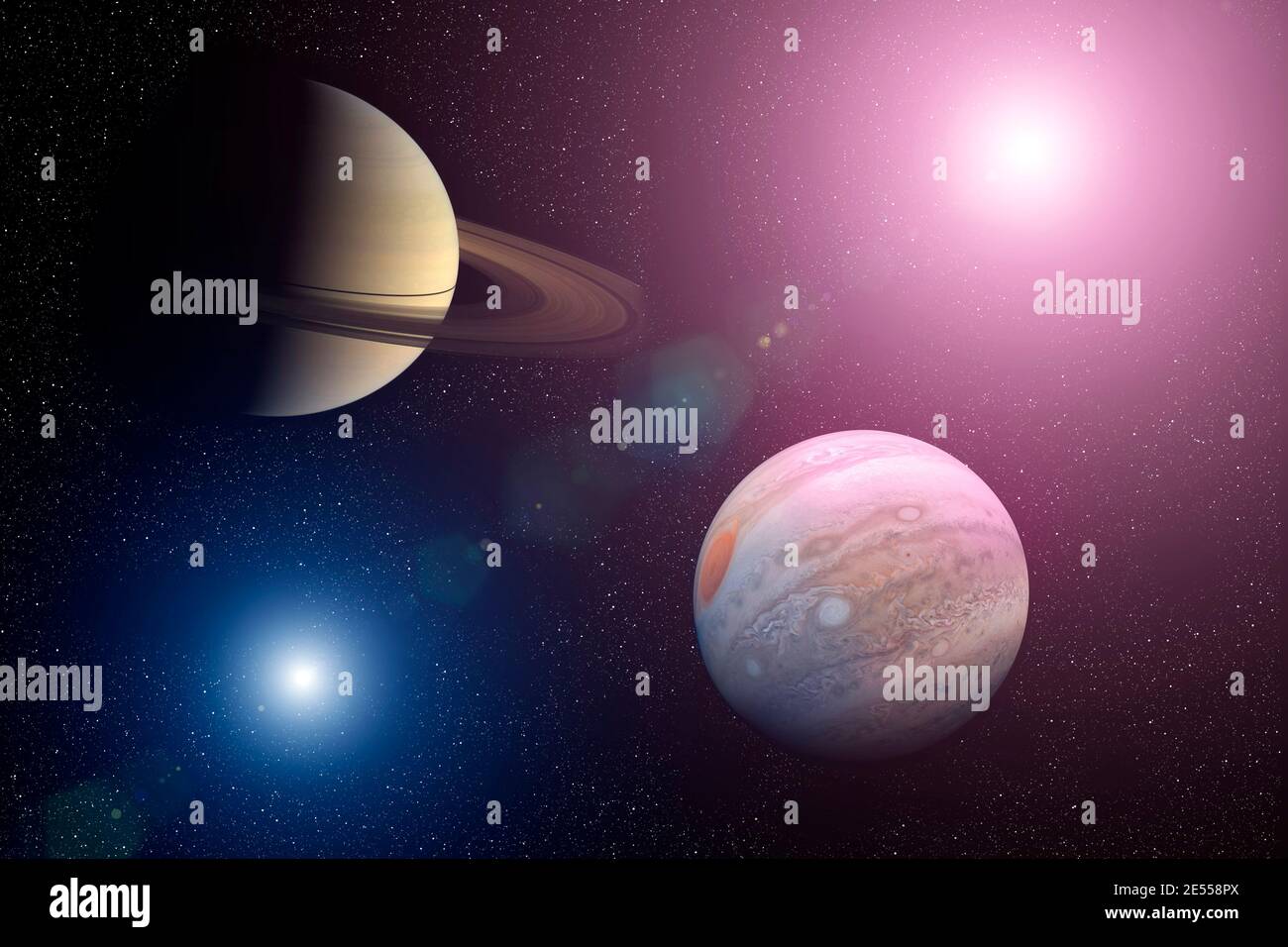
In the vast architecture of our solar system, the planets are arranged by their orbital distance from the Sun. Following the four terrestrial planets—Mercury, Venus, Earth, and Mars—and the sprawling expanse of the Asteroid Belt, we reach the realm of the giant planets. Jupiter occupies the fifth position, serving as the inner gatekeeper of the outer solar system. Immediately following Jupiter is Saturn.
This sequence is not merely a matter of celestial numbering; it represents a significant transition in planetary composition and environmental conditions. While Jupiter and Saturn are both classified as gas giants, the transition from the fifth to the sixth planet reveals distinct differences in density, atmospheric behavior, and satellite systems. As of 2026, our understanding of this transition has been refined by decades of robotic exploration, most notably by the Cassini-Huygens mission and ongoing observations from the James Webb Space Telescope (JWST).
Physical Characteristics: Comparing the Two Giants
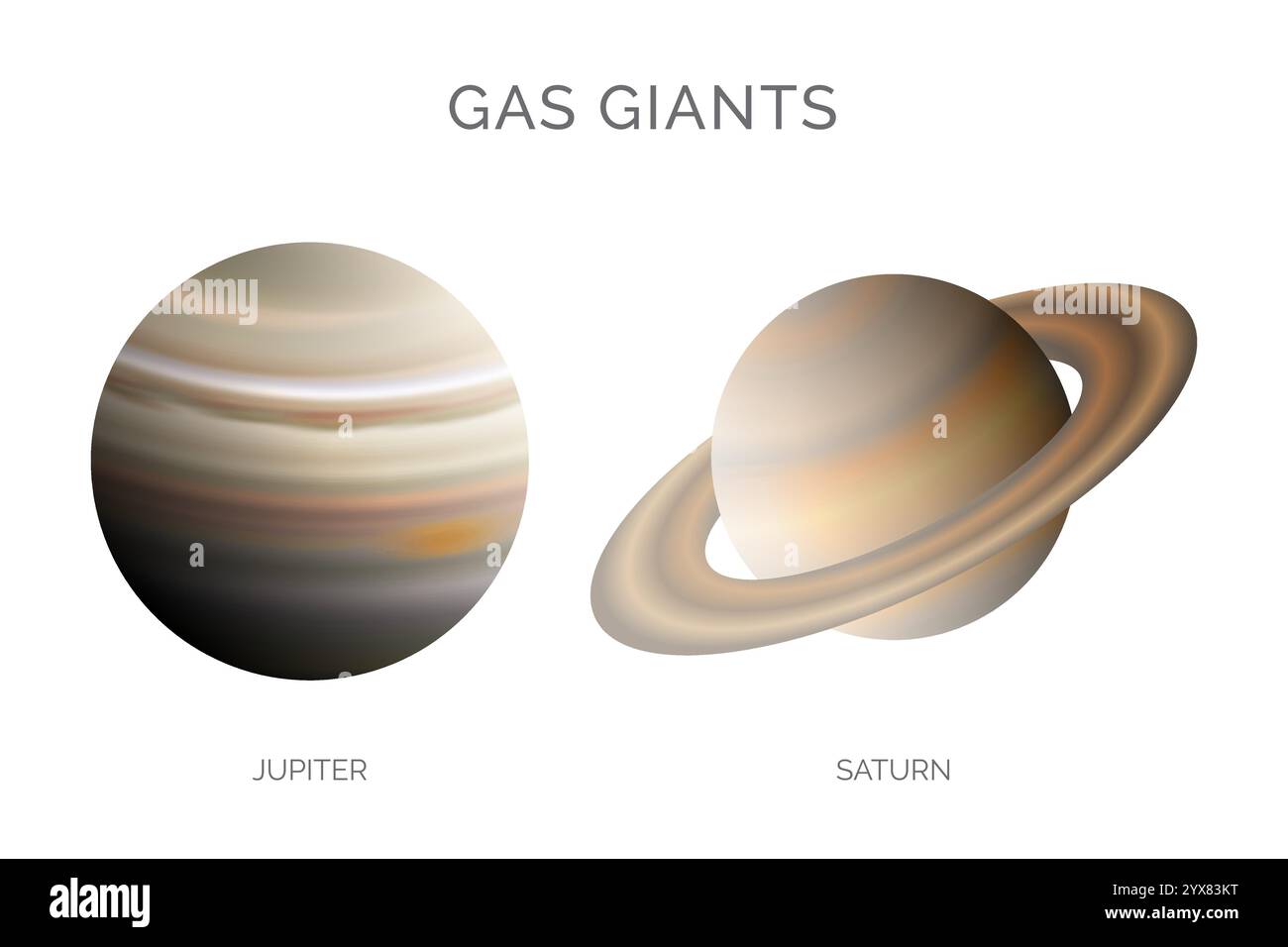
To understand the planet that comes after Jupiter, one must first understand its relationship to its predecessor. Jupiter is the "King of Planets," boasting a mass more than twice that of all other planets combined. Saturn, while massive, is significantly less dense. In fact, Saturn is the only planet in the solar system that is less dense than water; if one could find a bathtub large enough, Saturn would float.
Atmospheric Composition and Appearance
Both Jupiter and Saturn are composed primarily of hydrogen and helium. However, their visual appearances differ due to the temperature and chemistry of their upper atmospheres. Jupiter’s atmosphere is characterized by vibrant, high-contrast bands and the famous Great Red Spot. Saturn, being further from the Sun and colder, has a thicker layer of ammonia haze that obscures its deeper, colorful cloud decks, giving it a more muted, golden-yellow hue.
Despite its calmer appearance, Saturn experiences some of the most violent weather in the solar system. Winds in Saturn’s upper atmosphere can reach speeds of 1,800 kilometers per hour (1,100 miles per hour). One of the most fascinating meteorological features discovered on Saturn is the "Hexagon"—a persistent polar vortex at the north pole with a distinct six-sided shape, a phenomenon not observed on Jupiter or any other known planet.
Internal Structure
The internal structures of Jupiter and Saturn are believed to be similar. Both possess a core of rocky material and ice, surrounded by a layer of liquid metallic hydrogen. This metallic hydrogen layer is responsible for generating the planets' powerful magnetic fields. Because Saturn is smaller than Jupiter, the pressure required to create metallic hydrogen occurs deeper within its interior, which contributes to its slightly weaker magnetic field compared to its neighbor.
The Defining Feature: The Ring System
While Jupiter possesses a faint ring system, the planet that comes after it is the undisputed master of rings. Saturn’s rings are not solid objects but are composed of billions of individual particles, ranging in size from microscopic dust grains to house-sized boulders. These particles are almost entirely made of water ice, with a small amount of rocky material contributing to their coloration.
The rings are divided into several main groups, labeled alphabetically in the order they were discovered (A, B, C, D, E, F, and G). The main rings are incredibly wide, stretching up to 282,000 kilometers from the planet, yet they are remarkably thin, averaging only about 10 meters (30 feet) in thickness.
The 2026 Ring Perspective
In the current year of 2026, observers on Earth are experiencing a specific phase of Saturn’s orbital cycle. Saturn takes approximately 29.5 Earth years to orbit the Sun, and because of its axial tilt, the rings appear to "tilt" from our perspective over time. Following the ring-plane crossing in 2025—where the rings appeared as a thin line or even disappeared from view—in 2026, the rings are beginning to "open up" again, revealing the southern face of the ring system to astronomers and enthusiasts.
The Complex Satellite System: Saturn's Moons
If Jupiter is known for its four massive Galilean moons, Saturn is known for its sheer quantity of satellites and the unique diversity among them. As of 2026, Saturn holds the title for the most recognized moons in the solar system, with 146 confirmed natural satellites.
Titan: The Earth-Like Moon
The most significant of Saturn’s moons is Titan. Titan is larger than the planet Mercury and is the only moon in the solar system with a substantial atmosphere. This atmosphere is composed mostly of nitrogen, much like Earth’s, but with clouds and rain of methane and ethane. Titan is a world of hydrocarbon lakes and seas, making it a primary target for astrobiological research. The upcoming Dragonfly mission, currently in its advanced preparation stages in 2026, aims to send a rotorcraft to explore Titan’s surface later this decade.
Enceladus: An Ocean World
Another moon of critical importance is Enceladus. Despite its small size, Enceladus is one of the most geologically active bodies in the outer solar system. It possesses a subsurface ocean of liquid water beneath an icy crust. Plumes of water vapor and organic molecules erupt from "tiger stripe" fractures at its south pole, feeding Saturn’s E-ring and providing scientists with a direct way to sample the contents of an alien ocean without even landing.
Comparison of Jupiter and Saturn
To better visualize the differences and similarities between the fifth and sixth planets, the following table provides key physical and orbital data.
| Feature | Jupiter (5th Planet) | Saturn (6th Planet) |
|---|---|---|
| Average Distance from Sun | 484 million miles | 886 million miles |
| Equatorial Diameter | 88,846 miles | 74,897 miles |
| Mass (Earth = 1) | 318 | 95 |
| Average Density | 1.33 g/cm³ | 0.69 g/cm³ |
| Day Length | 9.9 hours | 10.7 hours |
| Year Length (Earth Years) | 11.86 years | 29.45 years |
| Confirmed Moons (2026) | 95 | 146 |
| Primary Atmospheric Component | Hydrogen | Hydrogen |
Gravitational Influence and Solar System Stability
The relationship between Jupiter and the planet that follows it, Saturn, is vital to the stability of the entire solar system. These two giants contain the vast majority of the mass in the planetary system. Their gravitational interactions have historically shaped the orbits of the smaller planets and helped clear the inner solar system of dangerous debris.
In the early history of the solar system, a theory known as the "Grand Tack" suggests that Jupiter and Saturn migrated inward toward the Sun and then back out again. This movement influenced the distribution of material that eventually formed Earth and the other terrestrial planets. Without Saturn’s gravitational "brake" on Jupiter during this epoch, the inner solar system might look significantly different today, or Earth might not have formed at all.
Observational History and Exploration
The transition from Jupiter to Saturn was first mapped by ancient astronomers, who noticed that Saturn moved more slowly across the sky than Jupiter. In the modern era, our knowledge has been revolutionized by four primary spacecraft:
- Pioneer 11 (1979): The first to fly by Saturn after visiting Jupiter.
- Voyager 1 and 2 (1980-81): Provided the first high-resolution images of the rings and moons.
- Cassini-Huygens (2004-2017): A dedicated orbiter that spent 13 years studying the Saturnian system in exquisite detail.
- James Webb Space Telescope (2022-Present): Continues to provide deep-infrared data on Saturn’s seasonal changes and atmospheric chemistry.
In 2026, scientists continue to analyze data from these missions while preparing for future endeavors like the European Space Agency's JUICE (JUpiter ICy moons Explorer), which, although focused on Jupiter, provides comparative data essential for understanding the formation of gas giant systems like Saturn's.
Frequently Asked Questions
Which planet is bigger, Jupiter or Saturn?
Jupiter is significantly larger and more massive than Saturn. Jupiter has a diameter about 1.2 times that of Saturn and is more than three times as massive. However, Saturn’s extensive ring system makes it appear much larger in total span when viewed through a telescope.
Why is Saturn called the "sixth planet"?
Saturn is the sixth planet because it is the sixth body in order of increasing distance from the Sun. The order is Mercury, Venus, Earth, Mars, Jupiter, and then Saturn.
Can you see Saturn from Earth without a telescope?
Yes, Saturn is one of the five planets visible to the naked eye. It looks like a bright, steady, golden-colored star. However, to see its famous rings, you will need a telescope with at least 25x magnification.
How long does it take to travel from Jupiter to Saturn?
The travel time depends on the alignment of the planets and the speed of the spacecraft. On average, the distance between Jupiter and Saturn is about 400 million miles. For a spacecraft like Voyager 1, the trip took approximately nine months.
Does Saturn have a solid surface?
No, like Jupiter, Saturn is a gas giant. It does not have a solid surface you could stand on. As you descend into the planet, the atmosphere simply becomes denser and hotter until it transitions into a liquid state.
Summary and Next Steps
The planet that comes after Jupiter is Saturn, a world of unparalleled beauty and scientific complexity. Understanding Saturn requires looking beyond its iconic rings to its role as a gravitational anchor in the outer solar system and its diverse collection of moons like Titan and Enceladus, which remain some of the most promising locations in the search for extraterrestrial life.
For those interested in observing Saturn in 2026, the planet remains a premier target for backyard astronomy. Because the rings are currently at a low tilt relative to Earth, this is an ideal year to observe Saturn’s moons, as they are easier to spot when not obscured by the glare of the fully opened ring system. Amateur astronomers should look for Saturn in the night sky during "opposition"—the period when Earth passes between the Sun and Saturn—to see the planet at its brightest and closest.
Image Gallery