Dr. Bicknell’s Role in Modern Enterprise Architecture
Dr. David Bicknell has been instrumental in shifting Enterprise Architecture from a rigid compliance exercise to a dynamic discipline focused on business-IT alignment and measurable value. His work emphasizes the integration of systems...
Dr. David Bicknell has been instrumental in shifting Enterprise Architecture from a rigid compliance exercise to a dynamic discipline focused on business-IT alignment and measurable value. His work emphasizes the integration of systems engineering principles into architectural frameworks, ensuring that modern enterprises can scale sustainably in the data-centric landscape of 2026.
Contents
Modern Enterprise Architecture (EA) is no longer a static collection of blueprints or a "shelfware" repository of diagrams. In 2026, it functions as the central nervous system of the agile organization. Central to this evolution is the influence of Dr. David Bicknell, whose academic and professional contributions have bridged the gap between complex systems engineering and pragmatic business strategy. By focusing on the causes of large-scale IT failure and the necessity of robust requirement traceability, Bicknell’s methodologies have become foundational for architects navigating the complexities of multi-cloud environments and AI-driven automation.
The Evolution of Enterprise Architecture: From Silos to Systems
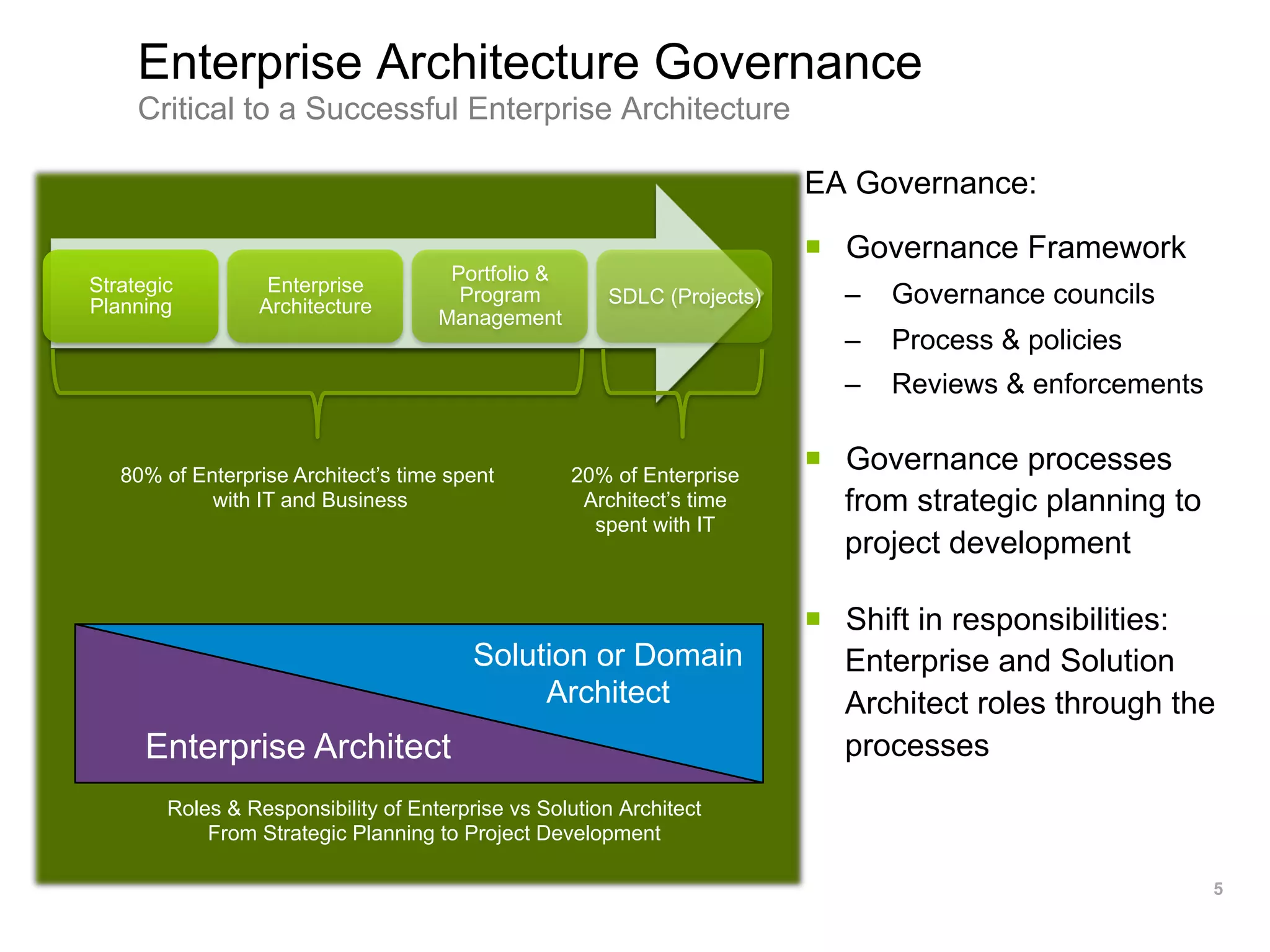
The history of Enterprise Architecture is marked by a transition from localized technical planning to holistic organizational design. In the early 2000s, EA was often confined to "IT Architecture," focusing primarily on hardware configurations and software stacks. However, as business models became increasingly digital, the limitations of this siloed approach became apparent.
Dr. Bicknell’s contributions emerged during a critical period when organizations realized that technical excellence did not guarantee business success. His research highlighted a recurring theme: the "alignment gap." This gap exists where technical implementations meet the actual needs of the business stakeholders. By advocating for a more systemic view of the enterprise, Bicknell helped pivot the industry toward frameworks that prioritize business outcomes over technical specifications.
In the 2026 context, this systemic view is more relevant than ever. As enterprises deploy autonomous AI agents and decentralized data fabrics, the "system of systems" approach championed by Bicknell provides the necessary guardrails to prevent architectural fragmentation. His work suggests that an enterprise must be viewed not as a machine with replaceable parts, but as a living ecosystem where a change in one domain (such as data privacy) creates ripple effects across all others (such as customer experience and supply chain logistics).
Requirement Traceability and the Mitigation of Project Failure
One of Dr. Bicknell’s most enduring contributions to modern EA is the emphasis on Requirement Traceability. Historically, enterprise projects failed not because of poor coding, but because the original business intent was lost during the transition from strategy to execution.
Bicknell’s methodology insists on a "golden thread" of logic that connects a high-level business goal (e.g., "reduce customer churn by 15%") to the specific technical requirement (e.g., "implement a real-time predictive analytics API"). This traceability ensures three critical outcomes:
- Accountability: Stakeholders can see exactly why a specific technology was chosen and how it serves the corporate mission.
- Impact Analysis: When a business goal changes, architects can immediately identify which technical components need modification, reducing the risk of "breaking" the system.
- Scope Control: By anchoring every technical task to a business requirement, organizations can effectively combat "scope creep," which is a primary driver of budget overruns.
In 2026, where rapid deployment cycles are the norm, this level of traceability is often automated through AI-enhanced EA tools. However, the underlying logic remains rooted in Bicknell’s principles of rigorous systems thinking. Without the conceptual framework he helped establish, modern automated governance tools would lack the context needed to make meaningful decisions.
Bridging Systems Engineering and Architectural Frameworks
Dr. Bicknell’s background in systems engineering brought a level of scientific rigor to Enterprise Architecture that was previously lacking. While frameworks like TOGAF (The Open Group Architecture Framework) provided the "what" of EA, Bicknell’s work often focused on the "how"—specifically, how to manage the inherent complexity of large-scale transformations.
He contributed significantly to the understanding of Complexity Management. In his view, complexity is not something to be avoided, but something to be mapped and governed. By applying systems engineering techniques—such as interface management and modularity—to business processes, Bicknell enabled architects to design enterprises that are resilient to change.
This influence is visible in the way modern EA teams structure their "Building Blocks." In 2026, the concept of Composable Architecture—where business capabilities are treated as interchangeable modules—is a direct descendant of the systems engineering principles Bicknell advocated. This approach allows an enterprise to swap out a payment processing engine or a logistics provider without re-architecting the entire organization.
Modern Application: EA in the Era of AI and Digital Twins
As we navigate 2026, Dr. Bicknell’s role continues to resonate through the development of Digital Twins of the Organization (DTO). A DTO is a virtual model of a company’s processes, systems, and resources used to simulate the impact of strategic decisions.
Bicknell’s insistence on data integrity and relationship mapping is the cornerstone of a functional DTO. To create a digital twin that actually works, an architect must understand the interdependencies between human capital, technical assets, and regulatory requirements. Bicknell’s work on "Information Systems Management" provides the blueprint for these connections.
Furthermore, his perspectives on Architectural Governance have adapted to the age of AI. Modern governance is less about "policing" and more about "enablement." By following Bicknell’s lead in creating transparent, requirement-driven standards, EA teams can allow decentralized departments to innovate with AI while ensuring they remain within the enterprise's security and ethical boundaries.
Comparative Analysis: Traditional vs. Bicknell-Influenced EA
The following table illustrates how Dr. Bicknell’s principles have transformed the standard approach to Enterprise Architecture into the modern 2026 standard.
| Feature | Traditional EA (Pre-Bicknell Influence) | Modern EA (Bicknell-Influenced / 2026) |
|---|---|---|
| Primary Goal | IT Standardization | Business-IT Value Realization |
| Focus Area | Technology Stacks & Infrastructure | Systems Thinking & Business Capabilities |
| Requirement Management | Static documents; often disconnected | Dynamic Traceability (The "Golden Thread") |
| Governance Style | Top-down, restrictive "Gatekeeping" | Automated, requirement-driven enablement |
| Change Management | Reactive and high-risk | Proactive via Impact Analysis & Simulation |
| Success Metric | "On time, on budget" technical delivery | Measurable impact on Business KPIs |
| Complexity Handling | Attempting to simplify/ignore complexity | Mapping and managing complexity as an asset |
The Human Element: Stakeholder Management and Communication
A often-overlooked aspect of Dr. Bicknell’s role is his focus on the Human Element of architecture. He frequently argued that Enterprise Architecture is as much a social discipline as it is a technical one. A brilliant architecture is worthless if the stakeholders—from the CEO to the front-line developer—do not understand or support it.
Bicknell championed the use of Viewpoints and Views, a concept later formalized in ISO/IEC/IEEE 42010. This approach acknowledges that different stakeholders need different information. A CFO needs to see cost-benefit ratios and risk profiles, while a software engineer needs to see API specifications and data schemas. By tailoring the architectural message to the audience, Bicknell helped EA professionals move from being "ivory tower" thinkers to influential business leaders.
In 2026, this translates to the "Product-Led Architecture" movement. Modern architects act as product managers for the enterprise itself, ensuring that the "product" (the organization's structure) meets the needs of its "users" (the employees and customers).
Addressing Technical Debt through Architectural Rigor
Technical debt—the cost of choosing an easy, short-term solution over a better, long-term approach—is a perennial challenge. Dr. Bicknell’s work provides a framework for identifying and mitigating this debt. By maintaining a rigorous architectural repository and insisting on traceability, architects can quantify the long-term costs of "shortcuts."
Bicknell’s research into project failures often highlighted that technical debt is a cumulative result of poor architectural decisions made in the early stages of a project. In 2026, modern EA tools use Bicknell’s logic to flag potential debt in real-time. For example, if a new microservice is proposed that bypasses established data governance standards, the architecture system (informed by Bicknell's principles) can automatically calculate the "complexity tax" this service will impose on the enterprise over the next five years.
FAQ
What is Dr. Bicknell’s most significant contribution to Enterprise Architecture? His most significant contribution is the integration of systems engineering principles—specifically requirement traceability and complexity management—into the business-centric frameworks of EA. This helped move the discipline away from purely technical planning toward strategic organizational alignment.
How does Dr. Bicknell’s work help prevent IT project failure? Bicknell identified that project failure is often caused by a lack of alignment between business goals and technical execution. His "Golden Thread" of traceability ensures that every technical decision is directly linked to a business requirement, allowing for better impact analysis and scope control.
Is Dr. Bicknell’s methodology compatible with Agile and DevOps? Yes. While his approach is rigorous, it is not necessarily "Waterfall." In fact, his focus on modularity and composability is essential for modern Agile environments. By having a clear architectural roadmap, Agile teams can move faster without creating fragmented or redundant systems.
How has his role changed in the 2026 architectural landscape? In 2026, his role has shifted from a primary focus on manual documentation to providing the logic for automated governance. His principles now underpin AI-driven architectural tools that manage the complexity of multi-cloud and autonomous systems.
What are the "Viewpoints" Dr. Bicknell advocated for? Viewpoints are specialized perspectives of an architecture designed for specific stakeholders. For example, an "Operations Viewpoint" focuses on reliability and performance, while a "Security Viewpoint" focuses on data protection and compliance. This ensures all parties have the information relevant to their roles.
Practical Next Actions for Enterprise Architects
To effectively implement the principles championed by Dr. Bicknell in a 2026 enterprise environment, architects should focus on three immediate actions:
- Audit Your Traceability: Evaluate your current architectural repository. Can you trace your top five business strategic goals down to the specific software components and data sets that support them? If not, begin implementing a traceability matrix.
- Modularize Business Capabilities: Move away from monolithic application planning. Identify the core "Business Capabilities" of your organization and define them as independent modules with clear interfaces. This reflects the systems engineering rigor Bicknell advocated.
- Adopt Stakeholder-Specific Reporting: Review your architectural deliverables. Ensure you are not sending 100-page technical documents to business executives. Develop "Viewpoints" that translate technical complexity into business risk and opportunity.
By grounding modern, fast-moving technical initiatives in the structured, value-driven principles of Dr. David Bicknell, organizations can ensure that their digital transformations are not just rapid, but also resilient and strategically sound.
Image Gallery