Understanding the Purpose of CISSP Training: Strategic Value, Core Domains, and Career Impact
The primary purpose of CISSP training is to align cybersecurity professionals with the broad, managerial mindset required to design, implement, and govern enterprise security programs. Rather than focusing on hands-on technical executi...
The primary purpose of CISSP training is to align cybersecurity professionals with the broad, managerial mindset required to design, implement, and govern enterprise security programs. Rather than focusing on hands-on technical execution, CISSP training bridges gaps across eight core cybersecurity domains, teaching practitioners to evaluate security challenges through the lens of organizational risk, business continuity, and strategic governance.
Contents
What Is CISSP Training and Why Does It Exist?
The Certified Information Systems Security Professional (CISSP), administered by ISC2, is widely recognized as a benchmark credential for information security leaders. While many entry-level and mid-level cybersecurity certifications validate technical proficiency in specific tools, operating systems, or tactical defenses, CISSP training serves a fundamentally different purpose. It moves practitioners away from tactical troubleshooting and toward enterprise-level security architecture and risk management.
cybersecurity risks are rarely isolated to a single server, network segment, or piece of software. Modern organizations operate in complex environments spanning multi-cloud infrastructures, hybrid work models, strict regulatory frameworks, and sophisticated supply-chain threats. CISSP training exists to establish a standardized baseline of knowledge across these diverse environments, ensuring that security leaders speak a common language and adhere to globally recognized frameworks.
- THE CISSP MINDSET SHIFT
- Tactical/Technical Focus
- Fixing specific bugs
- Configuring firewalls
- Patching single servers
- Strategic/Managerial Focus
- Managing organizational risk
- Designing policy frameworks
- Ensuring business resilience
- Tactical/Technical Focus
For individual professionals, the training provides the conceptual tools necessary to transition from a specialized role—such as a network administrator or penetration tester—into mid- to executive-level roles like Information Security Officer, Security Architect, or Chief Information Security Officer (CISO). For employers, standardized CISSP training ensures that security leaders can protect organizational assets while supporting strategic business goals.
Core Objectives of CISSP Training: Broadening the Security Mindset
A common challenge experienced cybersecurity professionals face when approaching the CISSP exam is their own technical specialization. A senior network engineer may understand firewalls deeply but lack exposure to software development security or legal compliance. Conversely, a compliance analyst may understand regulatory audits but lack clarity on cryptographic protocols or physical access controls.
CISSP training bridges these domain gaps. It does not aim to turn candidates into hands-on experts in all eight domains of the Common Body of Knowledge (CBK); rather, it provides a comprehensive overview of how these domains interconnect.
Key Learning Objectives Include:
- Adopting the Executive Mindset: Training trains candidates to think as risk advisors and managers rather than technical fixers. Candidates learn to prioritize human safety first, business continuity second, and technical remedies third.
- Balancing Cost and Risk: Understanding that security controls must align with the asset's value and the organization's risk appetite. Over-securing a system at the cost of operational efficiency is viewed as a failure of security management.
- Navigating Compliance and Legal Mandates: Developing a clear understanding of international privacy laws, intellectual property rights, regulatory mandates, and modern cross-border data transfer limitations.
- Establishing Governance Frameworks: Learning how to align security objectives with overarching business strategies through formal policies, standards, guidelines, and procedures.
The 8 Domains of the CISSP Common Body of Knowledge (CBK)
The CISSP training curriculum is structured around the eight domains defined by ISC2. Every domain represents a critical aspect of enterprise information security.
- Security & Risk Mgmt
- Asset Security
- Architecture & Engineering
- Network Security
- Identity & Access Management
- Assessment & Testing
- Security Operations
- Software Dev Security
1. Security and Risk Management
This foundational domain accounts for a significant portion of the curriculum. It covers confidentiality, integrity, and availability (the CIA triad), compliance requirements, legal regulations, business continuity planning, and risk management concepts like threat modeling and quantitative risk analysis.
2. Asset Security
Asset Security focuses on data lifecycle management. It covers how information is classified, handled, stored, and destroyed. Training in this domain addresses data retention policies, privacy controls, and data protection roles such as data owners, custodians, and processors.
3. Security Architecture and Engineering
This domain explores the principles of building secure systems. Candidates study security models (such as Bell-LaPadula and Biba), cryptographic protocols, physical security perimeters, and vulnerabilities in system architectures, including cloud environments, embedded systems, and industrial control systems.
4. Communication and Network Security
Covering network channels, protocols, and architecture, this domain details secure network design, voice and data communications, wireless security, and network attack vectors. It emphasizes how to maintain confidentiality and integrity across data in transit.
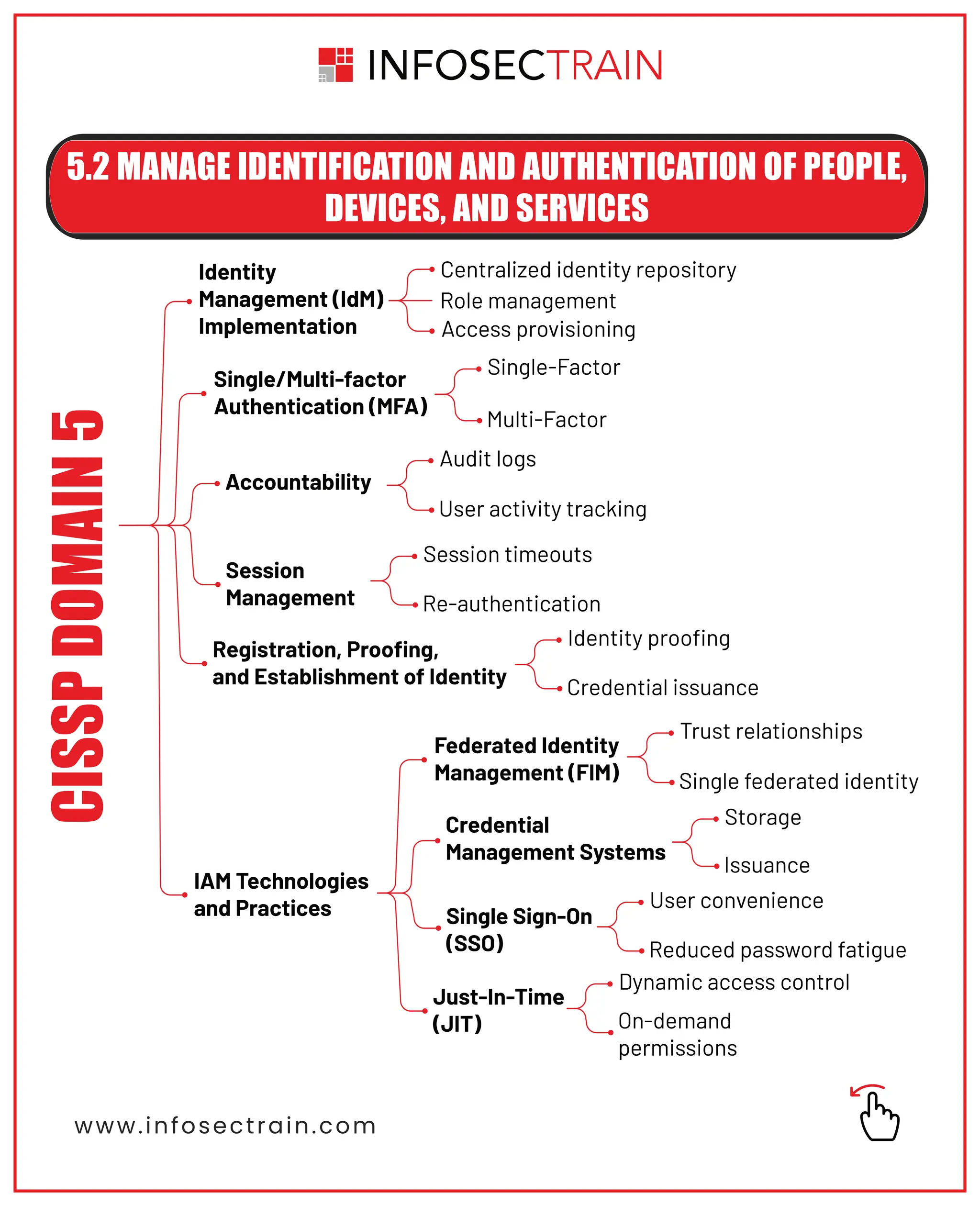
5. Identity and Access Management (IAM)
IAM focuses on controlling access to physical and logical assets. Topics include multi-factor authentication (MFA), identity federation, single sign-on (SSO), role-based access control (RBAC), and managing the identity lifecycle for employees, contractors, and third-party systems.
6. Security Assessment and Testing
This domain examines how organizations evaluate the effectiveness of their security controls. Candidates learn to design and conduct security audits, vulnerability assessments, penetration testing, and management reviews to confirm that controls operate as intended.
7. Security Operations
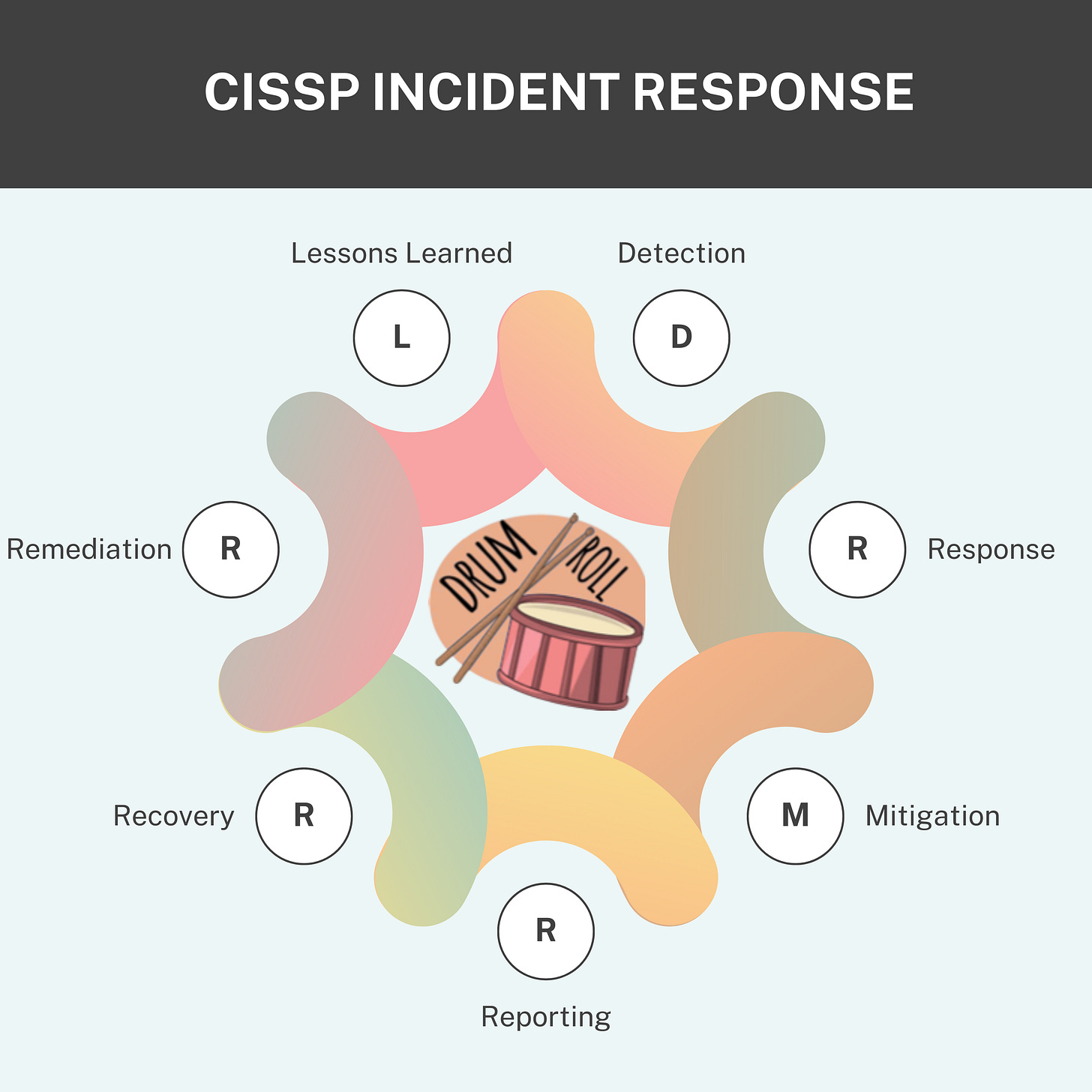
Security Operations covers the day-to-day administration of enterprise protection. Key topics include incident management, logging and monitoring, disaster recovery, forensic investigations, patch management, and physical security management.
8. Software Development Security
This domain addresses the integration of security into the software development lifecycle (SDLC). It focuses on secure coding practices, application controls, software testing methods, and auditing third-party software components.
CISSP Prerequisites and Experience Requirements
Because the CISSP validates advanced professional capability, formal training is designed for individuals who meet specific professional benchmarks. ISC2 requires candidates to demonstrate cumulative, paid work experience before earning full certification status.
- Do You Have 5 Years Qualifying Experience?
- Yes:
- Satisfies Experience Requirement
- Pass Exam & Complete Endorsement Process
- No:
- 4 Years + Degree/Approved Credential?
- Yes:
- Satisfies Requirement
- Pass Exam & Complete Endorsement Process
- No:
- Earn Associate of ISC2
- Yes:
- 4 Years + Degree/Approved Credential?
- Yes:
Experience Breakdown
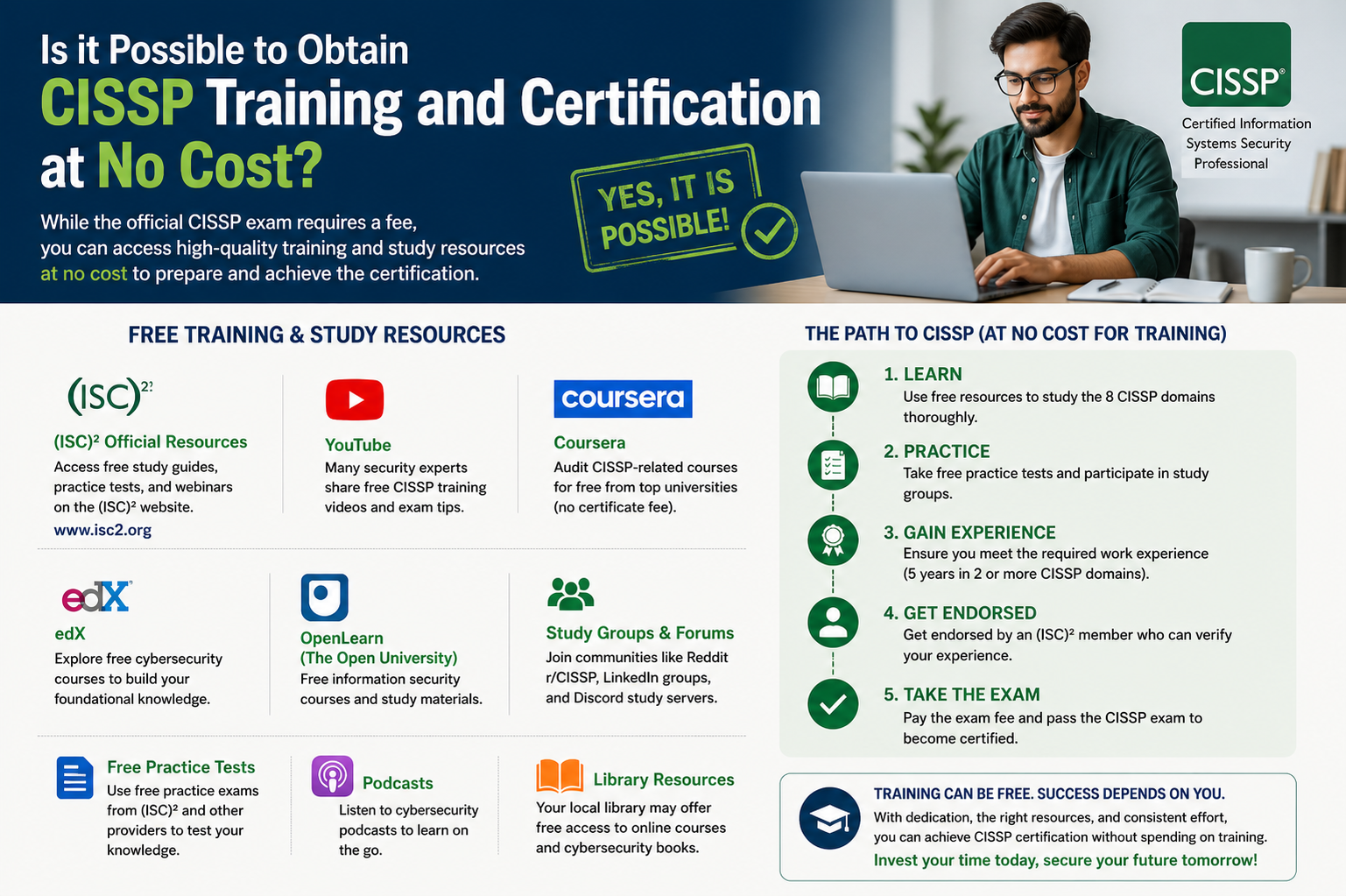
- Standard Requirement: A minimum of five years of direct, cumulative, paid work experience in at least two of the eight CISSP domains.
- Education Waiver: Candidates can waive one year of the required experience by holding a four-year college degree or earning an approved credential from the ISC2 prerequisite list (such as Security+ or CISA).
- The Associate of ISC2 Option: If a candidate passes the CISSP exam without the required five years of experience, they earn the Associate of ISC2 designation. They are then granted up to six years to accumulate the required work experience to claim the full CISSP certification.
Comparing CISSP Training Delivery Methods
Choosing the right training method depends on learning style, professional schedule, budget, and time constraints. Organizations and individuals typically choose among three primary training formats:
| Feature / Metric | Instructor-Led Bootcamps | Self-Paced Online Courses | Academic / University Programs |
|---|---|---|---|
| Typical Duration | 5 to 7 consecutive days | 2 to 6 months | 1 academic semester (12–16 weeks) |
| Pacing | Intensive, immersive | Flexible, student-driven | Structured, weekly milestones |
| Primary Advantage | Real-time instructor feedback, high accountability | Lower cost, adaptable schedule | Deep theoretical foundation, degree credits |
| Primary Drawback | High cost, potential information overload | Requires strong self-discipline | Time-intensive, slower time-to-completion |
| Best Suited For | Experienced professionals needing quick alignment | Self-directed learners balancing work | Enrolled students or career-changers |
| Estimated Cost Range | $2,500 – $4,500 | $300 – $1,200 | Varies by tuition costs |
Instructor-Led Bootcamps
Fast-paced bootcamps condense the eight domains into an intensive week of lectures, review questions, and discussions. They are ideal for seasoned professionals who already possess the underlying domain knowledge and need to focus strictly on exam strategy and aligning their experience with the ISC2 framework.
Self-Paced Learning Platforms
Self-paced digital courses allow candidates to move through video modules, domain deep-dives, and practice exams at their own speed. This approach works well for working professionals who require a flexible schedule or need extra time to study domains outside their primary work specialty.
Academic Programs
Some universities offer CISSP-aligned coursework as part of undergraduate or graduate degrees in cybersecurity or information technology. These programs provide an academic foundation in security concepts, making them suitable for early-career professionals planning long-term educational goals.
Career Outcomes and Professional ROI
Investing in CISSP training yields significant returns for both candidates and enterprise employers. The credential remains a preferred benchmark for senior security positions globally.
- ORGANIZATIONAL VALUE DRIVERS
- Executive Decision-Making: Translates complex technical risks into clear business impact metrics for C-suite decision-makers.
- Regulatory Compliance: Direct compliance with frameworks such as DoD 8140, ISO 27001, and HIPAA leadership mandates.
- Enterprise Defense Continuity: Establishes robust risk reduction across engineering, operations, and software supply chains.
Key ROI Drivers:
- Salary and Advancement: Industry studies consistently show that CISSP-certified professionals earn higher average compensation than non-certified peers in similar roles, often transitioning into positions like Director of Security, Enterprise Architect, or CISO.
- Regulatory and Mandate Compliance: Regulatory frameworks and government standards—such as the United States Department of Defense (DoD) Directive 8140 / 8570.01-M—frequently require CISSP certification for advanced Information Assurance Manager (IAM) positions.
- Cross-Disciplinary Effectiveness: Certified managers can effectively communicate technical needs to engineering teams while translating cyber risks into business terms for C-suite executives and board members.
Common Pitfalls and How CISSP Training Helps Overcome Them
Many candidates fail their first attempt at the CISSP exam not due to a lack of technical knowledge, but because they approach questions incorrectly. Effective training directly addresses these common pitfalls:
1. The "Engineer’s Trap" (Fixing Rather than Managing)
Technical specialists often choose exam options that fix an immediate technical glitch rather than options that address governance or business processes. CISSP training conditions students to ask: * "What is the management directive?"* or * "What policy guides this action?"*
2. Misinterpreting Computer Adaptive Testing (CAT) Mechanics
The English CISSP exam utilizes Computer Adaptive Testing (CAT). The system continually adjusts item difficulty based on previous answers to evaluate candidate ability efficiently within 125 to 175 questions over a 3-hour period. Specialized training helps candidates build endurance, manage test anxiety, and systematically analyze scenario-based question stems without second-guessing themselves.
3. Ignoring Human Safety
In scenarios involving physical security, facility damage, or disaster recovery, candidates sometimes prioritize data recovery or hardware protection over human safety. CISSP training reinforces the absolute rule of security management: Human life and safety are always the highest priority.
Frequently Asked Questions
Is CISSP training strictly necessary, or can you self-study?
Formal training is not mandatory; ISC2 permits candidates to self-study using official textbooks, study guides, and practice exams. However, structured CISSP training significantly streamlines preparation by identifying personal knowledge gaps, explaining difficult concepts, and teaching candidates how to navigate complex scenario questions.
What is the passing score for the CISSP exam?
To pass the CISSP exam, a candidate must achieve a scaled score of 700 out of 1,000 points. Under the Computer Adaptive Testing (CAT) format, the exam software evaluates confidence intervals across all eight domains rather than calculating a simple percentage grade.
How long does it take to prepare for the exam with formal CISSP training?
Most candidates spend between two to four months preparing. This typically includes completing a structured training course along with 100 to 150 hours of independent review and practice exam questions.
Does CISSP training teach hands-on technical skills?
No. CISSP training focuses on conceptual, architectural, and governance principles rather than hands-on terminal commands, tool configurations, or scripting. Candidates looking for technical implementation skills may prefer hands-on certifications like CompTIA Security+, GIAC, or specialized vendor credentials.
What happens if you pass the exam without five years of experience?
If you pass the exam without meeting the experience requirement, you earn the Associate of ISC2 designation. You will then have six years to gain the necessary five years of professional experience, after which you can complete the endorsement process to earn the full CISSP certification.
Strategic Recommendations and Next Steps
If you are considering CISSP training to advance your cybersecurity career or improve your organization's security posture, consider taking the following structured steps:
- Conduct an Initial Domain Gap Analysis: Review the eight domains of the CISSP CBK and identify areas where you lack practical experience. Focus your early study time on these unfamiliar areas.
- Verify Experience Requirements: Audit your career history against the ISC2 domain specifications to ensure your experience qualifies. Determine if an academic degree or another active certification waives one year of the five-year requirement.
- Choose the Right Training Format: Select an instructor-led bootcamp if you prefer immersion and are close to taking the exam. Choose a self-paced online program if you need to build baseline knowledge over several months.
- Adopt the ISC2 Manager Mindset: Throughout your preparation, evaluate every practice scenario from the perspective of an advisor, risk manager, or senior director. Focus on governance, policy, risk mitigation, and human safety.
By treating CISSP training as a strategic shift toward security governance rather than a simple test-prep exercise, you will position yourself to pass the exam and effectively protect enterprise assets.
Image Gallery