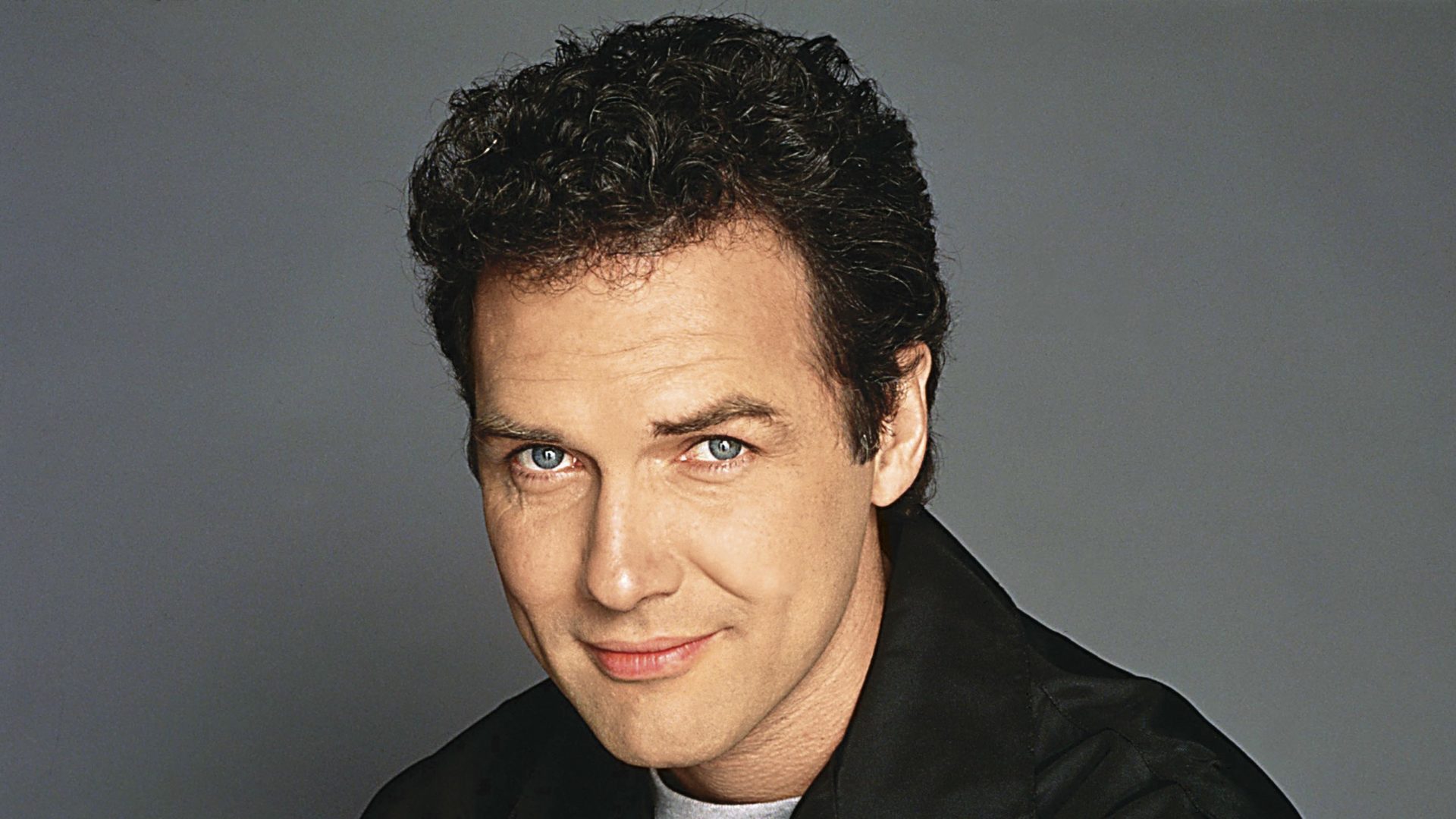
Norm Zada Net Worth and Career Overview: From Mathematics to Media Mogul
As of 2026, Norm Zada’s estimated net worth stands between $20 million and $30 million. This valuation reflects a complex financial history involving high-stakes hedge fund management, the founding of the "natural beauty" publication P...
As of 2026, Norm Zada’s estimated net worth stands between $20 million and $30 million. This valuation reflects a complex financial history involving high-stakes hedge fund management, the founding of the "natural beauty" publication Perfect 10, and a multi-decade series of intellectual property lawsuits against major technology corporations.
Contents
Norman Zada, Ph.D.—often known as Norman Zadeh—is a figure whose career defies simple categorization. A mathematician by training and the son of a world-renowned scientist, Zada transitioned from the rigors of academia to the volatile worlds of professional gambling, hedge fund management, and adult media. His journey provides a unique case study in how intellectual capital can be leveraged across wildly different industries, though his financial trajectory has been as much defined by costly legal battles as by his entrepreneurial successes.
Academic Foundations and Mathematical Heritage
To understand Norm Zada’s career, one must look at his lineage and educational background. He is the son of Lotfi Zadeh, the mathematician and computer scientist who invented "fuzzy logic," a framework that revolutionized artificial intelligence and control systems. Growing up in an environment where mathematical precision was paramount, Norman pursued a similar path of high-level inquiry.
He earned his Ph.D. in Operations Research from the University of California, Berkeley. This discipline, which focuses on using advanced analytical methods to help make better decisions, became the bedrock of his future career. Before entering the private sector, Zada spent time in academia, teaching at prestigious institutions including Stanford University, UCLA, and Columbia University. His early research focused on network flows and optimization, skills that would later allow him to dissect complex systems in both gaming and finance.
In 1974, he authored Winning Poker Systems, a book that remains a cult classic among serious players. Unlike the anecdotal advice common at the time, Zada’s work applied rigorous game theory and statistical analysis to poker. This publication didn't just establish him as an expert in probability; it signaled his intent to use mathematics to find "edges" in real-world environments.
The Hedge Fund Era and Financial Peak
By the 1980s, Zada shifted his focus from the poker table to the trading floor. He founded Zada Management, a hedge fund that utilized quantitative strategies to exploit market inefficiencies. During this period, his net worth grew exponentially. Reports from the 1980s and early 1990s indicated that his fund achieved staggering returns, sometimes exceeding 90% in a single year.
His success in finance was driven by the same "operations research" mindset he applied to academia. He looked for mathematical anomalies in stock pricing and derivatives, moving capital with a speed and precision that preceded the modern era of high-frequency trading. At his financial peak during this era, Zada was considered one of the more successful "boutique" fund managers in California, allowing him to accumulate the capital necessary for his next, more controversial venture.
Perfect 10 Magazine: A Disruptive Vision in Media
In 1996, Norm Zada launched Perfect 10, an adult magazine that sought to challenge the industry standards set by Playboy and Penthouse. The magazine’s USP (Unique Selling Proposition) was its strict "natural" policy: none of the models featured were allowed to have undergone plastic surgery, specifically breast implants or other cosmetic enhancements.
Zada’s motivation for founding the magazine was reportedly a mix of personal aesthetic preference and a belief that there was a massive, underserved market of men who preferred natural beauty. From a business perspective, the venture was high-risk. Producing high-quality print media is capital-intensive, and Zada insisted on using world-class photographers and high-end production values.
The Business of "Natural" Beauty
For several years, Perfect 10 enjoyed significant brand recognition. It was more than a magazine; it was a protest against the "silicone era" of the 1990s. However, the rise of the internet proved to be a catastrophic headwind for the publication. As free digital content began to saturate the market, the subscription-based and newsstand model of Perfect 10 faced existential pressure. Zada invested tens of millions of his own fortune to keep the publication afloat, transitioning it into a digital-only entity as the print market collapsed.
Intellectual Property and the Legal Crusade
Perhaps the most significant chapter of Norm Zada’s career—and the one that most impacted his long-term net worth—is his history of litigation. As the internet began to facilitate widespread copyright infringement, Zada transformed Perfect 10 from a media company into a legal powerhouse.
He filed numerous lawsuits against tech giants, including Google, Amazon, and Microsoft. His central claim was that these search engines were profiting from his copyrighted images by displaying them in search results (specifically thumbnails) and linking to "pirate" sites that hosted his content without permission.
Landmark Cases and Precedents
The case of Perfect 10, Inc. v. Amazon.com, Inc. is still studied in law schools today. It dealt with the "Server Test," which determined that a search engine does not "display" a copyrighted image in a way that violates the law if it merely provides a link to the image hosted on another server.
While Zada won some minor victories and settlements, the overall legal campaign was incredibly costly. He reportedly spent upwards of $50 million on legal fees over two decades. Many of the rulings went against him, setting precedents that actually protected search engines under "fair use" doctrines. This protracted legal warfare significantly depleted the liquid assets he had built during his hedge fund years.
Real Estate and Asset Portfolio
Norm Zada's net worth has often been tied to high-value real estate. Most notably, he was the owner of a massive 20,000-square-foot mansion in the ultra-exclusive Beverly Park enclave of Los Angeles. The property, situated on several acres, featured world-class amenities including a guest house, a professional-grade gym, and extensive gardens.
| Property/Asset Detail | Description | Estimated Value/Status |
|---|---|---|
| Beverly Park Estate | 20,000 sq. ft. mansion on 6.8 acres. | Sold (approx. $16M - $25M range) |
| Perfect 10 IP | Copyrights to thousands of high-res images. | Held privately |
| Hedge Fund Capital | Residual investments from Zada Management. | Diversified private portfolio |
| Literary Royalties | Winning Poker Systems and other writings. | Passive income stream |
In 2010, Zada sold the Beverly Park estate for approximately $16 million, a price that many real estate analysts at the time considered a "deal" for the buyer, given the land value in that neighborhood. This sale was widely seen as a move to liquefy assets to continue funding his various legal and business endeavors.
Assessing Norm Zada's Wealth in 2026
To understand why Zada’s net worth is estimated at $20M–$30M in 2026 rather than the hundreds of millions he might have commanded in the 1990s, one must look at the "burn rate" of his ventures.
- Media Transition: The shift from print to digital destroyed the valuation of traditional media assets. Perfect 10 survives as a niche brand, but it is no longer the revenue powerhouse it was during the late 90s.
- Litigation Costs: The "legal-industrial complex" of suing multi-billion dollar tech companies is a war of attrition. Zada’s willingness to fight for the principle of copyright meant he prioritized legal stands over capital preservation.
- Investment Strategy: While no longer managing a public fund, Zada has maintained a private investment portfolio. Given his mathematical background, it is likely he has maintained his wealth through conservative, algorithmically-driven personal trading.
Career Milestones Table
| Period | Career Phase | Key Achievement/Event |
|---|---|---|
| 1970s | Academic & Gambling | Published Winning Poker Systems; Taught at Stanford. |
| 1980s - 1990s | Finance | Managed Zada Management; Achieved record hedge fund returns. |
| 1996 | Media Launch | Founded Perfect 10 Magazine. |
| 2001 - 2015 | Legal Activism | Launched copyright lawsuits against Google and Amazon. |
| 2010 | Asset Liquidation | Sold Beverly Park mansion to reallocate capital. |
| 2020 - 2026 | Private Investment | Focused on IP management and private algorithmic trading. |
Frequently Asked Questions
How did Norm Zada make his first million?
Zada made his initial fortune through a combination of professional gambling and hedge fund management. His book Winning Poker Systems established him as a premier game theorist, which he then translated into a successful career managing "Zada Management," where his quantitative trading strategies yielded high returns in the 1980s bull market.
Is Perfect 10 magazine still in business?
In 2026, Perfect 10 exists primarily as a digital archive and a brand for natural beauty. While the monthly print publication ended years ago, the company continues to manage its extensive library of copyrighted images, which remain the subject of various licensing and intellectual property protections.
Who is Norm Zada's father?
His father was Lotfi Zadeh, a world-renowned mathematician, electrical engineer, and computer scientist. Lotfi Zadeh is most famous for proposing "fuzzy sets" and "fuzzy logic," which are fundamental to modern computing, robotics, and artificial intelligence.
Did Norm Zada win his lawsuits against Google?
The results were mixed but largely favored the tech giants in the long term. While Perfect 10 won some preliminary injunctions and established that some practices might infringe on copyrights, the courts ultimately ruled that "thumbnail" images in search engines constituted "fair use" because they were transformative and served a different purpose than the original high-resolution photos.
Why did Norm Zada sell his Beverly Hills mansion?
Zada sold his Beverly Park estate in 2010 to diversify his assets and likely to provide liquidity for his ongoing legal battles and business transitions. The sale was a strategic move to move away from high-maintenance real estate and into more liquid financial positions.
Practical Recommendation for Observers
For those looking to learn from Norm Zada’s career, the primary takeaway is the importance of intellectual property (IP) protection versus the cost of enforcement. While Zada was correct that the internet would challenge the rights of content creators, the financial cost of fighting that battle in court often exceeds the potential recovery. Investors and creators should focus on business models that adapt to technological shifts—such as subscription platforms or gated communities—rather than relying solely on retrospective litigation to protect revenue streams.
Image Gallery