Comprehensive Guide to the PSI State Life Insurance Test (2026)
The PSI state life insurance test is a standardized professional examination administered by PSI Services LLC on behalf of various state insurance departments. It serves as the primary gateway for individuals seeking to become licensed...
The PSI state life insurance test is a standardized professional examination administered by PSI Services LLC on behalf of various state insurance departments. It serves as the primary gateway for individuals seeking to become licensed life insurance producers. The exam validates a candidate's mastery of fundamental insurance principles, specific policy types, and the unique legal regulations governing insurance practices within their specific state jurisdiction.
Contents
Successfully navigating this assessment is a prerequisite for anyone intending to sell, solicit, or negotiate life insurance products in states that utilize PSI as their official testing vendor. In 2026, the exam remains a rigorous benchmark, reflecting updated "Best Interest" standards and modern regulatory frameworks designed to protect consumers and maintain the integrity of the financial services industry.
Understanding the PSI Life Insurance Exam Structure
The PSI state life insurance test is typically divided into two distinct sections, often delivered as a single integrated experience but scored independently or as part of a weighted total depending on state rules. Understanding this bifurcation is essential for effective study prioritization.
The National (General) Section
The national portion of the exam focuses on universal insurance concepts that apply regardless of geography. This section tests your knowledge of the "mechanics" of life insurance. Topics include the legal nature of insurance contracts (aleatory, adhesion, unilateral), the various types of term and permanent life insurance policies, and the standard provisions and riders that can be attached to these policies. In 2026, there is an increased emphasis on the tax implications of life insurance and the role of annuities in retirement planning.
The State-Specific Section
This section is tailored to the laws and regulations of the state in which you are seeking licensure. It covers the specific powers of the State Insurance Commissioner or Director, licensing requirements (such as continuing education and renewal periods), and unfair trade practices. Because insurance is regulated primarily at the state level rather than the federal level, this portion of the PSI exam ensures that agents understand the local statutes they must follow to maintain their license in good standing.
Eligibility and Pre-licensing Requirements
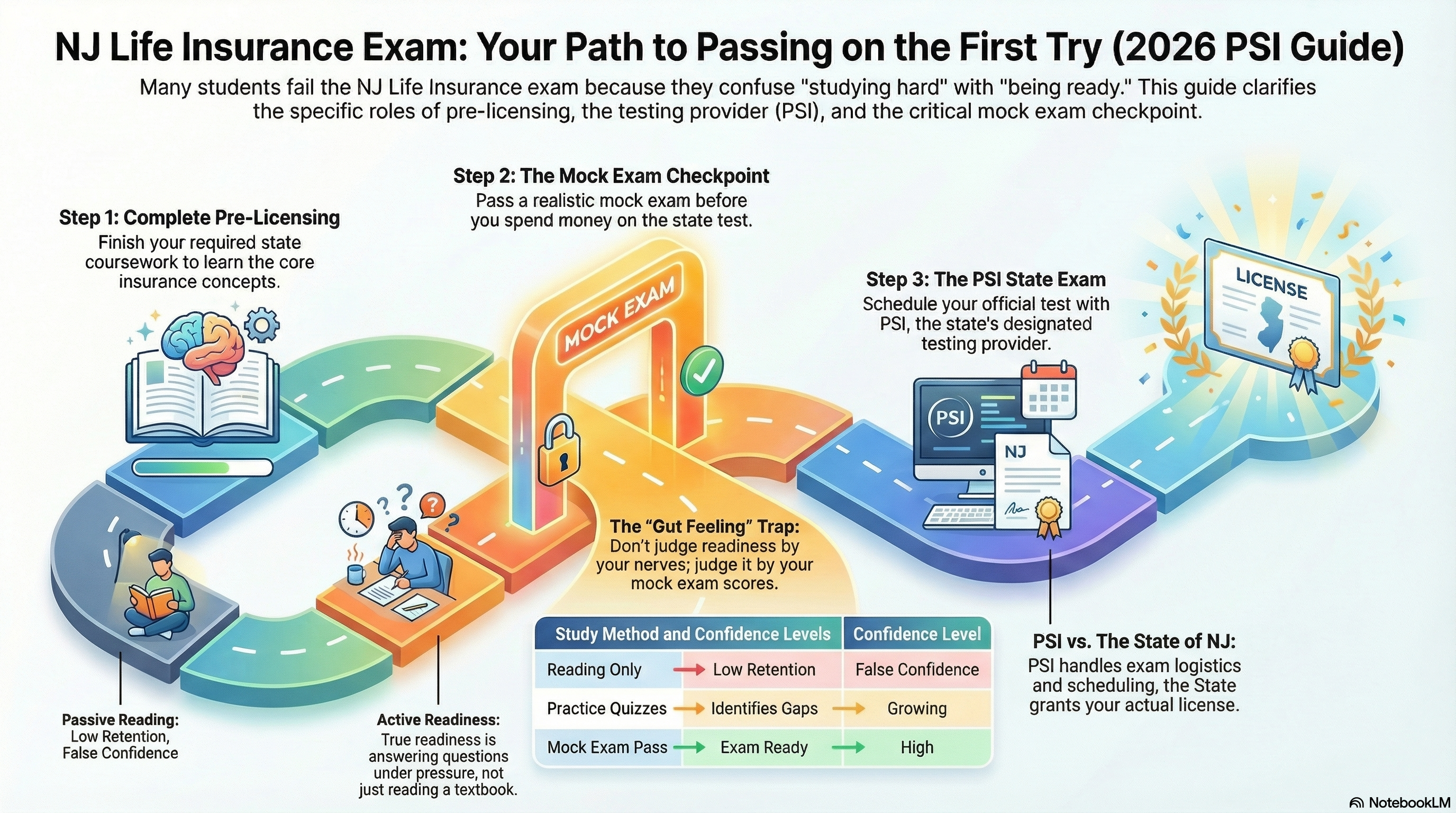
Before you can schedule your PSI state life insurance test, most states require the completion of a formal pre-licensing education program. As of 2026, these requirements are strictly enforced to ensure candidates have a baseline level of competency before attempting the high-stakes exam.
Pre-licensing Education (PE)
Most jurisdictions mandate between 20 and 40 hours of state-approved education. These courses can often be completed online or in a classroom setting. Upon completion, the provider issues a "Certificate of Completion" or a "School Code." You will generally need this code to register for the PSI exam. It is vital to check your specific state's Candidate Information Bulletin (CIB) provided by PSI, as some states have "recency" rules—meaning your PE certificate might expire if you do not take the exam within 90 to 180 days.
Background Checks and Fingerprinting
While the PSI exam is a test of knowledge, the licensing process also involves a test of character. Many states require candidates to undergo a criminal background check and submit fingerprints. In some jurisdictions, PSI testing centers offer fingerprinting services on-site, allowing you to complete this step on the same day as your exam.
Registration, Costs, and Scheduling in 2026
Registration for the PSI state life insurance test is handled primarily through the PSI online portal. Candidates must create an account, select their state, and choose the specific examination (e.g., "Life Producer" or "Life, Accident & Health").
Examination Fees
Fees for the life insurance exam vary by state. In 2026, the average cost for a single-line exam (Life only) ranges from $45 to $110. If you are taking a combined "Life and Health" exam, the fee is generally higher. These fees are non-refundable and must be paid at the time of registration via credit card or electronic check.
Testing Formats: In-Person vs. Remote Proctoring
PSI offers two primary modes of testing in 2026:
- Physical Test Centers: Candidates visit a secure PSI facility. These centers provide a controlled environment with provided computer terminals.
- Remote Online Proctoring: Using PSI's proprietary "Bridge" platform, candidates can take the exam from home. This requires a high-speed internet connection, a webcam, and a private room free from distractions. The proctor monitors the session via video and audio to ensure exam integrity.
Core Content Domains: What to Study
To pass the PSI state life insurance test, you must achieve a deep understanding of several core domains. PSI provides a detailed content outline for each state, which serves as the blueprint for the number of questions dedicated to each topic.
1. Types of Life Insurance Policies
You must be able to distinguish between Term Life (level, decreasing, increasing) and Permanent Life (Whole Life, Universal Life, Variable Life). You should understand how "Flexible Premium" policies differ from "Scheduled Premium" policies and the risks associated with Variable products, which require both an insurance license and a securities registration (FINRA).
2. Policy Provisions, Options, and Riders
This domain covers the "fine print" of an insurance contract. Key concepts include:
- Standard Provisions: Ownership rights, beneficiary designations (revocable vs. irrevocable), the grace period, and the incontestability clause.
- Policy Riders: Added benefits like the Waiver of Premium, Accidental Death Benefit, and Guaranteed Insurability.
- Settlement Options: How the death benefit is paid out (Lump sum, interest only, fixed period, or life income).
3. Life Insurance Tax Considerations
In 2026, regulators emphasize an agent's ability to explain the tax consequences of insurance products. You must understand that while death benefits are generally received income-tax-free, the cash value growth within a permanent policy is tax-deferred. You should also be familiar with Section 1035 Exchanges, which allow for the tax-free transfer of funds between insurance contracts.
4. State-Specific Regulations
This is often the most challenging section for candidates because it involves memorizing specific numbers and legal terms. You will be tested on:
- The Insurance Commissioner’s Powers: Including the ability to issue subpoenas and conduct audits.
- Licensing Laws: How long you have to notify the department of an address change (usually 30 days) and the consequences of "Twisting" or "Rebating."
- The Life and Health Guaranty Association: The safety net that protects policyholders if an insurance company becomes insolvent.
Comparative Overview of PSI Exam Parameters
The following table illustrates the typical structure of the PSI life insurance exam across various representative jurisdictions in 2026. Note that exact question counts and time limits are subject to change by state regulatory boards.
| State Jurisdiction | Total Questions | Time Allotted | Passing Score | State-Specific Focus |
|---|---|---|---|---|
| California | 75 - 90 | 120 Minutes | 60% - 70% | Ethics and California Insurance Code |
| Colorado | 100 | 120 Minutes | 70% | Producer Responsibilities & Disclosure |
| New Jersey | 100 | 120 Minutes | 70% | NJ Insurance Trade Practices |
| Tennessee | 80 | 120 Minutes | 70% | Marketing and Solicitation Rules |
| Virginia | 100 | 120 Minutes | 70% | VA Administrative Code & Statutes |
Scoring and Post-Exam Logistics
One of the benefits of the PSI testing system is the instant score report. As soon as you submit your exam, the computer will display your result.
Understanding Your Score Report
If you pass, you will receive a successful notification, but in most states, you will not see your numerical score; you simply receive a "Pass." If you fail, PSI provides a detailed diagnostic report. This report breaks down your performance by content domain (e.g., "Policy Provisions: 65%," "State Law: 55%"). Use this diagnostic to focus your studies for a retake.
Retake Policies
If you do not pass on your first attempt, you must wait a mandatory period—often 24 to 48 hours—before you can reschedule. Some states limit the number of times you can take the test within a year. In 2026, candidates who fail three times are often required to wait 30 days or retake their pre-licensing education, depending on state-specific rules.
Preparation Strategies for Success
The PSI state life insurance test is a "level-two" difficulty exam, meaning it requires more than just rote memorization; it requires the application of concepts to scenario-based questions.
- Master the Candidate Information Bulletin (CIB): This is the most important document. It is published by PSI for each state and lists the exact number of questions for every topic. If the CIB says there are 15 questions on "Annuities" and only 2 on "Group Life," allocate your study time accordingly.
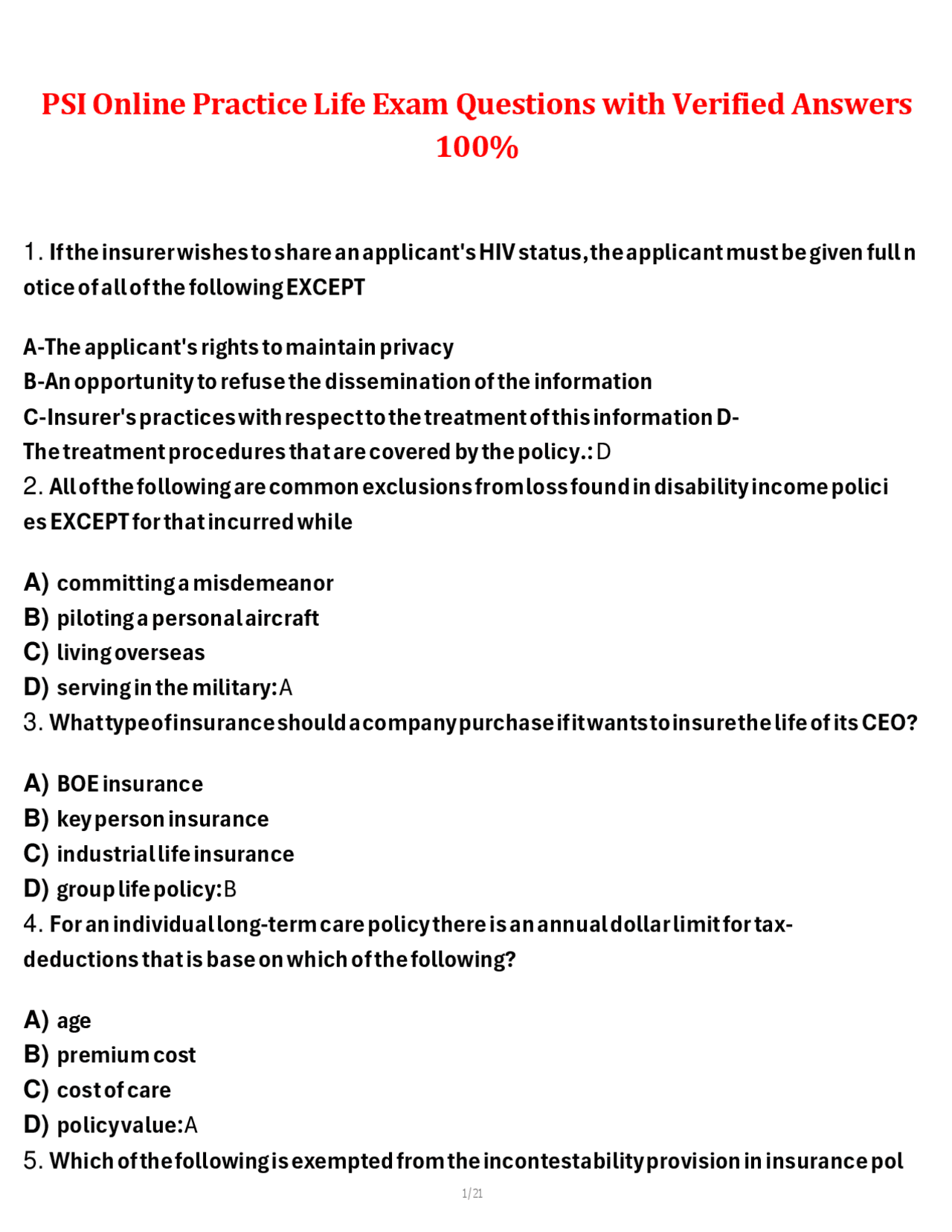
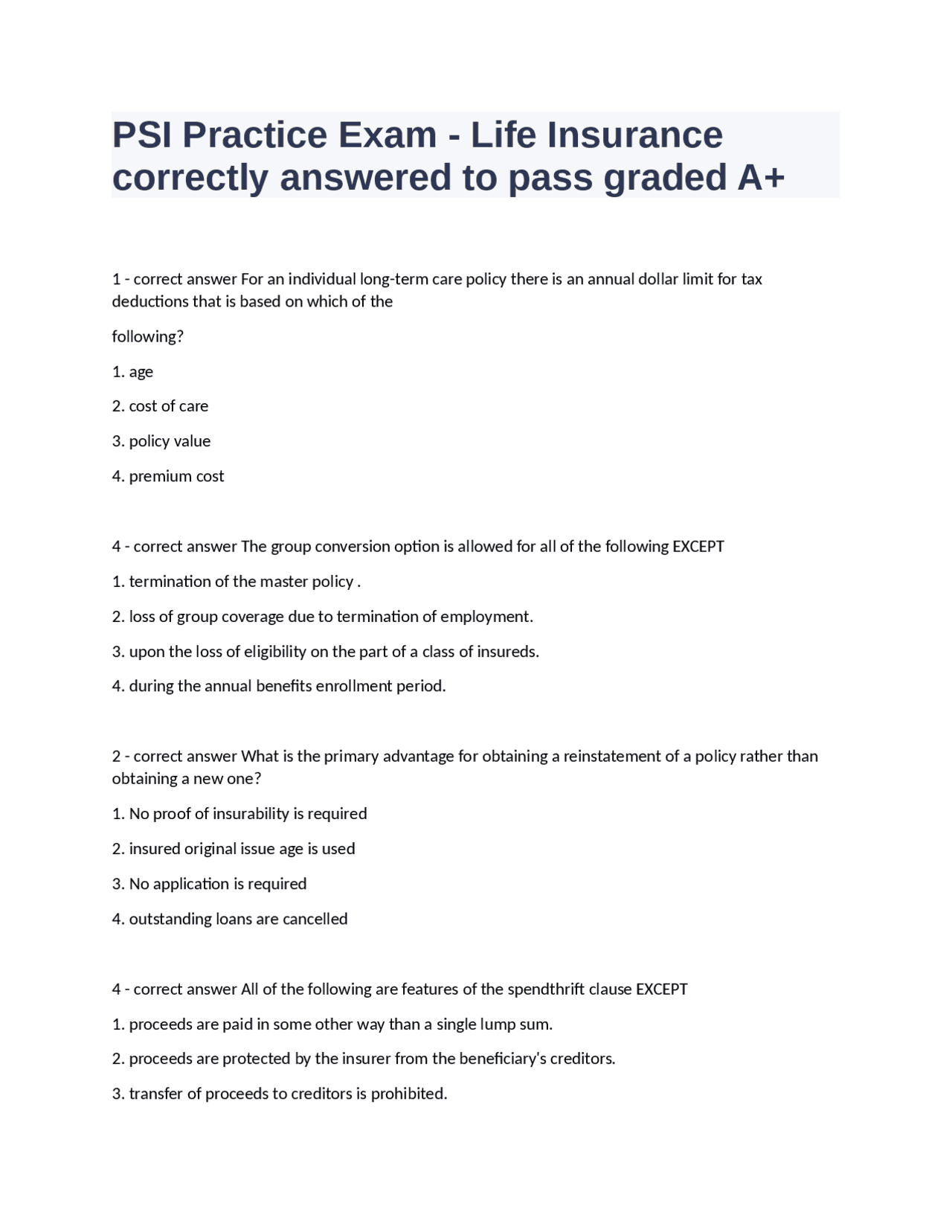
- Practice with "Logic" Questions: PSI often uses questions that ask for the "Except" or "Least Likely" scenario. Practice identifying these negative stems so you don't accidentally choose the opposite of the correct answer.
- Focus on Vocabulary: Insurance has its own language. Words like "indemnity," "subrogation," "fiduciary," and "estoppel" are common. If you don't know the vocabulary, you cannot understand the question.
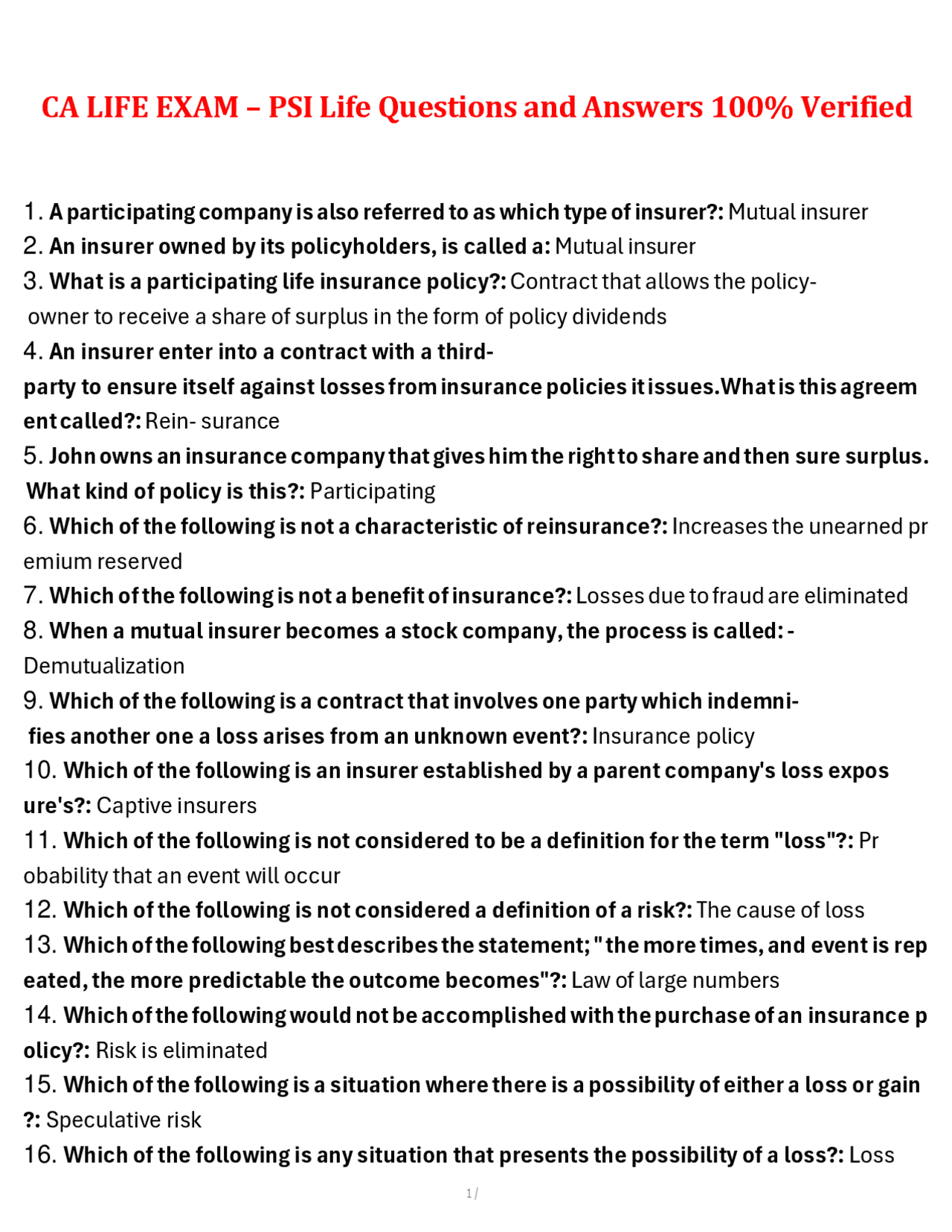
- Use Mock Exams: Take at least three full-length practice exams. This helps build the "mental stamina" required to sit for two hours and maintain focus through 100 questions.
Frequently Asked Questions
How difficult is the PSI state life insurance test?
The exam is moderately difficult. While the pass rate varies by state, it typically hovers around 60% to 70% for first-time test-takers. The challenge lies in the state-specific laws and the nuances between different types of permanent life insurance. Candidates who complete a comprehensive pre-licensing course and utilize practice exams generally have a high success rate.
What identification do I need on test day?
In 2026, PSI requires two forms of valid, non-expired identification. One must be a government-issued photo ID (like a Driver’s License or Passport). The second must contain your name and a signature (like a debit/credit card). The name on your IDs must exactly match the name you used for registration.
Can I use a calculator during the exam?
Yes, but you cannot bring your own. PSI will either provide a simple four-function calculator at the test center or provide a digital on-screen calculator within the testing software. The math is generally limited to basic calculations of premiums, death benefits, or simple interest.
Does the exam cover health insurance too?
Only if you registered for the "Life, Accident & Health" (combined) exam. If you only registered for "Life," you will only be tested on life insurance and annuities. Many candidates choose the combined exam to expand their career opportunities, though it is significantly longer and covers more material.
How do I apply for my license after passing?
Passing the PSI exam is not the same as being licensed. Once you pass, PSI transmits your score to the State Department of Insurance (usually within 48 hours). You must then submit a formal license application and pay the state licensing fee through the National Insurance Producer Registry (NIPR) or the state's specific portal.
Next Steps for Candidates
After passing your PSI state life insurance test, your immediate next step is to ensure your background check is completed and your application is submitted via NIPR. Once your license is issued, you should focus on "contracting" or "appointment" with specific insurance carriers. Remember that in 2026, most states require 24 hours of continuing education every two years to maintain your license, including at least 3 hours of ethics. For official schedules and the most current Candidate Information Bulletins, visit the PSI Exams official site.
Image Gallery