How to Manage Northern Corn Leaf Spot: A Comprehensive 2026 Guide
To effectively manage Northern Corn Leaf Spot (NCLS), growers must implement an integrated approach centered on selecting resistant hybrids, practicing a two-year crop rotation with non-grass species, and utilizing targeted fungicide a...
To effectively manage Northern Corn Leaf Spot (NCLS), growers must implement an integrated approach centered on selecting resistant hybrids, practicing a two-year crop rotation with non-grass species, and utilizing targeted fungicide applications. Early-season scouting and residue management through tillage are essential for reducing fungal inoculum and protecting grain yields.
Contents
Northern Corn Leaf Spot, caused by the fungal pathogen Bipolaris zeicola (formerly known as Helminthosporium carbonum), remains a persistent threat to corn production across the Midwest and Northeastern United States as we move through the 2026 growing season. While often overshadowed by its more aggressive relative, Northern Corn Leaf Blight, NCLS can cause significant localized yield losses, particularly in seed production fields and under specific environmental conditions favoring the pathogen. Managing this disease requires a deep understanding of its biology, the specific "races" of the fungus involved, and the environmental triggers that lead to outbreaks.
Identification and Symptomatology: Understanding the Pathogen
The first step in management is accurate identification. NCLS is unique because the symptoms vary significantly depending on the "race" of the fungus present in the field. As of 2026, researchers recognize five distinct races (0, 1, 2, 3, and 4), though Races 1, 2, and 3 are the most agronomically significant.
Identifying the Different Races
- Race 1: This is the most destructive race but is currently rare in commercial grain production due to widespread host resistance. It produces tan, oval lesions (0.5 to 1 inch long) and is notorious for attacking the ears, leading to a black, felt-like mold growth on the kernels.
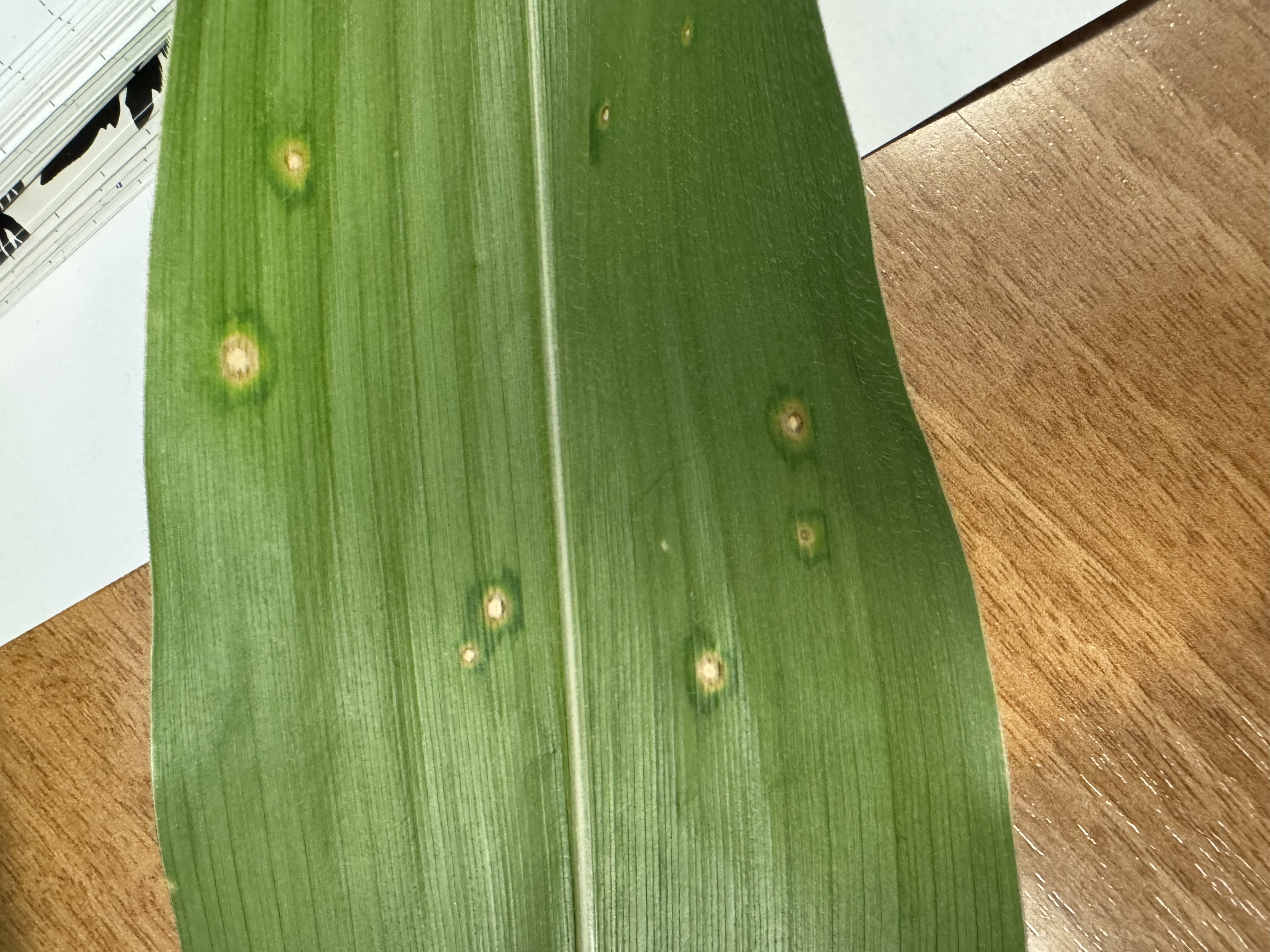
- Race 2: This race typically produces small, circular to oblong spots. These lesions are usually tan with a darker brown border and are often found on the leaves and occasionally the leaf sheaths.
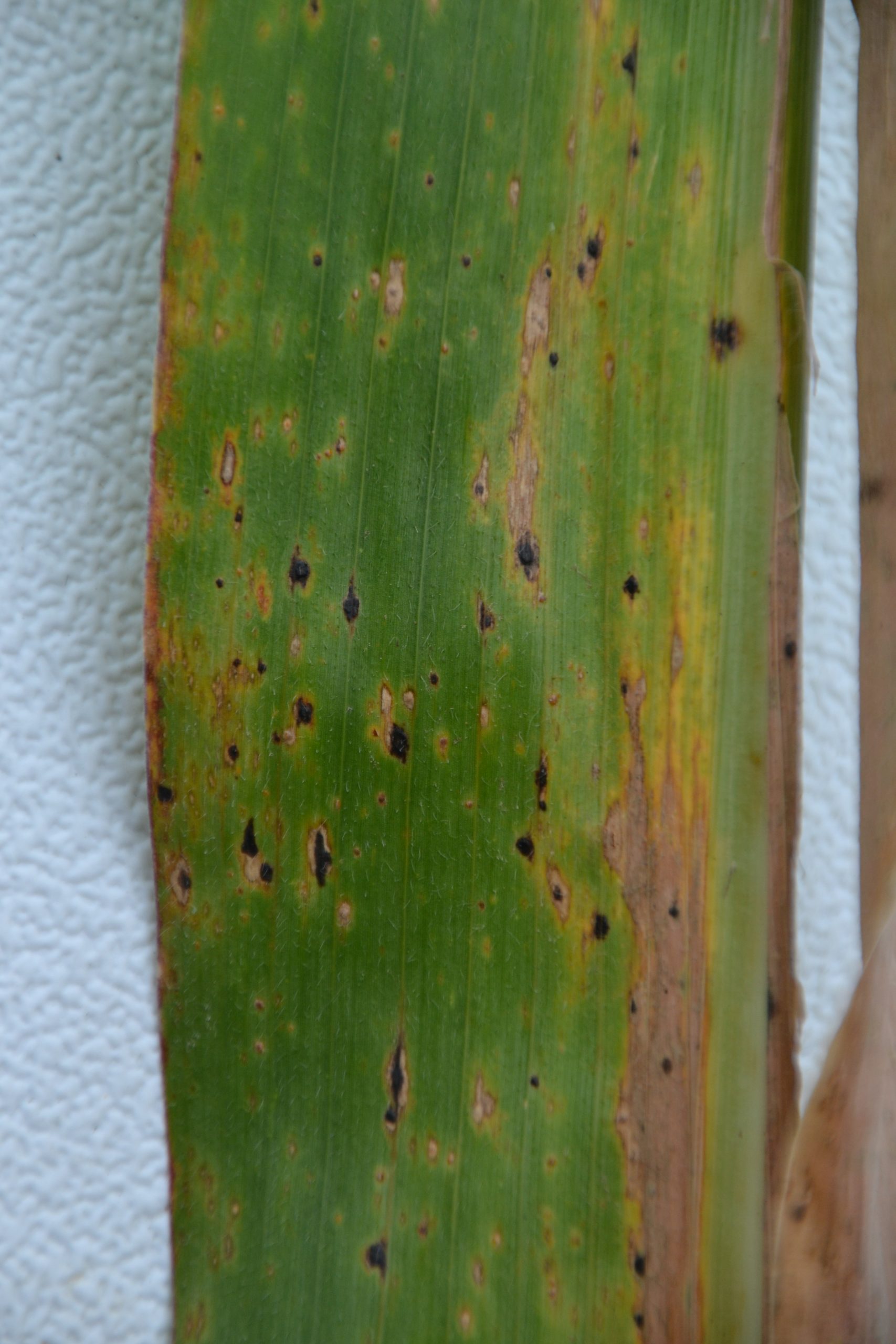
- Race 3: The most common race found in many corn-growing regions. It is characterized by long, narrow, linear lesions that are often described as "pencil-line" streaks. These lesions are tan with darker margins and run parallel to the leaf veins.
- Race 4: Similar to Race 2 and 3, but often observed on specific inbred lines or newer hybrid genetics, producing circular or oval spots that may coalesce under high pressure.
Differentiating NCLS from other foliar diseases is critical. Unlike Northern Corn Leaf Blight (NCLB), which produces large, cigar-shaped lesions, or Gray Leaf Spot (GLS), which produces distinct rectangular lesions limited by leaf veins, NCLS lesions are generally smaller and more varied in shape. Using a hand lens to look for dark fungal spores (conidia) within the lesions can help confirm the diagnosis.
The Disease Cycle and Environmental Triggers
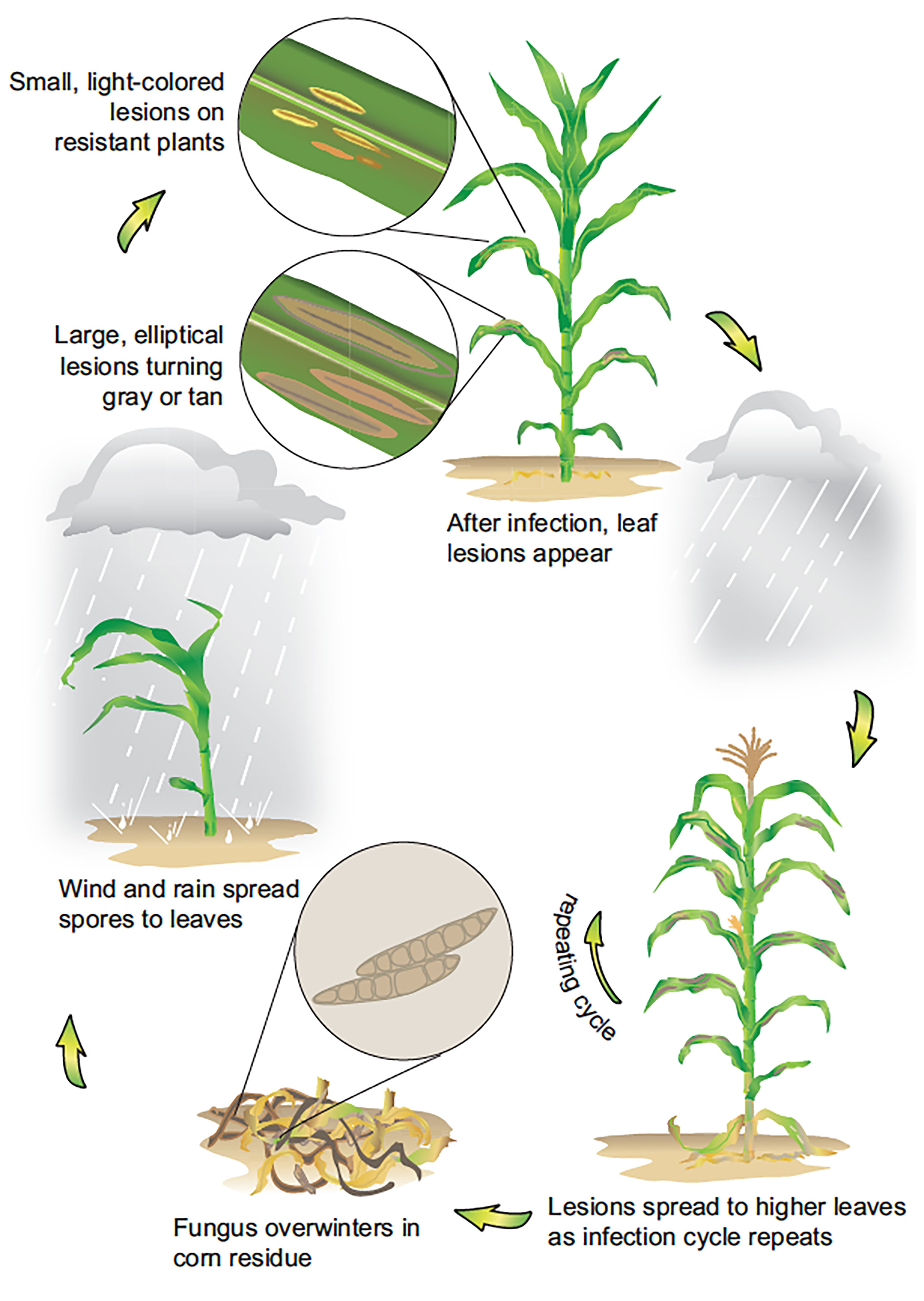
Understanding the lifecycle of Bipolaris zeicola explains why certain management practices are effective. The fungus overwinters as mycelia or spores on infested corn residue. As temperatures rise and humidity increases in the spring, the fungus produces conidia, which are then splashed by rain or carried by wind onto the lower leaves of the new corn crop.
Optimal Conditions for Infection
For NCLS to progress from a few isolated spots to a yield-limiting epidemic, three environmental factors must align:
- High Humidity: Relative humidity above 90% is necessary for spore germination and infection.
- Moderate Temperatures: The pathogen thrives between 65°F and 85°F (18°C to 29°C).
- Leaf Moisture: Frequent rainfall or heavy dews that keep the leaf surface wet for 6 to 12 hours facilitate the penetration of the fungal hyphae into the plant tissue.
In high-residue systems, such as no-till or continuous corn, the sheer volume of overwintering inoculum increases the risk of early-season infection. Once established on the lower leaves, the disease can move upward through the canopy (secondary spread) during the mid-to-late vegetative stages.
Strategic Selection of Resistant Hybrids
The most cost-effective and sustainable way to manage NCLS is through host resistance. Most modern commercial hybrids have been bred with strong resistance to Race 1, which is controlled by a single dominant gene (Hm1). However, resistance to Races 2 and 3 is typically "polygenic" or "quantitative," meaning it is controlled by multiple genes and provides partial protection rather than total immunity.
When selecting hybrids for 2026:
- Consult Seed Guides: Review the disease ratings provided by seed companies. On a scale of 1 to 9 (where 9 is most resistant), aim for hybrids with a rating of 7 or higher if you have a history of NCLS.
- Analyze Field History: If a specific field has seen repeated NCLS outbreaks, prioritize resistance over top-end yield potential in that specific location.
- Consider Inbred Sensitivity: If you are a seed producer, be aware that inbred lines are often much more susceptible to NCLS than their hybrid offspring. Intensive scouting and preventative fungicide programs are often mandatory in seed production.
Cultural Management Practices
Cultural controls aim to disrupt the disease cycle by reducing the amount of overwintering inoculum. While these methods may not eliminate the disease entirely, they significantly lower the baseline pressure, making other tools like fungicides more effective.
Crop Rotation
Rotating away from corn for at least one year—and ideally two years in high-pressure environments—is highly effective. Because Bipolaris zeicola is host-specific to corn and some related grasses, planting non-host crops like soybeans, alfalfa, or wheat allows the corn residue to decompose, causing the fungal population to crash.
Residue Management and Tillage
In fields where NCLS has been a recurring problem, burying infected residue through tillage can accelerate decomposition and physically remove the inoculum from the soil surface. While many growers prefer no-till for soil health benefits, a strategic one-time pass with a chisel plow or disk can reset a field that has become overwhelmed by fungal pathogens.
Chemical Control: Fungicide Application Strategies
Fungicides are a powerful tool for managing NCLS when environmental conditions favor disease development and hybrid resistance is insufficient. However, the timing of the application is more important than the product choice.
Timing the Application
The most critical window for protecting yield is between the V12 (12-leaf stage) and R2 (blister stage). The goal is to protect the "ear leaf" and the leaves above it, as these provide the majority of the photosynthate required for grain fill. If NCLS lesions are found on the leaf below the ear leaf prior to tasseling (VT), a fungicide application is usually economically justified.
Product Selection and Resistance Management
In 2026, many of the leading fungicides utilize a combination of multiple "modes of action" (MOA) to provide broad-spectrum control and prevent the pathogen from developing resistance. Common MOAs include:
- Quinone Outside Inhibitors (QoI/Strobilurins): These provide excellent preventative control by inhibiting spore germination.
- Demethylation Inhibitors (DMI/Triazoles): These offer curative activity by stopping the growth of the fungus once it has entered the leaf.
- Succinate Dehydrogenase Inhibitors (SDHI): A newer class that provides long-lasting residual protection.
| Fungicide Class | Mode of Action (FRAC Code) | Primary Benefit | Examples |
|---|---|---|---|
| Strobilurins | Group 11 | Preventative; Spore inhibition | Pyraclostrobin, Azoxystrobin |
| Triazoles | Group 3 | Curative; Arrests fungal growth | Prothioconazole, Tebuconazole |
| SDHIs | Group 7 | Residual; Long-lasting protection | Adepidyn, Fluopyram |
| Premixes | Groups 3, 7, & 11 | Broad-spectrum; Resistance mgmt | Delaro Complete, Trivapro |
Always rotate chemistry and use multi-mode products to ensure the long-term viability of these tools.
Economic Thresholds and Scouting Protocols
Successful management relies on systematic scouting. Beginning at the V8 stage, walk your fields in a "W" or "Z" pattern, inspecting plants every 50 to 100 yards.
When to Pull the Trigger
The decision to spray should be based on three factors:
- Disease Presence: Are lesions present on 50% or more of the plants?
- Weather Forecast: Is the forecast calling for extended periods of humidity and moderate temperatures?
- Crop Value vs. Cost: Calculate the "break-even" point. If a fungicide application costs $30 per acre (including aerial application) and corn is $4.50 per bushel, you need a yield save of approximately 6.7 bushels per acre to justify the cost. NCLS can easily reduce yields by 10% to 20% if left unchecked during the R1 stage, making the ROI favorable in high-pressure years.
Comparing NCLS with Similar Foliar Diseases
| Feature | Northern Corn Leaf Spot (NCLS) | Northern Corn Leaf Blight (NCLB) | Gray Leaf Spot (GLS) |
|---|---|---|---|
| Pathogen | Bipolaris zeicola | Exserohilum turcicum | Cercospora zeae-maydis |
| Lesion Shape | Small, circular or linear streaks | Large, cigar-shaped | Rectangular; "Matchstick" |
| Lesion Size | 0.5 to 1 inch (linear) | 1 to 6 inches | 0.5 to 2 inches |
| Margins | Dark brown to tan borders | Smooth, rounded ends | Sharp, straight edges |
| Key Risk | Ear rot (Race 1); Photosynthetic loss | Rapid canopy defoliation | Significant late-season lodging |
Frequently Asked Questions
Does Northern Corn Leaf Spot cause ear rot?
Yes, specifically Race 1 of Bipolaris zeicola can cause a significant ear rot. It appears as a black, velvety fungal mat growing between the kernels, often starting at the base of the ear. While rare in commercial hybrids today due to the Hm1 resistance gene, it can still appear in specialty corn or inbred lines. If ear rot is detected, the grain should be tested for quality, although this fungus does not typically produce major mycotoxins like Aspergillus or Fusarium.
Can NCLS survive in the soil without corn residue?
No, the pathogen is an obligate saprophytic competitor on corn residue. It does not survive well in the bare soil once the host tissue has completely decomposed. This is why tillage and rotation are such effective management strategies; they accelerate the "starvation" of the fungus by removing its food source.
Is it too late to spray for NCLS if the corn is in the R3 (milk) stage?
Generally, the economic return on fungicide applications diminishes rapidly after the R2 stage. By the time corn reaches R3, the yield potential is largely set, and the cost of the application may not be recovered unless the disease pressure is catastrophic and threatens the structural integrity of the stalk (lodging). Always prioritize applications between VT and R1 for maximum efficacy.
Are there organic options for managing NCLS?
Organic management relies almost entirely on cultural practices. Selecting the most resistant hybrids available through organic seed suppliers and implementing a strict 3-year rotation is paramount. Some copper-based fungicides are OMRI-listed and may provide suppression, but they are typically less effective than synthetic systemic fungicides and require frequent re-application.
How does irrigation affect NCLS management?
Overhead irrigation can significantly increase NCLS pressure by creating the leaf wetness required for infection. To manage this, avoid frequent, light irrigations that keep the canopy wet for long periods. Instead, opt for less frequent, heavier applications, and try to time them so the leaves can dry quickly in the sun.
Practical Recommendation for the 2026 Season
To protect your corn crop from Northern Corn Leaf Spot this year, start by reviewing your hybrid's disease package; if you are planting in a field with high residue and a history of the disease, ensure you have a hybrid with a strong foliar health rating. Begin scouting at the V10 stage, paying close attention to the lower canopy. If lesions are moving upward and reaching the ear leaf by the time tassels emerge, apply a multi-mode fungicide (Groups 3, 7, and 11) to safeguard your yield. Post-harvest, evaluate the severity of the disease to determine if a crop rotation or tillage pass is necessary for the 2027 season.
Image Gallery