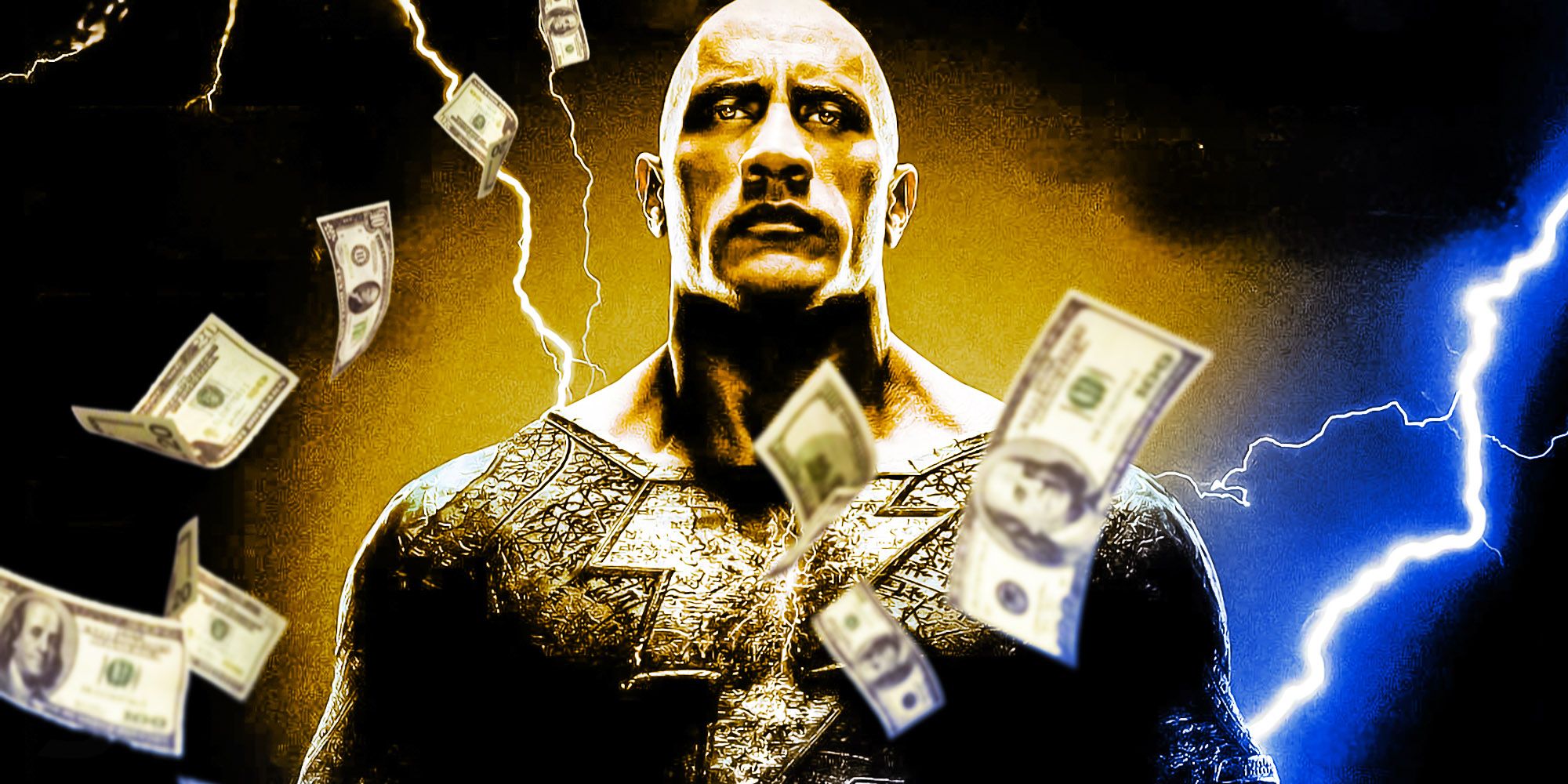
Black Adam: Why the Antagonist Might Be the Star of the Film
In the 2022 film Black Adam, the traditional boundaries between hero and villain are intentionally blurred, positioning Teth-Adam as a lethal anti-hero whose "antagonistic" methods—such as extrajudicial killing and a rejection of moder...
In the 2022 film Black Adam, the traditional boundaries between hero and villain are intentionally blurred, positioning Teth-Adam as a lethal anti-hero whose "antagonistic" methods—such as extrajudicial killing and a rejection of modern superhero ethics—provide a more compelling narrative arc than the conventional morality of the Justice Society.
Contents
The film Black Adam arrived at a pivotal moment for the DC Extended Universe (DCEU), a period we now look back on from 2026 as the final chapter of an ambitious, if turbulent, era of superhero cinema. While the film was marketed as a star vehicle for Dwayne Johnson, the critical discourse surrounding it frequently centers on a singular question: is the protagonist actually the "villain," and does that make him the most interesting part of the story? By examining the ideological friction between Teth-Adam and the Justice Society of America (JSA), the nuances of Pierce Brosnan’s performance, and the subversion of the "chosen one" trope, we can understand why the darker elements of the film often outshine its traditional heroic beats.
Redefining the Hero-Antagonist Dynamic
In most superhero narratives, the protagonist follows a strict moral code, usually defined by the preservation of life and the adherence to due process. Black Adam disrupts this by introducing Teth-Adam, a character who views himself not as a hero, but as a protector with no patience for the "no-kill" rule. This creates a fascinating dynamic where the film’s lead occupies the space typically reserved for a formidable antagonist.
From the perspective of the Justice Society of America, Teth-Adam is a global threat. He is an ancient, god-like being with a penchant for lightning-fueled executions. However, from the perspective of the people of Kahndaq, Teth-Adam is a liberator. This duality is what allows the "antagonist" persona to become the star. We are conditioned to root for the protagonist, yet the film forces us to reconcile that support with his brutal actions. The tension arises not from whether Teth-Adam will defeat a monster, but from whether his brand of justice is more valid than the sanitized version offered by Western-style superheroes.
The Justice Society of America: Functional Antagonists?
Interestingly, for a significant portion of the film’s runtime, the Justice Society of America (JSA) acts as the primary antagonistic force to Teth-Adam. Led by Carter Hall (Hawkman), the JSA enters Kahndaq—a nation that has been under the thumb of the criminal Intergang syndicate for decades—not to liberate the people, but to apprehend the one man who is finally fighting back.
Hawkman and the Conflict of Methods
Carter Hall represents the "Golden Age" of heroics. His rigid adherence to rules and his belief that "heroes don't kill" puts him in direct opposition to Teth-Adam. In many ways, Hawkman serves as the foil that highlights why Teth-Adam is the more captivating figure. While Hawkman’s morality is predictable, Teth-Adam’s is reactionary and visceral. The clash between them is less about good vs. evil and more about interventionism vs. self-determination.
Doctor Fate: The Soul of the Movie
While Teth-Adam provides the spectacle, Kent Nelson (Doctor Fate), played by Pierce Brosnan, provides the emotional and intellectual depth. Many critics and fans argued in the years following the film’s release that Doctor Fate was the true "star" in terms of character development. As a member of the JSA, he technically opposes Teth-Adam, but his ability to see the future allows him to understand the necessity of the anti-hero’s presence.
Fate’s weary wisdom and his eventually tragic sacrifice offer a level of gravitas that the central protagonist often lacks. By acting as a mentor figure to both his team and, subtly, to Teth-Adam, Doctor Fate bridges the gap between the "antagonist" and the "hero," making the conflict feel earned rather than manufactured.
Teth-Adam’s Moral Ambiguity as a Narrative Engine
The reason the "antagonist" (or anti-hero) might be considered the star of Black Adam is rooted in the psychological complexity of his origins. Unlike Superman, who was raised with Kansas values, or Batman, who was shaped by a singular tragedy, Teth-Adam is a product of 5,000 years of rage and grief. He was a slave who saw his family murdered, and the power he wields was born from a son’s sacrifice.
This background justifies his "villainous" traits in the eyes of the audience. When Teth-Adam drops an Intergang mercenary from the clouds, it isn't portrayed as a slip into darkness; it is portrayed as a necessary cleansing of an oppressor. This subversion makes him the star because he represents a "wish fulfillment" that traditional heroes cannot provide: the immediate, final cessation of systemic oppression without the bureaucratic delay of a trial.
Comparative Dynamics: Black Adam vs. The JSA vs. Sabbac
To understand the power balance and why the "antagonist" traits dominate the film, it is helpful to compare the primary entities involved in the Kahndaq conflict.
| Feature | Teth-Adam (Black Adam) | The Justice Society (JSA) | Ishmael Gregor (Sabbac) |
|---|---|---|---|
| Role | Protagonist / Anti-Hero | De Facto Antagonists (Act 1-2) | Primary Villain |
| Motivation | Revenge & Protection of Kahndaq | Global Stability & Rule of Law | Infernal Power & Domination |
| Moral Compass | Pragmatic / Lethal | Idealistic / Non-Lethal | Malevolent / Destructive |
| Source of Power | Egyptian Gods (Shazam) | Technology / Ancient Artifacts | Demonic Forces (Six Archdevils) |
| Audience Appeal | Subversive / Powerful | Nostalgic / Disciplined | Conventional / Antagonistic |
As the table illustrates, Teth-Adam sits in a unique middle ground. While Sabbac is the "villain" in the technical sense (the final boss to be defeated), he lacks the screen time or character depth to be the star. The real "stardom" lies in the friction between Teth-Adam’s methods and the JSA’s constraints.
The Socio-Political Undercurrents of Kahndaq
A major reason the antagonist-coded lead is so effective in this film is the setting of Kahndaq. The film presents a fictional Middle Eastern country that has been exploited by international interests while the "heroes" of the world (like the Justice League or JSA) stood by and did nothing.
When the JSA finally arrives to stop Teth-Adam, the citizens of Kahndaq explicitly point out this hypocrisy. They ask why the JSA is only showing up now to stop their "champion" when they never showed up to stop their oppressors. This political nuance elevates Teth-Adam from a simple "bad guy" to a revolutionary figure. In this context, the "antagonist" isn't the one breaking the law; the "antagonists" are those who enforce laws that only benefit the powerful. This perspective shifts the star power entirely toward Teth-Adam's disruptive nature.
Performance and Presence: The "Rock" Factor
We cannot analyze why the antagonist is the star without discussing the physical presence of Dwayne Johnson. Johnson spent over a decade trying to bring this character to the screen, and he intentionally played Teth-Adam with a stoicism that bordered on menacing.
In a cinematic landscape often filled with "quippy" heroes (the Marvel style), Teth-Adam’s refusal to joke or show vulnerability for most of the film makes him stand out. He carries himself with the weight of a statue come to life. This intensity is more characteristic of a "slasher" or a classic movie monster, yet because he is the lead, it gives the film a unique texture. The star power comes from the sheer overwhelming force of the character, which is a trait usually reserved for the "unbeatable" villain of a story.
Historical Context and the Legacy of the DCEU
Looking back from 2026, Black Adam occupies a strange place in film history. It was the "beginning of the end" for the original DCEU continuity. The film’s focus on a morally grey powerhouse was intended to reset the tone of the franchise. While the broader universe was eventually rebooted under new leadership, the film remains a case study in how to center a movie around a character who refuses to be "good."
The film’s failure to ignite a long-term sequel path doesn't diminish the effectiveness of its central character study. If anything, the isolation of the film makes Teth-Adam’s "star" quality more apparent; he doesn't fit into the wider world of heroes because he is fundamentally built differently. He is a relic of a more brutal age, and that "antagonistic" nature is precisely what makes him the only character in the film capable of moving the plot forward.
Frequently Asked Questions
Is Black Adam considered a villain or a hero in DC Comics?
In DC Comics history, Black Adam (Teth-Adam) has transitioned from being a pure arch-nemesis of Shazam to a complex anti-hero. He is often depicted as the ruler of Kahndaq who will do anything to protect his people, even if it means committing acts that the Justice League considers villainous. His "star" power in the comics, much like in the film, comes from this unpredictability.
Why does the Justice Society try to stop Black Adam?
The JSA, acting under the direction of Amanda Waller, views Teth-Adam as an "uncontrollable meta-human asset." Their primary goal is to maintain international order and prevent an ancient, powerful entity from disrupting the modern geopolitical balance. To them, his lethal methods are a violation of the "heroic" standard.
Who is the real villain of the film?
The primary antagonist is Ishmael Gregor, who eventually transforms into the demon Sabbac. However, many viewers find Ishmael less compelling than the internal conflict between Teth-Adam and the JSA. Sabbac serves more as a "common enemy" to force a temporary alliance between the anti-hero and the heroes.
Did Pierce Brosnan’s Doctor Fate overshadow Black Adam?
Many fans and critics believe so. Brosnan brought a level of sophistication and melancholy to the role that provided the film's strongest emotional beats. While Teth-Adam provided the action, Doctor Fate provided the heart, leading many to argue that the "supporting" cast members were the true stars of the production.
How does the 2022 film connect to the current DCU?
As of 2026, Black Adam is considered part of the "DC Legacy" category. It does not directly connect to the new continuity established by James Gunn and Peter Safran, though it remains a popular standalone viewing experience for fans of the character and Dwayne Johnson.
Practical Recommendation for Viewers
If you are revisiting Black Adam in 2026, the best way to appreciate the film is to view it through the lens of a deconstructive character study rather than a standard superhero romp. Pay close attention to the scenes in Kahndaq’s streets and the dialogue of the citizens (specifically Adrianna Tomaz).
By focusing on the "antagonistic" elements—the refusal to compromise, the rejection of Western heroic tropes, and the brutal efficiency of Teth-Adam—you will find a much richer story than if you simply wait for a "heroic" transformation that never truly comes. Treat Teth-Adam not as a hero who needs to learn a lesson, but as a force of nature that the rest of the world has to learn to live with.
Image Gallery