Comprehensive Overview of Data Security in the Mobile Cloud Computing Paradigm
Data security in the mobile cloud computing (MCC) paradigm involves protecting information as it transitions between resource-constrained mobile devices and scalable cloud infrastructures. This security model requires robust encryption...
Data security in the mobile cloud computing (MCC) paradigm involves protecting information as it transitions between resource-constrained mobile devices and scalable cloud infrastructures. This security model requires robust encryption, stringent identity management, and secure communication protocols to mitigate risks such as unauthorized access, data leakage, and privacy breaches across heterogeneous wireless networks.
Contents
Understanding the Mobile Cloud Computing (MCC) Paradigm
Mobile Cloud Computing (MCC) represents the integration of cloud computing into the mobile environment. By 2026, this paradigm has become the standard for mobile application development, allowing resource-limited devices—such as smartphones, tablets, and wearable IoT sensors—to perform complex tasks by offloading processing and storage to the cloud. This synergy overcomes inherent mobile limitations, including short battery life, limited storage capacity, and restricted processing power.
The MCC architecture typically consists of three main components: the mobile device, the communication network (incorporating 5G and early-stage 6G technologies), and the cloud service provider. While this structure offers immense scalability and flexibility, it significantly expands the attack surface. Data is no longer confined to a single physical device or a private local network; instead, it exists in a state of constant transit or resides on remote servers shared with other tenants.
The paradigm shift toward MCC introduces a "shared responsibility model." In this model, the cloud provider secures the underlying infrastructure (servers, hypervisors, and physical networking), while the user or the mobile application developer is responsible for the data, application-level security, and the integrity of the mobile endpoint. Understanding this demarcation is essential for any technical overview of the field.
Key Security Challenges in Mobile Cloud Computing
Securing data in MCC is more complex than in traditional desktop-based cloud computing due to the mobility of devices and the unpredictability of wireless connections. The following challenges represent the primary hurdles in maintaining a secure MCC environment.
Data Confidentiality and Privacy
Confidentiality ensures that sensitive data remains inaccessible to unauthorized entities, whether they are malicious hackers or the cloud service providers themselves. In MCC, privacy is particularly vulnerable because mobile devices frequently transmit location data, personal identifiers, and behavioral patterns. Protecting this metadata is as critical as protecting the core data payload. Techniques such as Fully Homomorphic Encryption (FHE) are increasingly discussed in 2026 to allow data processing in the cloud without ever decrypting the underlying information, though performance overhead remains a consideration for mobile applications.
Data Integrity and Verifiability
Integrity ensures that data has not been altered during transit or while stored in the cloud. Because cloud providers are third-party entities, users must have mechanisms to verify that their data remains untampered. In a mobile context, frequent handovers between network cells (e.g., moving from a Wi-Fi network to a 5G carrier) increase the risk of Man-in-the-Middle (MitM) attacks where data packets could be intercepted and modified.
Multi-tenancy and Virtualization Risks
Cloud environments rely on virtualization to serve multiple customers on the same physical hardware. This multi-tenancy introduces "side-channel" risks, where a malicious actor on one virtual machine might attempt to leak data from another tenant sharing the same CPU or memory resources. In MCC, where mobile users are constantly connecting and disconnecting, the dynamic allocation of these resources must be handled with extreme isolation protocols to prevent cross-account data leakage.
Technical Mitigation Strategies and Security Models
To address the aforementioned challenges, several sophisticated technical frameworks have been developed. These focus on securing the data at rest, in transit, and during computation.
Attribute-Based Encryption (ABE)
Attribute-Based Encryption is a type of public-key encryption in which the secret key of a user and the ciphertext are dependent upon attributes (e.g., job role, location, or device security posture). In the MCC paradigm, ABE is highly effective because it allows for fine-grained access control. For example, a healthcare application might allow a doctor to view a patient’s record only if the doctor is using a verified device within a specific hospital geofence. This ensures that even if the data is intercepted, it remains useless without the correct set of attributes.
Secure Data Offloading
Offloading is the process of migrating computation-intensive tasks from the mobile device to the cloud. The security risk here is that the data being offloaded could be exposed during the transfer. Modern MCC frameworks utilize Trusted Execution Environments (TEEs), such as Intel SGX or ARM TrustZone, to create a "secure enclave" on the cloud server. The mobile device sends encrypted data directly to this enclave, where it is decrypted and processed in an isolated environment that the rest of the cloud operating system cannot see.
Multi-access Edge Computing (MEC) Integration
By 2026, Multi-access Edge Computing (MEC) has become a critical layer in the MCC security stack. MEC places cloud-like resources at the "edge" of the network, typically within cellular base stations. This proximity reduces the distance data must travel, thereby reducing the window of opportunity for interceptors. From a security perspective, MEC nodes can act as local security gateways, performing heavy-duty encryption tasks or virus scanning before the data ever reaches the core internet or the central cloud.
| Security Technique | Primary Goal | Mobile Constraint Addressed | Trade-off |
|---|---|---|---|
| Homomorphic Encryption | Computation on encrypted data | Privacy from Cloud Provider | High CPU/Latency overhead |
| Attribute-Based Encryption | Fine-grained access control | Complex Permission Management | Key management complexity |
| TrustZone/TEEs | Execution Isolation | Untrusted Cloud OS | Hardware dependency |
| Differential Privacy | Statistical Anonymization | Data Leakage via Metadata | Slight loss in data accuracy |
| Lightweight Cryptography | Data Confidentiality | Limited Battery/CPU | Lower security margin than AES-256 |
Standards, Compliance, and the 2026 Regulatory Landscape
Data security in MCC is not merely a technical challenge but a legal one. Organizations operating within the mobile cloud paradigm must adhere to international standards and regional regulations that have become increasingly stringent by 2026.
- ISO/IEC 27017 & 27018: These international standards provide guidelines for information security controls applicable to the provision and use of cloud services, including specific protections for Personally Identifiable Information (PII) in public clouds.
- GDPR and Modern Privacy Acts: The General Data Protection Regulation (GDPR) and similar laws like the California Consumer Privacy Act (CCPA) require mobile cloud applications to implement "Privacy by Design." This includes the right to be forgotten and data portability, which are technically challenging in a distributed cloud environment.
- NIST Cloud Computing Standards: The National Institute of Standards and Technology (NIST) continues to update its guidelines (Special Publications 800 series) to address the specific vulnerabilities of mobile-to-cloud interfaces, emphasizing the need for robust identity verification.
Identity and Access Management (IAM) in Mobile Cloud
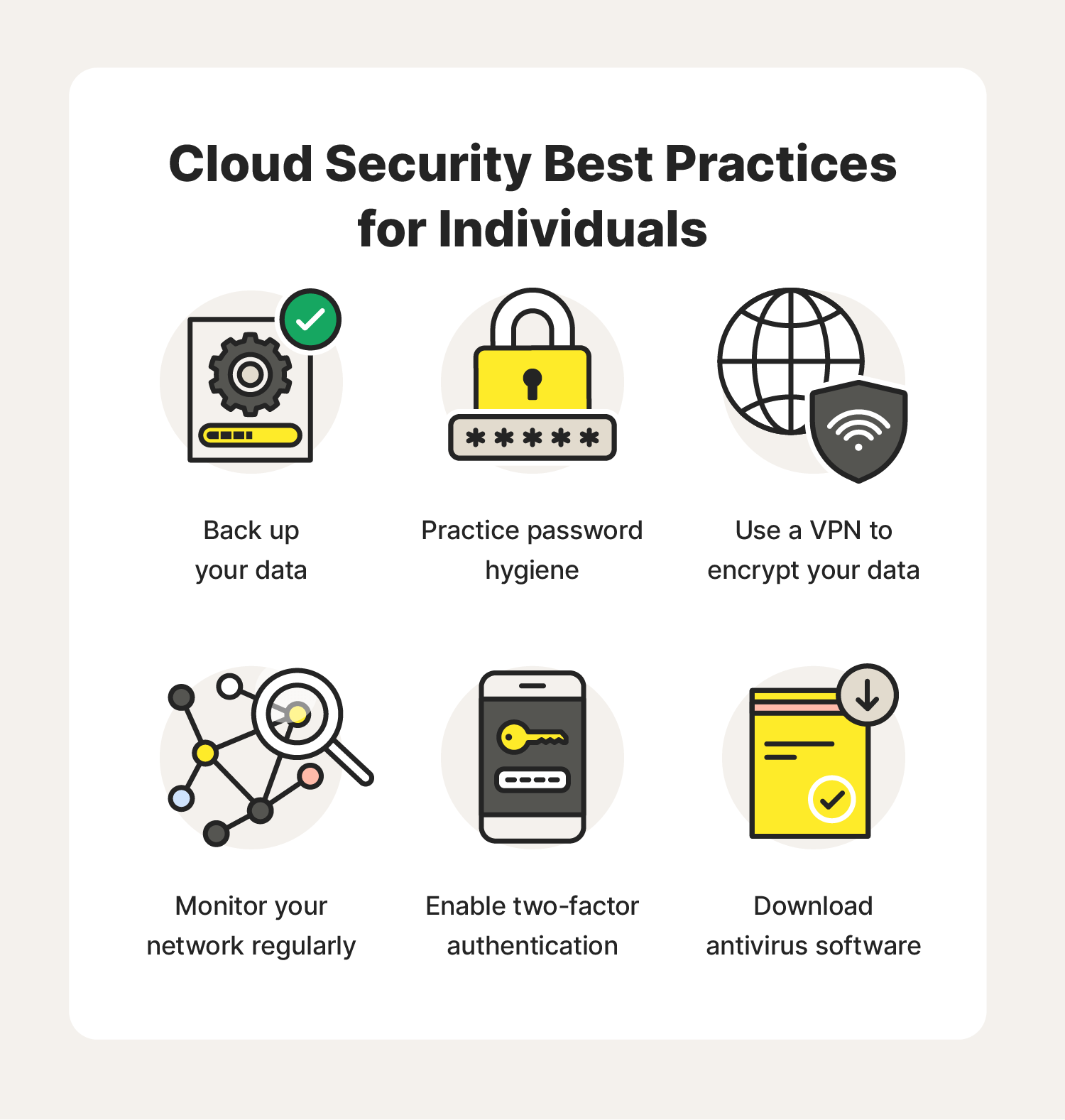
The mobile device acts as a primary entry point for cloud services, making Identity and Access Management (IAM) the first line of defense. In the MCC paradigm, traditional password-based authentication is insufficient.
Multi-Factor Authentication (MFA) and Biometrics
By 2026, passwordless authentication using FIDO2 standards has become the norm. Mobile devices utilize hardware-backed biometric sensors (fingerprint, facial recognition, iris scanning) to generate cryptographic tokens. These tokens, rather than the biometric data itself, are sent to the cloud to verify identity. This prevents the "replay" of biometric data if the cloud database is breached.
Zero Trust Architecture (ZTA)
The "Zero Trust" model assumes that no entity, whether inside or outside the network, should be trusted by default. In MCC, every request from a mobile device to the cloud must be authenticated, authorized, and continuously validated. Access is granted on a "least privilege" basis, meaning a mobile user only gets access to the specific data and resources required for their current task, and only for the duration of that task.
Frequently Asked Questions
How does MCC security differ from traditional cloud security?
Traditional cloud security focuses on securing static endpoints like desktops and servers within a defined perimeter. MCC security must account for the mobility of the device, frequent changes in network quality and type (Wi-Fi vs. Cellular), and the severe power constraints of mobile hardware, which limit the complexity of local encryption algorithms.
What is the impact of 5G/6G on MCC data security?
Higher bandwidth and lower latency allow for more frequent security handshakes and the use of more complex encryption protocols that were previously too slow for mobile use. However, these technologies also enable a much higher density of connected devices (IoT), which significantly increases the volume of data that must be monitored for threats.
Is blockchain a viable solution for data integrity in MCC?
Yes, blockchain or distributed ledger technology (DLT) is often used to maintain an immutable log of data access and modifications. In MCC, a lightweight version of blockchain can be used to store hashes of data, allowing mobile users to verify that the cloud provider has not altered their files without the overhead of storing the actual data on the chain.
What role does Artificial Intelligence play in MCC security?
By 2026, AI is used both as a defensive and offensive tool. Defensively, AI-driven User and Entity Behavior Analytics (UEBA) monitor mobile cloud access patterns to detect anomalies, such as a login from an unusual location or an unexpected mass data download, triggering an automatic lockout.
How can mobile developers reduce the data security risk in their apps?
Developers should prioritize minimizing the amount of sensitive data stored locally on the device, use the latest Transport Layer Security (TLS 1.3 or higher) for all communications, and leverage cloud-native security tools provided by platforms like AWS, Azure, or Google Cloud.
Practical Recommendations for Implementation
To ensure data security within the mobile cloud computing paradigm, organizations should adopt a tiered defense strategy. First, implement end-to-end encryption (E2EE) where the keys are managed by the client, ensuring that the cloud provider acts only as a blind storage and processing utility. Second, adopt a Zero Trust approach to identity, requiring continuous authentication based on device health and user context.
Finally, perform regular security audits and penetration testing specifically focused on the mobile-to-cloud API endpoints. These APIs are the most common vectors for data exfiltration. By combining advanced cryptographic techniques with rigorous compliance and AI-enhanced monitoring, the MCC paradigm can provide a secure and highly efficient environment for the next generation of mobile services.
Image Gallery