WOW Air Net Worth Overview: Financial Rise, Collapse, and Corporate Valuation
At its operational peak between 2017 and 2018, WOW air held an estimated enterprise valuation of $150 million to $200 million based on private funding rounds and prospective acquisition bids. However, rapid overexpansion and debt relia...
At its operational peak between 2017 and 2018, WOW air held an estimated enterprise valuation of $150 million to $200 million based on private funding rounds and prospective acquisition bids. However, rapid overexpansion and debt reliance led to its March 2019 collapse, leaving behind over $200 million in total liabilities and reducing its net corporate value to zero.
Contents
Disclaimer
This financial overview is intended strictly for educational, historical, and corporate research purposes. It does not constitute professional investment, legal, or financial advice. All figures represent historical public disclosures, bankruptcy court filings, and verified news reports.
The Rise of WOW Air: Business Model and Peak Valuation
Founded in November 2011 by Icelandic entrepreneur Skúli Mogensen, WOW air launched its first operational flights in May 2012. The airline adopted an ultra-low-cost carrier (ULCC) model, leveraging Iceland’s geographic position between North America and Europe to offer low-cost transatlantic flights through its hub at Keflavík International Airport (KEF).
In its early years, WOW air experienced rapid revenue growth by filling aircraft at high load factors and charging separately for unbundled services, such as baggage, seat selection, and onboard catering. The business model relied on high utilization rates of narrowbody Airbus aircraft—primarily A320 and A321 models—to maintain lower operating costs per available seat kilometer (ASK) than traditional network carriers.
- 2011: Founded
- 2012: First Flight
- 2015: Transatlantic Expansion
- 2017-2018: Peak Growth & Widebodies
- 2019: Collapse (March)
By late 2017, WOW air was flying over 2.8 million passengers annually, a figure that grew to nearly 3.5 million in 2018. During this period of peak expansion, industry analysts and private equity discussions valued the airline at between $150 million and $200 million. However, this top-line valuation masked mounting structural deficits, thin operating margins, and severe vulnerability to exogenous economic shocks.
Debt Accumulation and Structural Financial Vulnerabilities
Although WOW air generated significant gross revenue, its cash flow deteriorated rapidly as the airline attempted to scale up its route network. Unlike established legacy carriers with substantial capital reserves, WOW air operated on tight liquidity margins and relied on continuous debt financing to fund capital expenditure and operational expansion.
- Transatlantic Overexpansion (Airbus A330 Widebodies)
- High Capital & Fuel Costs (Spikes in Jet Fuel Prices)
- Price War & Yield Erosion (Competition with Icelandair)
- Crack in Liquidity Reserves (Cash Burn & Debt Default)
Several financial and operational factors contributed to the rapid erosion of the company's net equity:
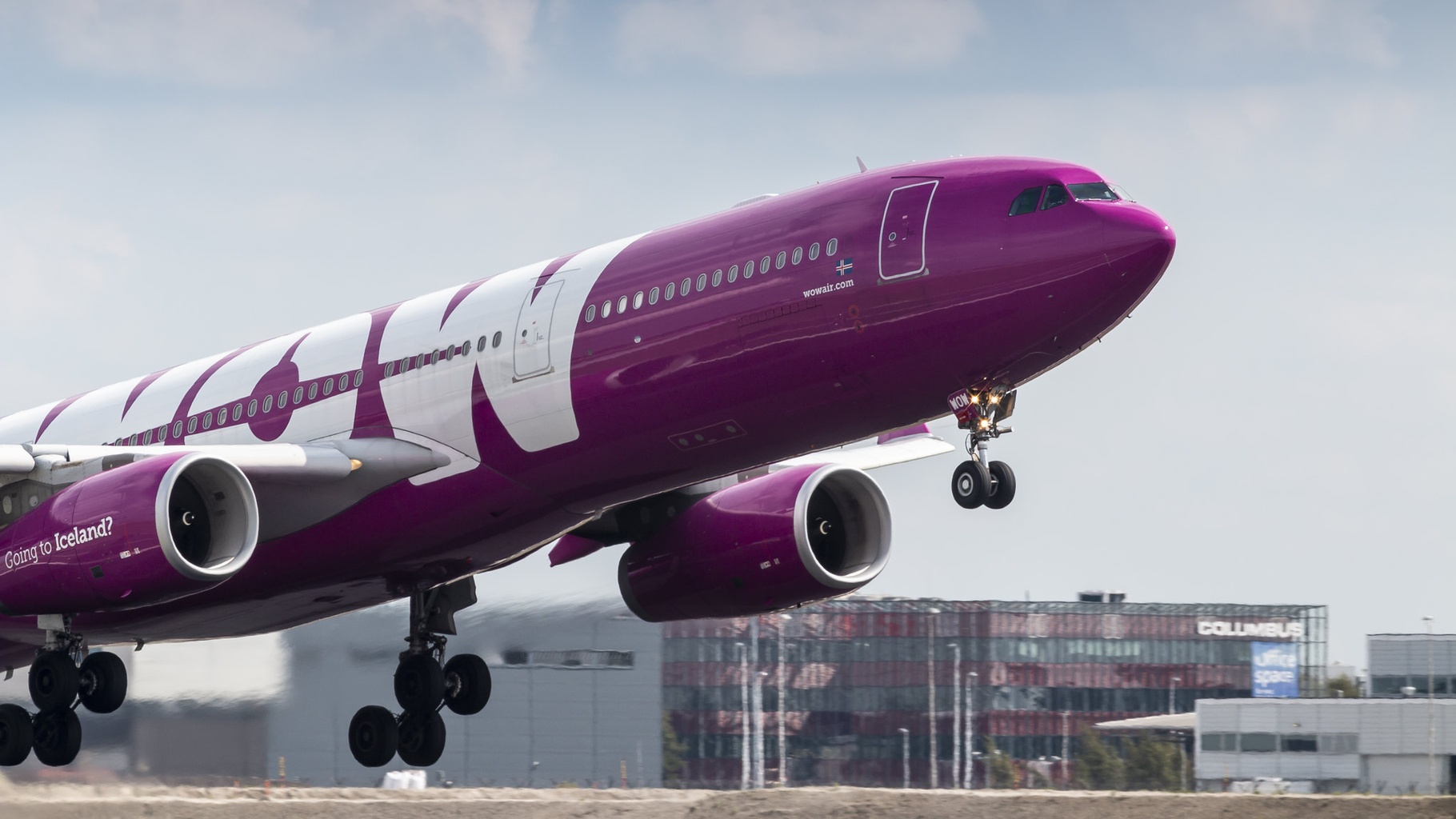
- Fleet Expansion and Widebody Aircraft: In 2016, WOW air introduced widebody Airbus A330-300 aircraft to serve long-haul routes to the U.S. West Coast and India. Widebody aircraft incur significantly higher lease payments, maintenance costs, and fuel burn compared to narrowbody jets. When demand on these long-haul routes failed to yield expected margins, fixed lease liabilities heavily weighted down the balance sheet.
- Jet Fuel Volatility: Crude oil prices increased notably throughout 2017 and 2018. As an unhedged carrier, WOW air absorbed the full impact of rising jet fuel prices, which quickly eroded its gross operating margins.
- Price Wars and Capacity Glut: A severe price war between WOW air and state rival Icelandair led to yield dilution across North American and European routes. To maintain market share, both carriers discounted fares below break-even cost thresholds.
- High Financing Costs: In September 2018, WOW air raised €60 million (approximately $70 million USD) through senior secured bond issuances at high interest rates to cover short-term liquidity needs. This bond issue added heavy debt-service obligations to an already constrained cash balance.
The Financial Collapse and Bankruptcy Liquidation
By late 2018, WOW air’s balance sheet was severely distressed, prompting urgent efforts to secure a buyer or strategic investor.
In November 2018, Icelandair Group announced a preliminary agreement to acquire WOW air in an all-share transaction, subject to due diligence. However, after examining WOW air’s financial obligations, balance sheet liabilities, and forward cash burn, Icelandair canceled the acquisition in late November 2018.
Following the failed Icelandair transaction, US-based private equity firm Indigo Partners—known for investments in ULCCs such as Wizz Air and Frontier Airlines—entered into negotiations to acquire a 49% stake in WOW air for an estimated $75 million cash injection. Negotiations continued into early March 2019 but ultimate restructuring terms could not be reached, causing Indigo Partners to withdraw its proposal.
A final, last-minute attempt to renegotiate terms with Icelandair and local bondholders failed when creditors refused to convert outstanding debt into equity without fresh cash backing. On March 28, 2019, WOW air abruptly ceased all operations, canceled all flights, and filed for bankruptcy protection in Reykjavik, Iceland.
Upon filing for bankruptcy, WOW air’s net worth was reduced to negative territory, with total claims filed by aircraft lessors, bondholders, airports, fuel suppliers, and passengers exceeding 26 billion Icelandic krónur (over $210 million USD at historical exchange rates).
Founder Skúli Mogensen’s Personal Wealth and Stake
Prior to founding WOW air, Skúli Mogensen built a substantial personal fortune as a technology investor and corporate executive. He co-founded Arctic Ventures and later served as CEO of OZ Communications, a mobile messaging software company sold to Nokia in 2008.
Mogensen financed WOW air’s early startup phase primarily through his holding company, Titan Holding hf. At various stages of WOW air’s growth, Mogensen held between 70% and 100% of the airline's equity.
To keep WOW air operational during the 2018 liquidity squeeze, Mogensen subordinated personal loans and converted millions of dollars in personal debt holdings into equity. When the airline declared bankruptcy in March 2019, Titan Holding's equity stake was completely wiped out, resulting in multi-million dollar direct personal losses for Mogensen and ending his control over the airline assets.
Post-Collapse Asset Sales and Spiritual Successors
Following the bankruptcy filing, court-appointed liquidators began auctioning off WOW air’s tangible and intellectual assets to pay secured creditors and administration fees.
| ASSET CLASS | DESTINATION / OUTCOME |
|---|---|
| Leased Fleet (Airbus A320, A321, A330) | Repossessed by lessors |
| Brand, Domain, Trademarks & Manuals | Sold to USA NOW LLC |
| Airport Slots & Operations Infrastructure | Returned to airport authorities |
| Former Management & Operations Talent | Formed PLAY Airlines (2019) |
- Intellectual Property Sale: In late 2019, US investor Michele Ballarin acquired WOW air’s brand, domain name, logos, and operating assets through USA NOW LLC. While plans were announced to restart operations as a freight and passenger carrier under the WOW air name, operational execution was repeatedly delayed and failed to re-establish market presence.
- Emergence of PLAY Airlines: In November 2019, former WOW air executives—including former Vice President of Operations Arnar Már Magnússon—founded a new Icelandic low-cost carrier initially named WAB air ("We Are Back"), later rebranded as Fly Play hf. (PLAY). PLAY adopted a narrower, disciplined strategy, utilizing single-aisle Airbus A320neo family aircraft while deliberately avoiding the expensive widebody long-haul route strategy that contributed to WOW air’s demise.
Financial Snapshot: WOW Air Across Key Operational Phases
The table below summarizes WOW air’s financial profile across its key operational stages, illustrating its transition from high growth to insolvency.
| Financial Metric / Feature | Peak Growth (2017–2018) | Collapse & Bankruptcy (2019) | Post-Liquidation Status |
|---|---|---|---|
| Estimated Net Corporate Value | $150M – $200M | Negative ($0 Equity Value) | Assets Liquidated |
| Annual Passenger Volume | ~3.5 Million | 0 (Operations Suspended) | N/A |
| Total Debt & Liabilities | ~$70M Bond Issuance + Leases | >$210M Confirmed Claims | Administrative Liquidation |
| Fleet Structure | ~20 Aircraft (A320, A321, A330) | Grounded / Repossessed | Aircraft Re-leased to Other Carriers |
| Primary Ownership | Skúli Mogensen (Titan Holding) | Bankruptcy Estate / Liquidators | Brand Assets Sold to USA NOW LLC |
| Strategic Focus | Ultra-Low-Cost Transatlantic | Cash Conservation / Bailout | Restructuring / Successor Entities |
Financial Lessons from WOW Air’s Capital Model
The failure of WOW air highlights key principles of airline capitalization and operational management in ultra-low-cost transatlantic markets:
- Subsidizing Unprofitable Routes: Using profitable short-haul European feeder routes to cross-subsidize unhedged, capital-intensive long-haul widebody flights quickly drains cash reserves.
- Sensitivity to Fuel Spikes: Unhedged ultra-low-cost airlines operating on thin margins face rapid erosion of capital when jet fuel prices increase unexpectedly.
- Balance Sheet Debt vs. Cash Reserves: Debt-financed growth in capital-intensive industries leaves little room for unexpected shifts in consumer demand, price wars, or currency fluctuations.
- Aircraft Fleet Homogeneity: Deviating from a single aircraft family increases maintenance overhead, crew cross-training costs, and spare parts inventory, undermining the basic operational savings of the ULCC model.
Frequently Asked Questions
What was WOW air’s peak net worth before bankruptcy?
At its peak between 2017 and 2018, WOW air held an estimated enterprise valuation of $150 million to $200 million, supported by rapid revenue growth, high passenger volumes, and private investor interest.
Why did WOW air fail despite high passenger numbers?
Despite transporting nearly 3.5 million passengers annually at its peak, WOW air failed due to high operating costs from widebody long-haul aircraft, rising jet fuel prices, aggressive fare wars with Icelandair, and unsustainable debt service obligations.
What happened to Skúli Mogensen’s investment in WOW air?
Skúli Mogensen lost his equity investment in WOW air through his holding company, Titan Holding hf. He had previously converted personal debt holdings into equity in a bid to keep the carrier solvent before operations ceased in March 2019.
Did another company buy WOW air after it shut down?
The intellectual property and brand assets were purchased by US entity USA NOW LLC (led by Michele Ballarin) in late 2019. However, the operational assets and fleet were repossessed by lessors, and former WOW air executives launched an independent carrier, PLAY Airlines.
How does PLAY Airlines differ financially from WOW air?
PLAY Airlines focuses strictly on narrowbody Airbus A320neo and A321neo aircraft to connect Europe and North America via Iceland, intentionally avoiding the high operating costs and lease commitments associated with the widebody aircraft that contributed to WOW air’s collapse.
Key Takeaways
The history of WOW air demonstrates the financial volatility inherent in the ultra-low-cost aviation sector. While the carrier successfully built a high-profile international brand and drove substantial growth in Icelandic tourism, its high debt load, rapid fleet expansion into widebody aircraft, and lack of fuel hedging ultimately depleted its net worth and led to bankruptcy. For financial analysts and aviation corporate strategists, WOW air remains a classic case study in the capital preservation risks of rapid, debt-funded expansion in volatile commodity markets.
Image Gallery