Essential Skills Required for a Finance Analyst: Professional Standards for 2026
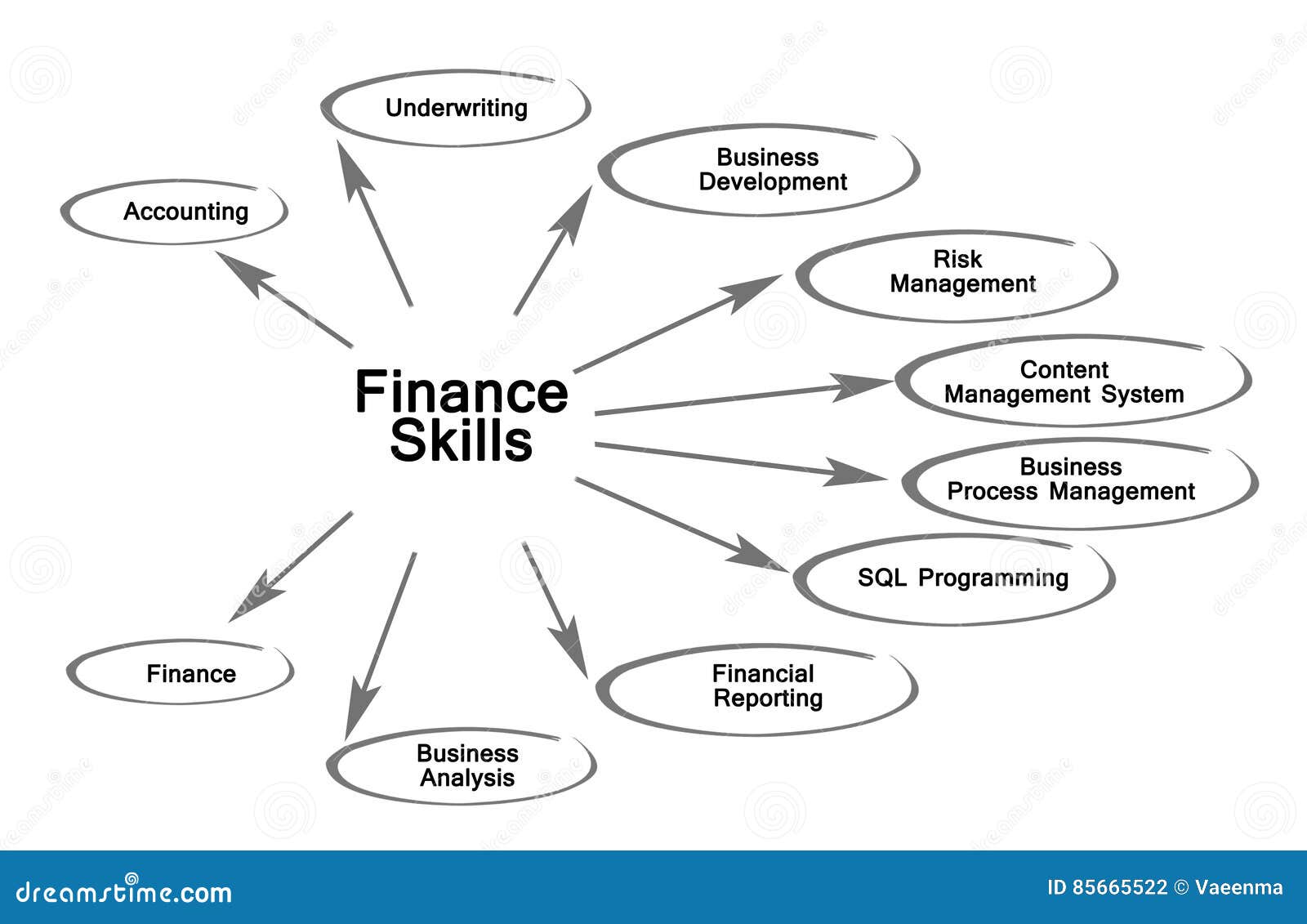
To succeed as a finance analyst in 2026, professionals must master a dual-competency framework consisting of advanced technical quantitative skills and strategic communication. This includes proficiency in financial modeling, SQL/Pytho...
To succeed as a finance analyst in 2026, professionals must master a dual-competency framework consisting of advanced technical quantitative skills and strategic communication. This includes proficiency in financial modeling, SQL/Python data manipulation, and IFRS/GAAP accounting standards, balanced with the ability to translate complex datasets into actionable business narratives for executive stakeholders.
Contents
The role of the finance analyst has evolved significantly over the last decade. While the core objective remains the same—evaluating financial data to help organizations make informed decisions—the methodology has shifted from manual spreadsheet management to integrated data science and strategic business partnering. In 2026, an analyst is no longer just a "number cruncher"; they are a critical architect of organizational strategy.
The Technical Foundation: Quantitative and Accounting Mastery
The bedrock of any finance analyst's career remains a profound understanding of how money moves through an organization. Without a firm grasp of technical accounting and mathematical principles, the more advanced analytical tools are essentially useless.
Financial Modeling and Forecasting
Financial modeling is the process of creating a mathematical representation of a company’s financial performance. In 2026, this requires more than just filling out a template. An analyst must be able to build dynamic, flexible models that can account for various economic scenarios.
- Three-Statement Models: Analysts must link the Income Statement, Balance Sheet, and Cash Flow Statement seamlessly. Any change in one must accurately reflect across the others.
- Discounted Cash Flow (DCF): This involves valuing a project or company based on the time value of money, requiring deep knowledge of WACC (Weighted Average Cost of Capital) and terminal value calculations.
- Sensitivity and Scenario Analysis: Analysts must test how "sensitive" a model is to changes in variables like interest rates, inflation, or market share.
Accounting Proficiency and Financial Reporting
A finance analyst must speak the language of business: accounting. This involves a deep familiarity with the Financial Accounting Standards Board (FASB) and International Financial Reporting Standards (IFRS).
Understanding the nuances between accrual and cash accounting is vital. Analysts frequently perform variance analysis, which involves comparing actual financial results against budgeted or forecasted figures. Explaining why a $1 million shortfall occurred requires an understanding of revenue recognition, depreciation schedules, and operational expenses.
The Technological Evolution: Data Science in Finance
By 2026, the divide between finance and data science has almost entirely evaporated. Standard Excel proficiency is now considered a baseline prerequisite rather than a competitive advantage.
Advanced Excel and Automation
While newer tools exist, Excel remains the industry standard for quick analysis. However, the modern analyst must go beyond basic formulas.
- Power Query and Power Pivot: These tools allow analysts to handle millions of rows of data, far exceeding the traditional spreadsheet limits.
- VBA and Macros: Automating repetitive tasks—such as monthly report generation—saves hundreds of hours and reduces the risk of human error.
- Lookup and Array Functions: Mastery of XLOOKUP, INDEX/MATCH, and dynamic arrays is essential for building robust models.
Programming and Database Management
The volume of data generated by modern enterprises requires analysts to interact directly with databases.
- SQL (Structured Query Language): This is the most critical technical skill for an analyst today. SQL allows you to pull specific datasets directly from a company’s data warehouse without relying on IT departments.
- Python or R: These programming languages are used for advanced statistical modeling and machine learning. In 2026, finance analysts use Python libraries like Pandas and NumPy to perform predictive analytics, such as forecasting customer churn or optimizing inventory levels based on historical trends.
Data Visualization
Collecting data is only half the battle; presenting it is what drives decision-making. Proficiency in tools like Tableau or Microsoft Power BI is mandatory. These platforms allow analysts to create interactive dashboards that executives can use to "drill down" into specific regions, products, or timeframes.
Strategic and Interpersonal Competencies
The transition from a junior to a senior analyst often depends less on technical skill and more on "soft" skills. These competencies allow an analyst to influence the direction of the company.
Data Storytelling and Communication
A finance analyst must be a translator. They take the "what" (the data) and explain the "so what" (the business impact). This requires the ability to strip away jargon when presenting to the Head of Marketing or the Chief Operating Officer. Effective communication involves:
- Simplification: Reducing complex multi-variable models into 3-4 key takeaways.
- Persuasion: Using data to advocate for a specific course of action, such as divesting from a failing product line.
- Active Listening: Understanding the specific needs of different departments to tailor financial reports to their goals.
Critical Thinking and Problem-Solving
Financial analysis is rarely a straight line. If a company’s profit margins are shrinking despite rising sales, an analyst must look beyond the spreadsheet. Is it an issue with rising COGS (Cost of Goods Sold)? Is there an inefficiency in the supply chain? Or is it a result of aggressive discounting? Critical thinking allows the analyst to hypothesize, test, and identify the root cause of financial anomalies.
Professional Certifications and Academic Requirements
The path to becoming a finance analyst typically begins with a Bachelor’s degree in Finance, Economics, Accounting, or Mathematics. However, specialized certifications often determine salary ceilings and promotion eligibility.
| Certification | Focus Area | Career Impact |
|---|---|---|
| CFA (Chartered Financial Analyst) | Investment management, valuation, and ethics. | Gold standard for asset management and equity research. |
| CPA (Certified Public Accountant) | Auditing, taxation, and regulatory reporting. | Essential for corporate accounting and tax-focused analysis. |
| CMA (Certified Management Accountant) | Financial planning, analysis, and cost management. | High value for internal corporate finance (FP&A) roles. |
| FMVA (Financial Modeling & Valuation Analyst) | Practical modeling and spreadsheet skills. | Best for immediate technical application in investment banking. |
The CFA Program
Administered by the CFA Institute, this three-level program is notoriously difficult but highly respected. It covers ethics, quantitative methods, economics, and portfolio management. By 2026, the CFA curriculum has integrated significant portions of data science and fintech, reflecting the changing landscape of the industry.
Comparison of Skills by Analyst Level
As an analyst progresses through their career, the weight of their responsibilities shifts from technical execution to strategic oversight.
| Skill | Junior Analyst (Years 0-3) | Senior Analyst (Years 4-7) | Finance Manager/Director (8+ Years) |
|---|---|---|---|
| Financial Modeling | Building and maintaining models. | Designing complex, multi-scenario architectures. | Approving model logic and assumptions. |
| Data Handling | Data entry and basic SQL queries. | Advanced Python automation and data cleaning. | Strategy for data governance and BI integration. |
| Presentation | Creating slide decks. | Presenting to department heads. | Presenting to the Board and C-Suite. |
| Focus | Accuracy and efficiency. | Insight and trend identification. | Risk management and long-term strategy. |
Frequently Asked Questions
Which is more important in 2026: Excel or Python?
Excel remains the primary tool for the majority of day-to-day financial tasks and ad-hoc modeling. However, Python has become the differentiator for high-paying roles. If you are working with datasets that exceed 1 million rows or require complex statistical simulations, Python is superior. A well-rounded analyst should be expert in Excel and proficient in Python.
Do I need a Master’s degree to become a finance analyst?
While not strictly required, an MBA or a Master’s in Finance can significantly accelerate career progression, especially for those moving into investment banking or private equity. For entry-level corporate roles, a strong undergraduate degree combined with a certification like the CMA or FMVA is often sufficient.
How has AI changed the skills required for this role?
By 2026, AI is used to handle most routine data entry and basic trend reporting. This has actually raised the bar for analysts; you are no longer valued for doing the calculation, but for interpreting the AI-generated results and ensuring the underlying data integrity.
Is coding really necessary for a career in finance?
In 2026, yes. Even if you aren't writing code daily, understanding the logic of SQL and basic scripting is necessary to navigate modern Enterprise Resource Planning (ERP) systems like SAP or Oracle.
What is the most common mistake new finance analysts make?
The most common mistake is focusing entirely on the numbers and ignoring the operational reality. A model might be mathematically perfect, but if it doesn't account for real-world constraints—like labor shortages or shipping delays—the analysis will be flawed.
Practical Next Steps for Aspiring Analysts
If you are looking to enter or advance in the field of financial analysis in 2026, start by auditing your current technical stack. Ensure you are comfortable with "Three-Statement" modeling and can perform a DCF analysis from scratch. Once your accounting foundation is solid, invest time in learning SQL; it is the most immediate way to increase your value in a data-driven organization.
Finally, seek opportunities to present your findings. The ability to stand in front of a room and explain why a business should pivot based on your data is what ultimately transforms a finance analyst into a business leader.
Image Gallery