Christian Drug Rehab Near Me: Complete Guide to Faith-Based Addiction Recovery
Finding a local Christian drug rehab program requires balancing spiritual alignment with clinical rigor. Faith-based addiction treatment combines evidence-based therapies—such as medical detoxification, cognitive behavioral therapy, an...
Finding a local Christian drug rehab program requires balancing spiritual alignment with clinical rigor. Faith-based addiction treatment combines evidence-based therapies—such as medical detoxification, cognitive behavioral therapy, and dual-diagnosis care—with Christian spiritual practices, pastoral counseling, and Scripture-grounded recovery support. This guide outlines how to locate accredited local facilities, verify clinical standards, evaluate insurance coverage, and select the right level of care for long-term sobriety.
Contents
What Is Christian Drug Rehab and How Does Faith-Based Treatment Work?
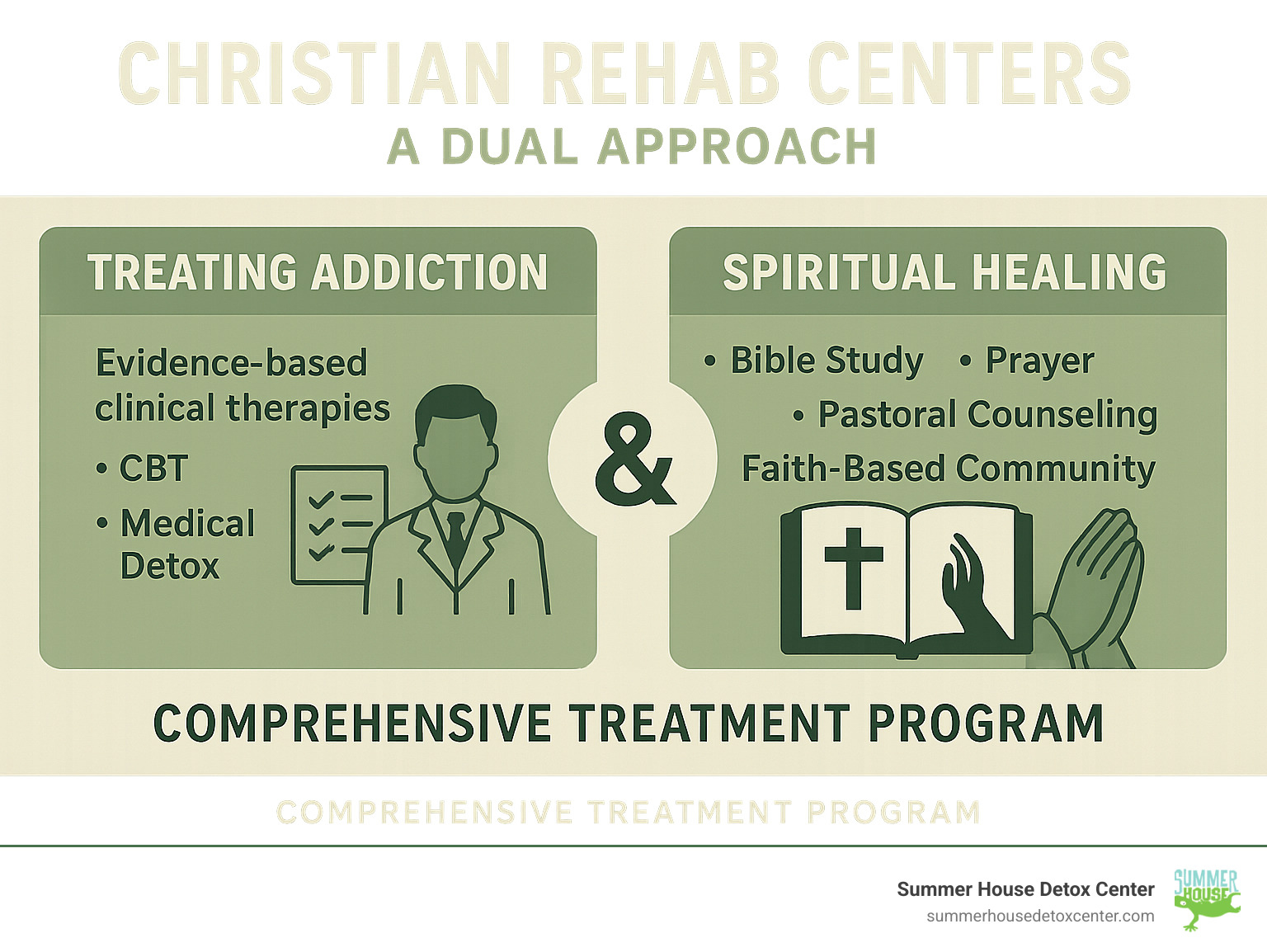
Christian drug rehabilitation is a specialized approach to substance use disorder (SUD) treatment that integrates clinical addiction medicine with Christian theology and spiritual care. Rather than treating addiction solely as a physical or psychological condition, faith-based programs address the disease holistically, emphasizing spiritual renewal, forgiveness, and personal responsibility alongside clinical interventions.
In a clinical setting, effective Christian rehabilitation programs do not replace modern medical science with prayer alone. Instead, reputable facilities operate on an integrated care model. Licensed therapists, psychiatrists, and addiction specialists work alongside pastors, chaplains, and faith counselors to provide comprehensive care.
Core Components of Faith-Based Recovery
- Evidence-Based Behavioral Therapies: Modalities such as Cognitive Behavioral Therapy (CBT), Dialectical Behavior Therapy (DBT), and Motivational Interviewing (MI) are utilized to help individuals identify toxic thought patterns, manage triggers, and build coping mechanisms.
- Pastoral and Biblical Counseling: Individual and group counseling sessions incorporate Biblical teachings, addressing themes of grace, redemption, guilt, identity, and moral inventory.
- Spiritual Practices and Reflection: Daily routines typically feature individual devotionals, group prayer, Scripture study, and voluntary chapel or worship services designed to rebuild personal faith and spiritual discipline.
- Christ-Centered 12-Step Programs: Adaptation of traditional 12-Step principles (such as Celebrate Recovery or traditional 12-Step groups grounded in Biblical passages) where Jesus Christ is explicitly acknowledged as the Higher Power.
- Clinical Co-Occurring Disorder Treatment: Addressing underlying mental health conditions—including clinical depression, generalized anxiety, PTSD, and trauma—through dual-diagnosis care delivered by board-certified clinicians.
How to Find and Evaluate Local Christian Rehab Centers
Searching for "Christian drug rehab near me" yields a wide range of providers, from non-profit church ministries to fully accredited medical residential facilities. Distinguishing between peer-led support groups and medically supervised treatment centers is critical for safety and recovery outcomes.
Step 1: Use Recognized National Registries
To locate verified treatment facilities in your geographic area, start with national healthcare databases that allow filtering by location and special programs:
- SAMHSA Treatment Locator: The Substance Abuse and Mental Health Services Administration maintains a comprehensive directory of state-licensed facilities at FindTreatment.gov.
- SAMHSA National Helpline: Calling 1-800-662-4357 provides free, confidential 24/7 treatment referral services for individuals and family members seeking local support.
- Local Church Networks and Health Ministries: Regional church associations and hospital health networks often maintain referral partnerships with accredited faith-based residential centers.
Step 2: Verify Clinical Accreditation and State Licensing
Faith-based dedication must be paired with clinical expertise. Verify that any prospective facility holds legitimate healthcare credentials:
- The Joint Commission Accreditation: Look for the Gold Seal of Approval from The Joint Commission, which indicates that the facility meets stringent national quality and patient safety standards.
- CARF Accreditation: The Commission on Accreditation of Rehabilitation Facilities (CARF) independently audits addiction treatment centers for operational and clinical excellence.
- State Department of Health Licensing: Ensure the facility and its clinical staff are fully licensed by your state’s substance abuse and health agencies to provide medical detox and residential care.
- Staff Credentials: Confirm that medical staff include Board-Certified Addiction Medicine Physicians, Licensed Professional Counselors (LPC), Licensed Clinical Social Workers (LCSW), and Registered Nurses (RN).
Step 3: Assess Theological and Programmatic Alignment
Different Christian rehab centers reflect diverse theological traditions, ranging from non-denominational evangelical to Catholic or mainline Protestant approaches. Ask the admissions team specific questions prior to enrollment:
- What is the facility's stance on medical interventions, psychiatric medications, and Medication-Assisted Treatment (MAT)?
- Are pastoral counselors credentials recognized by national counseling boards, or do they hold degrees from accredited seminaries?
- How does the program accommodate patients at different stages of their faith journey, including those struggling with spiritual doubt?
Comparing Levels of Care in Faith-Based Addiction Treatment
Substance use treatment is structured across recognized levels of care established by the American Society of Addiction Medicine (ASAM). Selecting the appropriate level depends on physical dependence severity, co-occurring psychiatric needs, and medical history.
| Level of Care | Program Structure | Medical Supervision | Primary Focus & Faith Integration | Average Duration |
|---|---|---|---|---|
| Medical Detoxification | Inpatient hospital or specialized residential unit | 24/7 medical oversight by physicians and nurses | Safe management of physical withdrawal symptoms; supportive chaplain visits upon patient request. | 3 to 7 days |
| Residential / Inpatient Rehab | 24/7 structured living within a treatment facility | On-site clinical and medical staff available around the clock | Intensive individual therapy, group counseling, daily devotions, pastoral care, and structured chapel services. | 30 to 90 days |
| Partial Hospitalization Program (PHP) | 5 to 7 days per week, 6+ hours per day (patient sleeps at home or sober living) | On-site medical monitoring during program hours | High-intensity clinical therapy paired with structured faith-based group work and accountability. | 2 to 4 weeks |
| Intensive Outpatient Program (IOP) | 3 to 5 days per week, 9 to 15 hours total per week | Periodic medical check-ins and medication management | Reintegration into work or family life while attending evening faith counseling and Celebrate Recovery meetings. | 8 to 12 weeks |
| Outpatient & Aftercare | 1 to 2 sessions per week (individual or group) | Outpatient appointments as needed | Ongoing recovery maintenance, church community integration, alumni support groups, and mentorship. | 6 to 12+ months |
Clinical Evidence vs. Faith-Based Integration: Dual Diagnosis and MAT
A critical consideration when selecting a local Christian rehab center is its integration of evidence-based medical science alongside spiritual care. According to research published by the National Institute on Drug Abuse (NIDA), addiction is a chronic, treatable brain disease that requires comprehensive medical and behavioral management.
Dual-Diagnosis Capability
Over half of individuals diagnosed with a severe substance use disorder also experience a co-occurring mental health condition, such as clinical depression, bipolar disorder, panic disorder, or post-traumatic stress disorder (PTSD). High-quality Christian rehab facilities employ licensed mental health practitioners who provide integrated dual-diagnosis care.
In an effective dual-diagnosis framework:
- Psychiatric conditions are treated with validated therapies (such as trauma-informed CBT or EMDR) and appropriate psychiatric medications.
- Spiritual counselors help patients navigate existential distress, shame, and moral injury without framing clinical mental illness as a personal spiritual failure or lack of faith.
Medication-Assisted Treatment (MAT) in Christian Facilities
Medication-Assisted Treatment involves the use of FDA-approved medications—such as buprenorphine, methadone, or naltrexone—in combination with counseling and behavioral therapies to treat opioid or alcohol use disorders.
While historically some faith-based programs relied solely on abstinence-based models that rejected pharmacological support, modern clinical Christian treatment centers recognize MAT as a life-saving, evidence-based medical tool. When searching for local centers, clarify whether the facility supports MAT for clients who require long-term pharmacological stabilization under physician care.
Insurance Coverage, Costs, and Payment Options for Faith-Based Rehab
Understanding the financial landscape of addiction treatment helps prevent unexpected out-of-pocket expenses and ensures continuity of care.
Commercial Health Insurance and Federal Parity Laws
Under the Mental Health Parity and Addiction Equity Act (MHPAEA) and the Affordable Care Act (ACA), private health insurance plans, state Medicaid programs, and Medicare are required to provide coverage for mental health and substance use disorder services comparable to medical and surgical coverage.
Many accredited, private Christian rehab centers operate as in-network or out-of-network providers for major insurance carriers, including:
- Blue Cross Blue Shield
- Aetna
- Cigna
- UnitedHealthcare
- Humana
When speaking with an admissions representative, request a free Verification of Benefits (VOB). The facility will contact your insurance provider directly to determine deductible balances, copayments, prior authorization requirements, and covered lengths of stay.
Alternative Financial Assistance and Non-Profit Care
If private insurance is unavailable or out-of-pocket costs remain prohibitive, several alternative funding options exist:
- Faith-Based Scholarships and Grants: Many non-profit Christian treatment centers, rescue missions, and charitable ministries operate scholarship funds supported by donor networks to cover full or partial tuition for individuals in financial need.
- Sliding-Scale Payment Plans: State-funded or faith-sponsored outpatient clinics frequently adjust treatment fees based on verified household income and family size.
- SAMHSA Block Grants: State substance abuse agencies receive federal funding to subsidize treatment for uninsured or underinsured individuals. Contact your state health department to find state-funded faith-integrated providers.
- Church Benevolence Funds: Local congregations and denominational headquarters often maintain crisis funds to help members pay for residential rehabilitation.
What to Expect During Daily Life in a Faith-Based Residential Center
Understanding the daily routine helps alleviate anxiety for individuals and families preparing for admission. While schedules vary by level of care and specific facility, a standard day in a structured residential Christian rehab center balances clinical treatment with spiritual development.
06:30 AM – Morning Devotional, Personal Reflection & Breakfast 08:00 AM – Medical Check-In & Medication Administration 09:00 AM – Morning Process Group / Cognitive Behavioral Therapy (CBT) 10:30 AM – Pastoral Counseling or Scripture-Based Group Discussion 12:00 PM – Lunch & Therapeutic Recreation / Exercise 01:30 PM – Specialized Workshop (Trauma, Relapse Prevention, Financial Stewardship) 03:00 PM – Individual Psychotherapy Session or Family Therapy Call 05:00 PM – Dinner & Personal Free Time 06:30 PM – Faith-Based Recovery Support Meeting (Celebrate Recovery / 12-Step) 08:30 PM – Evening Prayer, Reflections & Journaling 10:00 PM – Lights Out
This predictable routine helps restore physical health, instills personal discipline, and fosters supportive relationships with peers walking a similar recovery path.
Key Questions to Ask When Screening Local Facilities
Before committing to a specific Christian drug rehab center, conduct a rigorous screening interview with the admissions office. Use this checklist to evaluate clinical and operational standards:
- Licensing & Accreditation: Is this center licensed by the state health department and accredited by CARF or The Joint Commission?
- Medical Staffing: Are medical doctors (MD/DO) and registered nurses on-site 24/7 for inpatient detox and residential levels of care?
- Clinical Qualifications: Do primary therapists hold master's-level degrees and state licensure in counseling or social work?
- Co-Occurring Disorders: How does the program evaluate and treat co-occurring psychiatric conditions like depression, anxiety, or PTSD?
- Approach to MAT: Does the medical team support and manage Medication-Assisted Treatment if clinically indicated?
- Family Involvement: Are family therapy sessions, pastoral family guidance, or weekend visitation programs available?
- Aftercare Planning: What formal discharge planning, sober living placement, or outpatient stepping-down support is provided to prevent relapse?
Frequently Asked Questions
Do I have to be a practicing Christian to attend a Christian drug rehab?
No. Most accredited faith-based rehab centers welcome individuals of all religious backgrounds, as well as those who identify as agnostic or non-religious. While the program curriculum incorporates Christian principles, daily prayer, and spiritual counseling, facilities emphasize compassionate care and personal recovery over mandatory belief compliance.
How does Celebrate Recovery differ from traditional Alcoholics Anonymous (AA)?
While traditional 12-Step programs like Alcoholics Anonymous refer broadly to a "Higher Power" of the individual's understanding, Celebrate Recovery is an explicitly Christ-centered recovery program. It utilizes eight recovery principles derived from the Beatitudes in the New Testament alongside the traditional 12 steps, addressing not only substance addiction but also a wide range of emotional hurts, habits, and hang-ups.
Can a faith-based rehab facility manage severe medical detox?
Only faith-based facilities equipped with a licensed medical detox unit can safely manage severe chemical withdrawal. Programs operating purely as non-medical residential homes or peer-led ministries cannot provide medical detoxification. If physical dependency on alcohol, opioids, or benzodiazepines is present, ensure the facility has 24/7 physician oversight and medical nursing care before starting treatment.
Is faith-based addiction treatment effective according to medical research?
Research indicates that incorporating spiritual and religious practices into addiction recovery can enhance outcomes, improve psychological well-being, and increase long-term sober living retention. However, clinical health organizations emphasize that faith-based elements are most effective when integrated with validated medical and psychological interventions, such as CBT, pharmacological support, and professional counseling.
What should I pack for a residential Christian rehab stay?
Facilities provide specific packing lists upon admission approval. Typically, you should bring modest everyday clothing, personal hygiene items (alcohol-free), approved prescription medications in their original bottles, personal identification, insurance cards, and a Bible or spiritual notebook. Items containing alcohol, unprescribed medications, electronic devices with internet access, and outside reading materials may be restricted.
Next Actions for Locating Immediate Help
If you or a loved one is struggling with substance dependence, taking swift, informed action is essential for safety and long-term health.
- Seek Immediate Crisis Assistance: If there is an emergency, risk of overdose, or acute withdrawal, call 911 or go to the nearest hospital emergency room immediately.
- Contact the SAMHSA Helpline: Call 1-800-662-4357 or visit FindTreatment.gov to locate state-licensed addiction treatment resources in your zip code.
- Verify Clinical Credentials: Ensure any local center under consideration maintains active state licensing and independent accreditation through CARF or The Joint Commission.
- Confirm Insurance Coverage: Call the admissions department of candidate centers to conduct a thorough Verification of Benefits for out-of-pocket cost clarification.
Disclaimer: This guide is for informational and educational purposes only and does not constitute formal medical advice, diagnosis, or treatment. Individuals experiencing a medical emergency or severe withdrawal should seek immediate care from a qualified healthcare professional or emergency medical provider.
Image Gallery