Navigating Life Insurance Quotes in Canal, ON: A Complete Ontario Guide
Securing competitive life insurance quotes in Canal, Ontario (ON) requires comparing coverage types, understanding regional regulatory protections, and evaluating personal risk factors. By requesting quotes from licensed Canadian insur...
Securing competitive life insurance quotes in Canal, Ontario (ON) requires comparing coverage types, understanding regional regulatory protections, and evaluating personal risk factors. By requesting quotes from licensed Canadian insurers, applicants in the Muskoka region and across Ontario can customize term or permanent policies to match their family financial goals and estate planning needs.
Contents
Understanding Life Insurance Quotes in Ontario
Obtaining a life insurance quote in Ontario involves an assessment of your financial liabilities, age, medical background, and lifestyle habits. Whether you reside in the quiet community of Canal—located in the Huntsville area of Muskoka—or elsewhere in the province, life insurance policies issued in Ontario are governed by provincial consumer protection standards and underwritten by licensed Canadian life insurance carriers.
When requesting a quote, insurers generate a premium estimate based on the statistical likelihood of paying out a death benefit during the active policy window. In Canada, life insurance proceeds are generally paid out as a tax-free lump sum to named beneficiaries, making it a cornerstone of personal financial risk management, mortgage protection, and business succession planning.
Financial Advice Disclaimer
This guide provides educational information regarding life insurance products, provincial regulations, and quote comparison strategies in Ontario as of 2026. Insurance laws and policy options vary by individual circumstance. Consult a licensed life insurance agent or financial advisor certified by the Financial Services Regulatory Authority of Ontario (FSRA) before purchasing or replacing a policy.
Core Life Insurance Options in Ontario
Selecting the right coverage requires understanding the primary policy structures available through Canadian underwriters. Each policy type addresses distinct financial timelines and budgetary requirements.
- Term Life Insurance: Temporary (10, 20, 30 years)
- Whole Life Insurance: Permanent + Guaranteed Cash Value
- Universal Life Insurance: Permanent + Investment Flexibility
- No-Medical Life Insurance: Simplified / Guaranteed Issue
1. Term Life Insurance
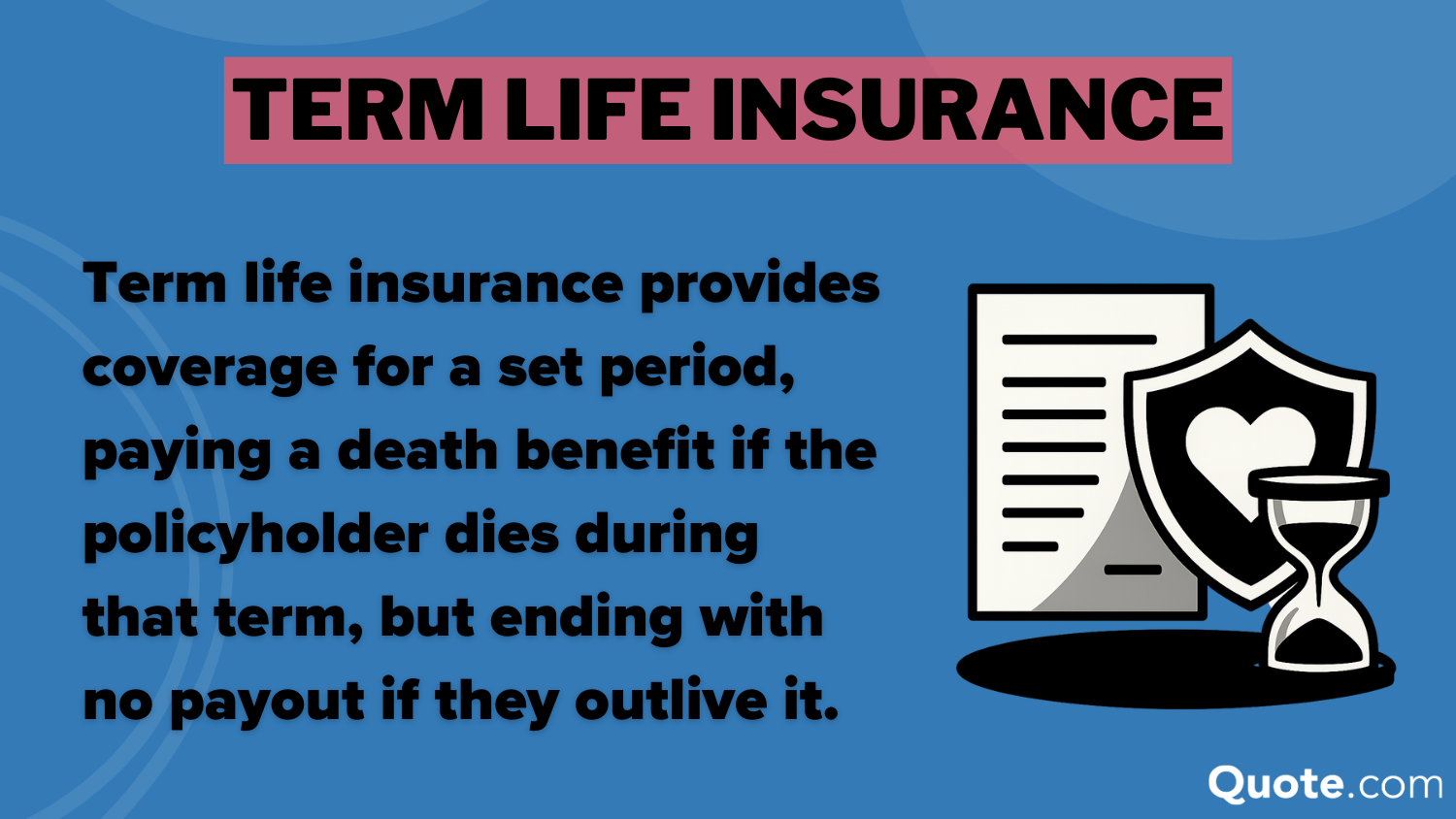
Term life insurance provides temporary coverage for a designated duration, typically 10, 20, or 30 years (commonly designated as Term 10, Term 20, or Term 30).
- How It Works: Premium rates remain locked for the selected term length. If the insured individual passes away while the policy is active, the insurer pays the tax-free death benefit to designated beneficiaries. If the policy expires without a claim, coverage ends unless renewed.
- Best Used For: Income replacement during income-earning years, covering major debt such as a residential mortgage, or supporting dependent children until they reach adulthood.
- Key Feature: Most standard Canadian term policies contain a Term Conversion Option, allowing policyholders to convert their term plan into a permanent life insurance policy before a specific age (often 65 or 70) without providing medical evidence of insurability.
2. Whole Life Insurance
Whole life insurance is a form of permanent coverage that remains active for the insured's entire life, provided required premiums are paid.
- How It Works: Level premiums are guaranteed never to increase. A portion of every premium payment funds the policy's cumulative cash value, which grows on a tax-deferred basis under Canadian tax law.
- Participating vs. Non-Participating: Participating whole life policies allow policyholders to receive eligible dividends declared by the insurance company. Dividends can be taken as cash, used to reduce premiums, or reinvested to buy paid-up additional insurance.
- Best Used For: Estate preservation, tax-efficient wealth transfer, funding funeral expenditures, and covering provincial capital gains tax liabilities triggered upon death.
3. Universal Life Insurance
Universal life insurance combines permanent life coverage with flexible investment accounts managed by the policyholder.
- How It Works: Unbundled policy architecture allows you to adjust your premium payments and death benefit over time within prescribed regulatory limits set by the Canada Revenue Agency (CRA). Unused premium dollars above the cost of insurance are deposited into designated investment options.
- Best Used For: High-net-worth individuals who have maximized traditional tax-advantaged accounts (such as RRSPs and TFSAs) and seek additional tax-deferred investment growth alongside life protection.
4. No-Medical and Simplified Issue Insurance
For individuals in Canal or surrounding areas who have underlying medical conditions or prefer to avoid physical medical exams, Canadian carriers offer simplified issue and guaranteed issue policies.
- Simplified Issue: Requires answering a brief questionnaire with no blood work, urine tests, or physical exams.
- Guaranteed Issue: No health questions or medical exams are required; acceptance is guaranteed. However, death benefits are often capped (e.g., $25,000 to $50,000), and a standard two-year waiting period typically applies for non-accidental death benefits.
Key Factors Influencing Your Insurance Premium Rates
Underwriters use established actuarial models to evaluate risk. When applying for life insurance quotes in Ontario, insurance companies weigh several core variables:
- Age and Biological Sex: Younger applicants present lower statistical risk, yielding lower base premiums. Statistically longer female life expectancies result in lower initial rates for women compared to men of the same age.
- Smoking and Tobacco Use: Tobacco use—including cigarettes, cigars, chewing tobacco, and e-cigarettes/vapes containing nicotine—frequently doubles or triples baseline premiums due to associated mortality risks. Non-smoker rates require remaining tobacco-free for at least 12 consecutive months.
- Medical History and Family Health: Underwriters evaluate personal history, including blood pressure, cholesterol levels, body mass index (BMI), personal cancer history, and cardiovascular health. A family history of premature hereditary conditions prior to age 60 can also influence risk ratings.
- Occupation and Recreational Activities: Residents participating in hazardous occupations or risky hobbies (such as aviation, scuba diving, or motor racing) may face premium surcharges (ratings) or policy exclusions.
- Coverage Amount and Term Length: Higher death benefit face amounts and longer policy terms increase the total risk exposure for the carrier, resulting in higher monthly premiums.
Consumer Protections and Governance in Ontario
Ontario maintains a strict regulatory environment to safeguard life insurance policyholders and maintain financial system stability.
Financial Services Regulatory Authority of Ontario (FSRA)
Life insurance agents and companies operating in Ontario are licensed and regulated by the Financial Services Regulatory Authority of Ontario (FSRA). FSRA enforces market conduct rules, oversees agent licensing standards, and protects consumers against deceptive sales tactics.
Assuris Protection Limits
Every licensed life insurance provider in Canada is required to be a member of Assuris, a designated non-profit organization that protects Canadian policyholders if their life insurance company fails financially.
Assuris automatically provides financial coverage to policyholders:
- Death Benefits: Assuris guarantees retention of up to $1,000,000 or 90% of the accumulated benefit amount (whichever is higher).
- Cash Value: Guarantees protection up to $100,000 or 90% of accumulated cash value (whichever is higher).
Ombudservice for Life & Health Insurance (OLHI)
For dispute resolution between consumers and insurance providers, Ontario residents have free access to the Ombudservice for Life & Health Insurance (OLHI). The OLHI acts as an independent body providing impartial review of unresolved insurance complaints.
The 10-Day "Free Look" Period
Under Ontario guidelines, policyholders receive a statutory 10-day right of examination (often referred to as a "free look" period). Upon receiving the physical or digital policy contract, the applicant has 10 days to review all terms. If they cancel within this window, the insurer must refund 100% of any premiums paid.
Comparing Ontario Life Insurance Options
The following overview highlights standard policy structures available to Ontario applicants evaluating life coverage:
| Policy Type | Coverage Duration | Premium Structure | Cash Value Component | Typical Primary Application |
|---|---|---|---|---|
| Term 10 | 10 Years | Level for 10 years; increases at renewal | None | Short-term loans, personal debts, temporary protection |
| Term 20 | 20 Years | Level for 20 years; increases at renewal | None | Income replacement, mortgage protection, child-rearing support |
| Term 30 | 30 Years | Level for 30 years; increases at renewal | None | Long-term mortgage coverage, young family security |
| Participating Whole Life | Lifetime | Fixed and guaranteed for life | Yes (Guaranteed growth + eligible dividends) | Estate planning, tax-deferred wealth transfer, final expenses |
| Universal Life | Lifetime | Flexible (Subject to CRA tax limits) | Yes (Managed investment options) | Advanced tax planning, succession strategy |
| Simplified Issue | Term or Lifetime | Fixed level premium | Varies by carrier | Applicants with moderate medical history |
| Guaranteed Issue | Lifetime | Fixed level premium | Limited / None | Final expense coverage for uninsurable applicants |
Step-by-Step Guide to Securing Life Insurance Quotes
Getting an accurate life insurance quote requires providing thorough personal information to prevent delays or administrative denials during underwriting.
- Step 1: Calculate Coverage Needs
- Step 2: Decide Between Term vs. Permanent
- Step 3: Obtain & Compare Multi-Carrier Quotes
- Step 4: Complete Underwriting & Medical Exam (if required)
- Step 5: Review Policy Contract During 10-Day Free Look Window
Step 1: Calculate Your Required Coverage Amount
Determine your total financial obligations using a standard liability assessment formula:
$$\text{Total Coverage Needed} = \text{Mortgage balance} + \text{Other debts} + (\text{Annual income} \times \text{Years of support}) + \text{Future education costs} - \text{Existing liquid assets}$$
Step 2: Determine Policy Type
Choose between lower-cost temporary term insurance (ideal for debt and child-rearing years) and permanent coverage designed for lifelong security or estate planning obligations.
Step 3: Request Quotes from Independent Brokers
Work with an independent, FSRA-licensed life insurance broker who can source quotes across multiple major Canadian underwriters (such as Canada Life, Manulife, Sun Life, Desjardins, and Industrial Alliance). Captive agents work with a single carrier, whereas independent brokers compare rates across carriers to find optimal terms.
Step 4: Complete the Medical Underwriting Process
For fully underwritten policies, the insurance company schedules a paramedic visit at no cost to you. The examiner typically records height, weight, blood pressure, blood samples, and urine samples. Complete disclosure of personal and family medical history is mandatory; failure to disclose material information can void future policy claims under the Ontario Insurance Act.
Step 5: Review the Issued Contract
Once approved, review the official policy contract carefully during the 10-day free look period. Verify named beneficiaries, policy ownership, term duration, riders, and contestability rules.
Essential Policy Riders and Optional Coverages
Policyholders in Canal, ON can tailor baseline life insurance policies using optional contract riders:
- Waiver of Premium Rider: Waives ongoing policy premium payments if the insured becomes totally disabled and unable to work due to illness or injury.
- Critical Illness Rider: Pays out a lump-sum cash benefit if the insured is diagnosed with a covered life-altering condition, such as cancer, stroke, or heart attack.
- Child Term Benefit Rider: Provides low-cost term life coverage for dependent children, often convertible to individual permanent policies later in life without medical underwriting.
- Accidental Death Benefit Rider: Provides additional payout to beneficiaries if the death is the direct result of a covered accident.
- Guaranteed Insurability Option: Allows the policyholder to purchase additional life insurance at specified future dates or life events (e.g., marriage, birth of a child) without undergoing additional medical exams.
Common Mistakes to Avoid When Requesting Quotes
- Underestimating Required Coverage: Purchasing coverage solely to match a mortgage balance leaves families underprotected against ongoing daily living expenses and education costs.
- Delaying Policy Purchases: Premiums increase with age. Waiting to lock in coverage risks higher rates or developing medical conditions that make coverage more expensive or difficult to obtain.
- Misrepresenting Health Habits: Omitting past medical treatments, recreational drug use, or smoking habits constitutes material misrepresentation. Canadian insurers retain a two-year contestability period under standard policy provisions, during which non-disclosure can lead to policy cancellation or claim denial.
- Failing to Name Secondary Beneficiaries: Naming a primary beneficiary without designating contingent (secondary) beneficiaries means policy proceeds could default to the policyholder's estate if the primary beneficiary predeceases the insured, subjecting funds to provincial probate fees and court delays.
Frequently Asked Questions
What is the average cost of life insurance in Ontario?
Premiums vary widely based on age, coverage amount, policy type, and health. A non-smoking 35-year-old in good health securing a $500,000, 20-year term policy in Ontario can generally expect to pay between $25 and $45 per month. Permanent whole life coverage for the same individual typically costs significantly more due to lifelong guarantees and accumulated cash values.
Are life insurance proceeds taxable to beneficiaries in Canada?
No. Lump-sum death benefits paid directly to named beneficiaries under a valid Canadian life insurance policy are received completely free of federal and provincial income taxes. However, if the benefit is paid directly to the policyholder's estate, it may be subject to provincial estate administration tax (probate fees).
Can I get life insurance in Canal, ON if I have pre-existing conditions?
Yes. Depending on the severity of the condition, applicants can secure fully underwritten coverage with a medical rating (higher premium), purchase a simplified issue policy requiring no medical exams, or select a guaranteed issue policy that requires no health questions.
What is the contestability period for Ontario life insurance policies?
In Ontario, the standard contestability period is two years from the date the policy takes effect. During this initial two-year window, the insurer reserves the right to review the original application for misstatements or omissions. After two years, the policy generally cannot be contested except in cases of deliberate fraud.
How does converting a term policy work?
A term conversion clause allows policyholders to change an existing term policy into a permanent whole life or universal life policy with the same carrier. This conversion can be executed prior to the contract's conversion deadline without completing medical questionnaires or physical exams, preserving original underwriting status.
Next Steps for Securing Your Coverage
To establish an effective life insurance strategy in Canal, ON:
- Calculate Financial Exposure: Aggregate outstanding mortgage obligations, consumer debt, income replacement needs, and final expenses.
- Consult an FSRA-Licensed Professional: Reach out to an independent broker licensed in Ontario to review policies across multiple underwriters.
- Compare Formal Quotes: Assess policy features side by side, paying close attention to guaranteed renewal rates, conversion provisions, and rider costs.
- Finalize Beneficiary Designations: Ensure primary and contingent beneficiaries are named clearly to facilitate efficient, tax-free distribution of funds outside of probate court.
Image Gallery