Cash in Safe Risks and Practical Considerations
Keeping physical currency in a secure onsite location remains a necessity for many businesses and private individuals in 2026, despite the continued proliferation of digital payment systems. However, storing "cash in safe" introduces a...
Keeping physical currency in a secure onsite location remains a necessity for many businesses and private individuals in 2026, despite the continued proliferation of digital payment systems. However, storing "cash in safe" introduces a unique profile of risks ranging from physical burglary and environmental damage to complex insurance compliance requirements. Managing these risks effectively requires a technical understanding of safe construction, strategic installation, and the rigorous procedural controls necessary to maintain the integrity of the asset and its associated insurance coverage.
Contents
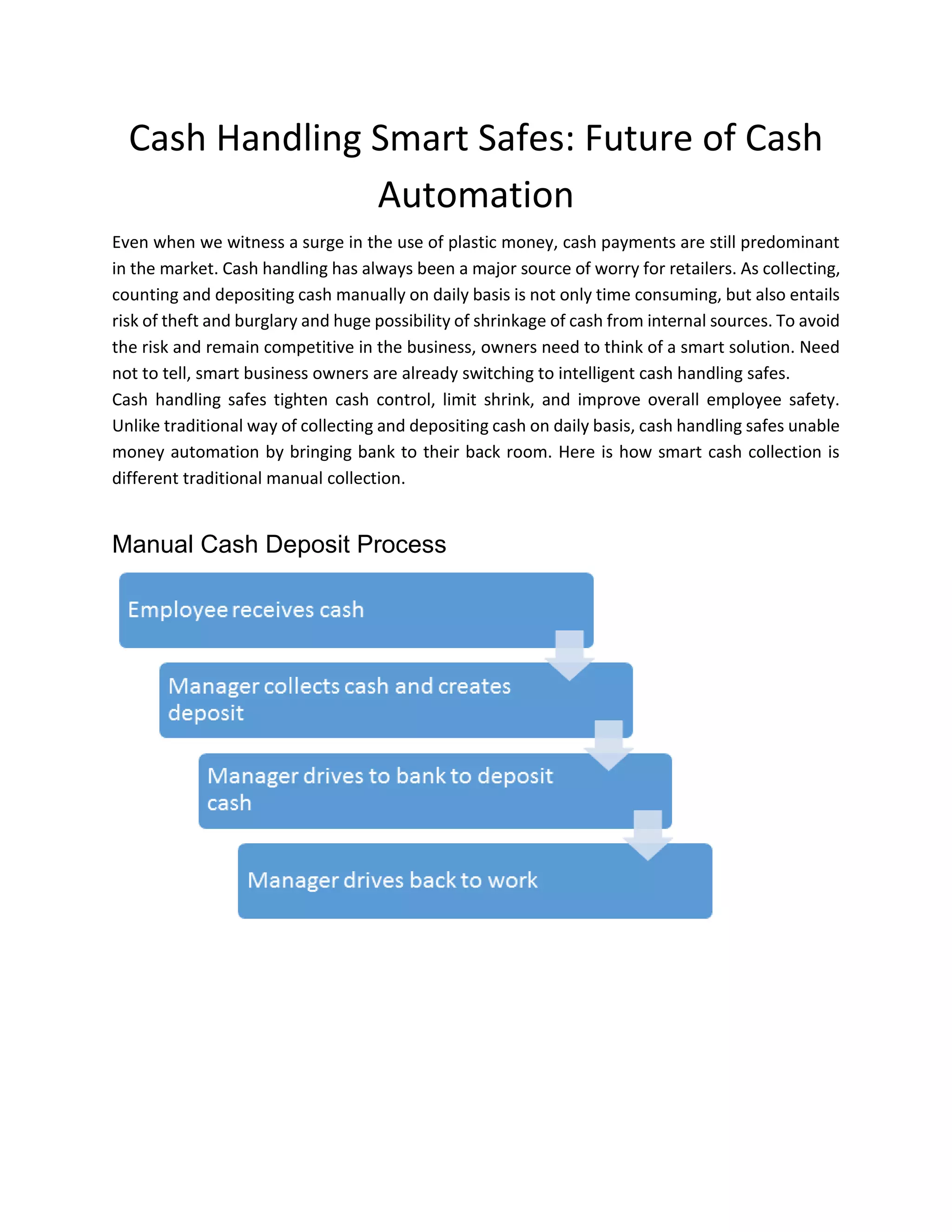
The Evolution of Cash Storage Risks in 2026
While the frequency of cash transactions has shifted, the value of physical liquidity remains high for emergency preparedness, operational petty cash, and specific industry requirements. The primary risk of keeping cash in a safe is no longer just the "smash and grab" robbery; it has evolved into sophisticated physical attacks and social engineering. In 2026, professional burglars often utilize advanced thermal cutting tools or high-speed cordless grinders that can bypass lower-grade consumer safes in minutes.
Beyond criminal intent, the risk of "internal shrinkage" or employee theft remains a significant concern for commercial entities. Without strict auditing and access controls, the safe itself can become a liability. Furthermore, the economic environment of 2026 dictates that large sums of idle cash are subject to opportunity costs and inflation, meaning the "risk" is not just losing the money, but the declining purchasing power of the stored capital if it is not cycled effectively.
Physical Security and Burglary Resistance
The effectiveness of a safe is measured by its ability to delay an attacker. No safe is "impregnable"; rather, safes are rated based on the time and tools required to breach them. When considering cash in safe risks, the first step is understanding the technical specifications of the container.
Understanding Burglary Ratings
Most reputable safes are tested by independent bodies such as Underwriters Laboratories (UL) in the United States or VdS/ECB-S in Europe. A "Residential Security Container" (RSC) rating is common for home use but is often insufficient for high-value cash storage. For significant sums, one must look toward professional ratings:
- TL-15: Tested to resist a specialized tool attack for 15 minutes on the door.
- TL-30: Tested for 30 minutes on the door.
- TL-30x6: Tested for 30 minutes on all six sides of the safe, including the body.
- TRTL (Torch and Tool Resistant): Designed to withstand attacks from both high-speed tools and oxy-fuel cutting torches.
In 2026, the distinction between a "fire safe" and a "burglary safe" is critical. Many consumers mistakenly store cash in fire-resistant boxes which have thin metal skins and are easily breached with a simple screwdriver or pry bar. A true cash safe must have a dedicated burglary rating to be considered a viable risk mitigation tool.
Environmental and Catastrophic Risks
Physical theft is only one part of the equation. Cash is a combustible material, and its preservation requires protection from fire, humidity, and water damage.
Fire Resistance and Thermal Limits
Paper currency begins to char and become brittle at approximately 350°F (177°C). A safe rated for "UL Class 350" is designed to keep the internal temperature below this threshold for a specified duration (usually 1, 2, or 4 hours) during a standard fire. However, if the safe is located on an upper floor and the building collapses during a fire, the safe must also have an Impact Rating to ensure it remains sealed upon hitting the ground.
Humidity and Moisture
In 2026, environmental sensors are frequently integrated into high-end safes. Storing cash in a sealed, airtight environment can lead to the buildup of moisture, especially in humid climates. This can result in mold growth on the banknotes, potentially rendering them "unfit" for circulation and requiring a tedious redemption process through a central bank. Practical considerations should include the use of silica gel desiccant packs or active dehumidifiers if the safe is located in a basement or coastal area.
Insurance Requirements and the "Cash in Safe" Clause
For most businesses, the most significant risk associated with onsite cash is the potential for an insurance claim denial. Insurance providers in 2026 are increasingly strict regarding the "Cash in Safe" (CIS) warranty. This clause typically dictates that the insurer will only cover a loss up to a specific limit based on the safe's security grade.
The Rating vs. Coverage Limit
Insurers use a "Cash Rating" system (often based on the Eurograde system in international markets) to determine coverage. For example, a Grade 0 safe may be covered for up to $6,000, while a Grade 5 safe might be covered for up to $100,000. If a business stores $50,000 in a safe only rated for $10,000, and a theft occurs, the insurer may legally refuse to pay any portion of the claim due to a breach of the warranty conditions.
Compliance and Record Keeping
To ensure a successful claim in the event of a loss, the policyholder must prove:
- The Safe was Locked: Many policies are void if the safe was left on "day lock" or if the keys were left in a nearby drawer.
- Professional Installation: Most insurers require that any safe weighing less than 1,000 kg (approx. 2,200 lbs) be professionally bolted to a concrete floor according to manufacturer specifications.
- Accurate Ledgering: There must be a verifiable record of the cash balance kept outside of the safe. If the only record of the cash is inside the safe and it is stolen or destroyed, proving the loss amount becomes difficult.
Technical Specifications: Comparison of Safe Grades
The following table outlines the standard expectations for safe grades and their typical insurance capacities as of 2026. Note that these values are approximations; individual insurers may offer different limits based on the building’s overall security (alarms, CCTV, etc.).
| Safe Grade (EN 1143-1) | Typical Cash Coverage Limit | Construction Features | Recommended Use Case |
|---|---|---|---|
| Grade 0 | $6,000 - $10,000 | Solid steel, basic boltwork | Residential / Small Office Petty Cash |
| Grade I | $10,000 - $15,000 | Enhanced locking mechanisms | Retail daily takings |
| Grade II | $20,000 - $30,000 | Composite barriers for drill resistance | Small jewelry stores / High-end residential |
| Grade III | $35,000 - $50,000 | Relocking devices, glass plates | Mid-sized commercial operations |
| Grade IV | $60,000 - $80,000 | Reinforced composite, torch resistant | High-volume retail / Pharmaceutical |
| Grade V | $100,000 - $150,000 | Multi-layered alloys, advanced electronics | Financial institutions / Private wealth |
Practical Considerations for Installation and Placement
The location of a safe is as important as its rating. A high-grade safe in a poor location remains a high-risk asset.
Bolting and Anchoring
The "carry-away" robbery is the most common form of safe theft. Even heavy safes can be moved with a simple pallet jack or dolly. Therefore, the primary practical consideration is anchoring. Safes should be bolted into a reinforced concrete slab using heavy-duty expansion bolts. In 2026, many local building codes or insurance policies mandate that these bolts be chemically anchored (using epoxy) to prevent them from being vibrated loose or pulled out.
Strategic Concealment
"Out of sight, out of mind" remains a core principle of security. Safes should not be visible from windows or general public areas. In commercial settings, safes are ideally placed in a "buffer zone"—a room that is already behind a secondary layer of security, such as a keypad-access office or a dedicated cash room.
Electronic Locking Systems vs. Mechanical Dials
In 2026, electronic locks have largely surpassed mechanical dials in popularity due to their audit trail capabilities. Practical considerations for electronic locks include:
- Time Delays: Forcing a 10-minute wait between code entry and the door opening can prevent "hold-up" robberies.
- Duress Codes: Entering a specific code that opens the safe but silently alerts a security company.
- Multi-User Access: Assigning unique codes to different employees allows management to see exactly who opened the safe and when.
Operational Procedures and Internal Controls
The human element is the most frequent point of failure in cash-in-safe management. Robust procedural controls are essential to mitigate risks of both internal and external origin.
The Four-Eyes Principle
Also known as dual control, this procedure requires two different individuals to be present for the opening of the safe. This is often achieved through "split-knowledge" combinations, where Person A has the first half of the code and Person B has the second half. This effectively eliminates the risk of a single employee acting alone to steal funds.
Regular Audits and Balancing
A physical count of the cash in the safe should be performed at irregular intervals by someone other than the primary keyholder. This "surprise audit" helps detect small-scale skimming before it becomes a major loss. The balance should always be reconciled against the point-of-sale (POS) system or the corporate ledger.
Maintenance of the Safe
Safes are mechanical devices that require maintenance. Locking bolts should be lubricated annually, and electronic lock batteries must be replaced proactively—ideally with high-quality lithium batteries to prevent leakage. If a safe becomes difficult to open, it is a sign of mechanical fatigue; forcing it can lead to a "lock-out," requiring an expensive professional drilling service to regain access to the cash.
Frequently Asked Questions
Does a fireproof safe also protect against burglars?
Not necessarily. Most fireproof safes are constructed with thin metal walls filled with a fire-resistant composite (like vermiculite or concrete). These materials are designed to release moisture when heated to keep the interior cool but offer very little resistance to drills, saws, or pry bars. For cash storage, you must specifically look for a "burglary-fire" (BF) safe, which combines a thick steel or composite chassis with fire-insulating layers.
Will my homeowner's or business insurance cover cash stolen from a safe?
Most standard policies have a very low limit for "unspecified" cash, often as low as $200 to $1,000. To have significant amounts covered, you must specifically add a "Cash in Safe" rider or endorsement to your policy. This will require you to provide the make, model, and rating of the safe, and the insurer will set a maximum limit based on those factors.
Is it better to hide a safe or bolt it down?
The most secure approach is to do both. However, if forced to choose, bolting it down is more important. Modern thermal imaging and high-sensitivity metal detectors used by professional burglars make "hiding" a safe very difficult. A safe that is properly bolted to a concrete floor requires significantly more time and loud power tools to remove, which increases the likelihood of the burglar being caught or abandoning the attempt.
How often should I change the safe combination?
Combinations should be changed immediately whenever an employee with access leaves the company, if you suspect the code has been compromised, or at least once every six months as a routine security measure. When choosing a new code, avoid obvious patterns like birthdays, addresses, or sequential numbers (e.g., 1-2-3-4-5-6), as these are the first combinations attempted by unauthorized users.
Can I store coins and paper money together?
While physically possible, it is practically better to separate them. Coins are significantly heavier and can damage paper bills or the safe’s interior shelving if not properly contained in bags or boxes. Furthermore, heavy loads of coins can exceed the weight capacity of internal safe drawers, leading to mechanical failure of the drawer slides.
Summary of Next Actions
To effectively manage the risks associated with keeping cash in a safe in 2026, individuals and business owners should take the following steps:
- Audit Current Cash Levels: Determine the maximum amount of cash that will be onsite at any given time to establish the necessary insurance rating.
- Verify Insurance Compliance: Review your current policy to ensure your safe meets the required burglary grade for the amount of cash you are storing.
- Upgrade Locking Mechanisms: If using an older safe, consider retrofitting an electronic lock with audit trail and time-delay features.
- Schedule Professional Anchoring: Ensure the safe is bolted to a concrete foundation using modern chemical anchors to prevent removal.
- Implement Dual Control: Establish a policy where no single individual can access the safe alone, significantly reducing the risk of internal theft.
Professional Advice Limitation: This article provides general information regarding security and risk management. It does not constitute legal, financial, or professional security advice. Readers should consult with a certified locksmith and their insurance provider to ensure compliance with local regulations and specific policy requirements as of 2026.
Image Gallery