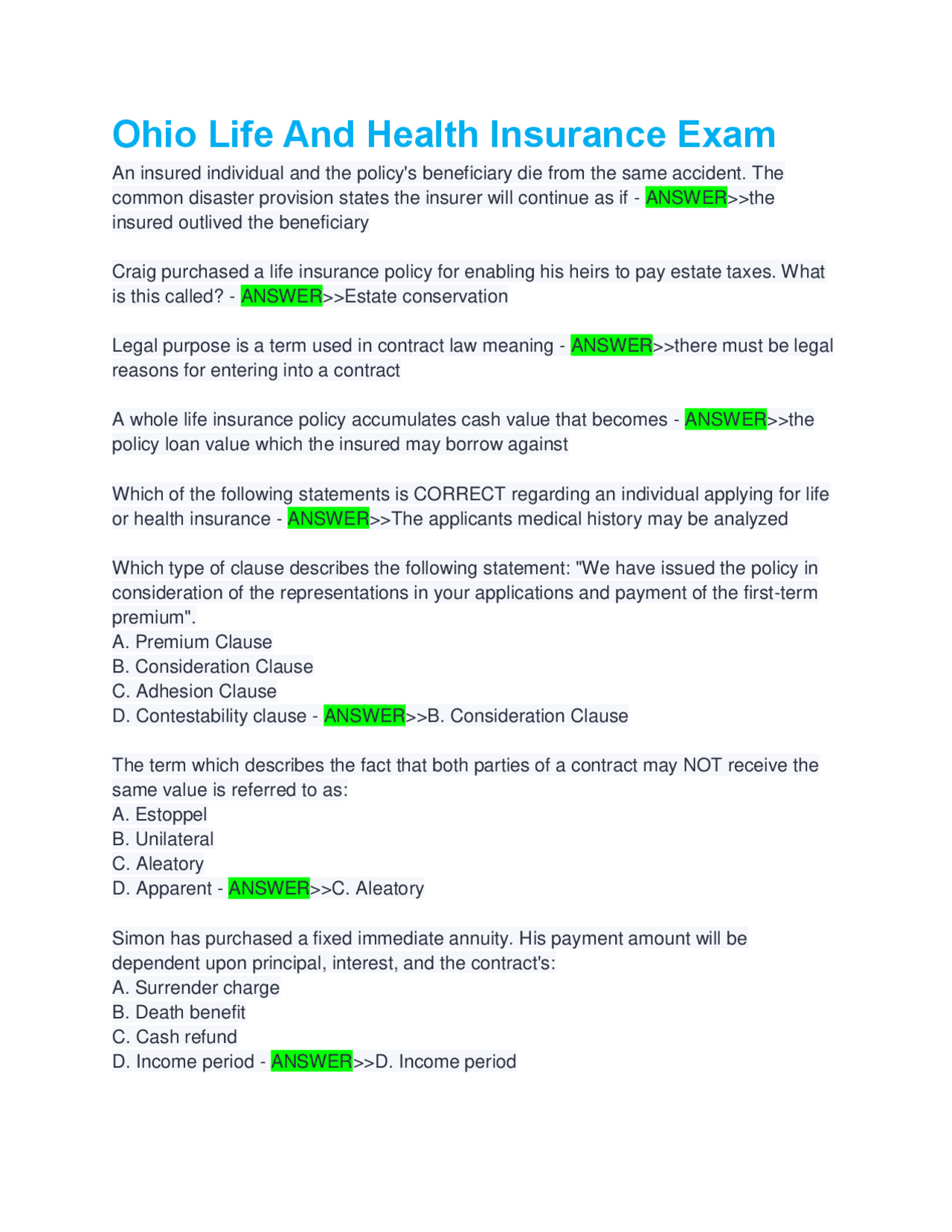
How to Prepare for the Life and Health Insurance Agent Exam
Preparing for the life and health insurance agent exam requires completing state-approved pre-licensing education, mastering core product categories and statutory regulations, and dedicating substantial time to simulated practice testi...
Preparing for the life and health insurance agent exam requires completing state-approved pre-licensing education, mastering core product categories and statutory regulations, and dedicating substantial time to simulated practice testing. Success hinges on a structured study plan that breaks down complex policy provisions, underwriting rules, and ethical standards into manageable concepts.
Contents
Understanding the Life and Health Insurance Licensing Structure
Entering the insurance industry begins with understanding how individual states regulate producers. While insurance licensing is administered at the state level—typically through the Department of Insurance (DOI) or an outsourced testing vendor like Prometric or Pearson VUE—most states structure their examinations into distinct lines of authority. The life and health insurance agent exam is rarely a single monolithic test; rather, it is frequently combined into a single composite exam or split into two separate examinations covering life insurance and health insurance independently.
The life insurance portion evaluates a candidate’s knowledge of term, whole, universal, and variable life policies, as well as annuities, group life structures, and policy riders. The health insurance section focuses on medical expense plans, disability income insurance, long-term care, Medicare supplements, group health standards, and federal healthcare legislation. Additionally, a significant portion of every state exam covers general insurance concepts, such as the legal elements of a contract, agency law, underwriting principles, and state-specific regulations governing consumer protection and unfair trade practices.
Before registering for the exam, candidates must determine whether their target state requires separate testing or a combined paper. Many jurisdictions offer a combined Life, Accident, and Health (LAH) exam, which saves testing fees and time for individuals pursuing a comprehensive career. Reviewing the specific Candidate Handbook published by your state’s insurance commissioner or testing vendor clarifies these structural details, the number of scored and unscored questions, and the exact passing score required—usually hovering between 70% and 75%.
Meeting State Pre-Licensing Education Requirements
Most states mandate a specific number of classroom or online pre-licensing education hours before a candidate can sit for the life and health exam. These statutory mandates ensure that prospective agents receive foundational instruction from approved providers. Requirements vary widely by jurisdiction; some states require 20 to 40 hours of combined coursework, while others specify separate hour requirements for life insurance and health insurance lines.
When selecting a pre-licensing education provider, candidates should look for accredited online schools or local instructional seminars that align with the current state examination content outline. Quality providers integrate chapter quizzes, reading assignments, and progress tracking to reinforce statutory terminology. It is vital to complete these hours through a state-certified provider because the testing center or the state DOI will typically require a certificate of completion before releasing authorization to test, or they will verify course completion electronically at the test center check-in desk.
| State Requirement Category | Typical Range / Standard | What to Verify With Your DOI |
|---|---|---|
| Pre-Licensing Education Hours | 20 to 60 hours total | Separate vs. combined hour mandates for life and health |
| Passing Score | 70% to 75% | Exact percentage required and policy on unscored pilot questions |
| Exam Format | Computer-Based Testing (CBT) | Authorized testing vendors (e.g., Pearson VUE, Prometric) and local center locations |
| Background Check / Fingerprinting | Required prior or post-exam | Submission windows, fingerprint fees, and disqualifying criminal records |
Developing an Effective Study Plan and Routine
Passing the life and health exam on the first attempt requires disciplined study habits that extend well beyond merely reading the textbook. Because insurance exams heavily emphasize legal definitions and technical terminology, passive reading is rarely sufficient. Candidates should establish a structured 3-to-6-week study timeline, dedicating a consistent block of daily time—ranging from one to three hours—to absorb, review, and test their comprehension.
A proven method involves breaking the study guide down into weekly milestones. Week one should focus on general insurance principles, including contract law, insurable interest, hazard classifications, and the authority granted to agents. Week two should center entirely on life insurance policies, riders, beneficiary designations, and taxation rules. Week three should cover health insurance, disability policies, medical expense provisions, and group insurance coordination of benefits. Week four should be dedicated to state-specific regulations, ethical standards, replacement rules, and intensive practice testing.
Active recall techniques, such as flashcards for policy provisions and regulatory timeframes (e.g., free-look periods, grace periods, and reinstatement rules), drastically improve retention. Candidates should maintain a dedicated notebook for misunderstood concepts, reviewing these trouble areas daily until the underlying mechanics are completely clear.
Mastering Core Content Areas: Life Insurance
The life insurance segment of the exam tests a candidate's ability to match consumer financial goals with appropriate risk-transfer vehicles. Mastery of this section requires a firm grasp of permanent versus temporary insurance, policy riders, and settlement options.
Temporary life insurance, or term life, provides pure protection for a specified period with no cash value accumulation. Candidates must understand the variations: level term, decreasing term (often used for mortgage protection), and increasing term. Conversely, permanent life insurance combines protection with a cash-value savings element. Whole life features guaranteed level premiums and fixed cash-value growth. Universal life introduces premium flexibility and adjustable death benefits, while variable life ties cash value performance to sub-accounts invested in equities, requiring agents to hold appropriate securities licenses (such as Series 6 or 63) in many jurisdictions.
Policy riders—amendments that modify policy coverage—frequently appear on the exam. Candidates must know the function of waivers of premium, accidental death benefit riders, guaranteed insurability riders, and accelerated death benefit provisions, which allow terminally ill insureds to access policy funds early. Furthermore, understanding beneficiary designations (primary versus contingent, revocable versus irrevocable) and settlement options (lump sum, fixed period, fixed amount, and life income) is essential for answering situational application questions correctly.
Mastering Core Content Areas: Health Insurance
Health insurance concepts can be challenging due to the intricate web of federal laws, policy provisions, and specialized indemnity structures. Candidates must clearly distinguish between individual medical expense plans, disability income protection, and long-term care insurance.
Medical expense policies cover the cost of medical care, physician visits, and hospital stays. The exam tests knowledge of major medical insurance, deductibles, coinsurance, stop-loss limits, and out-of-pocket maximums. Candidates must also understand managed care organizations, including Health Maintenance Organizations (HMOs), Preferred Provider Organizations (PPOs), and Point of Service (POS) plans, noting how each handles referrals, out-of-network providers, and primary care physicians.
Disability income insurance replaces lost earnings when an insured cannot work due to illness or injury. Questions in this category frequently test the definition of total versus partial disability, elimination periods (waiting periods), and benefit periods. Additionally, candidates must study long-term care (LTC) policies, which cover assistance with activities of daily living (ADLs) in nursing homes or home health care settings, as well as Medicare supplement policies (Medigap) and Medicare Advantage (Part C) rules.
Navigating State-Specific Regulations and Ethics
While general product knowledge is uniform across many regions, state insurance laws dictate how agents conduct business locally. State-specific content usually comprises a substantial portion of the exam and covers licensing maintenance, disciplinary actions, and ethical standards.
Key state-specific topics include rules governing replacement—where an agent helps a client exchange an existing policy for a new one—requiring strict disclosure and comparison forms to prevent churning or twisting. Agents must also master regulations concerning advertising standards, consumer privacy, rebating, misrepresentation, and unfair trade practices. Understanding the regulatory powers of the state insurance commissioner—such as the authority to conduct examinations, issue cease-and-desist orders, levy fines, and suspend or revoke producer licenses—is heavily tested.
Maintaining a clean licensing record requires understanding continuing education (CE) requirements, address change notification windows, and the appointment process by which insurance carriers authorize producers to sell their specific products.
Utilizing Practice Exams and Troubleshooting Weaknesses
Practice exams serve as the ultimate diagnostic tool during the final two weeks of preparation. Taking timed, full-length practice tests under simulated exam conditions builds mental stamina and highlights exact knowledge gaps. Candidates should aim to consistently score above 80% on multiple unique practice exams before scheduling their official test appointment.
When reviewing practice test results, candidates must analyze why they missed specific questions rather than merely memorizing correct answers. Are errors driven by misreading complex policy scenarios, or is there a fundamental misunderstanding of statutory provisions like the incontestability clause or grace period? Adjusting study focus based on performance analytics ensures that preparation time is spent where it matters most.
Frequently Asked Questions
How difficult is the life and health insurance agent exam?
The exam is considered moderately difficult because it requires memorizing dense legal terminology, policy provisions, and numerical formulas (such as nonforfeiture values). While pass rates vary by state and testing center, candidates who complete structured pre-licensing education and dedicate adequate study time routinely pass on their first attempt.
How long does it take to prepare for the exam?
Most candidates require between two to four weeks of consistent study, translating to roughly 40 to 60 total hours of preparation. Individuals balancing full-time employment often extend this timeline to six weeks to ensure thorough absorption of both life and health concepts.
What should I bring to the testing center on exam day?
Test-takers must bring two forms of government-issued identification—typically a primary ID with a photograph and signature (such as a driver's license or passport) and a secondary ID containing a signature. Personal belongings, study materials, and electronic devices are strictly prohibited in the testing room.
Can I retake the exam if I fail on my first attempt?
Yes, states allow candidates to retake the exam if they do not achieve a passing score, though specific policies vary. Most jurisdictions impose a mandatory waiting period of a few days to a few weeks before a retake, and candidates must pay an additional examination fee for each subsequent attempt.
Do I need a college degree to become a licensed insurance agent?
No, a college degree is not required to obtain a life and health insurance license in any U.S. state. The baseline prerequisites typically include being at least 18 years of age, completing state-approved pre-licensing education hours, passing the written examination, and submitting to a criminal background check and fingerprinting.
Next Actions for Aspiring Agents
Begin your licensing journey by visiting your state's Department of Insurance website or checking the candidate information booklet provided by your regional testing vendor. Confirm the exact pre-licensing education hour requirements and register with an approved online or classroom provider. Establish a structured study calendar today, commit to daily practice testing, and take the first concrete step toward launching a professional career in the insurance industry.
Image Gallery