How to Build a Cloud Secure Connection: A Comprehensive Enterprise Guide
Building a cloud secure connection requires establishing an encrypted, authenticated pathway between an on-premises data center or end-user device and a cloud service provider infrastructure using protocols such as IPsec VPNs, dedicate...
Building a cloud secure connection requires establishing an encrypted, authenticated pathway between an on-premises data center or end-user device and a cloud service provider infrastructure using protocols such as IPsec VPNs, dedicated direct circuits, or zero-trust network access architectures. This ensures that data traveling across public or private networks remains confidential, integral, and shielded from interception.
Contents
As organizations accelerate their migration to multi-cloud and hybrid environments, securing the pathways that bridge corporate boundaries with cloud infrastructure becomes paramount. Traditional perimeter defenses have given way to decentralized architectures, where corporate assets reside across Amazon Web Services (AWS), Microsoft Azure, Google Cloud Platform (GCP), and private data centers. Establishing a robust, resilient, and secure connection prevents unauthorized access, mitigates data exfiltration risks, and satisfies compliance mandates. This guide explores the architectural blueprints, configuration steps, protocols, and operational best practices required to build a cloud secure connection in modern production environments.
Understanding Cloud Connectivity Models
Before engineering a secure connection, organizations must evaluate the primary connectivity models available across major cloud providers. The choice of architecture dictates performance, cost, deployment velocity, and security posture. Selecting the right model requires balancing bandwidth demands, regulatory requirements, and existing network topologies.
Internet-Based Virtual Private Networks (VPNs)
The most common approach to cloud connectivity relies on Virtual Private Networks utilizing IPsec (Internet Protocol Security). IPsec VPNs encrypt traffic in transit over the public internet, making them cost-effective and rapid to deploy. They are well-suited for small-to-medium workloads, branch offices, and administrative access where ultra-low latency and dedicated bandwidth guarantees are not mandatory.
IPsec VPNs operate by establishing a secure tunnel between a customer-managed customer gateway (CGW) and a cloud-managed virtual private gateway or transit gateway. Modern configurations support both policy-based and route-based VPNs, with route-based VPNs offering superior flexibility through Border Gateway Protocol (BGP) dynamic routing and redundant tunnel architectures.
Dedicated Direct Interconnects
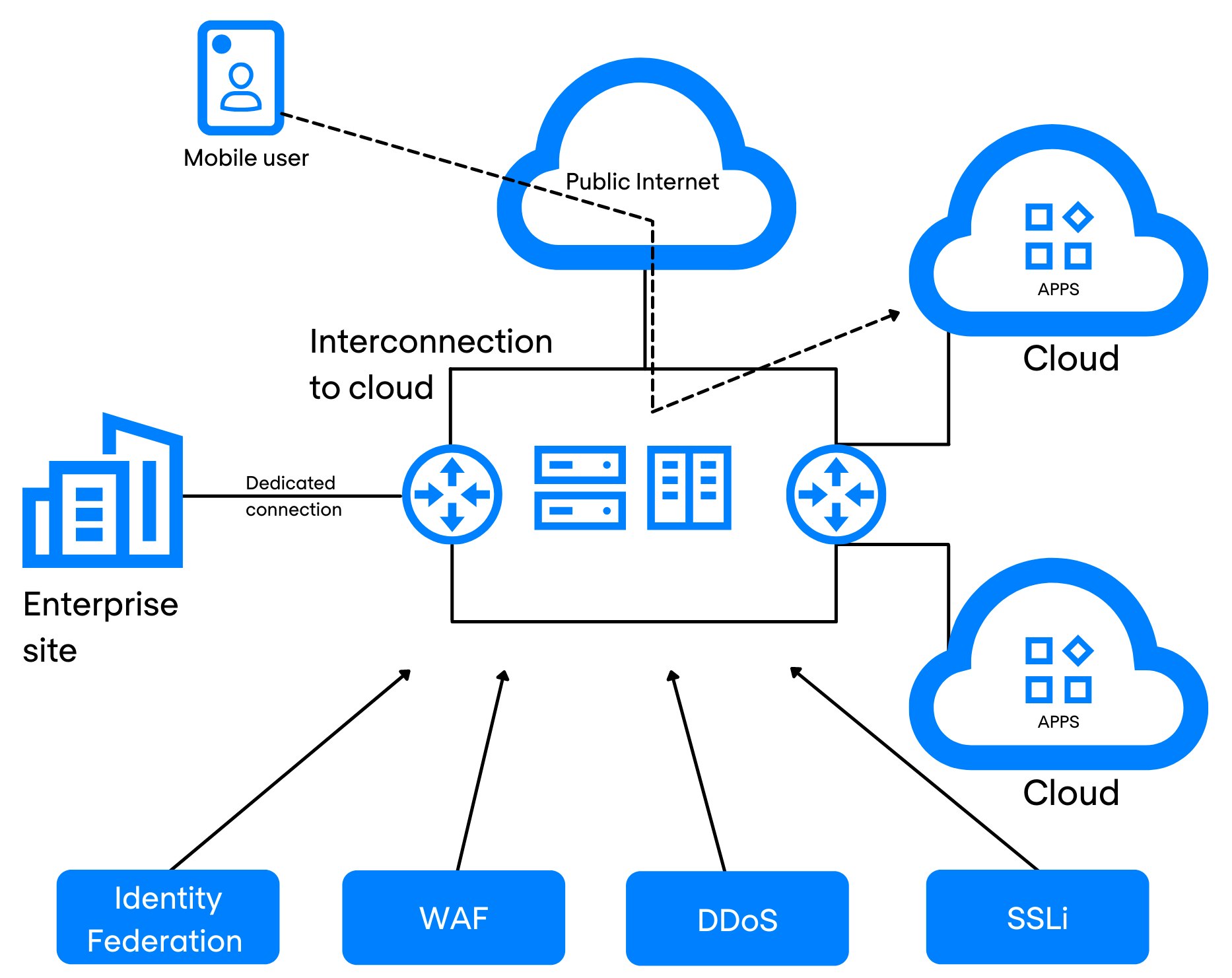
For enterprises handling massive data volumes, financial transactions, or strict compliance frameworks that prohibit traversing the public internet, dedicated interconnects are the gold standard. Services like AWS Direct Connect, Azure ExpressRoute, and Google Cloud Interconnect establish a private, physical connection between an enterprise data center and the cloud provider's network edge.
- On-Premises Data Center (Customer Router)
- Dedicated Circuit (BGP / VLAN)
- Cloud Provider Edge Node (Virtual Router / VGW)
These connections bypass the public internet entirely, providing lower latency, higher throughput consistency, and enhanced privacy. Enterprises can further secure these dedicated circuits by layering MACsec (Media Access Control Security) for layer 2 encryption or running encrypted IPsec tunnels directly over the dedicated circuit for layer 3 defense-in-depth.
Zero-Trust Network Access (ZTNA) and Software-Defined Perimeters
As remote workforces expand, traditional site-to-site VPNs are increasingly supplemented or replaced by Zero-Trust Network Access frameworks. ZTNA decouples network access from network connectivity, ensuring that users and devices are authenticated and authorized on a per-session basis before gaining access to specific cloud-hosted resources. By refusing implicit trust based on network location, ZTNA minimizes the lateral movement attack surface if an endpoint is compromised.
Core Security Protocols and Cryptographic Standards
The integrity of any cloud secure connection rests upon cryptographic primitives and established network protocols. Configuring these components correctly requires strict adherence to contemporary security standards, deprecating legacy algorithms that are vulnerable to modern cryptanalytic attacks.
Encryption Protocols and Cipher Suites
When building IPsec VPN tunnels, administrators must configure Internet Key Exchange version 2 (IKEv2) for security association establishment and key management. IKEv2 offers superior reliability, faster session resumption, and native support for mobility compared to its predecessor, IKEv1.
- Authentication: Utilize Certificate Authority (CA) digital signatures or robust pre-shared keys (PSKs) with high entropy.
- Encryption Algorithms: Implement Advanced Encryption Standard (AES) in Galois/Counter Mode (AES-GCM) with 256-bit keys, or AES-CBC with HMAC-SHA256 for data integrity.
- Diffie-Hellman (DH) Groups: Employ modern modular exponentiation (MODP) groups (such as Group 14 or higher) or Elliptic-Curve Cryptography (ECC) groups (such as Group 19 or 384-bit curves) for secure key exchange.
Transport Layer Security (TLS) for Application-Level Connections
While network-level VPNs secure entire subnets, application-level cloud connections rely heavily on Transport Layer Security (TLS) version 1.3. TLS 1.3 eliminates obsolete cryptographic algorithms, reduces handshake latency to a single round trip, and enforces forward secrecy by default. When exposing cloud APIs, databases, or web applications, enforcing TLS 1.3 with strict cipher suite restrictions prevents downgrade attacks and man-in-the-middle interception.
Step-by-Step Implementation: Building an IPsec VPN Cloud Connection
Deploying a reliable site-to-site IPsec VPN involves coordinating configurations between your on-premises edge firewall and your cloud provider's virtual network console. Below is a generalized architectural sequence for establishing a secure tunnel between an on-premises data center and a cloud Virtual Private Cloud (VPC).
Phase 1: Network Planning and IP Addressing
- Define CIDR Blocks: Map your on-premises network ranges and ensure there is no IP address overlap with your cloud VPC or Virtual Network (VNet) address spaces. Overlapping CIDRs will cause routing failures.
- Determine Redundancy Requirements: Plan for at least two VPN tunnels per connection to ensure high availability. Cloud providers typically supply two distinct public IP endpoints for redundancy on their side.
Phase 2: Cloud-Side Resource Provisioning
- Create the Virtual Gateway: Navigate to your cloud provider’s networking console and provision a Virtual Private Gateway (or attach a Transit Gateway) to your target VPC.
- Configure Customer Gateway: Register your on-premises public IP address and routing preferences within the cloud console to create a Customer Gateway object.
- Establish the VPN Connection: Link the Customer Gateway to the Virtual Private Gateway, selecting dynamic routing (BGP) if your on-premises router supports it, or static routing otherwise. Download the vendor-specific configuration template for your on-premises hardware firewall.
Phase 3: On-Premises Firewall Configuration
- Phase 1 (IKE) Settings: Input the parameters specified in your template, configuring IKEv2, AES-256 encryption, SHA-256 integrity, and the appropriate DH group.
- Phase 2 (IPsec) Settings: Configure IPsec security associations (SA), specifying encapsulation mode (tunnel mode), encryption algorithms, and Perfect Forward Secrecy (PFS) settings.
- Routing and Security Policies: Configure static routes or enable BGP peering. Update your internal firewall access control lists (ACLs) to permit traffic flowing between authorized internal subnets and the cloud CIDR block through the newly created tunnel interface.
Phase 4: Verification and Troubleshooting
- Check Tunnel Status: Verify in both your on-premises firewall management plane and the cloud console that the IPsec tunnels are reporting an "Up" or "Connected" status.
- Test Connectivity: Execute diagnostic commands such as
pingortracerouteacross the tunnel to verify latency and packet delivery. - Validate Routing: Confirm that BGP routes are propagating correctly and that asymmetric routing paths are avoided by inspecting route tables on both ends.
Comparison of Cloud Connectivity Options
Choosing the optimal connection method depends on performance, cost, security, and deployment complexity. The matrix below outlines the key differences between standard connection paradigms.
| Connectivity Model | Primary Medium | Typical Latency | Encryption Method | Best Use Case |
|---|---|---|---|---|
| IPsec VPN | Public Internet | Moderate to High | IPsec (AES-256) | Branch offices, backup links, small workloads |
| Direct Interconnect | Dedicated Fiber | Low and Consistent | None (Optional MACsec/IPsec) | Mission-critical workloads, high-throughput migration |
| Zero-Trust Access (ZTNA) | Public Internet | Variable | TLS 1.3 / DTLS | Remote workers, granular application-level access |
Operational Best Practices and Security Hardening
Building the connection is only the initial step; maintaining its security posture requires continuous monitoring, automated configuration audits, and strict lifecycle management.
Monitoring and Logging
- Tunnel Health Telemetry: Configure monitoring tools to track tunnel status metrics, CPU utilization on edge devices, and packet drop rates. Set up alerts for unexpected tunnel disconnections.
- Traffic Flow Logs: Enable VPC Flow Logs (or equivalent cloud network monitoring features) to analyze ingress and egress traffic patterns. Inspect logs regularly for anomalous data volumes or unauthorized scanning attempts originating from connected networks.
Credential and Key Rotation
- Pre-Shared Key Hygiene: If using pre-shared keys for IPsec authentication, avoid static, weak strings. Implement automated rotation policies where supported, and replace keys immediately if personnel turnover occurs.
- Certificate Management: For certificate-based authentication and TLS connections, utilize automated certificate management services (such as AWS Certificate Manager or HashiCorp Vault) to prevent outages caused by expired certificates.
Network Segmentation and Micro-Segmentation
Never assume that traffic entering through a secure cloud connection is entirely trusted. Implement network segmentation within your cloud environment using security groups, network access control lists (NACLs), and firewall appliances to restrict lateral movement. Even if an attacker compromises the VPN endpoint, strict micro-segmentation limits their access to isolated application tiers.
Common Pitfalls and Troubleshooting Strategies
Administrators frequently encounter specific roadblocks when constructing cloud secure connections. Recognizing these challenges accelerates troubleshooting and minimizes downtime.
Asymmetric Routing Issues
Asymmetric routing occurs when packets take one path to reach their destination and a different path on the return journey. This frequently happens in multi-path VPN setups or when secondary backup circuits are misconfigured. Stateful firewalls will drop packets that arrive out of context. To resolve this, ensure that routing tables on both the cloud router and on-premises firewall are symmetric, and verify that BGP metric weights or local preferences are configured identically.
Path MTU Discovery (PMTUD) Black Holes
Encapsulation adds overhead to data packets traversing an IPsec VPN tunnel, increasing the effective packet size. If the Maximum Transmission Unit (MTU) is improperly configured, large packets may be dropped without notification, leading to stalled TCP connections or failing file transfers. Mitigate this by adjusting the TCP Maximum Segment Size (MSS) clamping on your edge routers or lowering the tunnel interface MTU to 1387 bytes (or standard provider recommendations) to accommodate cryptographic overhead.
Summary and Next Actions
Building a cloud secure connection is a foundational engineering task that underpins modern hybrid cloud architecture. By carefully selecting the appropriate connectivity model—whether an encrypted IPsec VPN, a dedicated direct interconnect, or a modern ZTNA framework—organizations can bridge their infrastructure boundaries safely. Prioritizing modern cryptographic standards, establishing redundant paths, enforcing strict network micro-segmentation, and maintaining rigorous monitoring ensure long-term stability and resilience against evolving cyber threats.
For immediate next actions, audit your existing network topology, inventory all active cloud connections against current cryptographic standards, and verify that high-availability failover mechanisms are tested under simulated outage conditions.
CATEGORY_SLUG: education-enterprise
TAGS_JSON: ["Cloud Security", "IPsec VPN", "Network Architecture", "Hybrid Cloud"]
Image Gallery