Navigating Ambetter Broker Services: A Guide to Enrollment and Partnerships
Ambetter broker services provide licensed insurance producers with the infrastructure, commission structures, and enrollment tools necessary to distribute Centene Corporation’s health insurance products. By acting as the bridge between...
Ambetter broker services provide licensed insurance producers with the infrastructure, commission structures, and enrollment tools necessary to distribute Centene Corporation’s health insurance products. By acting as the bridge between consumers seeking coverage under the Affordable Care Act (ACA) and Ambetter’s network of plans, brokers play a critical role in facilitating market access, managing client renewals, and ensuring that policyholders navigate their healthcare options effectively during the annual open enrollment period and special enrollment windows.
Contents
Understanding the Role of an Ambetter Broker
Ambetter operates primarily within the Health Insurance Marketplace, offering individual and family plans across various states. For a broker, this means operating within a highly regulated environment where compliance with state and federal laws—specifically those governing ACA-compliant health plans—is mandatory. Ambetter broker services are designed to centralize the administrative burden of selling these plans.
The relationship between an insurance carrier and a broker is built on a contractual agency agreement. Once a producer is appointed and certified to sell Ambetter products, they gain access to proprietary agent portals. These portals are the heartbeat of Ambetter broker services, allowing producers to quote plans, submit applications directly through the carrier’s systems, and track the status of their book of business. Because these plans are often subsidy-eligible, brokers must be adept at using the Marketplace tools to determine if a client qualifies for Advanced Premium Tax Credits (APTC) or Cost-Sharing Reductions (CSR).
Prerequisites for Becoming an Appointed Broker
Before an individual can leverage Ambetter broker services, they must meet specific professional licensing and certification requirements. These prerequisites ensure that the broker is legally authorized to advise clients on health insurance products and understands the specific nuances of the Ambetter portfolio.
- Active Health Insurance License: Producers must hold an active resident or non-resident health insurance license in the states where they intend to sell Ambetter plans.
- National Producer Number (NPN): This unique identifier is mandatory for all transactions and commission tracking.
- Appointment Process: Brokers must undergo a formal appointment process with the carrier. This often involves completing a profile through a broker-specific portal or a carrier-affiliated agency management system.
- Product Certification: Ambetter typically requires annual product certification. This is a training module that covers the specific plan designs, network features, and compliance expectations for the current plan year. Failure to complete this certification by the deadline can result in the suspension of access to broker portals and the inability to earn commissions on new enrollments.
- Errors and Omissions (E&O) Insurance: Maintaining active E&O coverage is a standard requirement for all appointed brokers, protecting the agency and the carrier from liability related to advice or application errors.
Navigating the Broker Portal
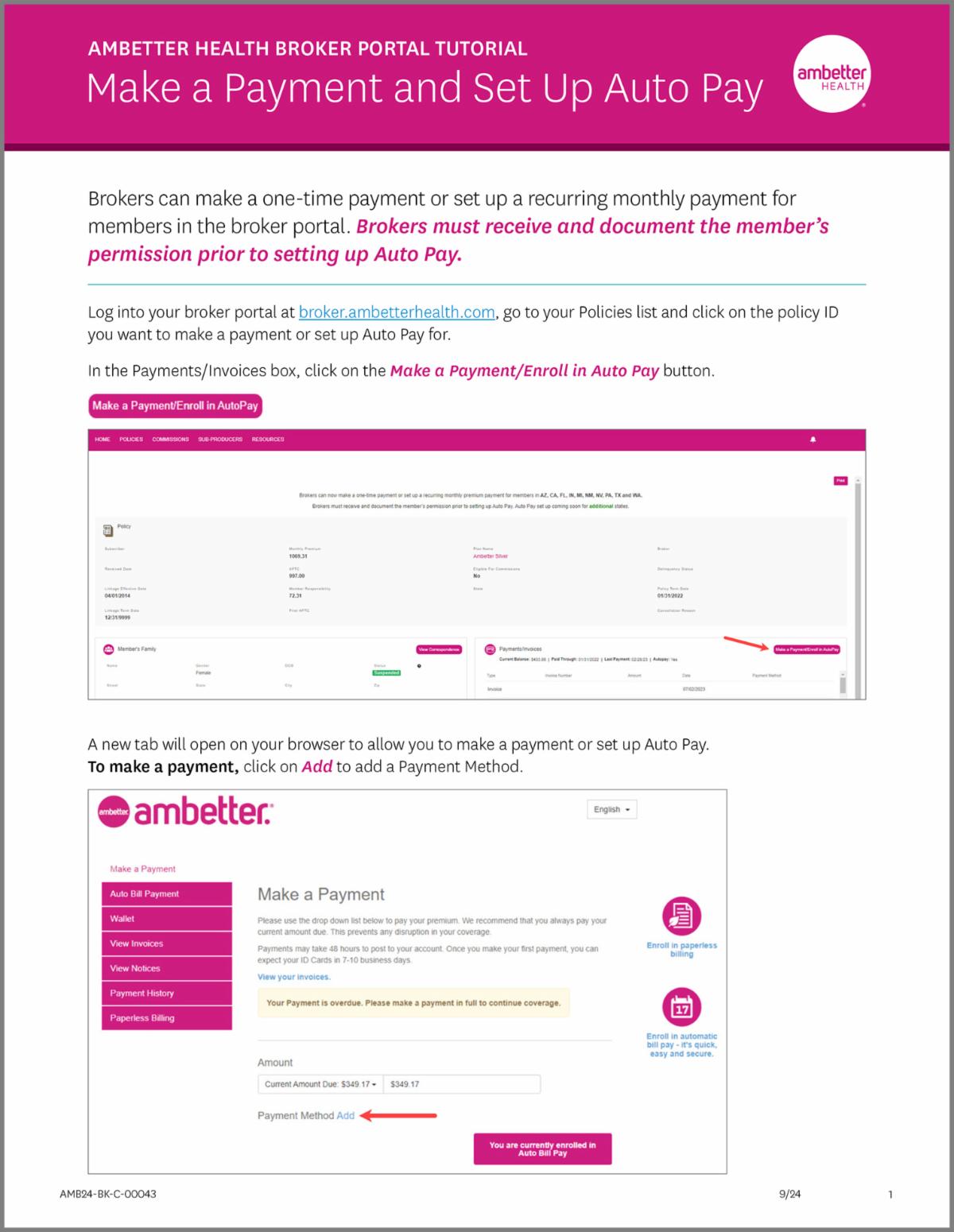
The primary interface for Ambetter broker services is the producer portal. In 2026, these digital environments prioritize streamlined enrollment flows and real-time data access. Once authenticated, a broker can utilize the portal for several high-frequency tasks.
First, the Quote and Enroll functionality allows brokers to enter basic demographic data and zip codes to generate plan comparisons. These tools often include calculators that estimate potential subsidies for the applicant. Second, Commission Tracking is managed through the portal, providing brokers with visibility into their active policies and pending payments. Finally, Client Management features allow for the secure upload of documents, tracking of missing application requirements, and the monitoring of renewal status for existing policyholders.
Effective use of these digital tools reduces "Not In Good Order" (NIGO) applications. A NIGO application occurs when information is missing or incorrect, leading to delays in coverage effective dates and potential loss of commission. By utilizing the built-in validation checks within the Ambetter portal, brokers can minimize these errors before the application is transmitted to the federal or state-based marketplace.
Comparison of Broker Support Services
| Service Feature | Purpose | Broker Requirement |
|---|---|---|
| Producer Portal | Centralized access to tools, quotes, and commission data. | Active Appointment |
| Product Certification | Required training on plan designs and compliance. | Annual Completion |
| Agent Support Line | Direct assistance for complex enrollment or technical issues. | Valid NPN |
| Marketing Toolkit | Compliance-approved collateral for client engagement. | Current Appointment |
Managing Commissions and Compliance
Commission structures for Ambetter products are based on a per-member-per-month (PMPM) model. These rates are determined by the specific product, the plan level (e.g., Bronze, Silver, Gold, Platinum), and the individual state’s regulatory environment. Brokers are paid based on active, paid-in-full policies.
Compliance is a non-negotiable aspect of these services. In 2026, regulatory oversight remains stringent regarding marketing practices. Brokers must ensure that all materials used to solicit business—such as brochures, social media posts, or website descriptions—are either created by the carrier or pre-approved by the compliance department. Unauthorized marketing or the misrepresentation of benefits can lead to the termination of the broker’s appointment and potential legal action from state insurance departments.
Supporting Clients Through the Enrollment Cycle
The broker’s value proposition extends beyond the initial sale to year-round client management. During the Open Enrollment Period (OEP), the focus is on volume and accuracy. However, brokers must also be prepared to assist with Special Enrollment Periods (SEP). SEPs are triggered by qualifying life events, such as a change in household size, loss of other coverage, or moving to a new service area.
Ambetter broker services provide the necessary guidance for brokers to document these qualifying events properly. Without sufficient proof of the event, the Marketplace may reject the enrollment application. Brokers who proactively manage their clients’ records ensure that annual renewals occur smoothly, preventing the loss of subsidies or the unintentional termination of health benefits.
Troubleshooting Common Challenges
Even with robust digital systems, brokers may encounter obstacles. The most common issues include:
- Identity Verification Failures: When a consumer’s identity cannot be verified through the Marketplace’s automated system, the broker must assist in submitting manual identity proof documents.
- Subsidy Discrepancies: If the income reported on the application does not match the data stored by the IRS or the Social Security Administration, the broker must help the client reconcile this data to ensure the correct subsidy amount is applied.
- Portal Technical Issues: Occasionally, system updates or browser compatibility issues can prevent the submission of applications. Brokers should maintain a record of any error codes or screenshots of these issues to facilitate faster resolution through the Ambetter support team.
Frequently Asked Questions
How do I check my commission status as an Ambetter broker? You can access your commission statements and payment history through the secured Ambetter broker portal. These statements provide a breakdown by member, plan year, and payment date. If you find a discrepancy, contact the broker support department with your NPN and the specific policy number in question.
Are there specific marketing restrictions for Ambetter agents? Yes. All public-facing marketing material must comply with both carrier-specific guidelines and federal ACA marketing rules. You should never use branding that implies you are an official government entity. Always use the marketing materials provided within the broker portal to ensure full compliance.
What happens if I miss the annual product certification deadline? If the certification is not completed by the designated deadline, your access to new enrollments will likely be restricted. In many cases, you will remain the agent of record for existing clients, but you will not be able to write new business or receive commissions on new applications until the certification is fulfilled.
Can I sell Ambetter plans if I am not a resident of the state? You can, provided you hold a non-resident insurance producer license in that specific state. You must be properly appointed in every state where you solicit and sell products, regardless of where your primary office is located.
How does the Ambetter broker portal integrate with the federal Marketplace? Ambetter broker services utilize "Enhanced Direct Enrollment" (EDE). This allows you to complete the entire enrollment process, including subsidy eligibility checks, directly within the Ambetter-branded environment without being redirected to the federal Healthcare.gov website, simplifying the user experience for the client.
Next Steps for Producers
For brokers looking to partner with Ambetter, the first step is to visit the carrier’s official broker website. Identify the "Get Appointed" or "Become a Partner" section. Ensure that you have your NPN and current state licensing information ready. Once the application is submitted, you will receive instructions on how to access the training portal to begin your annual certification. Establishing a strong relationship with the broker support team early on is highly recommended to resolve potential hurdles before the peak of the enrollment season.
Image Gallery