Do Bugs Have Eyes? Understanding Insect and Arachnid Vision
Yes, almost all bugs have eyes, but their structure and function differ vastly from human eyes. Most insects possess a combination of large compound eyes for motion detection and small simple eyes, called ocelli, for light sensing. Ara...
Yes, almost all bugs have eyes, but their structure and function differ vastly from human eyes. Most insects possess a combination of large compound eyes for motion detection and small simple eyes, called ocelli, for light sensing. Arachnids, such as spiders, typically have multiple pairs of simple eyes designed for depth perception and low-light hunting.
Contents
The Architecture of Insect Vision: Compound Eyes
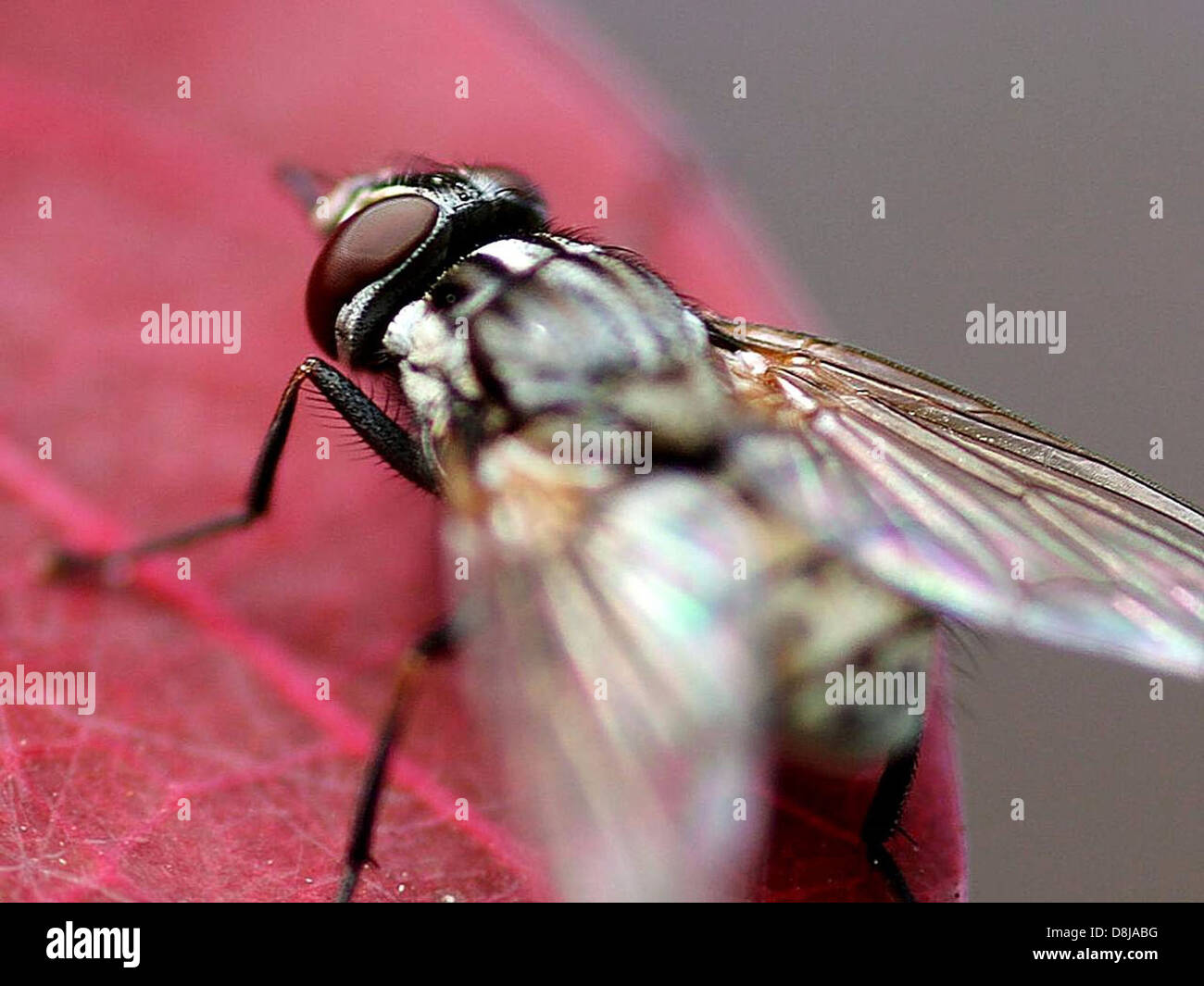
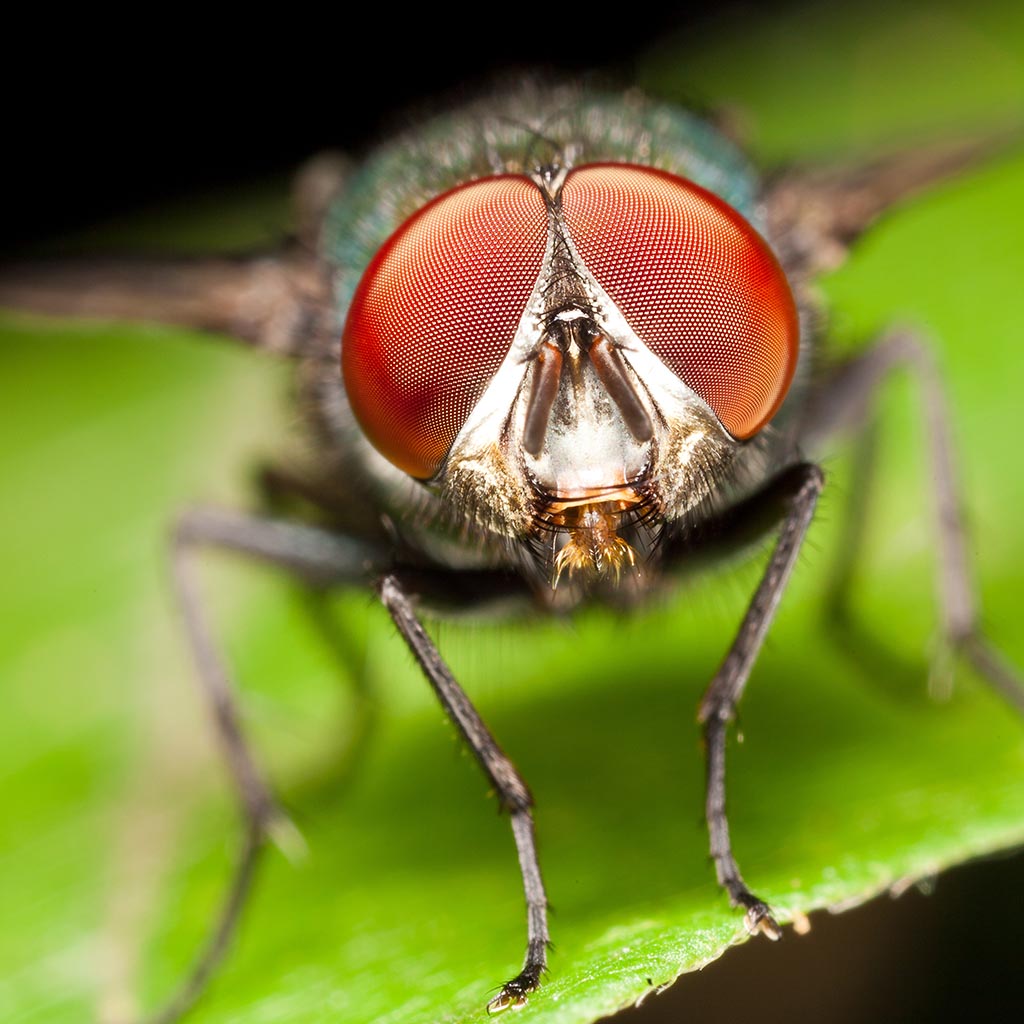
When we ask if bugs have eyes, we are usually looking at the large, bulging structures on the sides of an insect's head. These are compound eyes, and they represent one of the most successful evolutionary adaptations in the animal kingdom. Unlike the single-lens "camera" eyes found in humans, compound eyes are made up of thousands of individual visual units known as ommatidia.
Each ommatidium functions as an independent light detector, containing its own lens, crystalline cone, and light-sensitive cells. As of 2026, entomological research continues to highlight how these units provide a "mosaic" view of the world. While insects do not see a high-resolution image like a photograph, they are unparalleled in their ability to detect movement. This is due to a high flicker fusion frequency. While a human sees a motion picture as a smooth sequence at about 60 frames per second, many flying insects, such as houseflies, process visual data at over 250 frames per second. To a fly, a human hand moving to swat it appears to be moving in slow motion, allowing the insect plenty of time to calculate an escape trajectory.
The number of ommatidia varies wildly between species, which dictates the "resolution" of their vision. For instance:
- Ants: Often have only a few dozen ommatidia, as many species rely more on chemical pheromones.
- Houseflies: Possess approximately 4,000 ommatidia per eye.
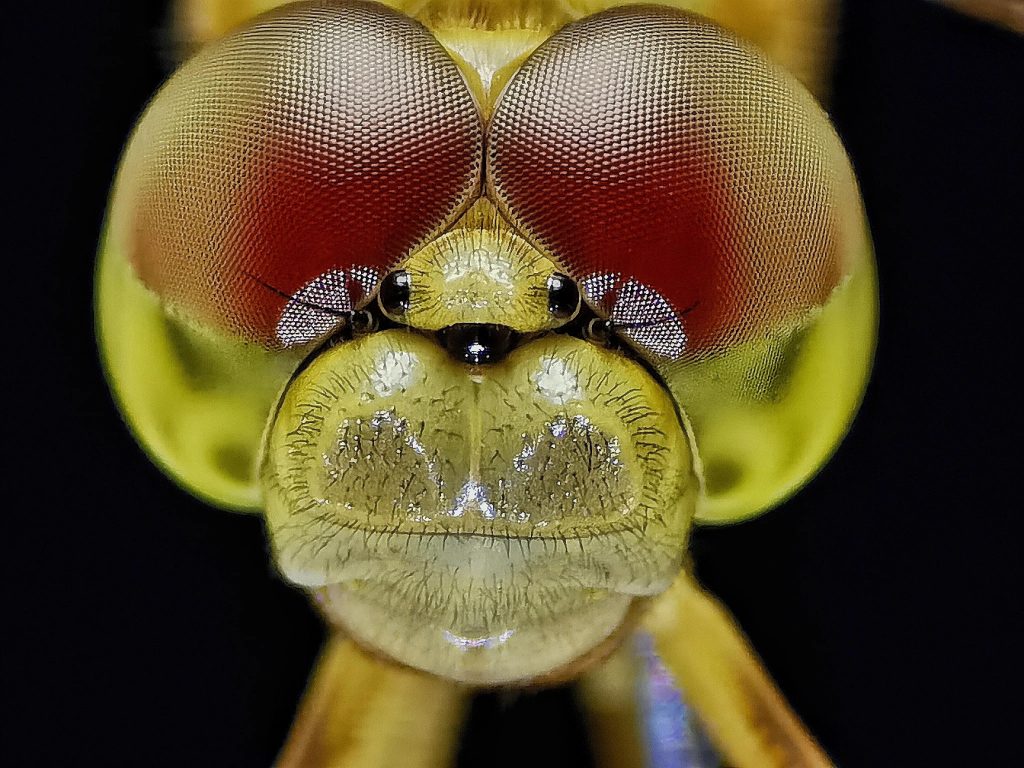
- Dragonflies: The masters of insect vision, dragonflies can have up to 30,000 ommatidia in each eye, granting them nearly 360-degree vision and the ability to hunt mid-air with surgical precision.
The Role of Simple Eyes: Ocelli and Stemmata
In addition to their large compound eyes, many insects have "simple" eyes. These are divided into two main types: ocelli and stemmata.
Ocelli (Dorsal Ocelli)
Most flying insects have three small ocelli arranged in a triangle on the top of their heads (the vertex). These do not form complex images. Instead, they are highly sensitive to changes in light intensity. Evolutionarily, ocelli serve as a flight-stabilization system. By detecting the horizon through the contrast between the bright sky and the dark ground, an insect can maintain a level flight path. Recent studies published in Nature have demonstrated that ocelli also play a role in circadian rhythm regulation, helping the insect determine the time of day based on light angles.
Stemmata (Lateral Ocelli)
Stemmata are the primary visual organs for larvae, such as caterpillars. Because caterpillars do not need to fly or hunt at high speeds, their visual requirements are lower. Stemmata are essentially simplified versions of ommatidia that allow the larva to distinguish light from dark and recognize the edges of the leaves they inhabit.
Arachnid Vision: A Different Approach
The term "bug" is colloquially used for both insects and arachnids, but their visual systems are fundamentally different. Spiders do not have compound eyes. Instead, they have simple eyes (more akin to our own in basic structure, but smaller and more numerous), usually arranged in pairs.
Most spiders have eight eyes, though some have six or even four. These eyes are specialized for different tasks:
- Principal Eyes (Anterior Median Eyes): Usually the largest pair, used for identifying objects and tracking prey. In jumping spiders (Salticidae), these eyes have telephoto capabilities and can move independently.
- Secondary Eyes: These include the lateral and posterior eyes. They are primarily movement detectors and are often equipped with a tapetum lucidum, a reflective layer that increases sensitivity in low light—the same feature that makes a cat's eyes "glow" at night.
The visual acuity of jumping spiders is particularly remarkable. Research updated in 2026 by the Smithsonian Institution confirms that some jumping spiders possess color vision that rivals that of primates, allowing them to see into the ultraviolet spectrum to better identify potential mates and prey.
Comparison of Visual Systems in the "Bug" World
To understand the diversity of vision among arthropods, it is helpful to compare the primary structures and their functions across different groups.
| Feature | Compound Eyes (Insects) | Simple Eyes/Ocelli (Insects) | Simple Eyes (Spiders) |
|---|---|---|---|
| Structure | Thousands of ommatidia | Single lens per unit | Single lens per unit |
| Image Quality | Low resolution, mosaic | No image (light detection) | High resolution (in some species) |
| Motion Detection | Exceptional (high flicker rate) | Rapid response to shadows | Good to Excellent |
| Primary Use | Navigation, hunting, mating | Flight stability, timing | Hunting, depth perception |
| Examples | Bees, Flies, Dragonflies | Grasshoppers, Wasps | Jumping Spiders, Wolf Spiders |
Seeing the Invisible: Ultraviolet and Polarized Light
One of the most fascinating aspects of bug vision is their ability to see light that is invisible to humans. Many insects, particularly pollinators like honeybees and butterflies, can see ultraviolet (UV) light.
Flowers have evolved "nectar guides"—patterns visible only in the UV spectrum—that act like landing lights for bees, directing them toward the pollen and nectar. This symbiotic relationship is a cornerstone of global ecosystems. Without the ability of bugs to "see" these hidden signals, many plant species would fail to reproduce.
Additionally, many insects use polarized light for navigation. While humans need specialized sunglasses to filter polarized light, insects like desert ants use the polarization patterns of the sun in the sky as a natural compass. This allows them to forage far from their nests and return in a straight line, even when the sun is obscured by clouds. This phenomenon, known as celestial navigation, is documented extensively by the University of California, Berkeley in their evolutionary biology archives.
Do Any Bugs Lacks Eyes?
While vision is a dominant trait, not every bug has eyes. Evolution is efficient; if a creature lives in an environment where light is permanently absent, eyes become a biological liability—vulnerable to injury and expensive to maintain in terms of energy consumption.
- Troglobites: Many cave-dwelling species, such as certain beetles and millipedes, have lost their eyes entirely over millions of years. They replace vision with highly developed tactile and chemical senses (long antennae and sensitive hairs).
- Soil Dwellers: Some subterranean insects and mites are blind, relying on vibrations and moisture gradients to navigate their dark, damp environments.
- Endoparasites: Certain insects that live inside the bodies of other animals often lack eyes, as there is no light to perceive within the host’s tissues.
Evolutionary Trade-offs: Why Small Eyes?
The size and type of a bug's eyes are dictated by the laws of physics. Because insects are small, they cannot support a large, high-resolution camera eye like a human's. A camera eye requires a certain size to prevent diffraction, a physical property where light waves blur as they pass through a tiny opening.
To achieve the same resolution as a human eye, a compound eye would need to be several meters wide. Therefore, bugs have evolved to prioritize wide-angle views and motion sensitivity over the sharp, clear focus that mammals enjoy. This trade-off is what makes them so successful at surviving in a world filled with larger predators.
Frequently Asked Questions
Do bugs have eyelids or close their eyes to sleep?
No, bugs do not have eyelids. Their eyes are protected by a hard, transparent cuticle that is part of their exoskeleton. When bugs rest or enter a state of torpor (insect sleep), their eyes remain open. They rely on "shutting down" their neural processing rather than physically blocking out light.
Can bugs see in the dark?
Many nocturnal bugs have specialized eyes for night vision. Moths and certain beetles have "superposition" compound eyes, which allow light from multiple ommatidia to be focused onto a single photoreceptor, drastically increasing light sensitivity. However, they usually sacrifice some image sharpness to achieve this.
Why do some bugs have more than two eyes?
Insects often have two large compound eyes and three small ocelli, totaling five. Spiders usually have eight. Multiple eyes provide different data points: some for motion, some for depth perception, and some for monitoring light levels or the horizon. This multi-input system is more efficient for small organisms than a single pair of complex eyes.
Do all spiders have good eyesight?
No. While jumping spiders and wolf spiders have excellent vision for hunting, many web-building spiders have very poor eyesight. These species rely almost entirely on vibrations in their web (mechanoreception) to detect the size and location of their prey.
Can insects see the color red?
Most insects are "red-blind." They see a spectrum shifted toward the blue and ultraviolet. Butterflies are a notable exception, as many species can see red, which helps them find specific flowers.
Practical Recommendation: Observing Bug Vision
If you are interested in entomology or citizen science, the best way to observe bug vision is through macro photography or a simple hand lens. In 2026, many smartphone attachments allow for 20x or 50x magnification. By looking closely at a dragonfly or a large horsefly, you can clearly see the individual facets (ommatidia) of the compound eye. Observe how a jumping spider tracks your camera lens; it will often tilt its head to use its principal eyes to "size up" the object, providing a clear demonstration of active visual tracking in the arthropod world.
Image Gallery