How to Play the Harry Potter Theme on Piano: A Practical Guide for Beginners
Playing the "Harry Potter" theme, formally known as "Hedwig’s Theme," on the piano is a rewarding milestone for musicians of all skill levels. Composed by John Williams for the 2001 film Harry Potter and the Sorcerer's Stone, the piece...
Playing the "Harry Potter" theme, formally known as "Hedwig’s Theme," on the piano is a rewarding milestone for musicians of all skill levels. Composed by John Williams for the 2001 film Harry Potter and the Sorcerer's Stone, the piece relies on a haunting, melodic minor-key sequence that is instantly recognizable. Achieving a recognizable performance requires understanding the basic melody, hand positioning, and the essential rhythmic patterns that give the track its magical, mysterious quality.
Contents
Understanding the Musical Structure of Hedwig’s Theme
"Hedwig’s Theme" is written in the key of E minor, which is an excellent starting point for piano players because it utilizes white keys for most of the melody while occasionally introducing the F# to create the characteristic "magical" tension. Before sitting at the keyboard, it is vital to understand that the theme is divided into a few distinct phrases. The first phrase is the most iconic, acting as the hook that draws the listener in.
The composition follows a ternary-style structure where the primary melody is introduced, developed, and then resolved. To play this effectively, you must focus on the legato phrasing—meaning the notes should be played smoothly and connectedly. In the original orchestral arrangement, the celesta provides the distinct, crystalline timbre of the opening. While an acoustic or digital piano cannot perfectly replicate a celesta, you can emulate that feel by playing the notes in the higher registers of the keyboard with a light, delicate touch.
Prerequisites for Learning the Melody
Before attempting the full piece, ensure your setup is conducive to learning. If you are a beginner, you do not need an expensive grand piano; a standard 88-key weighted digital keyboard is sufficient to practice the dynamic control required for this piece.
- Finger Independence: The theme requires moving between notes that are often a third or a fifth apart. Practice scales in E minor to prepare your fingers for the reach.
- Tempo Control: Start at half the speed of the original recording. "Hedwig’s Theme" is often played too quickly by beginners, leading to uneven rhythm. Using a metronome set to a slow tempo (around 60–70 BPM) will help you internalize the syncopation.
- Note Identification: Familiarize yourself with the E-minor scale on your keyboard. Ensure you can quickly locate E, G, B, and the essential F# that provides the minor-key "sorrow" of the melody.
Step-by-Step Guide to the Main Melody
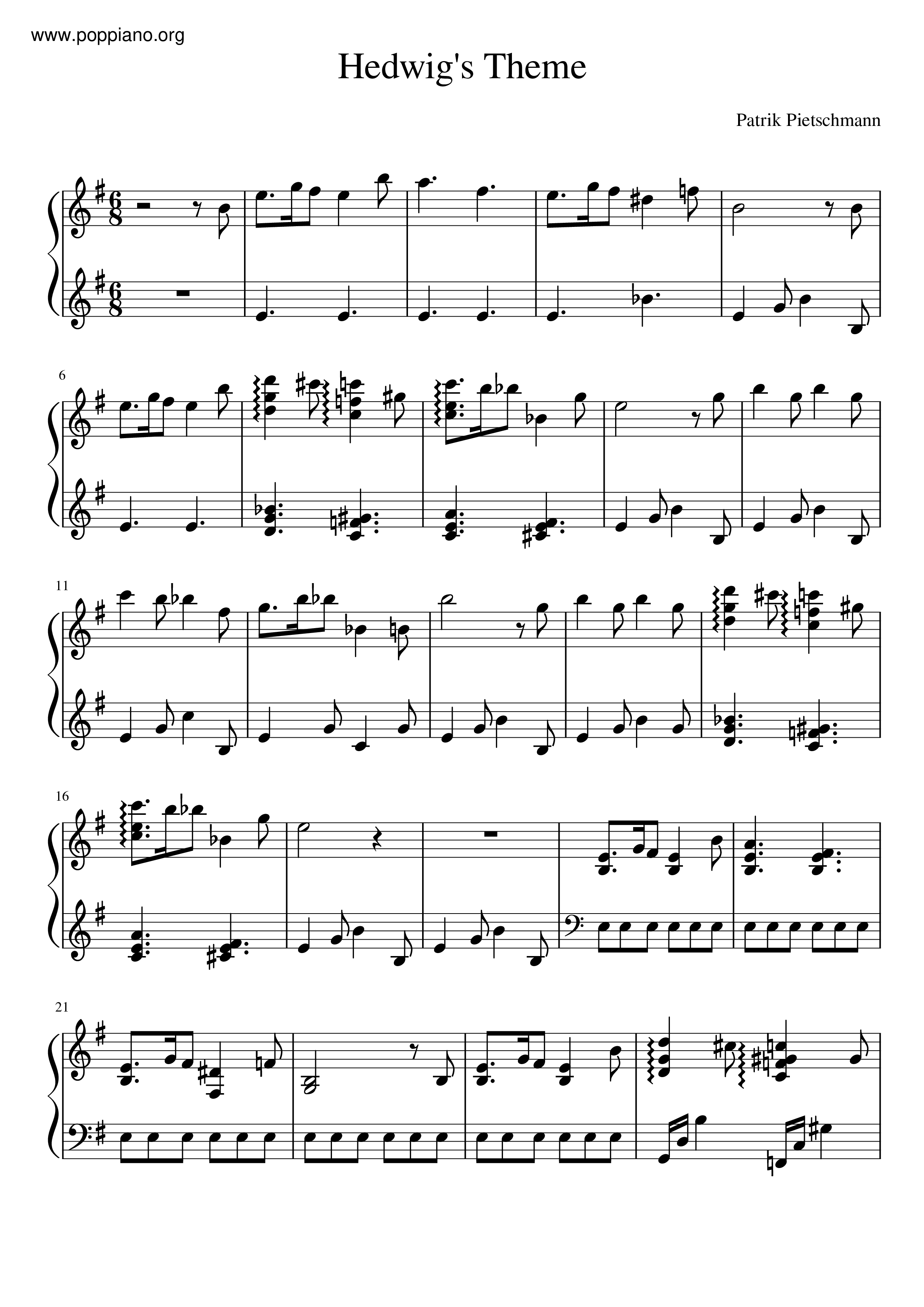
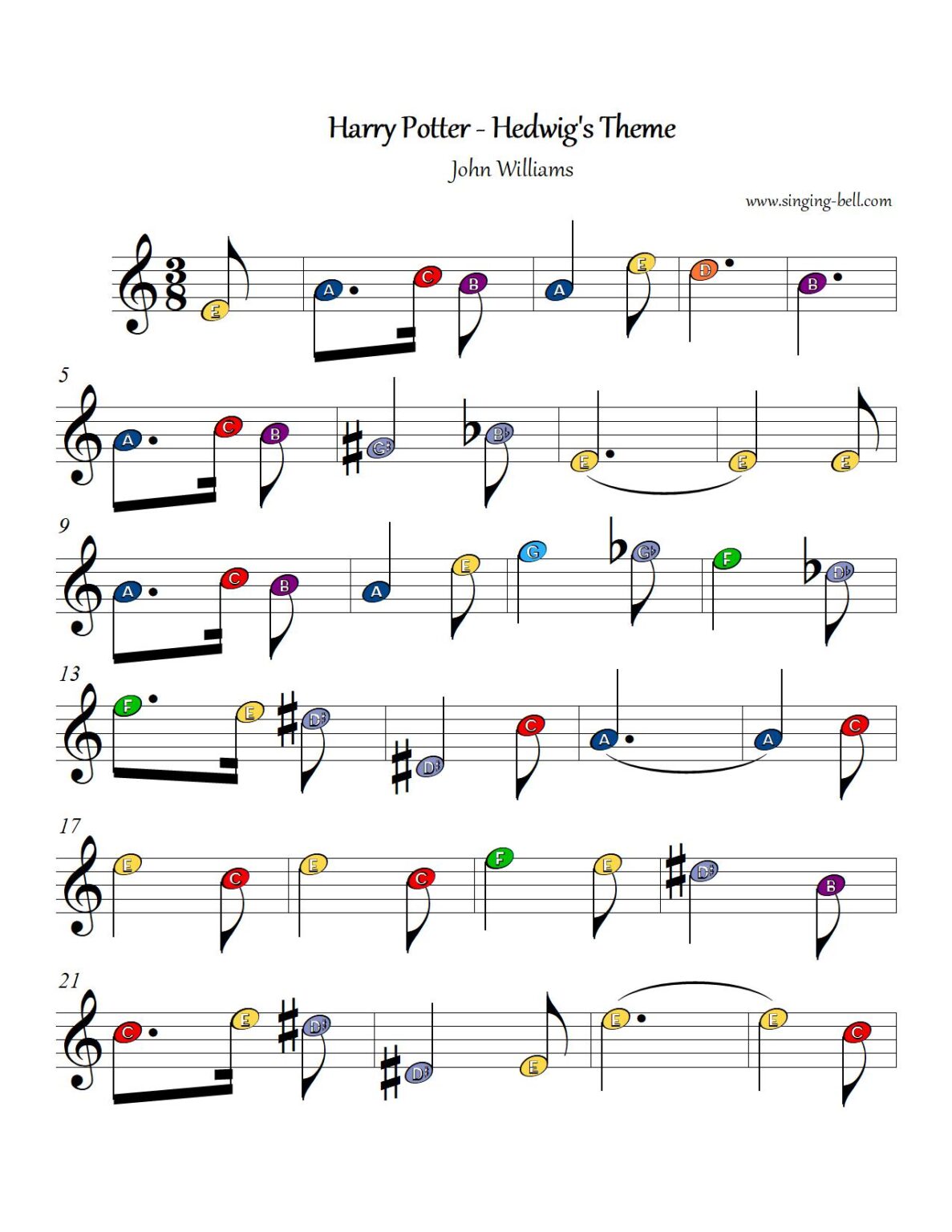
The melody of "Hedwig's Theme" can be broken down into a repeating sequence of notes. The following table provides a simplified progression for the primary theme to help you map the notes onto your keyboard.
| Section | Note Sequence | Finger Suggestion |
|---|---|---|
| Opening Phrase | B - E - G - F# - E - B' - A - F# | 1 - 3 - 5 - 4 - 3 - 5 - 4 - 2 |
| Bridge Phrase | E - G - F# - D# - B | 1 - 3 - 2 - 1 - 4 |
| Resolution | E - G - F# - E - B' - A - F# | 1 - 3 - 2 - 1 - 4 - 3 - 2 |
Note: B' denotes the B note that is an octave higher than the starting B.
To execute this, start with your thumb (Finger 1) on E. The jump from E to the higher B is the most critical movement. Keep your wrist loose; tension is the primary enemy of smooth transitions. If your hand feels cramped, your posture may be too rigid. Keep your elbows slightly away from your torso to allow for natural movement across the keys.
Developing the Left-Hand Accompaniment
Once the right-hand melody is comfortable, you can introduce the left-hand accompaniment. The left hand in "Hedwig's Theme" provides the harmonic foundation, typically using sustained bass notes or rolling chords (arpeggios).
For a beginner-friendly approach, play long, sustained E-minor chords (E, G, B) on the downbeat of every measure. As you progress, you can move toward "broken" chords, where you play the notes of the chord in quick succession rather than hitting them all at once. This creates a flowing, ethereal sound that matches the cinematic quality of the film score. If you find the synchronization difficult, record your right-hand melody first and practice playing the left-hand chords over your recording. This "layering" method allows you to isolate the difficulty of each hand before combining them into a cohesive performance.
Common Challenges and Troubleshooting
Even experienced players encounter hurdles with this piece. The most common mistake is failing to maintain the rhythm during the syncopated parts.
- Rhythmic Hesitation: Many students pause too long between the E and the B. To fix this, count "1 and 2 and 3 and 4" out loud. The melody notes should fall consistently on the beats and off-beats as dictated by the 3/4 or 6/8 time signatures typically found in arrangements of the piece.
- Lack of Dynamic Variation: "Hedwig’s Theme" should not be played at the same volume throughout. Start the theme softly (piano), grow louder as the melody rises (crescendo), and pull back at the end of the phrase (diminuendo).
- Incorrect Note Values: Ensure you are holding the longer notes at the end of the phrases. Cutting them short makes the piece sound "choppy" rather than "magical."
Advanced Techniques for Experienced Players
If you have already mastered the basic melody, you can improve your rendition by incorporating dynamics and pedal control. Using the sustain pedal (the right pedal on your piano) is essential for this piece. Depress the pedal slightly after striking the note and release it before changing chords to avoid "muddying" the sound.
Additionally, consider using "voicing." This is the technique of playing the melody notes slightly louder than the accompanying bass notes. This ensures that the theme remains the focus of the performance, even when the left hand is busy with complex arpeggios. If you are using a digital keyboard, experiment with different "voices" or instrument settings; a "bright" piano setting can mimic the sharp, clear sound of a celesta more effectively than a "mellow" grand piano setting.
Frequently Asked Questions
Is it hard to learn Hedwig’s Theme for a beginner? No, the melody is quite intuitive once the E-minor scale is understood. It is a favorite for beginners because the intervals are logical and easy to repeat, making it an excellent piece for developing finger strength and coordination.
Do I need the original sheet music to play the theme? While original scores by John Williams are the gold standard, there are many simplified arrangements available in 2026 for hobbyists. You do not need the full orchestral score; a "lead sheet" or "beginner piano" arrangement will suffice and is often easier to read.
Why does my playing sound different from the movie? The movie version uses a full orchestra, including a celesta and strings. On a solo piano, you lack the texture of the orchestra. You can compensate for this by using the sustain pedal more effectively and focusing on the touch—playing with a light, crisp articulation.
How long does it take to learn this song? For an average student practicing 30 minutes a day, it typically takes two to four weeks to memorize the melody and gain basic proficiency in playing it with two hands.
Next Steps for Your Musical Journey
Start by focusing exclusively on the first four measures of the melody. Do not move on to the rest of the song until you can play those four measures without looking at your fingers. Once you have reached that level of fluency, record yourself. Hearing your own performance is the most objective way to identify where you are rushing or where your rhythm is becoming uneven. If you are interested in further development, look for tutorials that focus on "arranging," which will teach you how to add your own flourishes to the melody, making your performance of the Harry Potter theme truly unique.
Image Gallery