Evolution of the Ford Raptor: A Complete Guide to Every Generation
Since its debut in 2010, the Ford Raptor has evolved through three distinct generations of the F-150 platform, while expanding to include the Bronco Raptor and Ranger Raptor models. Known for its factory-warrantied desert racing capabi...
Since its debut in 2010, the Ford Raptor has evolved through three distinct generations of the F-150 platform, while expanding to include the Bronco Raptor and Ranger Raptor models. Known for its factory-warrantied desert racing capabilities, the lineup transitioned from heavy V8 power to high-output EcoBoost technology, eventually reintroducing the V8 with the 720-horsepower Raptor R.
Contents
The First Generation (2010–2014): The SVT Legacy
The first-generation Ford F-150 SVT Raptor was a radical departure from the street-performance "Lightning" trucks of previous decades. Developed by Ford’s Special Vehicle Team (SVT), this truck was designed specifically for high-speed off-road traversal, drawing inspiration from Baja 1000 desert racers.
Engineering and Powertrain
When it launched in 2010, the Gen 1 Raptor was initially powered by a 5.4L V8 engine producing 310 horsepower and 365 lb-ft of torque. However, Ford quickly realized the chassis could handle more. By mid-2010, a 6.2L naturally aspirated V8 became available, pumping out 411 horsepower and 434 lb-ft of torque. This engine became the standard for the remainder of the first generation's life cycle.
The hallmark of the Gen 1 was its suspension. Ford partnered with Fox Racing Shox to provide internal bypass shocks with 11.2 inches of front travel and 12.1 inches of rear travel. This setup allowed the truck to soak up massive impacts that would typically disable a standard half-ton pickup. To accommodate the long-travel suspension, the Raptor featured a track width seven inches wider than a standard F-150, necessitating the iconic "FORD" block-letter grille and integrated marker lights.
Heritage and Collectability
As of 2026, the Gen 1 Raptor remains a highly sought-after vehicle on the used market. Enthusiasts prize it for its hydraulic power steering—which offers more tactile feedback than later electronic systems—and the raw, mechanical sound of the 6.2L V8. It was offered in both SuperCab (extended cab) and SuperCrew configurations, though the shorter wheelbase of the SuperCab is often preferred by dedicated off-roaders for its superior breakover angle.
The Second Generation (2017–2020): The EcoBoost Revolution
After a two-year hiatus, the second-generation Raptor arrived for the 2017 model year. This version moved away from the SVT branding, falling under the newly formed Ford Performance umbrella. It introduced significant technological leaps, though not without controversy among V8 purists.
Lightweight Materials and Forced Induction
The Gen 2 Raptor utilized the new high-strength, military-grade aluminum-alloy body of the standard F-150, which helped shed approximately 500 pounds compared to the previous steel-bodied generation. Under the hood, Ford replaced the 6.2L V8 with a High-Output 3.5L Twin-Turbo EcoBoost V6. Despite having two fewer cylinders, the engine produced a staggering 450 horsepower and 510 lb-ft of torque.
This power was managed by a then-new 10-speed automatic transmission (the 10R80), developed in collaboration with GM. This gearbox allowed the engine to stay within its optimal power band more effectively than the old 6-speed unit. The Gen 2 also introduced the Terrain Management System, featuring a "Baja Mode" that adjusted throttle response, shift points, and the four-wheel-drive system for high-speed desert running.
Suspension Evolution
Suspension technology also advanced mid-cycle. While 2017 and 2018 models used traditional Fox shocks, the 2019 update introduced Live Valve technology. These electronically controlled shocks could adjust damping rates in real-time based on sensor inputs, stiffening the suspension instantly when the truck sensed it was airborne to prevent bottoming out upon landing.
The Third Generation (2021–Present): Refinement and the V8 Return
The third-generation F-150 Raptor debuted for the 2021 model year, focusing heavily on rear suspension architecture and digital integration. By 2026, this generation has matured into the most diverse lineup in the Raptor’s history, encompassing both the standard EcoBoost and the ultra-high-performance Raptor R.
The Five-Link Rear Suspension
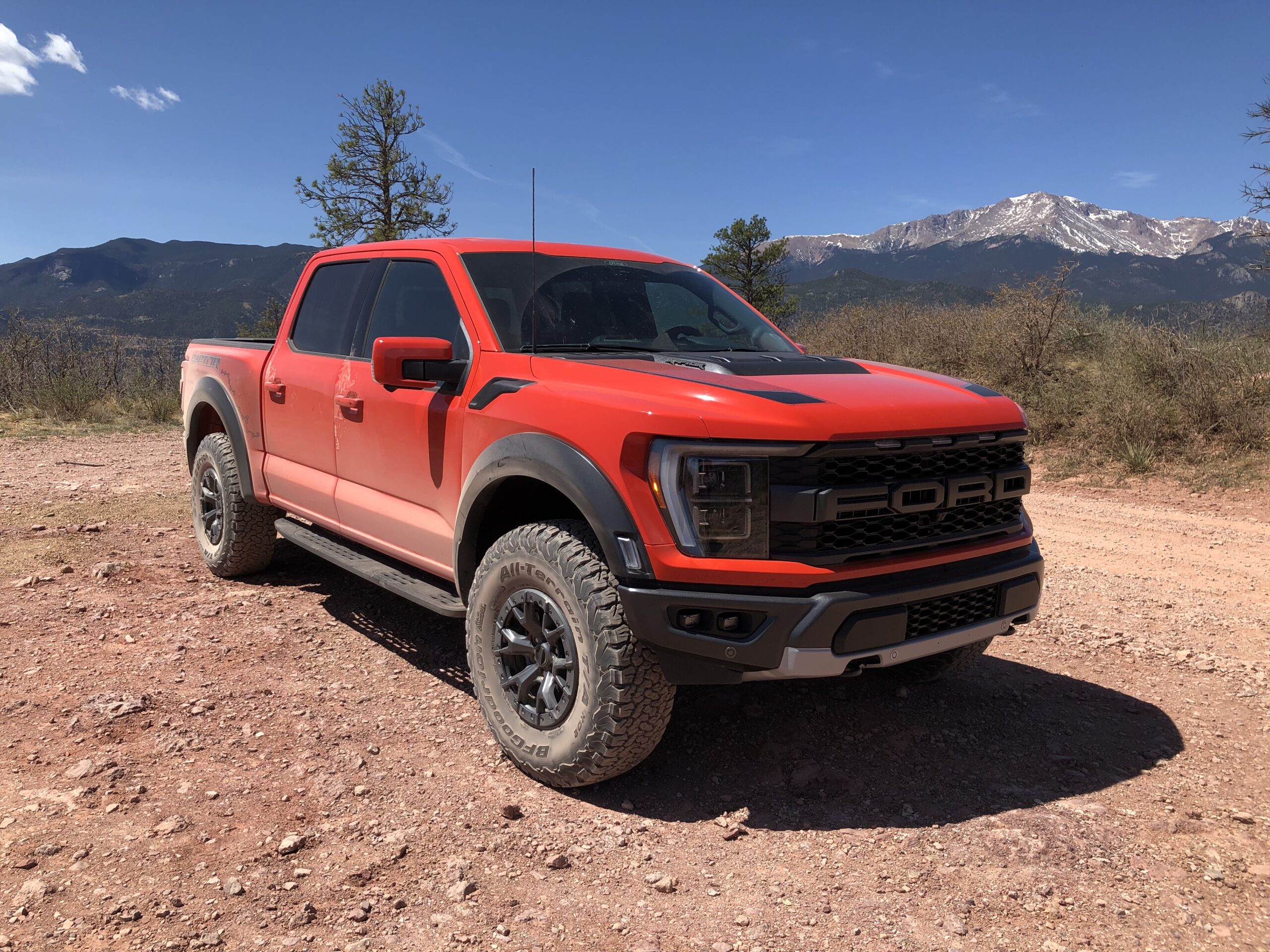
The most significant mechanical change for the Gen 3 was the move from traditional leaf springs to a bespoke five-link rear suspension with extra-long trailing arms and 24-inch coil springs. This change drastically improved the truck’s ability to maintain tire contact on rough terrain and virtually eliminated "axle hop," a common complaint in previous leaf-sprung generations.
In 2024, Ford updated the Gen 3 with Fox Dual Live Valve shocks. This system allows for independent control of both compression and rebound, providing a broader range of damping characteristics for both on-road comfort and high-speed off-road stability.
The Raptor R and the 2024 Refresh
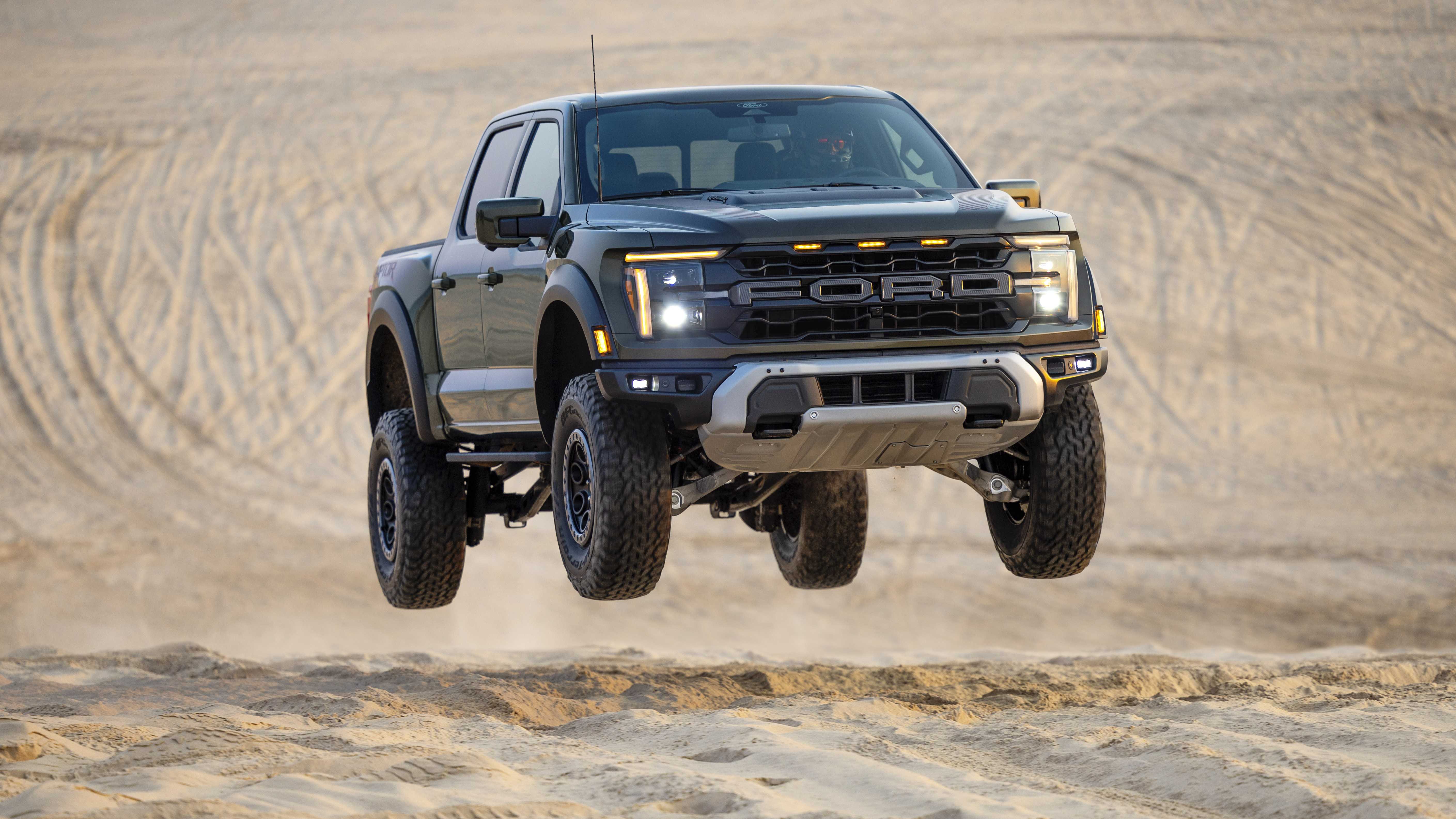
To answer the challenge posed by competitors like the Ram 1500 TRX, Ford introduced the Raptor R in 2023. This model borrowed the 5.2L supercharged "Predator" V8 from the Shelby GT500. For the 2024 model year refresh, Ford optimized the air intake and calibration, bumping the Raptor R's output to 720 horsepower and 640 lb-ft of torque.
The 2024 refresh also introduced a modular front bumper capable of housing a factory-installed Warn winch and a revised headlight design with "C-clamp" LED signatures. This remains the current state-of-the-art for the F-150 Raptor as we move through 2026.
Comparison of Ford F-150 Raptor Generations
| Feature | Gen 1 (2010–2014) | Gen 2 (2017–2020) | Gen 3 (2021–Present) |
|---|---|---|---|
| Primary Engine | 6.2L V8 | 3.5L Twin-Turbo V6 | 3.5L Twin-Turbo V6 / 5.2L SC V8 |
| Horsepower | 411 hp | 450 hp | 450 hp (V6) / 720 hp (V8) |
| Torque | 434 lb-ft | 510 lb-ft | 510 lb-ft (V6) / 640 lb-ft (V8) |
| Transmission | 6-Speed Automatic | 10-Speed Automatic | 10-Speed Automatic |
| Rear Suspension | Leaf Springs | Leaf Springs | 5-Link Coil Springs |
| Max Tire Size | 35-inch | 35-inch | 35-inch / 37-inch (Factory Option) |
| Shock Diameter | 2.5-inch Fox | 3.0-inch Fox Live Valve | 3.1-inch Fox Dual Live Valve |
Expanding the Family: Ranger Raptor and Bronco Raptor
The "Raptor" name is no longer exclusive to the F-150. As of 2026, the lineup includes two additional heavy hitters that cater to different off-road disciplines.
The Bronco Raptor (2022–Present)
Affectionately known during development as the "Warthog," the Bronco Raptor was designed for high-speed desert running and hardcore rock crawling. It is significantly wider (9.8 inches) than a standard Bronco and features 37-inch tires as standard equipment. Power comes from a 3.0L EcoBoost V6 producing 418 horsepower. Its HOSS 4.0 suspension system utilizes Fox Live Valve technology similar to the F-150, but tailored for the shorter wheelbase and SUV geometry of the Bronco.
The Ranger Raptor (2024–Present)
While the Ranger Raptor existed globally since 2019, it finally arrived in the North American market for the 2024 model year. It serves as the "entry-level" Raptor but remains incredibly capable. It features a 3.0L EcoBoost V6 tuned to 405 horsepower and 430 lb-ft of torque. Its smaller footprint makes it the preferred choice for tighter trails where the full-sized F-150 Raptor would be too cumbersome.
Performance Engineering: What Defines a Raptor?
Regardless of the generation, every Raptor is built around three engineering pillars: specialized suspension, enhanced cooling, and widened bodywork.
- Fox Racing Shox Integration: The relationship with Fox is the backbone of the brand. The transition from simple internal bypass shocks in 2010 to the Dual Live Valve systems of 2026 represents the pinnacle of off-road shock technology, allowing the vehicle to be both a comfortable daily driver and a desert-jump-ready beast.
- Chassis Reinforcement: Raptors do not use standard F-150 frames. They feature reinforced shock towers, beefier mounting points, and high-strength steel throughout the frame to withstand the torsional stress of high-speed off-roading.
- Specific Terrain Logic: Ford's software engineering is as vital as the hardware. Systems like "Trail Turn Assist" (on Bronco and Ranger) and "One-Pedal Drive" allow drivers of varying skill levels to navigate technical terrain that would otherwise require expert-level technical control.
FAQs
Which Ford Raptor generation is the most reliable?
The first-generation (2010–2014) with the 6.2L V8 is often cited as the most mechanically simple and robust. While it lacks the advanced fuel economy and tech of newer models, the naturally aspirated V8 and 6-speed transmission are known for long-term durability. However, the Gen 2 and Gen 3 models have proven reliable if the 10-speed transmission and cam phasers are properly maintained according to Ford Performance guidelines.
Can you get a V8 in a newer Ford Raptor?
Yes, but only in the Raptor R trim. Starting in 2023, Ford introduced the 5.2L supercharged V8 to the lineup. For the standard Raptor, the 3.5L EcoBoost V6 remains the sole engine option. The Raptor R is positioned as a premium, limited-production model with a significantly higher price point.
What is the difference between the 35 and 37-inch tire packages on the Gen 3?
While the standard Gen 3 Raptor comes with 35-inch tires, Ford offers a factory 37-inch tire package. This isn't just a tire swap; the 37-inch package includes specific frame reinforcements, different shock tuning, and a modified bed to fit a full-size 37-inch spare tire underneath. It provides better ground clearance and approach/departure angles.
Is the Ranger Raptor better than the F-150 Raptor?
"Better" depends on the environment. The Ranger Raptor is superior for technical, wooded trails and tight maneuvers due to its smaller dimensions. The F-150 Raptor is superior for high-speed desert running and open terrain, where its wider track and longer wheelbase provide more stability.
What was the "Live Valve" update in 2019?
Introduced during the second generation, Live Valve is an electronic control system for Fox shocks. It uses sensors to monitor steering, braking, and acceleration inputs 500 times per second, adjusting the internal valving of the shocks to provide the ideal damping for the current condition—whether that's cornering on pavement or landing a jump.
Recommendation for Buyers in 2026
If you are looking for the ultimate performance truck in 2026, a 2024 or newer F-150 Raptor with the Dual Live Valve suspension provides the best balance of technology and capability. For those on a budget, a well-maintained 2019–2020 Gen 2 offers the benefits of the first-generation Live Valve system and the lightweight aluminum body at a significant discount. If the sound and simplicity of a V8 are your priorities, the Gen 1 6.2L remains a timeless classic that continues to hold its value exceptionally well.
Image Gallery