The Michael Jordan Home Sale Price Revealed: Inside the Historic Highland Park Estate Transaction
After spending over a decade on the luxury real estate market, NBA legend Michael Jordan’s sprawling Highland Park, Illinois mansion finally sold for $14.8 million in early 2024, bringing an end to one of the most prolonged celebrity p...
After spending over a decade on the luxury real estate market, NBA legend Michael Jordan’s sprawling Highland Park, Illinois mansion finally sold for $14.8 million in early 2024, bringing an end to one of the most prolonged celebrity property listings in modern sports history.
Contents
The Long Journey to a Sale: Understanding the Highland Park Estate
When elite athletes or high-net-worth individuals purchase or build custom architectural marvels, the resulting properties often present unique valuation and liquidity challenges. Michael Jordan’s custom-built compound at 2700 Point Lane in Highland Park, Illinois, stands as a premier example of this real estate dynamic. Constructed to his exact specifications and completed in 1995—the height of his dominance with the Chicago Bulls—the property became as famous for its prolonged time on the market as it did for its iconic "23" gates.
Listing a custom luxury estate involves navigating a very narrow pool of prospective buyers. Ultra-high-net-worth individuals (UHNWIs) typically prefer to build properties tailored to their own tastes or purchase neutral, historic estates rather than homes heavily customized around a specific living personality. For years, industry analysts debated why the property struggled to secure a buyer, pointing to factors ranging from hyper-specific interior finishes—such as the cigar room, custom trophy rooms, and a regulation-sized indoor basketball court—to the overall volatility of the high-end suburban Chicago housing market.
Property Specifications and Architectural Features
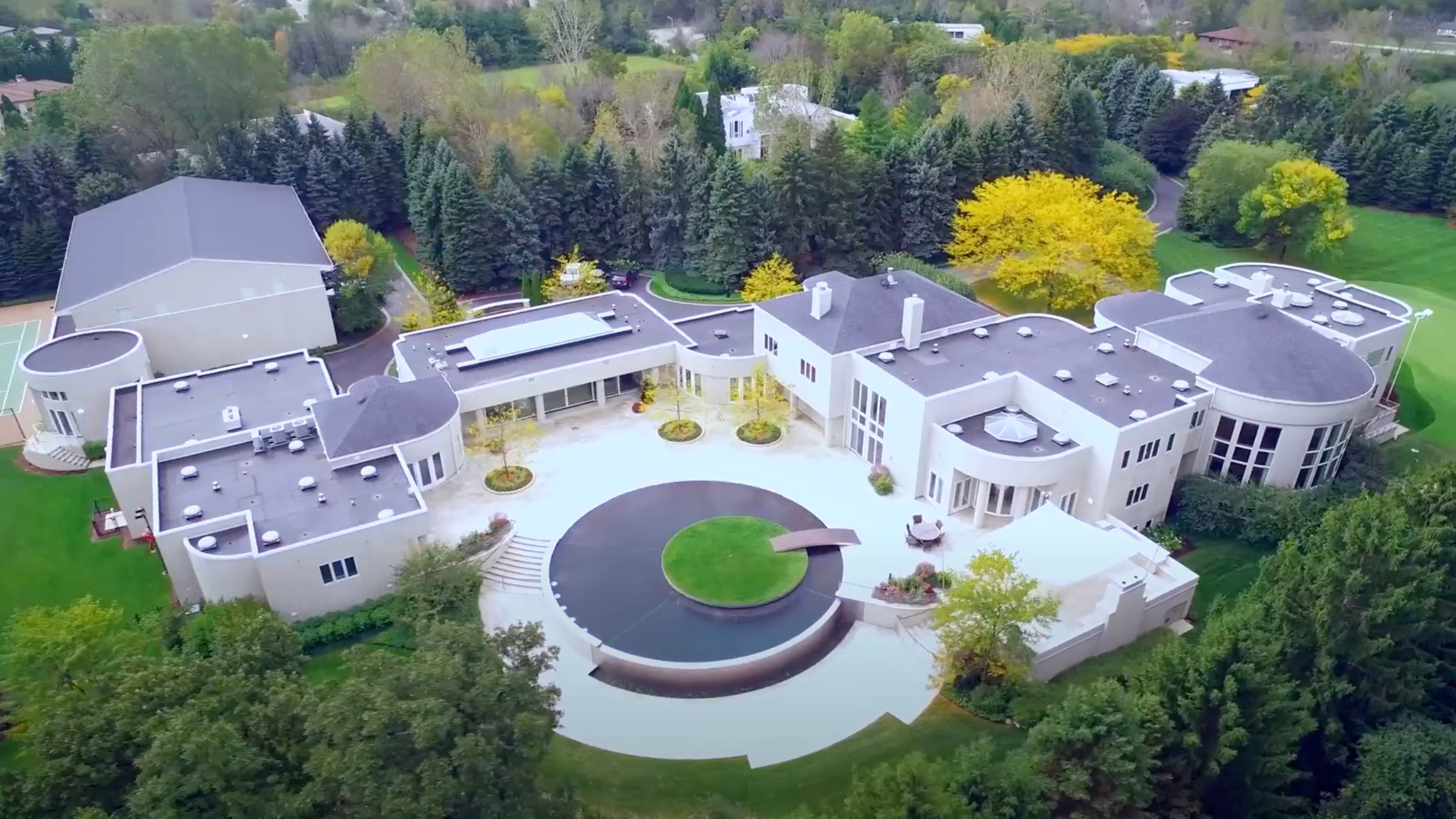
Spanning over 56,000 square feet, the Highland Park compound is an engineering and design marvel tailored for privacy, elite training, and large-scale entertaining. Understanding the true scope of the estate helps explain why its eventual sale price required a recalibration of market expectations.
The main residence features nine bedrooms, nineteen bathrooms, and numerous specialized living spaces. Every corner of the structure reflects Jordan’s career and lifestyle requirements during the 1990s and 2000s.
Key Structural Highlights of the Estate
- The Athletic Complex: The crown jewel of the property is a regulation-sized indoor basketball court equipped with professional-grade lighting, hardwood flooring bearing Jordan's signature logo motifs, and a spectator viewing area.
- Entertainment and Leisure: The estate includes a massive infinity pool, an outdoor tennis court, a putting green, a cigar room with a sophisticated air-filtration system, and a temperature-controlled wine cellar.
- Guest Accommodations: A separate, fully equipped multi-room guest house ensures total privacy for visiting friends, family, or security personnel.
- Security and Privacy: Surrounded by mature evergreens and a perimeter security fence, the property features a multi-tiered electronic surveillance system and a gated entrance marked by the famous numeral 23.
| Feature / Amenity | Specification Details |
|---|---|
| Total Square Footage | Approximately 56,000 sq. ft. |
| Lot Size | ~7.39 acres |
| Bedrooms / Bathrooms | 9 bedrooms, 19 bathrooms |
| Key Athletic Facilities | Indoor NBA-spec basketball court, tennis court, putting green, pool |
| Original Listing Price (2012) | $29 million |
| Final Sale Price (2024) | $14.8 million |
The Economics of Luxury Real Estate: Price Reductions and Carrying Costs
When the property first hit the market in February 2012, listing agents priced it at an ambitious $29 million. At the time, this figure reflected not only the immense replacement cost of the raw materials and custom features but also the intangible value of owning a home belonging to a global cultural icon. However, luxury real estate operates on strict economic realities where emotional attachment rarely translates to market liquidity.
As years passed without a viable buyer, the listing underwent a series of strategic price reductions. By 2015, the asking price dropped to $14.85 million—essentially cutting the initial price tag in half. Even at this reduced level, the estate remained on the market for nearly another decade.
Holding a multi-million-dollar estate incurs substantial recurring expenses. Property taxes on a Highland Park compound of this scale historically exceeded $100,000 annually. Combined with ongoing landscape maintenance, high-end security personnel, climate control for extensive square footage, and routine structural upkeep, the annual carrying costs ran into the hundreds of thousands of dollars. These financial pressures eventually influenced the final transaction dynamics, aligning the asset's valuation with what the ultra-luxury Chicago suburban market was genuinely willing to bear.
Buyer Anonymity and Transaction Mechanics
In elite real estate transactions involving public figures, privacy remains a paramount priority for both parties. The sale of the Highland Park mansion was handled through complex legal and corporate structures designed to shield the buyer’s identity from immediate public scrutiny. High-net-worth buyers frequently utilize Delaware LLCs, family offices, or specialized trusts to acquire residential assets.
Public property records and brokerage disclosures confirmed that the transaction closed at $14.8 million, marking a steep 49% discount from the original 2012 asking price. While the identity of the buyer has not been publicly confirmed through transparent individual deeds due to the privacy veils utilized, real estate insiders note that acquiring the property at this price point represents a significant value relative to its historic construction and replacement costs. Buying the estate for roughly $264 per square foot for a heavily customized mega-mansion offered the incoming owner substantial infrastructure at a fraction of modern building expenses.
Comparative Analysis of Celebrity Real Estate Liquidations
Michael Jordan's property journey is not an isolated incident in the world of celebrity real estate. High-profile athletes, actors, and musicians frequently encounter liquidity hurdles when attempting to sell bespoke architectural compounds.
| Celebrity Property | Original Asking Price | Final Sale Price / Status | Discount / Outcome |
|---|---|---|---|
| Michael Jordan (Highland Park, IL) | $29,000,000 | $14,800,000 | ~49% reduction over 12 years |
| Celine Dion (Jupiter Island, FL) | $72,500,000 | $28,000,000 | ~61% reduction over 4 years |
| Eddie Murphy (Englewood, NJ) | $30,000,000 | $12,000,000 | ~60% reduction over 8 years |
| Shaquille O'Neal (Windermere, FL) | $28,000,000 | $16,500,000 | ~41% reduction over 3 years |
As demonstrated by these transactions, ultra-luxury estates characterized by hyper-personalized interior design routinely require significant downward pricing adjustments to attract qualified buyers. The specialized nature of these properties restricts the buyer pool exclusively to those who share the aesthetic vision or possess the capital required to execute a massive gut renovation.
Frequently Asked Questions
Why did Michael Jordan’s Highland Park home take so long to sell?
The estate remained on the market for over a decade primarily due to its hyper-personalized features, high annual property taxes, and a luxury suburban Chicago real estate market with a limited pool of buyers willing to purchase mega-mansions of that specific scale and style.
What was the final sale price of the Michael Jordan estate?
The property officially sold for $14.8 million, which was nearly half of its initial 2012 asking price of $29 million.
Who bought Michael Jordan’s Chicago-area mansion?
The identity of the buyer has been kept private through the use of corporate entities and legal trusts, which is a standard practice for ultra-high-net-worth real estate transactions.
What unique features are included in the Highland Park compound?
The 56,000-square-foot estate features a regulation-sized indoor basketball court with Jordan-branded flooring, an infinity pool, a tennis court, a professional-grade cigar room, a wine cellar, and a separate multi-room guest house.
How much were the annual property taxes on the estate?
Property taxes for the expansive Highland Park compound historically exceeded $100,000 per year, contributing significantly to the ongoing carrying costs during the years it sat on the market.
Next Steps and Practical Insights for Luxury Real Estate Buyers
For buyers navigating the ultra-luxury real estate market, the history of Michael Jordan's Highland Park estate offers valuable lessons in asset valuation and liquidity. When purchasing a heavily customized property built for a celebrity or high-profile executive, buyers should factor in potential future resale challenges, as highly personalized architectural elements rarely appeal to the broader luxury market. Furthermore, prospective owners must carefully audit ongoing carrying costs—including property taxes, maintenance, and specialized security—before committing capital to sprawling compounds that may require extended holding periods if market conditions shift.
Image Gallery