Personal Balance Sheet: A Comprehensive Guide to Your Net Worth Statement
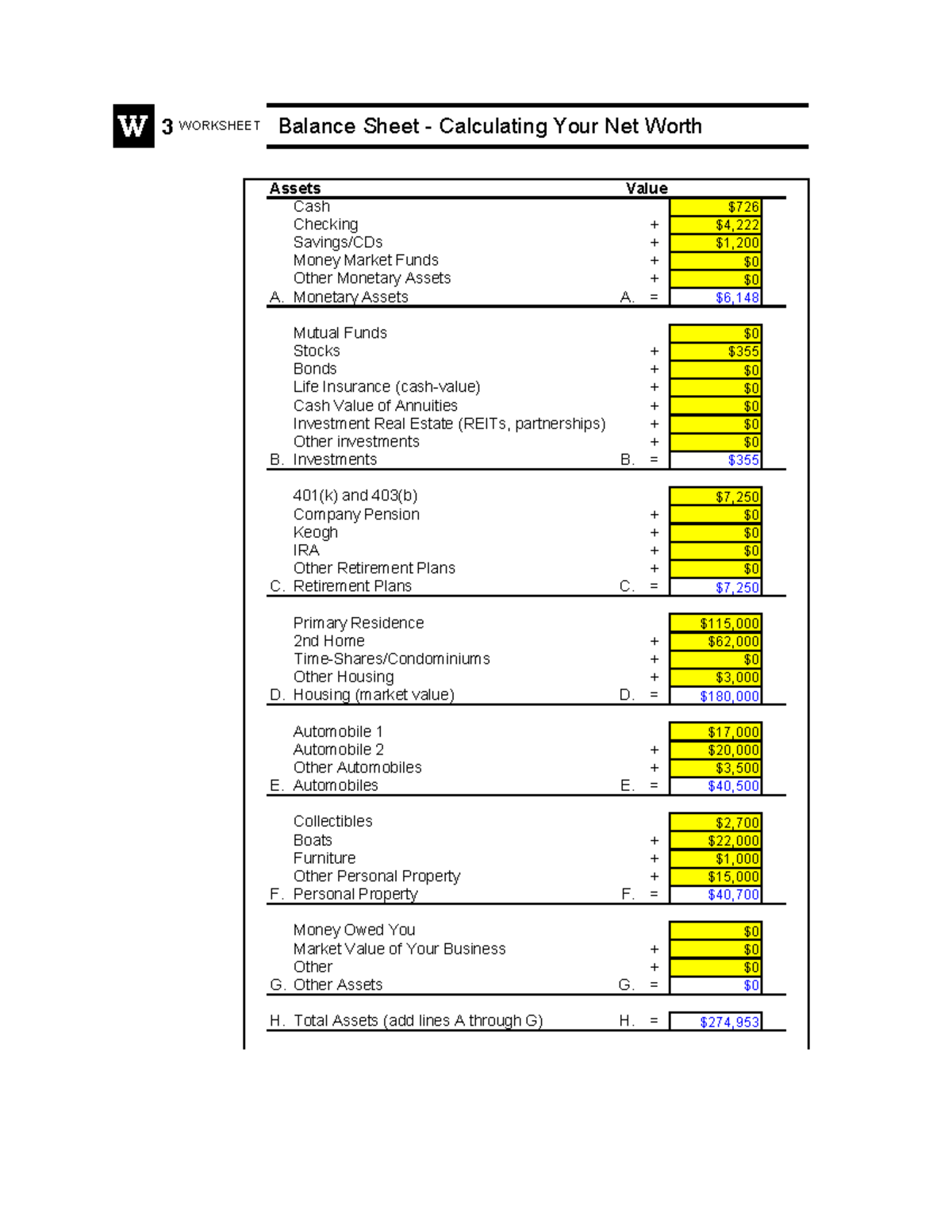
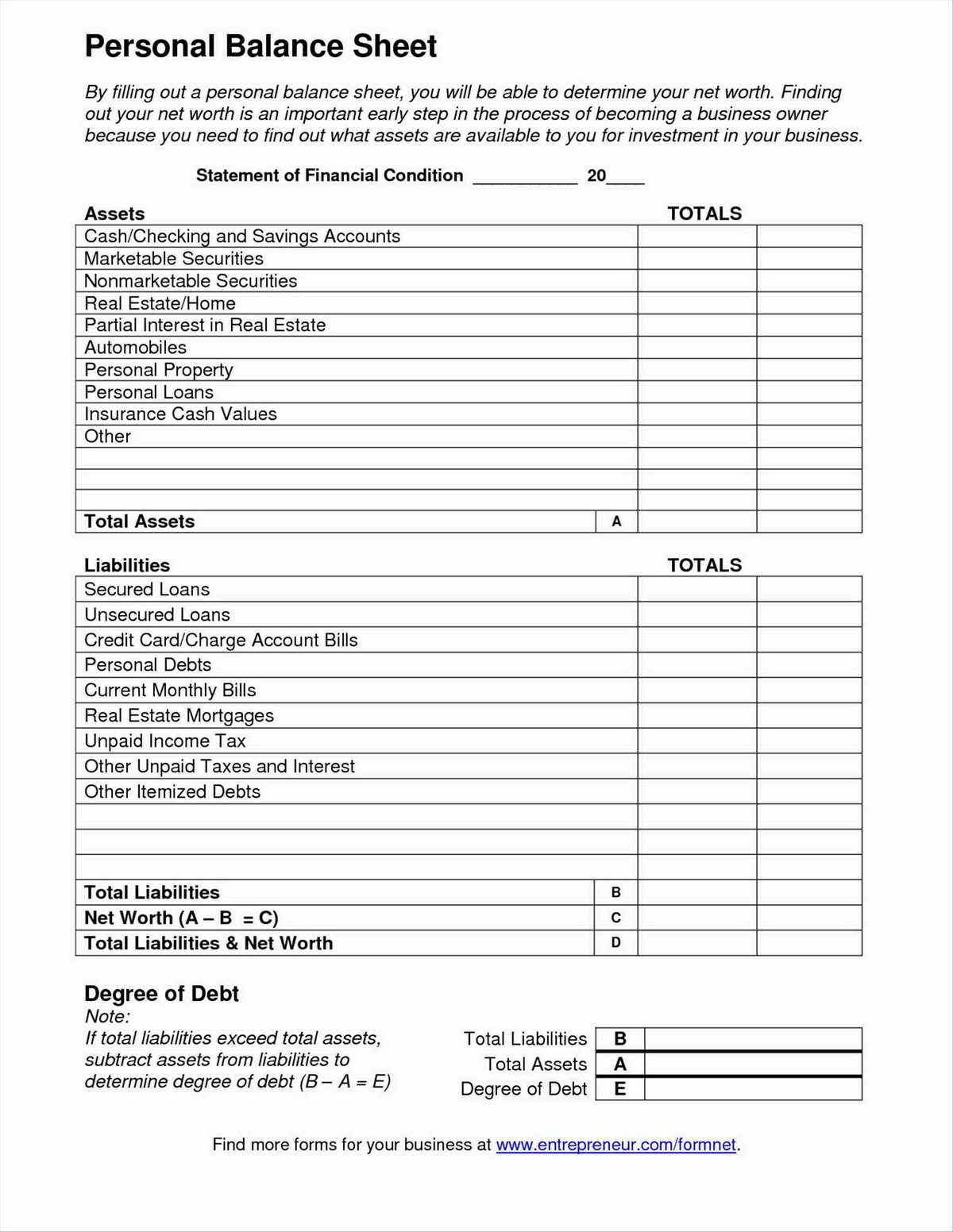
A worksheet listing your assets, liabilities, and net worth is called a personal balance sheet. It serves as a financial snapshot that captures your entire financial position at a specific point in time. By subtracting your total liabi...
A worksheet listing your assets, liabilities, and net worth is called a personal balance sheet. It serves as a financial snapshot that captures your entire financial position at a specific point in time. By subtracting your total liabilities from your total assets, you arrive at your net worth—the definitive measure of your individual or household wealth.
Contents
The personal balance sheet is one of the most critical documents in personal financial planning. While a budget tracks your "flow" (income and expenses) over a period, the balance sheet tracks your "stock" (what you own and owe). In 2026, with the proliferation of digital assets and automated financial tracking, maintaining an accurate personal balance sheet has become an essential practice for anyone seeking long-term financial stability or preparing for major life milestones like retirement or homeownership.
The Core Components of a Personal Balance Sheet
To construct an accurate personal balance sheet, you must understand the three fundamental pillars: assets, liabilities, and net worth. Each category requires precise classification to ensure the final calculation reflects your true economic standing.
Assets: What You Own
Assets are items of value that you own. They can be converted into cash or provide future economic benefit. In a personal context, assets are generally categorized by their liquidity—how quickly they can be turned into cash without a significant loss in value.
- Liquid Assets (Cash and Equivalents): These are the most accessible funds. They include cash on hand, checking accounts, savings accounts, and money market funds. These provide your "emergency fund" and are essential for short-term financial security.
- Investment Assets: These are assets held for long-term growth or income. In 2026, this category includes traditional stocks, bonds, and mutual funds, as well as retirement accounts like 401(k)s or IRAs. Additionally, digital assets such as cryptocurrency or tokenized real estate interests are increasingly common components of a modern investment portfolio.
- Real Estate: For many, the primary residence is their largest asset. This category also includes vacation homes, rental properties, or undeveloped land. Valuation should be based on current market value, not the original purchase price.
- Personal Possessions: This includes high-value items like vehicles, jewelry, art, and high-end electronics. While these are assets, they are often "depreciating assets," meaning they lose value over time.
Liabilities: What You Owe
Liabilities are financial obligations or debts owed to other entities. Just as assets are categorized by liquidity, liabilities are often categorized by their duration.
- Current Liabilities: These are short-term debts that are typically due within one year. Examples include credit card balances, utility bills, medical bills, and the portion of taxes due within the current year.
- Long-Term Liabilities: These are debts that will take more than a year to pay off. The most common examples are mortgages, student loans, auto loans, and personal term loans. When listing these on a balance sheet, you should record the remaining principal balance, not the total of all future payments (which would include unearned interest).
Net Worth: The Bottom Line
Net worth is the mathematical result of your assets minus your liabilities.
Equation: Total Assets - Total Liabilities = Net Worth
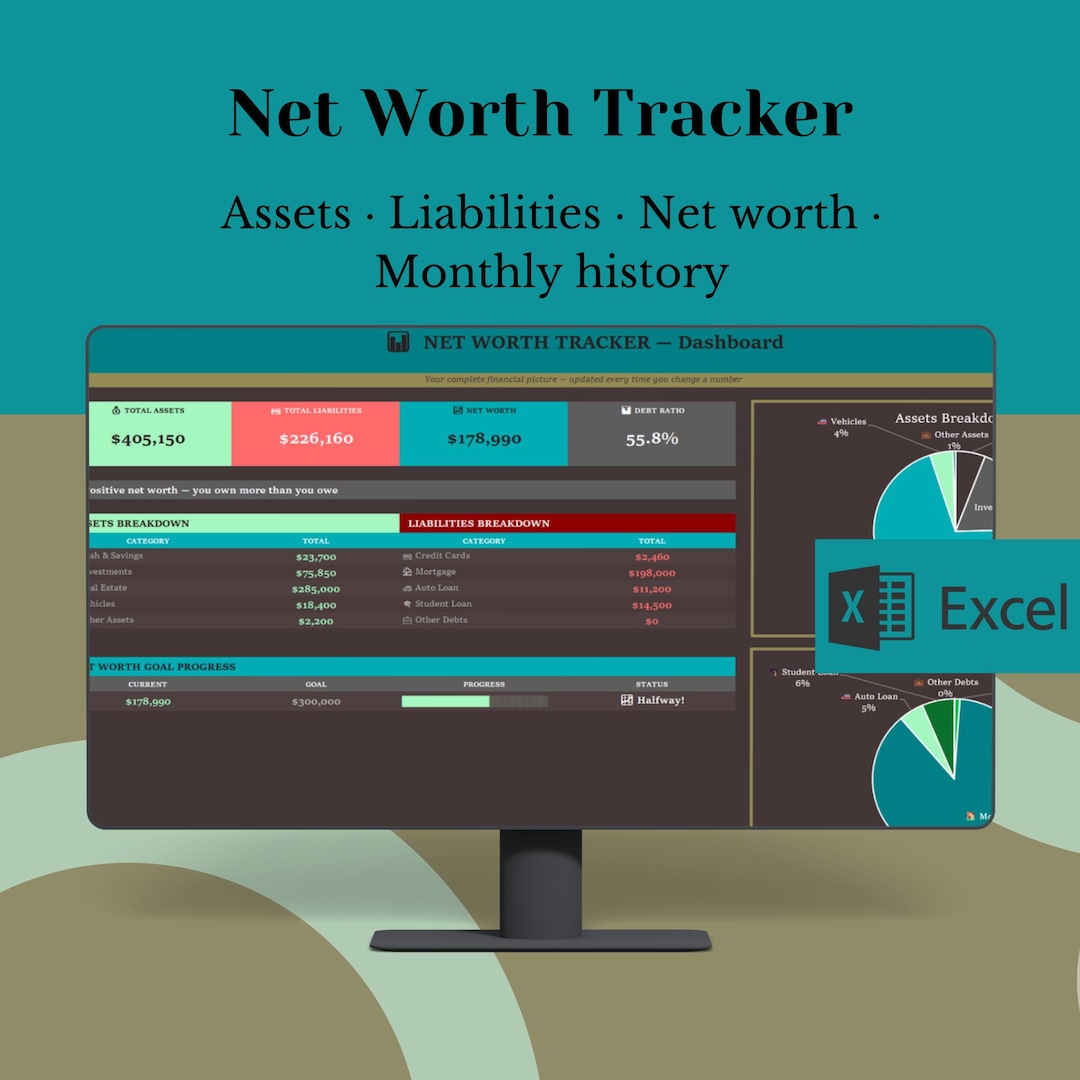
A positive net worth indicates that you have more value in ownership than you have in debt. A negative net worth, often seen among recent graduates with high student loan debt, means your obligations exceed your current resources. Tracking this number over time is the most effective way to measure financial progress.
Why a Personal Balance Sheet is Vital in 2026
In the current financial landscape of 2026, the complexity of personal finance has increased. Between traditional banking, decentralized finance (DeFi), and various "buy now, pay later" (BNPL) schemes, it is easy to lose track of one’s total financial health.
1. Goal Setting and Progress Tracking
Without a balance sheet, you are flying blind. If your goal is to reach a specific wealth milestone for retirement, the balance sheet tells you exactly how far you have to go. It allows you to see if your net worth is growing year-over-year, which is a better indicator of success than simply looking at your monthly salary.
2. Loan and Mortgage Readiness
When you apply for a significant loan, such as a mortgage for a primary residence or a business expansion loan, lenders often require a personal financial statement. Providing a well-organized balance sheet demonstrates financial literacy and gives the lender a clear picture of your collateral and debt-to-income ratio.
3. Identifying Inefficiencies
A balance sheet can reveal if you are "cash heavy" (holding too much in low-interest savings) or "debt heavy" (carrying high-interest consumer debt that erodes your net worth). By seeing all items on one page, you can make strategic decisions to shift assets into higher-growth areas or prioritize the liquidation of high-interest liabilities.
Step-by-Step Guide to Creating Your Personal Balance Sheet
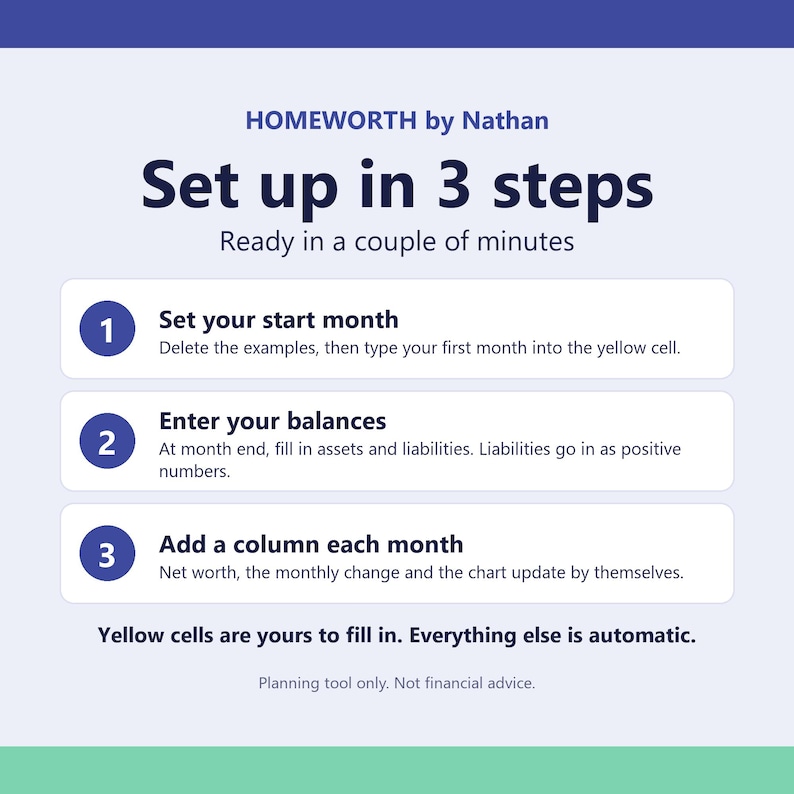
Creating a balance sheet does not require complex accounting software; a simple spreadsheet or even a physical worksheet is sufficient. However, the data must be accurate.
Step 1: List and Value Your Assets
Gather your most recent bank and brokerage statements.
- For Liquid Assets: Use the balance as of the "statement date."
- For Real Estate: Use a conservative estimate from a reputable valuation tool or a recent appraisal.
- For Personal Property: Only list items with significant resale value (e.g., a car worth $20,000, not a television worth $200).
Step 2: List Your Liabilities
Check your credit report and loan portals to get the exact payoff amounts for your debts.
- For Credit Cards: Use the current balance, not just the "minimum payment due."
- For Mortgages: Use the remaining principal balance found on your monthly statement.
Step 3: Perform the Calculation
Total your asset column and your liability column. Subtract the total liabilities from the total assets. This final figure is your net worth.
Step 4: Analyze and Update
Review the results. Are your assets diversified? Is your debt concentrated in high-interest areas? It is recommended to update this worksheet at least once a year, or ideally every quarter, to reflect changes in market values and debt reduction.
Asset vs. Liability Comparison Table
The following table summarizes common items found on a personal balance sheet to help you categorize your own finances accurately.
| Category | Item Type | Description | Valuation Method |
|---|---|---|---|
| Asset | Liquid Assets | Cash, checking, savings accounts. | Face value / Current balance. |
| Asset | Investment Assets | Stocks, Bonds, 401(k), IRA, Crypto. | Current market value. |
| Asset | Use Assets | Primary residence, vehicles, jewelry. | Estimated resale value. |
| Liability | Current Debt | Credit cards, unpaid bills, taxes. | Current payoff amount. |
| Liability | Long-term Debt | Mortgage, student loans, car loans. | Remaining principal balance. |
| Liability | Contingent Debt | Co-signed loans for others. | Total potential obligation. |
Common Mistakes When Calculating Net Worth
Even with a clear worksheet, several common errors can skew the results of a personal balance sheet, leading to a false sense of security or unnecessary panic.
Overvaluing Personal Property
Many people list their furniture, clothing, and electronics at the price they paid (purchase price). In reality, these items depreciate rapidly. For a balance sheet to be useful, these should be listed at their liquidation value—what you could realistically get for them in a quick sale. Many financial experts recommend excluding "lifestyle assets" like clothes and furniture entirely to keep the focus on wealth-generating assets.
Forgetting "Hidden" Liabilities
Subscription services, tax liabilities (such as capital gains taxes owed on stocks that have increased in value), and small "buy now, pay later" balances are often overlooked. While small individually, they can collectively impact your liquidity.
Confusing Income with Wealth
A high salary does not guarantee a high net worth. If an individual earns $300,000 a year but spends $310,000, they have a "negative cash flow" that will eventually lead to a declining or negative net worth. The balance sheet exposes the truth that the income statement might hide.
Strategic Financial Planning Using Your Balance Sheet
Once the worksheet is complete, use it as a diagnostic tool. In 2026, financial advisors emphasize the "Net Worth to Income" ratio. If your net worth is several times your annual income, you are likely on the path to financial independence.
If your liabilities are high relative to your assets, your immediate strategy should be "debt stacking" or "debt snowballing" to reduce the principal on your liabilities. If your assets are primarily in "use assets" (like your home) and not in "investment assets," you may be "house rich and cash poor," meaning you have high net worth but low flexibility for retirement.
Frequently Asked Questions
1. Is a personal balance sheet the same as a budget? No. A budget tracks your income and expenses over a period (usually a month). A personal balance sheet tracks what you own and owe at a specific point in time. Think of a budget as a video of your financial activity and a balance sheet as a still photograph of your financial position.
2. How often should I update my personal balance sheet? At a minimum, you should update it once a year, typically during tax season. However, for those actively paying down debt or investing heavily, a quarterly update (every three months) provides better feedback on your financial trajectory.
3. Should I include my salary on my balance sheet? No. Salary is income, which belongs on a Cash Flow Statement or a Budget. The balance sheet only includes tangible items you own (assets) and debts you owe (liabilities). However, the cash saved from your salary that sits in your bank account is an asset.
4. How do I value my home on a 2026 balance sheet? You should use a conservative market estimate. You can look at recent comparable sales in your neighborhood or use online valuation tools. To be safe, many financial planners suggest taking 90% of the estimated market value to account for the costs (commissions and fees) of potentially selling the property.
5. Why is my net worth negative? A negative net worth is common for young adults or students. It usually occurs when student loans or initial car loans exceed the value of small savings and entry-level assets. As long as you are using your income to pay down the principal of those debts and beginning to save, a negative net worth is a temporary stage.
Practical Recommendation: Start by creating a simple version of this worksheet today. Use a basic spreadsheet and focus on your three largest assets and three largest liabilities. This small step provides immediate clarity and serves as the foundation for all future financial decisions.
Image Gallery