Master the Compound Semi-Annually Formula: Calculations and Practical Applications
The compound semi-annually formula is A = P(1 + r/n)^(nt), where n equals 2. This mathematical expression calculates the future value of an investment or loan where interest is added to the principal balance twice per year. By compound...
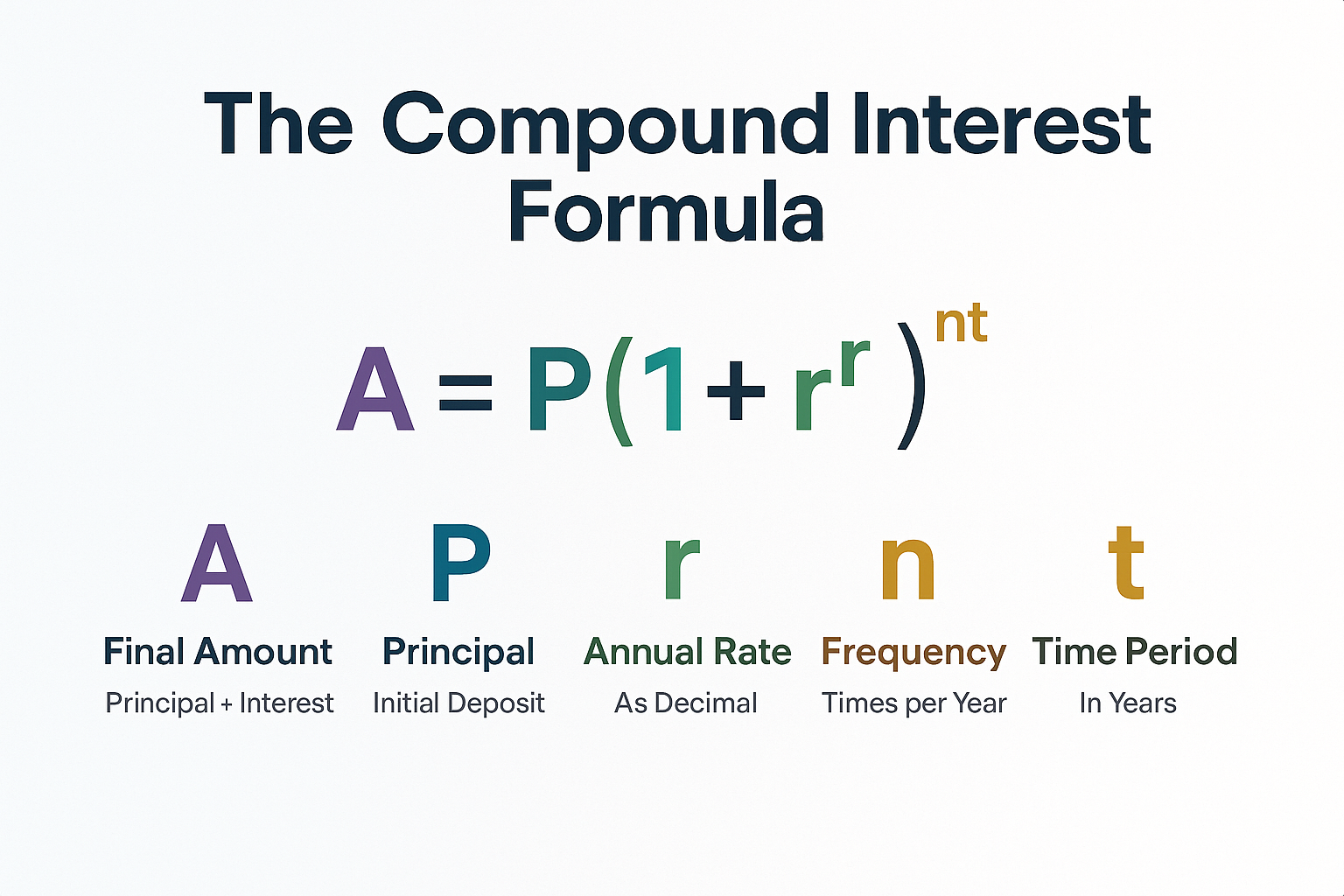
The compound semi-annually formula is A = P(1 + r/n)^(nt), where n equals 2. This mathematical expression calculates the future value of an investment or loan where interest is added to the principal balance twice per year. By compounding every six months, the interest earned in the first half of the year generates its own interest during the second half.
Contents
Understanding how interest compounds semi-annually is a fundamental skill for navigating the 2026 financial landscape. Whether you are evaluating a fixed-income bond, a high-yield savings account, or a corporate loan, the frequency of compounding significantly impacts the total accumulation of wealth or the total cost of debt. Unlike simple interest, which only calculates returns on the initial principal, semi-annual compounding creates an exponential growth curve by factoring in the "interest on interest" earned every six-month cycle.
Understanding the Fundamentals of Semi-Annual Compounding
Compounding is the process where the value of an investment increases because the earnings on an investment, both the principal and the accumulated interest, earn interest as time passes. When we specify "semi-annually," we are defining the frequency of this process. In a semi-annual arrangement, the year is divided into two distinct periods (typically January through June and July through December).
In the current 2026 economic environment, semi-annual compounding remains the standard for many significant financial instruments. Most notably, United States Treasury bonds and many corporate bonds utilize semi-annual coupon payments. For investors, this means that every six months, the bond issuer calculates the interest due and pays it out or reinvests it.
The "magic" of this frequency lies in the timing. If you have an annual interest rate of 6%, semi-annual compounding does not simply give you 6% at the end of the year. Instead, it gives you 3% after six months, and then applies another 3% to your new, higher balance for the remaining six months. This results in an effective yield that is slightly higher than the stated nominal rate.
Breaking Down the Mathematical Components
To use the compound semi-annually formula effectively, one must understand each variable within the equation: A = P(1 + r/n)^(nt). Using the wrong format for these variables is the most common cause of calculation errors.
P – The Principal Amount
The principal is the starting point of your calculation. It represents the initial sum of money invested or the initial amount of a loan before any interest has been applied. In 2026, with the diversification of digital assets and traditional banking, the principal could be anything from a $1,000 deposit in a certificates of deposit (CD) to a multi-million dollar corporate bond purchase.
r – The Annual Interest Rate (Decimal)
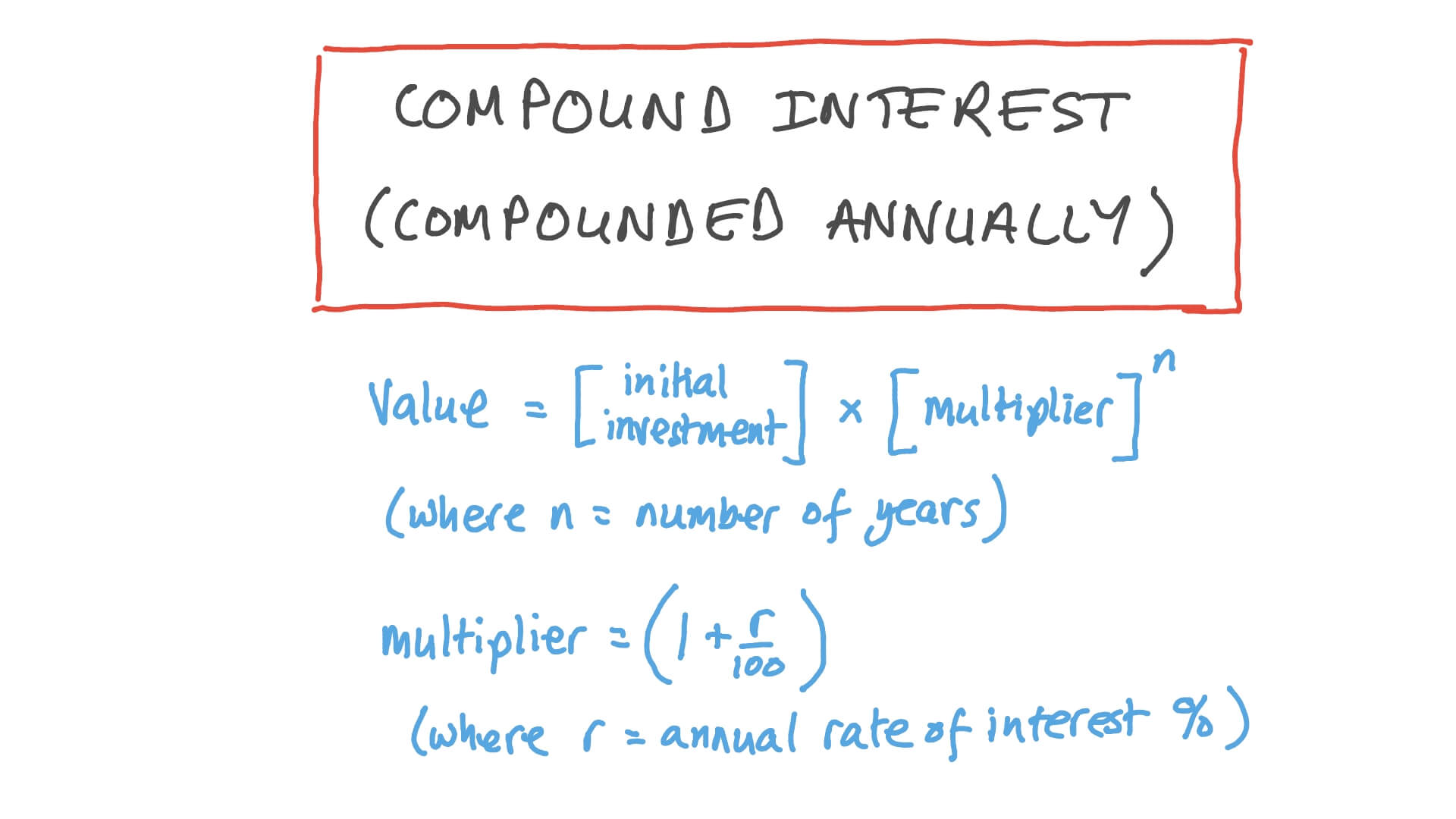
The rate is almost always quoted as an annual percentage (APR). To use it in the formula, you must convert the percentage into a decimal. For example, a 5.5% interest rate must be expressed as 0.055. Using "5.5" instead of "0.055" will result in a massive mathematical error.
n – The Number of Compounding Periods Per Year
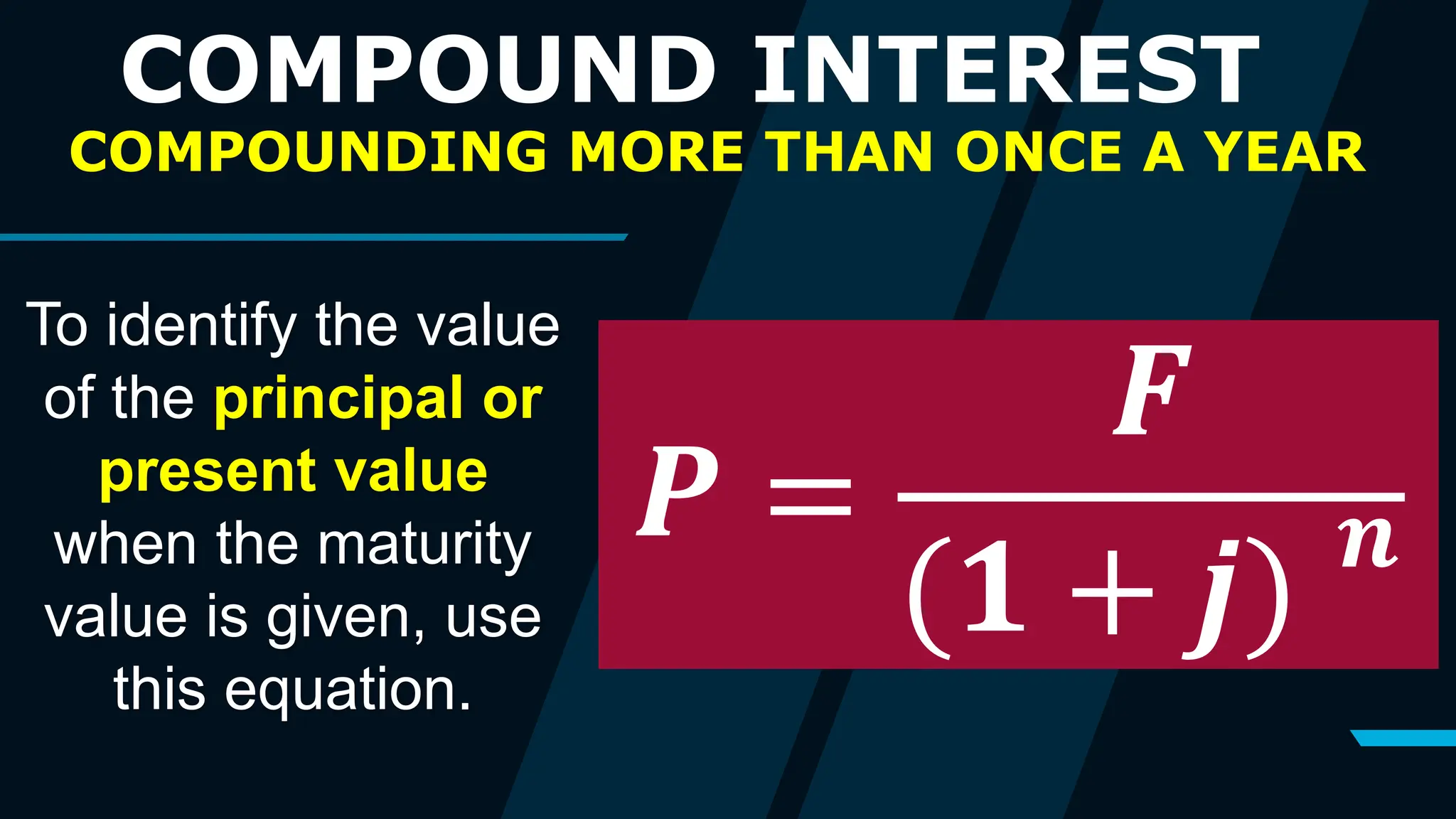
For semi-annual compounding, n is always 2. This is the defining characteristic of this specific formula. If the compounding were quarterly, n would be 4; if monthly, n would be 12. In the semi-annual context, we divide the annual rate (r) by 2 to find the periodic rate, and we multiply the years (t) by 2 to find the total number of compounding events.
t – The Time in Years
This variable represents the duration the money is left to compound. It must be expressed in years. If you are calculating for a period of 18 months, you must use 1.5 years.
A – The Future Value
This is the final result of the formula. It represents the total amount of money you will have after the interest has been compounded over the specified time. To find the total interest earned, you simply subtract the Principal (P) from the Future Value (A).
The Step-by-Step Mathematical Process
To demonstrate how the formula functions in a real-world scenario, let’s look at a practical example involving a five-year investment.
Scenario: An investor places $20,000 into a high-yield fixed-income security with a 6% annual interest rate, compounded semi-annually, for a duration of 5 years.
Identify the variables:
- P = $20,000
- r = 0.06 (6% as a decimal)
- n = 2 (semi-annual)
- t = 5 (years)
Set up the formula:
- A = 20,000 * (1 + 0.06 / 2)^(2 * 5)
Calculate the periodic interest rate:
- 0.06 / 2 = 0.03 (This is the 3% interest earned every six months)
Calculate the total number of periods:
- 2 * 5 = 10 (The interest will be calculated 10 times over the 5-year span)
Solve the inner parentheses:
- (1 + 0.03) = 1.03
Apply the exponent:
- 1.03^10 ≈ 1.343916
Multiply by the principal:
- 20,000 * 1.343916 = $26,878.32
The future value of the investment is $26,878.32. The total interest earned over five years is $6,878.32. If this had been simple interest, the investor would have only earned $6,000 ($20,000 * 0.06 * 5). The extra $878.32 is the direct result of semi-annual compounding.
Comparing Compounding Frequencies
The frequency of compounding has a measurable impact on the final return. While the difference between annual and semi-annual compounding may seem small on a low principal, it scales significantly with larger sums and longer time horizons.
The following table compares a $10,000 investment at a 7% annual interest rate over 10 years across different compounding frequencies:
| Compounding Frequency | Periods per Year (n) | Calculation Formula (Simplified) | Future Value (A) | Total Interest Earned |
|---|---|---|---|---|
| Annual | 1 | 10,000 * (1.07)^10 | $19,671.51 | $9,671.51 |
| Semi-Annual | 2 | 10,000 * (1.035)^20 | $19,897.89 | $9,897.89 |
| Quarterly | 4 | 10,000 * (1.0175)^40 | $20,015.97 | $10,015.97 |
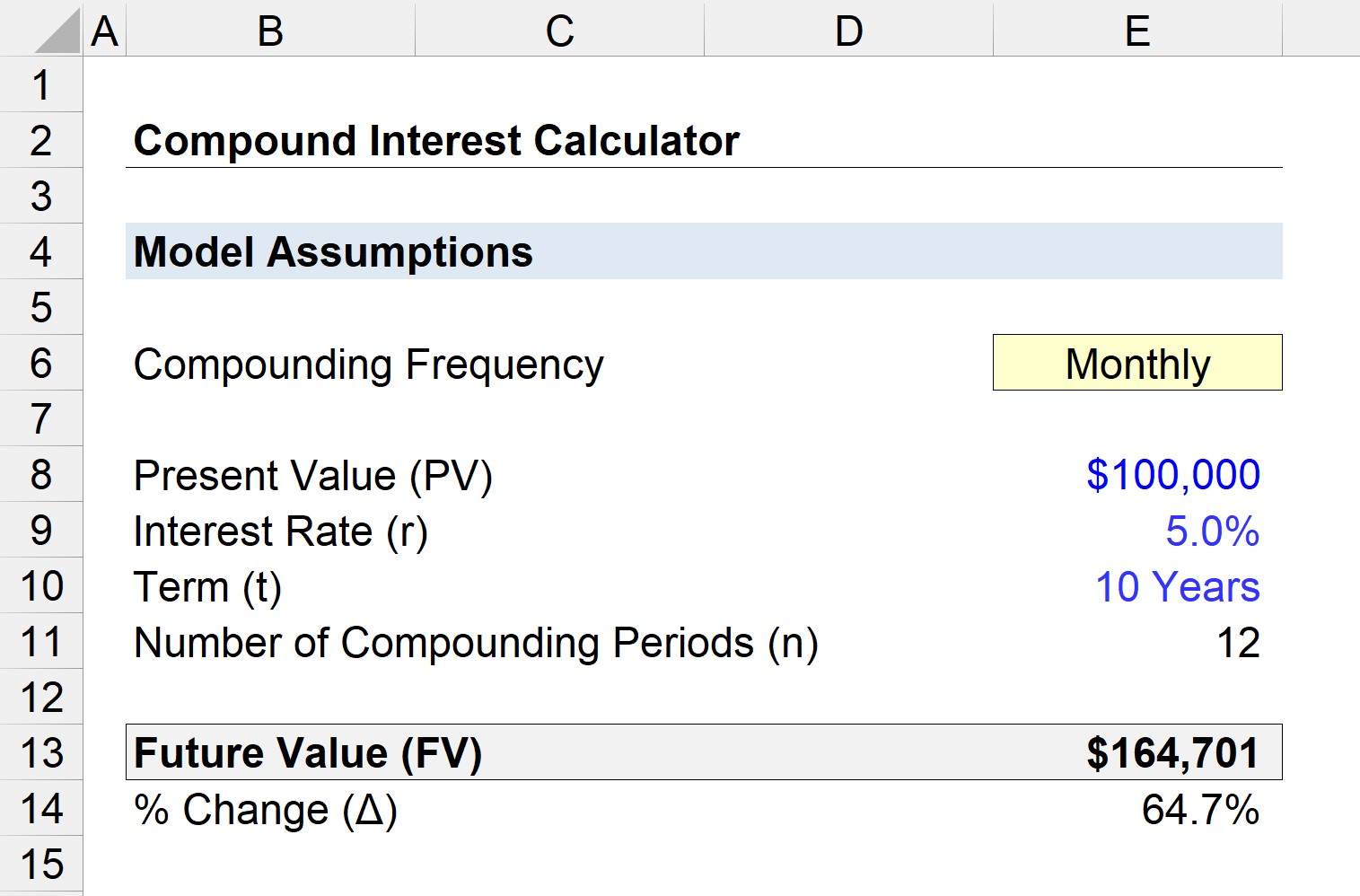
| Monthly | 12 | 10,000 * (1.00583)^120 | $20,096.61 | $10,096.61 |
| Daily | 365 | 10,000 * (1.00019)^3650 | $20,136.18 | $10,136.18 |
As shown, moving from annual to semi-annual compounding increases the return by over $226. While the jumps become smaller as frequency increases (diminishing returns), the semi-annual "step up" is one of the most significant shifts in the compounding ladder.
Real-World Applications in 2026 Financial Markets
In 2026, the compound semi-annually formula remains integral to both personal finance and institutional operations. Its use is standardized across several sectors.
Fixed-Income Securities and Bonds
Most government and corporate bonds are "semi-annual pay" instruments. When you see a bond yield quoted, it is typically assuming a semi-annual calculation. If you are a retiree looking for steady cash flow, understanding that your "6% bond" actually pays you 3% every six months allows for better budgeting and reinvestment planning.
Certificates of Deposit (CDs)
While many modern banks offer monthly compounding, many traditional CD products still use semi-annual compounding. When comparing CD rates in 2026, savvy consumers look beyond the nominal APR and calculate the Annual Percentage Yield (APY) using the semi-annual formula to ensure they are getting the best deal.
Corporate Loans and Commercial Paper
In the business world, many long-term loans or lines of credit calculate interest semi-annually. For a business owner, this means the interest expense grows slightly faster than it would under an annual calculation. When forecasting 2026-2027 cash flows, businesses use this formula to predict their debt service obligations accurately.
Advanced Considerations: APR vs. APY
A critical distinction for anyone using the compound semi-annually formula is the difference between the Annual Percentage Rate (APR) and the Annual Percentage Yield (APY).
- APR: This is the "stated" or "nominal" rate. It does not account for compounding within the year.
- APY: This is the "effective" rate. It accounts for the effects of compounding.
The formula to find the APY for a semi-annually compounded account is: APY = (1 + r/2)^2 - 1
If a bank offers an APR of 5% compounded semi-annually, the APY is: (1 + 0.05/2)^2 - 1 = (1.025)^2 - 1 = 1.050625 - 1 = 0.050625 or 5.06%.
In marketing materials, lenders are often required to show the APR (because it looks lower for loans), while banks show the APY (because it looks higher for savings). Knowing how to convert between the two using the semi-annual constant (n=2) protects you from misleading financial marketing.
Common Mistakes and Troubleshooting
Even experienced professionals can make errors when applying the compound semi-annually formula. Avoiding these pitfalls is essential for financial accuracy.
- Failing to Adjust the Rate: The most frequent error is applying the full annual interest rate to the semi-annual period. You must divide the rate by 2. If you apply 6% every six months, you are actually calculating a 12.36% annual yield.
- Forgetting to Double the Time Periods: Just as the rate is halved, the number of periods must be doubled. A 10-year investment has 20 semi-annual compounding periods.
- Rounding Too Early: When calculating the periodic rate or the exponent, rounding to two decimal places mid-calculation can lead to significant discrepancies in the final total, especially with large principal amounts. It is best to keep at least six decimal places until the final step.
- Mixing Units: Ensure that "t" is always in years. If a loan is for 30 months, and you plug "30" into the formula as "t," the formula will calculate for 30 years. You must use 2.5 years.
Using Excel or Google Sheets for Semi-Annual Compounding
In a professional setting, manual calculations are often replaced by spreadsheet functions. To calculate the future value of an investment with semi-annual compounding in Excel, you use the FV function.
The syntax is: =FV(rate, nper, pmt, [pv], [type])
For a $10,000 investment at 6% for 5 years compounded semi-annually:
- rate: 0.06/2
- nper: 5*2
- pmt: 0 (assuming no additional monthly deposits)
- pv: -10000 (expressed as a negative because it is an outflow)
The formula would look like this: =FV(0.06/2, 5*2, 0, -10000). This will return the same $13,439.16 that the manual formula provides.
FAQ
How does semi-annual compounding differ from quarterly compounding? Semi-annual compounding happens twice a year, whereas quarterly compounding happens four times a year. Because interest is added more frequently in quarterly compounding, it results in a slightly higher future value than semi-annual compounding for the same nominal interest rate.
Why do bonds use semi-annual compounding instead of annual? Historical convention in the United States bond market established semi-annual payments as the standard. This frequency provides a balance for issuers (who don't want the administrative burden of monthly payments) and investors (who prefer receiving income more frequently than once a year).
Can I use the compound semi-annually formula for debt repayment? Yes. If you have a loan where interest is charged semi-annually, you can use the formula to see how much the balance will grow if no payments are made. However, most consumer loans like credit cards or mortgages compound monthly or even daily, so ensure you check your loan terms before choosing your "n" value.
What is the "Rule of 72" and does it work with semi-annual compounding? The Rule of 72 is a quick mental shortcut to estimate how long it takes to double your money (72 / interest rate). It is a rough estimate and works reasonably well for annual and semi-annual compounding. However, the semi-annual formula provides the exact mathematical figure, whereas the Rule of 72 is purely for approximation.
Does inflation affect the semi-annual compounding formula? The formula calculates the nominal future value. To find the real future value (purchasing power), you would need to subtract the inflation rate from your interest rate (r) or discount the final result (A) by the projected inflation over time (t).
Final Recommendation: When evaluating any investment or loan in 2026, always verify the compounding frequency in the fine print. If the terms specify semi-annual compounding, use the formula A = P(1 + r/2)^(2t) to determine your true projected outcome. For the most accurate comparisons between different products, convert all quoted APRs into APYs to see the real-world impact of the compounding frequency on your capital.
Image Gallery