The State of Cable Television Decline in 2026: Causes, Trends, and Alternatives
Cable television decline represents a structural shift in media consumption where traditional linear programming is replaced by streaming and on-demand platforms. In 2026, the primary drivers are the high cost of traditional bundles, t...
Cable television decline represents a structural shift in media consumption where traditional linear programming is replaced by streaming and on-demand platforms. In 2026, the primary drivers are the high cost of traditional bundles, the migration of premium live sports to digital apps, and a preference for personalized viewing across multiple devices.
Contents
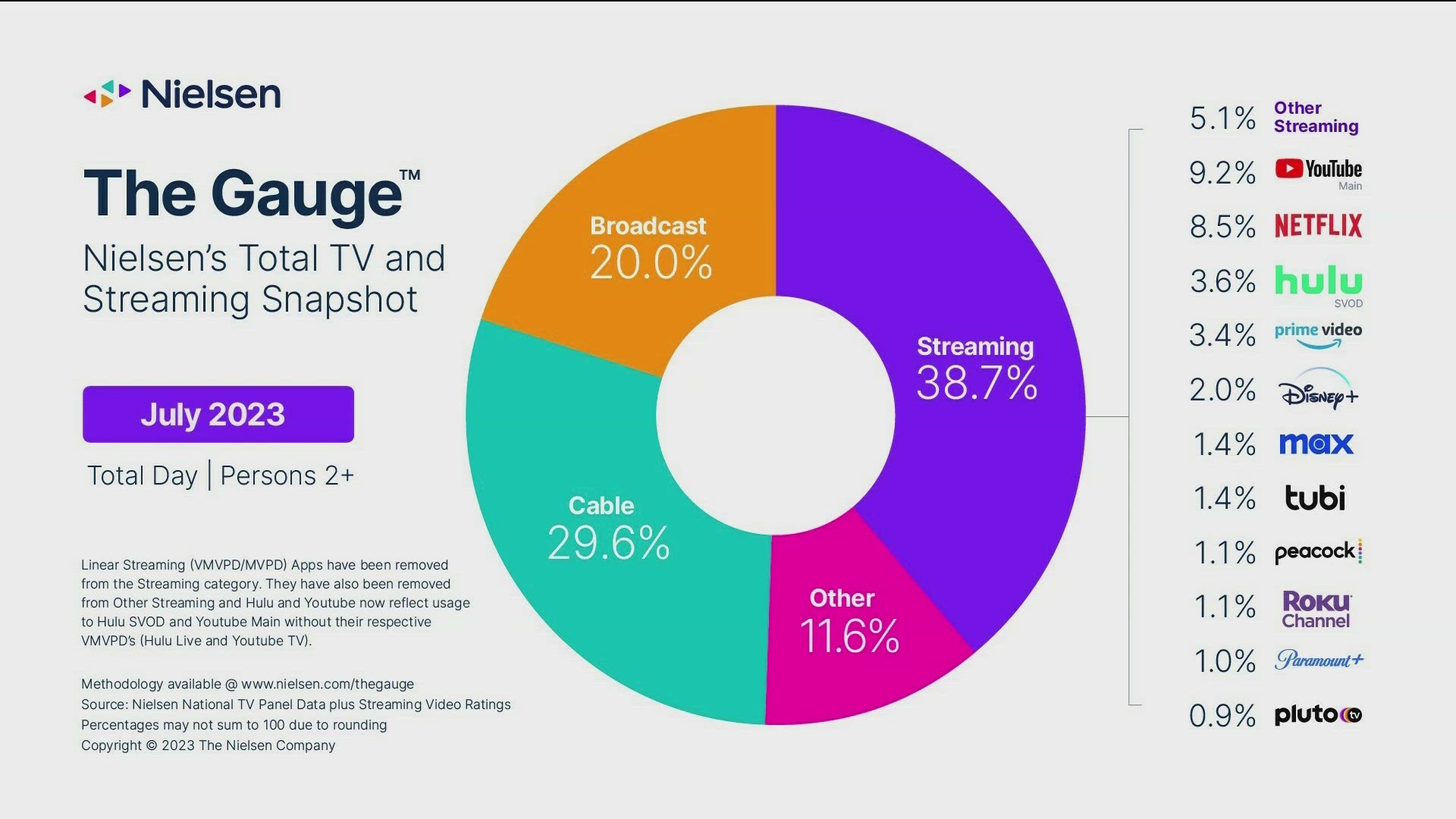
The decline of cable television, often referred to as "cord-cutting," has accelerated from a niche trend into the dominant market reality. As of 2026, the telecommunications landscape has been fundamentally reordered. Legacy providers that once relied on lucrative video subscriptions have largely pivoted to becoming high-speed internet service providers (ISPs), while content creators have moved their primary "storefronts" to direct-to-consumer (DTC) streaming applications. To understand the current state of this transition, one must examine the economic, technological, and behavioral shifts that led to the erosion of the traditional cable bundle.
The Economic Death Spiral of Traditional Pay-TV
The decline of cable is not merely a story of consumer preference; it is an economic phenomenon known as the "cable death spiral." For decades, the cable business model relied on a "forced bundle" where consumers paid for hundreds of channels they never watched to access the few they did. This model allowed cable operators to collect high monthly fees while passing a portion of that revenue to networks in the form of carriage fees.
However, as the first wave of cord-cutters left the ecosystem in the mid-2010s, cable companies faced a dilemma. To maintain profit margins with a shrinking subscriber base, they were forced to increase prices for the remaining customers. These price hikes, often manifesting as "Broadcast TV Fees" and "Regional Sports Fees," further incentivized more users to cancel their subscriptions. By 2026, the average monthly cable bill has surpassed $150 in many markets, making it a prime target for household budget cuts.
Furthermore, the rising cost of content—particularly live sports—has made it difficult for cable providers to remain competitive. Networks like ESPN and local regional sports networks (RSNs) demand high per-subscriber fees regardless of whether the customer watches sports. As these fees increased, the value proposition of the cable bundle collapsed for non-sports fans, leading to a mass exodus of light TV viewers.
The Migration of Live Sports: The Final Anchor Loosens
Historically, live sports were considered the "glue" holding the cable bundle together. Because sports are best consumed live, they remained resistant to the asynchronous viewing habits that decimated the ratings of scripted dramas and sitcoms. However, the period between 2023 and 2026 saw a decisive shift in how sports rights are distributed.
Major leagues, including the NFL, NBA, and MLB, began carving out exclusive windows for streaming platforms. The 2023 deal that brought NFL Sunday Ticket to YouTube TV was a watershed moment, but it was followed by even more aggressive moves. By 2026, the "Venu Sports" joint venture—a collaboration between Disney, Fox, and Warner Bros. Discovery—has successfully consolidated a significant portion of sports broadcasting into a standalone digital package.
When fans can access their favorite teams via Amazon Prime, Peacock, or a specialized sports streaming service, the necessity of a $100+ cable subscription disappears. This migration has particularly impacted Regional Sports Networks. Many RSNs faced bankruptcy or restructuring as their traditional revenue from cable operators dried up, forcing them to launch direct-to-consumer apps that bypass the cable box entirely.
Comparing Viewing Models in 2026
The following table compares the primary methods of video consumption currently available, highlighting why traditional cable has lost its competitive edge.
| Feature | Traditional Cable | vMVPD (e.g., YouTube TV) | SVOD (e.g., Netflix, Max) | FAST (e.g., Pluto TV, Tubi) |
|---|---|---|---|---|
| Avg. Cost (2026) | $125 – $210 / month | $75 – $95 / month | $10 – $25 / month | $0 (Ad-supported) |
| Contract Requirement | Often 12-24 months | None (Month-to-month) | None (Month-to-month) | None |
| Hardware | Proprietary Set-top Box | Existing Smart TV/Phone | Existing Smart TV/Phone | Existing Smart TV/Phone |
| Live Sports Access | Comprehensive (Legacy) | High (Varies by tier) | Fragmented/Exclusive | Limited/Historical |
| Primary Advantage | Reliability/Local News | Flexibility/Cloud DVR | Original Content | Cost (Free) |
The Rise of vMVPDs and the "Great Re-bundling"
As traditional cable declined, a new category emerged: the Virtual Multichannel Video Programming Distributor (vMVPD). Services like YouTube TV, Hulu + Live TV, and FuboTV provide a cable-like experience—complete with a channel grid and live local news—but delivered over the internet without long-term contracts or proprietary hardware.
In 2026, the line between these services and traditional cable has blurred. While vMVPDs initially offered significantly lower prices, they have not been immune to the same carriage fee pressures that plagued cable. However, the lack of "hidden fees" and the ability to cancel with a single click have made them the preferred choice for those who still want a linear television experience.
Interestingly, 2026 has also seen the "Great Re-bundling." Consumers who initially saved money by switching to individual streaming services found themselves overwhelmed by "subscription fatigue" and rising costs across multiple apps. In response, ISPs and platforms like Apple and Amazon now offer aggregated bundles, allowing users to manage Disney+, Max, and Paramount+ through a single interface and a single bill, effectively recreating the convenience of the cable bundle without the antiquated infrastructure.
Technological Barriers and Rural Connectivity
One of the primary reasons cable television has not disappeared entirely is the "Digital Divide." In many rural areas of the United States, high-speed broadband—required for high-quality 4K streaming—is either unavailable or prohibitively expensive. In these regions, satellite providers like DirecTV and Dish Network, along with legacy cable, remain the only reliable ways to access national news and entertainment.
However, the expansion of high-speed fiber optics and 5G Home Internet has significantly narrowed this gap. As federal and state initiatives continue to subsidize broadband expansion, the "last mile" of cable infrastructure is being replaced by fiber. For most cable companies, the television signal is now a secondary data stream on a high-capacity fiber line, rather than the primary reason for the wire's existence.
The Impact on Content Quality and Discovery
The decline of cable has profoundly changed how television is produced. In the cable era, "filler content" was necessary to populate a 24-hour programming schedule. This led to the rise of low-budget reality TV and procedural dramas. In the streaming-dominant world of 2026, the focus has shifted toward "appointment viewing" and massive "tentpole" series that can drive new subscriptions.
While this has led to a "Golden Age" of high-budget production, it has also created a discovery problem. On cable, "channel surfing" allowed viewers to stumble upon new content. In the algorithmic world of streaming, viewers are often siloed into recommendations based on past behavior. To combat this, the industry has seen a resurgence of FAST channels (Free Ad-supported Streaming TV). These platforms, such as Tubi and Samsung TV Plus, replicate the "lean-back" experience of surfing through linear channels, providing a free, lower-stakes alternative to the high-priced cable experience.
Frequently Asked Questions
Is cable TV going away completely by the end of 2026?
No, cable TV is not expected to disappear entirely in 2026, but its role has changed. It is becoming a niche product for specific demographics, such as those in rural areas with poor internet or older consumers who prefer the traditional interface. Most major "cable" companies have already rebranded themselves as connectivity providers, focusing on broadband and mobile services.
Why does my cable bill keep going up despite fewer people watching?
This is due to the rising costs of "carriage fees." Networks charge cable providers a fee for every subscriber, whether that subscriber watches the channel or not. As the total number of subscribers drops, the networks increase the per-person fee to maintain their revenue, and the cable companies pass those costs directly to you.
Can I get all my local channels without a cable subscription?
Yes. In 2026, most local channels (ABC, CBS, NBC, Fox) are available through an Over-the-Air (OTA) antenna for free. Additionally, vMVPD services like YouTube TV and Hulu + Live TV include local affiliates in most zip codes, and many networks now stream their local news live on their own apps or FAST platforms.
Is streaming actually cheaper than cable in 2026?
It depends on your viewing habits. If you only subscribe to one or two services like Netflix or Disney+, it is significantly cheaper. However, if you try to replicate the full cable experience by subscribing to five or six different apps plus a live sports package, the total cost may approach or exceed a traditional cable bill. The primary benefit of streaming is the ability to pay only for what you actually watch.
What is the best alternative to cable for a senior citizen?
For those who prefer a traditional remote and a channel guide, a vMVPD like YouTube TV or a simple OTA antenna paired with a DVR is often the best transition. Many modern smart TVs also feature "Live TV" buttons that aggregate free streaming channels into a familiar grid format, requiring no additional technical knowledge.
Practical Recommendation: Evaluating Your 2026 Media Budget
If you are still paying for a traditional cable bundle in 2026, the most effective next step is to perform a "content audit." Identify the five channels you watch most frequently. In the current market, it is highly likely that those five channels are available via a significantly cheaper vMVPD or through individual streaming apps.
Before canceling, contact your current provider to see if they offer an "Internet-only" plan. Most legacy cable companies now prioritize broadband retention and may offer a competitive rate to keep you as a data customer even if you drop the video service. Transitioning to a combination of a high-speed fiber plan and a few select streaming services typically results in a 30% to 50% reduction in monthly media expenses without a significant loss in content access.
Image Gallery