Understanding the Roots of Entrepreneur Failure
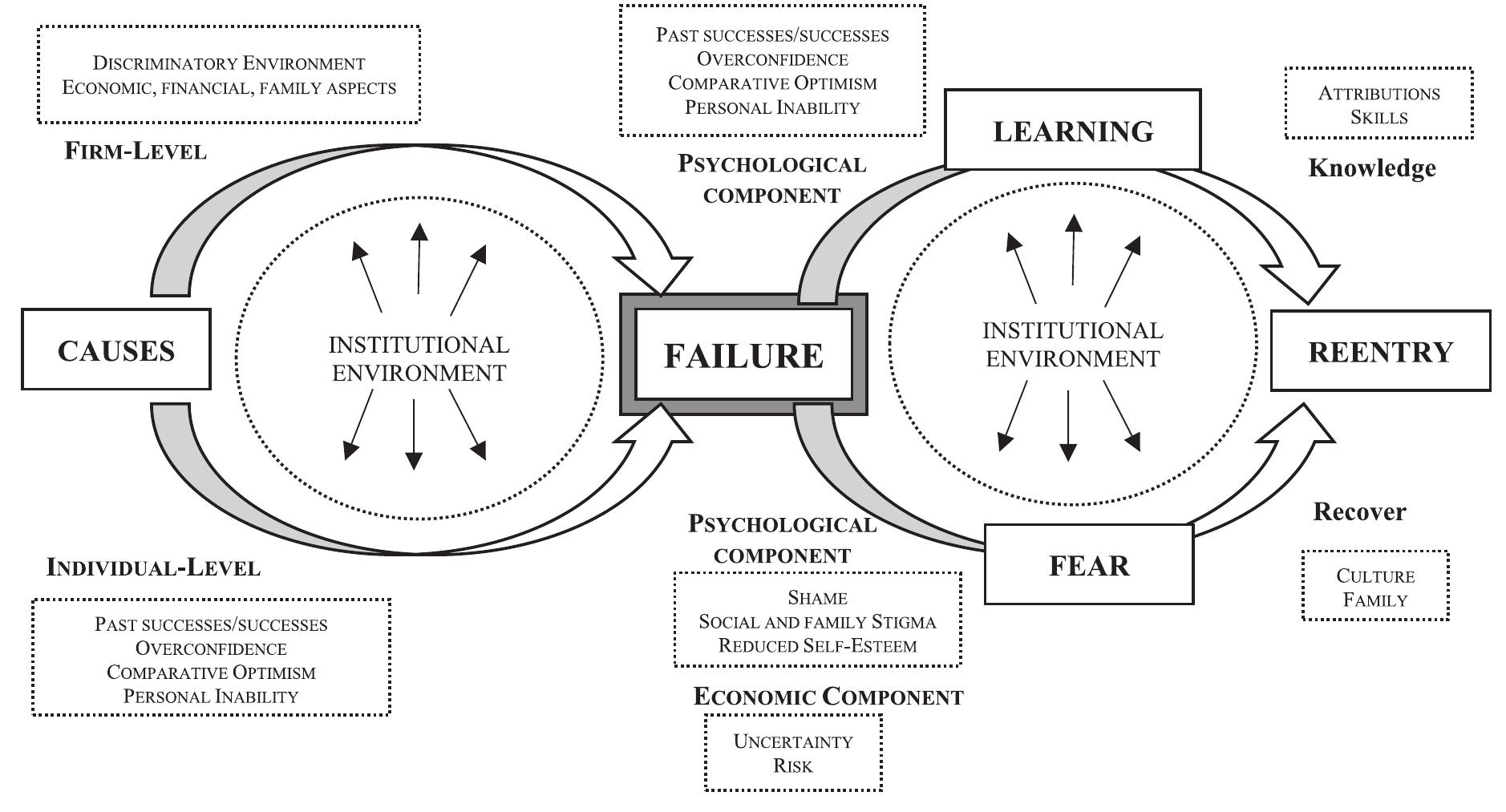
Entrepreneur failure typically stems from a misalignment between product development and actual market demand, compounded by insufficient capital reserves and ineffective leadership structures. While external economic shifts play a rol...
Entrepreneur failure typically stems from a misalignment between product development and actual market demand, compounded by insufficient capital reserves and ineffective leadership structures. While external economic shifts play a role, the primary roots involve internal strategic errors, such as premature scaling, poor financial oversight, and a failure to achieve sustainable product-market fit.
Contents
The Statistical Landscape of Business Attrition in 2026
To understand the roots of entrepreneur failure, one must first look at the persistent data regarding business longevity. As of 2026, data from the Bureau of Labor Statistics (BLS) and the Small Business Administration (SBA) continues to show a consistent pattern of attrition. Approximately 20% of new businesses fail within their first year, and nearly 50% cease operations by the end of their fifth year.
These figures have remained remarkably stable over decades, despite advancements in technology, access to global markets, and the proliferation of AI-driven operational tools. This stability suggests that the core causes of failure are not merely technological or environmental but are deeply embedded in the fundamental mechanics of business strategy and human psychology. In the current economic climate of 2026, where capital is more expensive than it was in the previous decade, the margin for error regarding cash flow and debt management has narrowed significantly.
Root Cause 1: Misjudging Market Demand
The most frequent cause of failure, often cited in post-mortem analyses of startups, is the lack of a genuine market need for the product or service being offered. Many entrepreneurs succumb to the "Solution Looking for a Problem" trap. This occurs when a founder is so enamored with their specific innovation or idea that they fail to validate whether a significant number of customers are actually willing to pay to solve the problem that the innovation addresses.
According to historical research by CB Insights, which remains a benchmark for analyzing startup failure, nearly 42% of failed ventures identified "no market need" as the primary reason for their collapse. In 2026, this often manifests as over-engineered software or niche services that solve "inconveniences" rather than "critical pain points." Without rigorous market validation—which involves deep customer interviews, MVP (Minimum Viable Product) testing, and iterative feedback—entrepreneurs often build products in a vacuum, only to find an empty marketplace upon launch.
Root Cause 2: Financial Depletion and Cash Flow Mismanagement
While a lack of market need is a strategic root, running out of cash is the tactical event that ultimately shutters a business. Financial failure is rarely about a single bad day; it is the cumulative result of poor burn rate management and inadequate capitalization.
In the 2026 financial environment, the "growth at all costs" mentality has largely been replaced by a focus on "unit economics" and "path to profitability." However, many entrepreneurs still struggle with:
- Under-capitalization: Starting with too little money to reach the next significant milestone or "value inflection point."
- Fixed Cost Bloat: Committing to high overheads, such as expensive office leases or excessive full-time payroll, before the revenue model is proven.
- Inaccurate Forecasting: Overestimating how quickly customers will adopt a product while underestimating the cost of customer acquisition (CAC).
When the Customer Acquisition Cost (CAC) exceeds the Lifetime Value (LTV) of that customer, a business is essentially losing money on every sale. If an entrepreneur cannot bridge this gap through operational efficiency or price adjustments, failure becomes a mathematical certainty once initial investment rounds are exhausted.
Root Cause 3: Structural Weaknesses in Leadership and Team Dynamics
A business is only as resilient as the team behind it. A significant root of failure lies in the "Founder Gap"—the disconnect between the skills a founder possesses and the skills the business actually requires to scale.
Many entrepreneurs are excellent at the "0 to 1" phase—the creative, chaotic process of invention. However, they may lack the managerial discipline required for the "1 to 10" phase. Common leadership-related failure points include:
- Lack of Diversity in Skill Sets: A founding team composed entirely of engineers may struggle with sales and marketing, while a team of pure marketers may fail to build a robust technical product.
- Micromanagement and Burnout: Founders who refuse to delegate create operational bottlenecks, leading to team frustration and eventual talent flight.
- Founder Conflict: Disagreements over equity, vision, or work ethic among co-founders are a leading cause of mid-stage collapse. Without clear operating agreements and conflict-resolution frameworks, internal friction can paralyze decision-making.
Root Cause 4: The Pitfalls of Premature Scaling
Scaling a business before the fundamental model is verified is akin to adding fuel to a structural fire. Premature scaling occurs when an entrepreneur spends significant capital on marketing, hiring, or geographic expansion before they have achieved a repeatable and profitable sales process.
In the rush to capture market share, businesses often hire ahead of demand. If the expected demand fails to materialize—or if the product requires significant reworking—the business is left with a massive payroll and dwindling reserves. For example, expanding into a new city or country before the flagship location is profitable often compounds losses rather than diversifying risk. By the time the entrepreneur realizes the core model is flawed, the resources needed to pivot have already been spent on expansion.
Comparative Analysis: Success Factors vs. Failure Indicators
The following table contrasts the operational habits of sustainable businesses with the common "roots of failure" observed in the 2026 entrepreneurial landscape.
| Factor | Indicators of Success | Roots of Failure |
|---|---|---|
| Market Approach | Iterative testing and customer feedback loops. | Reliance on assumptions and "gut feeling." |
| Financial Management | Focus on positive unit economics and cash runway. | High burn rates without clear ROI on spending. |
| Product Development | Solves a documented, high-value pain point. | Feature-heavy products with no clear utility. |
| Team Structure | Complementary skills and delegated authority. | Homogeneous skill sets and centralized control. |
| Growth Strategy | Data-driven scaling based on proven demand. | Premature expansion to satisfy investor pressure. |
| Adaptability | Willingness to pivot based on market data. | Rigid adherence to the original business plan. |
External Constraints and the 2026 Macro Environment
While internal factors are the primary roots of failure, they do not exist in a vacuum. The regulatory and macroeconomic environment of 2026 has introduced specific pressures that can accelerate the downfall of fragile businesses.
Regulatory Compliance: Increased scrutiny on data privacy (evolving from GDPR and various state-level acts) and AI ethics requirements mean that startups must now allocate significant budget to legal and compliance much earlier than in previous years. Failing to account for these costs or violating these regulations can lead to terminal fines.
Cost of Capital: With interest rates stabilized at higher levels compared to the early 2020s, the era of "easy money" has ended. Investors now demand higher levels of due diligence and faster paths to revenue. Entrepreneurs who fail to adapt their pitch and business model to this reality find themselves unable to secure the bridge funding necessary to survive temporary downturns.
FAQ
Why do most entrepreneurs fail despite having a great product?
A "great product" is subjective; if it does not solve a problem that customers are willing to pay for at a price that covers the cost of delivery, the business will fail. Success requires more than engineering excellence; it requires a viable business model, effective distribution, and disciplined financial management. Many entrepreneurs focus 90% of their energy on the product and only 10% on the business mechanics, which is a primary root of failure.
How much capital should an entrepreneur have to avoid failure?
There is no universal number, but a common rule of thumb is to have at least 18 to 24 months of "runway"—the amount of time the business can survive without additional revenue or investment. This allows for the inevitable delays in product development and the "trough of sorrow" that occurs before a product gains significant market traction.
Can a business fail even if it is profitable?
Yes. This is a common point of confusion. A business can be profitable on an accounting basis but fail because of a liquidity crisis. If the business’s cash is tied up in inventory or accounts receivable (money owed by customers) and it cannot pay its employees or rent today, it may be forced into insolvency despite having "paper profits."
Is founder burnout a legitimate cause of failure?
Founder burnout is often a symptom of underlying structural issues, such as a lack of a support team or poor delegation. However, when a founder's mental and physical health declines, their decision-making suffers. This lead to "founder fatigue," where the drive to pivot or solve complex problems evaporates, eventually leading to the abandonment of the venture.
How does "pivoting" relate to preventing failure?
A pivot is a structured course correction designed to test a new hypothesis about the product, strategy, or engine of growth. Successful entrepreneurs recognize the "roots of failure" early and pivot before they run out of cash. Failure often occurs because an entrepreneur waits too long to change direction, holding onto a flawed vision until the resources to change are gone.
Practical Steps to Mitigate Risk
To address the roots of failure, entrepreneurs should prioritize customer discovery over development in the early stages. This involves validating the "willingness to pay" before writing a single line of code or signing a commercial lease. Furthermore, maintaining a "lean" operational structure—where fixed costs are kept to an absolute minimum—provides the flexibility needed to survive market volatility.
Establishing a board of advisors or mentors with diverse industry experience can also provide an external perspective, helping founders identify blind spots in their leadership or financial planning. By treating business development as a series of scientific experiments rather than a predestined path, entrepreneurs can identify the roots of failure while they are still manageable.
Image Gallery