Understanding the Average Internet Mbps for US Users in 2026
As of 2026, the average internet download speed for US households has climbed to approximately 285 Mbps, while upload speeds have seen significant gains, averaging 45 Mbps. These improvements reflect massive infrastructure investments...
As of 2026, the average internet download speed for US households has climbed to approximately 285 Mbps, while upload speeds have seen significant gains, averaging 45 Mbps. These improvements reflect massive infrastructure investments and the Federal Communications Commission’s updated broadband standards, which prioritize high-capacity fiber and advanced 5G wireless deployments across the nation.
Contents
The State of American Connectivity in 2026
The landscape of internet connectivity in the United States has undergone a transformative shift over the last few years. In 2026, the "average" connection is no longer defined merely by the ability to browse the web or stream standard-definition video. Instead, the average Mbps (Megabits per second) reflects a society deeply integrated with high-bandwidth applications, including 4K/8K streaming, cloud-based gaming, and ubiquitous remote professional environments.
Data from the early part of 2026 indicates that fixed broadband speeds have maintained a steady upward trajectory. While the national average download speed sits around 285 Mbps, this figure is a composite of diverse technologies. Urban centers, where fiber-to-the-home (FTTH) is now the standard, often see averages exceeding 500 Mbps. Conversely, rural areas are catching up due to the maturation of the Broadband Equity, Access, and Deployment (BEAD) program, which has funneled billions into closing the "digital divide" that previously hampered non-metropolitan growth.
Deciphering Mbps: What the Numbers Actually Mean
To understand the average internet Mbps for US users, one must first distinguish between download and upload speeds. Download speed refers to how quickly data is delivered from the internet to your device. This is the metric most consumers focus on, as it dictates how fast a movie starts or how quickly a large file is retrieved. Upload speed, however, measures how fast your device can send data to the internet. This has become increasingly critical in 2026 for video conferencing, uploading large creative assets to the cloud, and hosting live streams.
The term "Mbps" stands for Megabits per second. It is important for users to distinguish this from "MBps" (Megabytes per second). Since there are 8 bits in a byte, a 100 Mbps connection actually transfers data at a maximum rate of 12.5 MB per second. In 2026, as file sizes for software and media continue to balloon, understanding this distinction helps users manage their expectations for download durations and system performance.
The Shift in Standards: FCC Benchmarks and Regulatory Impact
The Federal Communications Commission (FCC) significantly altered the baseline for what constitutes "broadband" in early 2024, raising the standard from 25/3 Mbps to 100/20 Mbps. By 2026, this regulatory floor has forced Internet Service Providers (ISPs) to phase out legacy DSL and low-tier cable plans.
This regulatory shift was not just symbolic; it changed how "average" speeds are reported. When the minimum standard for broadband is 100 Mbps, the national average naturally moves toward the 300 Mbps range as providers compete on speed tiers that far exceed the minimum. Furthermore, the FCC's focus on symmetrical speeds—where upload and download rates are equal—has pushed fiber providers to the forefront, as traditional cable (Hybrid Fiber-Coaxial) often struggles to match high download speeds with equivalent upload capacity.
Infrastructure Types: Fiber, Cable, and 5G in 2026
The technology delivering your Mbps is as important as the number itself. In 2026, three primary technologies dominate the US market, each offering different performance characteristics.
Fiber-Optic (FTTH)
Fiber remains the gold standard. Utilizing pulses of light over glass strands, fiber-optic networks offer the highest stability and symmetrical speeds. In 2026, most new residential developments in the US are pre-wired for fiber, offering tiers ranging from 500 Mbps to 5 Gbps. Fiber is less susceptible to environmental interference and does not degrade over distance as significantly as copper-based systems.
Cable (DOCSIS 4.0)
Cable internet, provided via coaxial lines, is still the most widely available high-speed option. The rollout of DOCSIS 4.0 has been a major milestone in 2026, allowing cable providers to offer multi-gigabit download speeds and significantly improved upload speeds that were previously impossible on older cable standards. This has allowed cable companies to remain competitive with fiber in mature suburban markets.
5G Fixed Wireless Access (FWA)
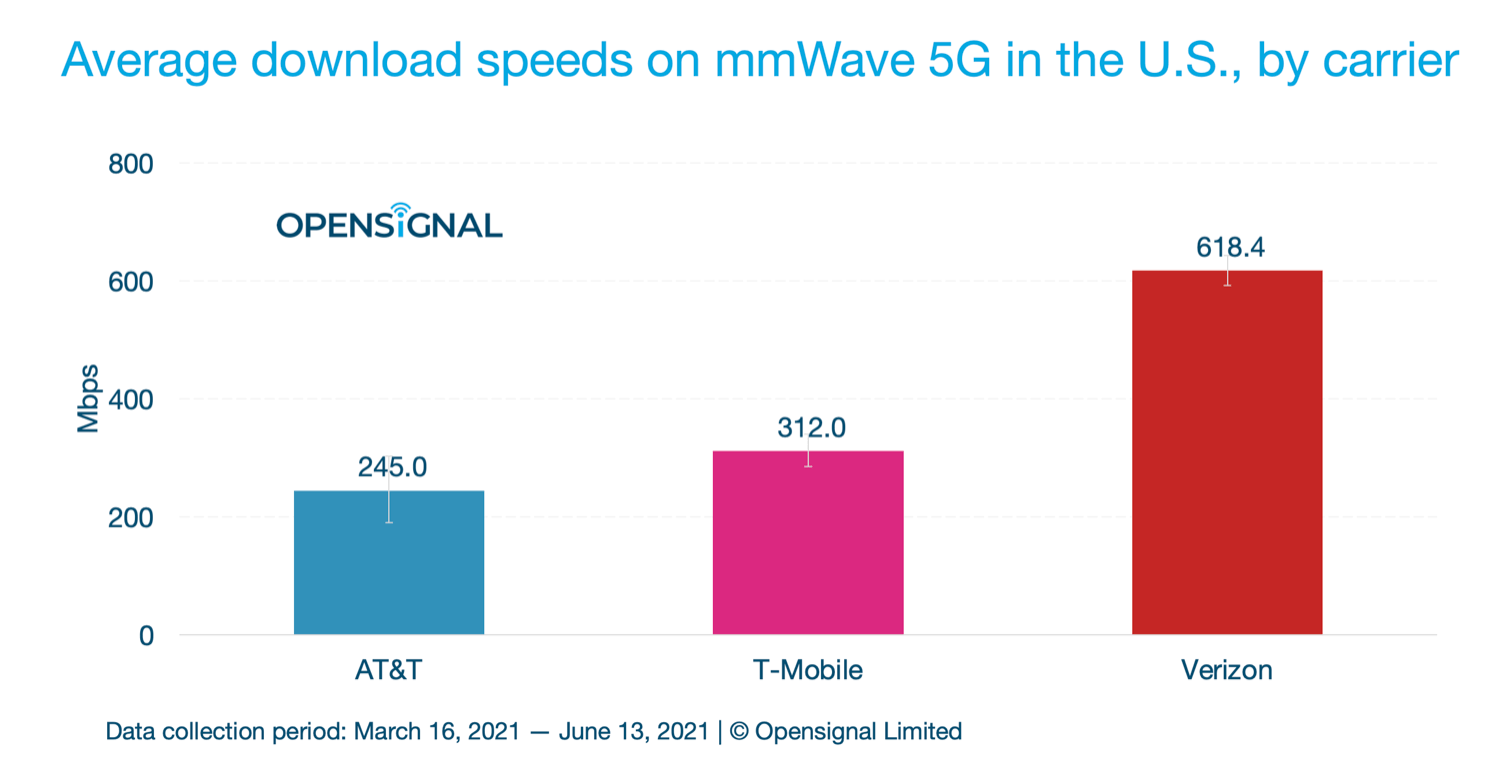
5G Home Internet has become a formidable competitor to wired broadband. For many US users, their "average" Mbps comes from a cellular signal converted into a home Wi-Fi network. In 2026, 5G FWA often delivers speeds between 150 Mbps and 400 Mbps. It has become the primary solution for renters and households in areas where digging for fiber is cost-prohibitive.
Bandwidth vs. Latency: Why Mbps Only Tells Half the Story
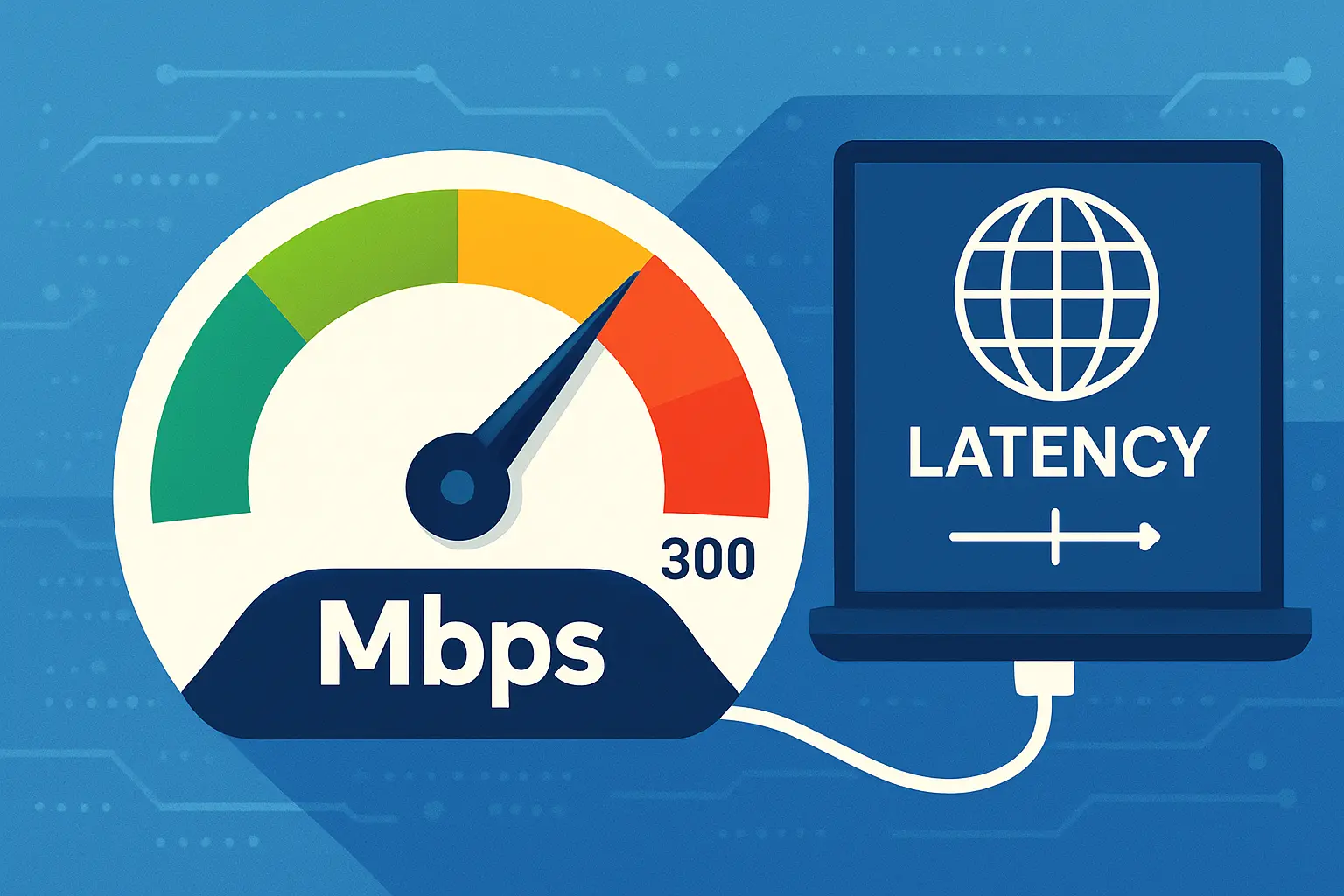
While Mbps is the headline figure, "latency" (often called ping) is equally vital for a modern internet experience. Latency is the delay between a command being sent and the response being received. In 2026, even with a high average Mbps, a connection with high latency can feel "slow."
For example, a satellite connection might offer 200 Mbps download speeds, but if the latency is 600 milliseconds, a video call will be plagued by lag. Fiber connections in 2026 typically offer latencies below 10ms, whereas 5G FWA ranges from 20ms to 40ms. When evaluating the average internet Mbps for US users, it is crucial to consider that the quality of the connection (low jitter and low latency) is often more noticeable than the difference between 300 Mbps and 600 Mbps for everyday tasks.
Rural vs. Urban: The Ongoing Connectivity Divide
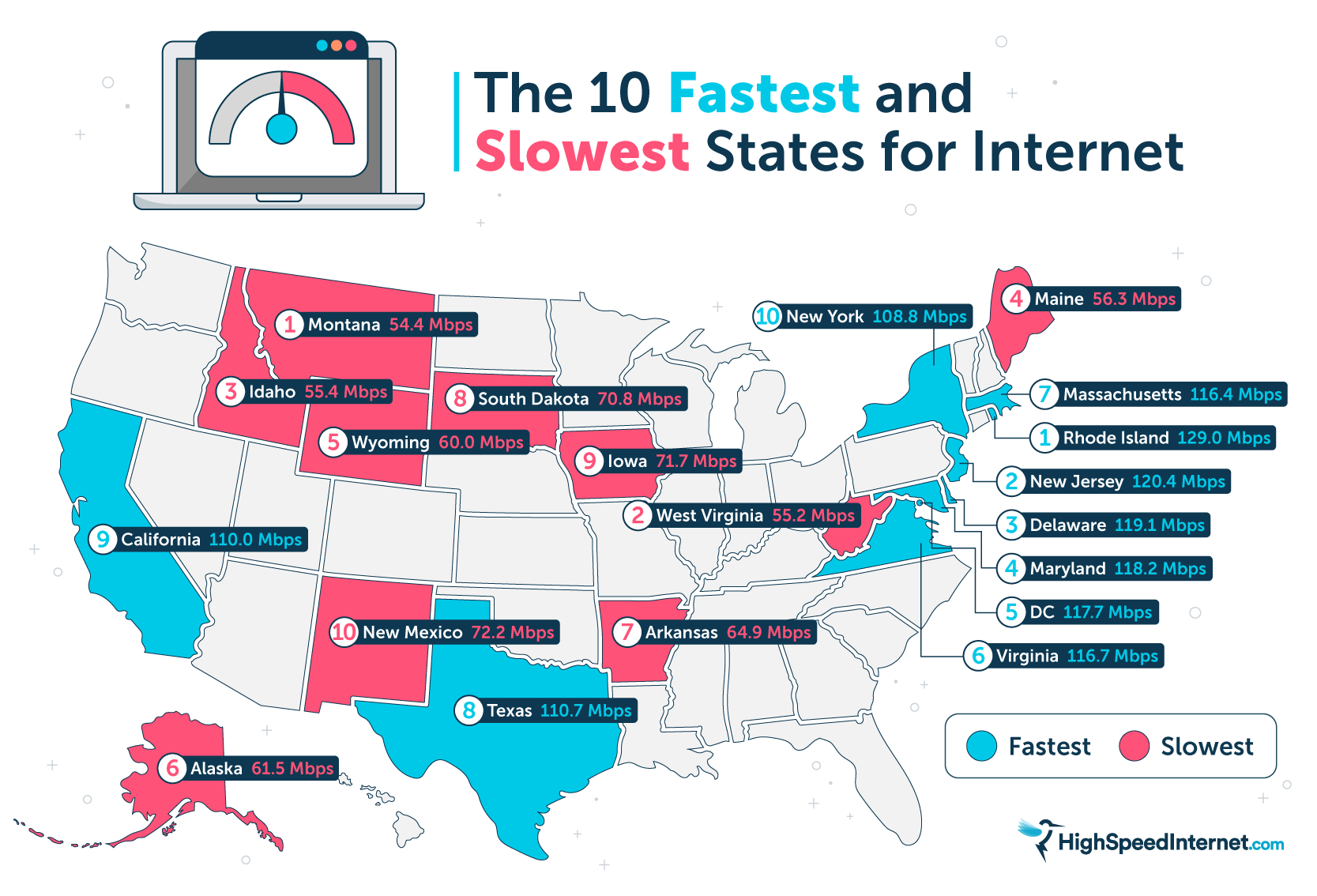
Despite the national average hovering near 285 Mbps, the experience remains bifurcated based on geography. In major metropolitan areas like New York, Chicago, or Houston, multi-gigabit speeds are readily available and affordable. In these zones, the average user likely experiences speeds well above the national median.
In rural America, the picture is improving but remains distinct. Significant portions of the NTIA's BroadbandUSA initiatives have reached fruition by 2026, bringing 100/20 Mbps service to previously underserved regions. However, many rural users still rely on Low Earth Orbit (LEO) satellite constellations like Starlink, which provide consistent speeds (typically 100–200 Mbps) but can be subject to weather-related fluctuations.
Recommended Mbps for Common Activities in 2026
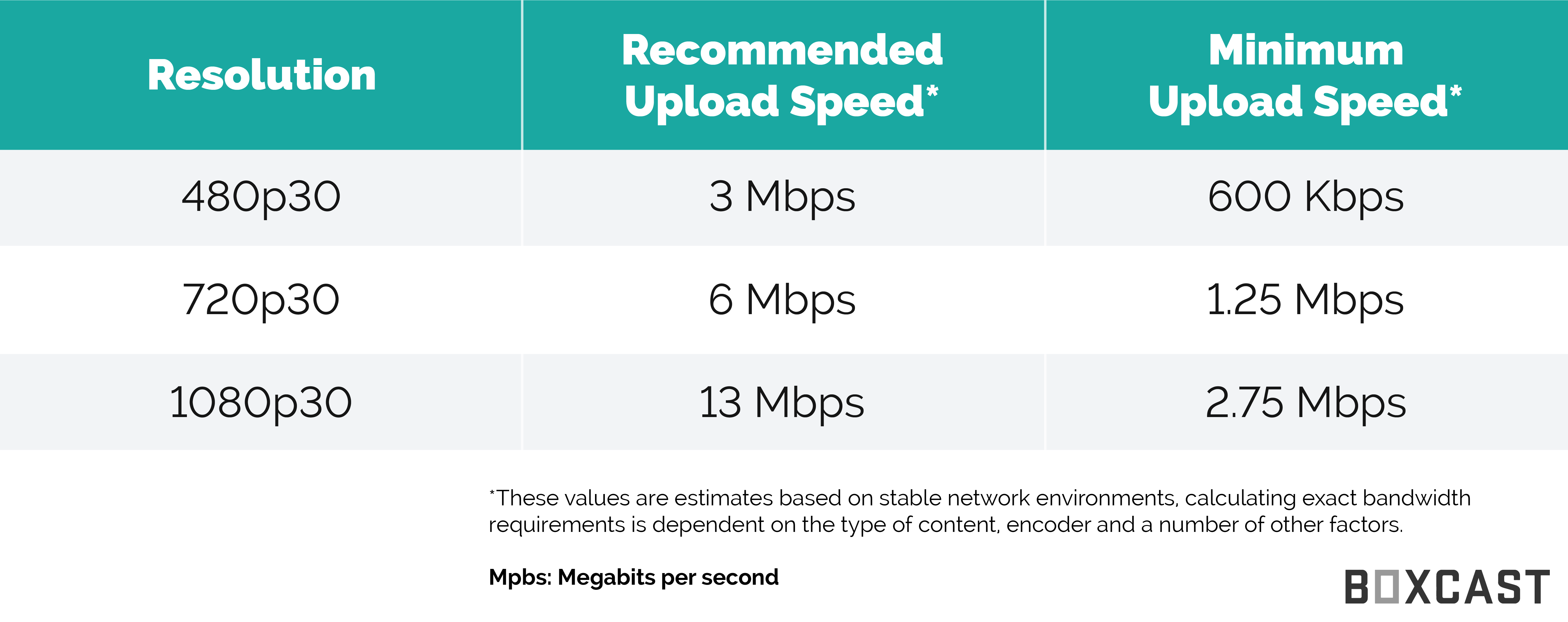
To help users determine if their connection meets the "average" requirement for their lifestyle, the following table outlines the bandwidth needed for common digital tasks in 2026.
| Activity | Recommended Download Speed | Recommended Upload Speed | Notes |
|---|---|---|---|
| 8K Video Streaming | 100 Mbps | 5 Mbps | Requires stable, high-bandwidth throughput. |
| 4K Video Streaming | 25 Mbps | 2 Mbps | Standard for most modern smart TVs. |
| Professional Video Conferencing | 10 Mbps | 10 Mbps | Symmetrical speed is key for high-res video calls. |
| Competitive Online Gaming | 15 Mbps | 5 Mbps | Low latency is more important than raw Mbps. |
| Cloud Gaming (Xbox/NVIDIA) | 50 Mbps | 10 Mbps | Requires consistent bitrates to avoid stutter. |
| Smart Home Hub (20+ devices) | 50 Mbps | 10 Mbps | Includes cameras, sensors, and appliances. |
| Standard Remote Work | 30 Mbps | 15 Mbps | Sufficient for VPNs and file transfers. |
Common Bottlenecks and How to Troubleshoot Them
Many US users find that their "real-world" speed is lower than the average or the speed promised by their ISP. This is often due to internal factors rather than the service line itself.
- Outdated Hardware: In 2026, Wi-Fi 7 is the current high-end standard. Users still operating on Wi-Fi 5 (802.11ac) routers will find they cannot achieve the full speeds of their 500 Mbps or 1 Gbps plans over wireless.
- Congestion: In densely populated apartment buildings, Wi-Fi signals can interfere with one another. Switching to the 6GHz band (available on Wi-Fi 6E and Wi-Fi 7) can bypass this congestion.
- Physical Obstructions: Thick walls and large appliances can degrade signal strength. By 2026, mesh Wi-Fi systems have become the standard solution for larger American homes to ensure the average Mbps is consistent across all rooms.
- ISP Throttling: While net neutrality protections are largely in place in 2026, some providers may still manage traffic during peak hours (usually 7:00 PM to 11:00 PM) if the local node is oversubscribed.
Frequently Asked Questions
Is 100 Mbps fast enough in 2026?
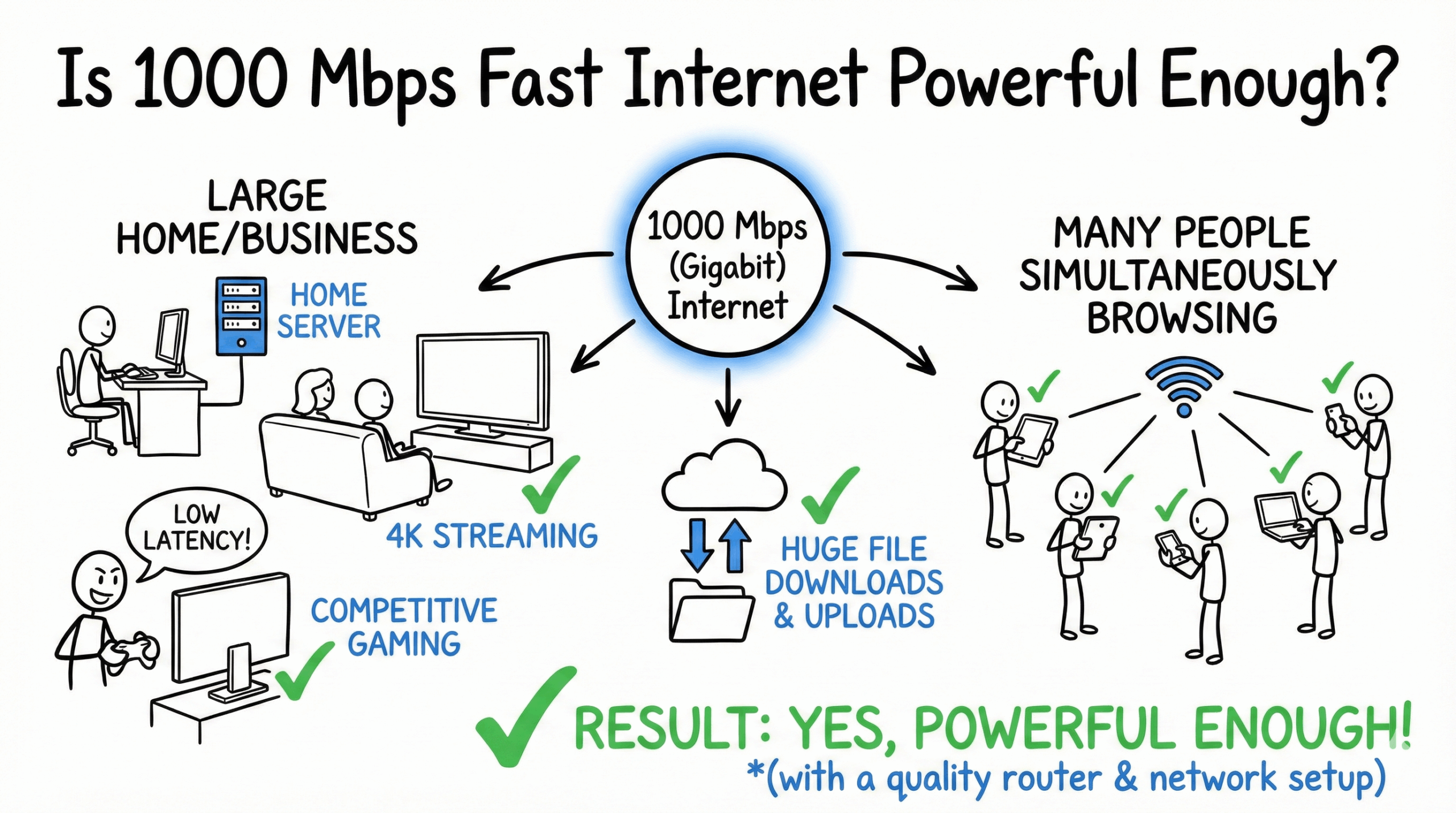
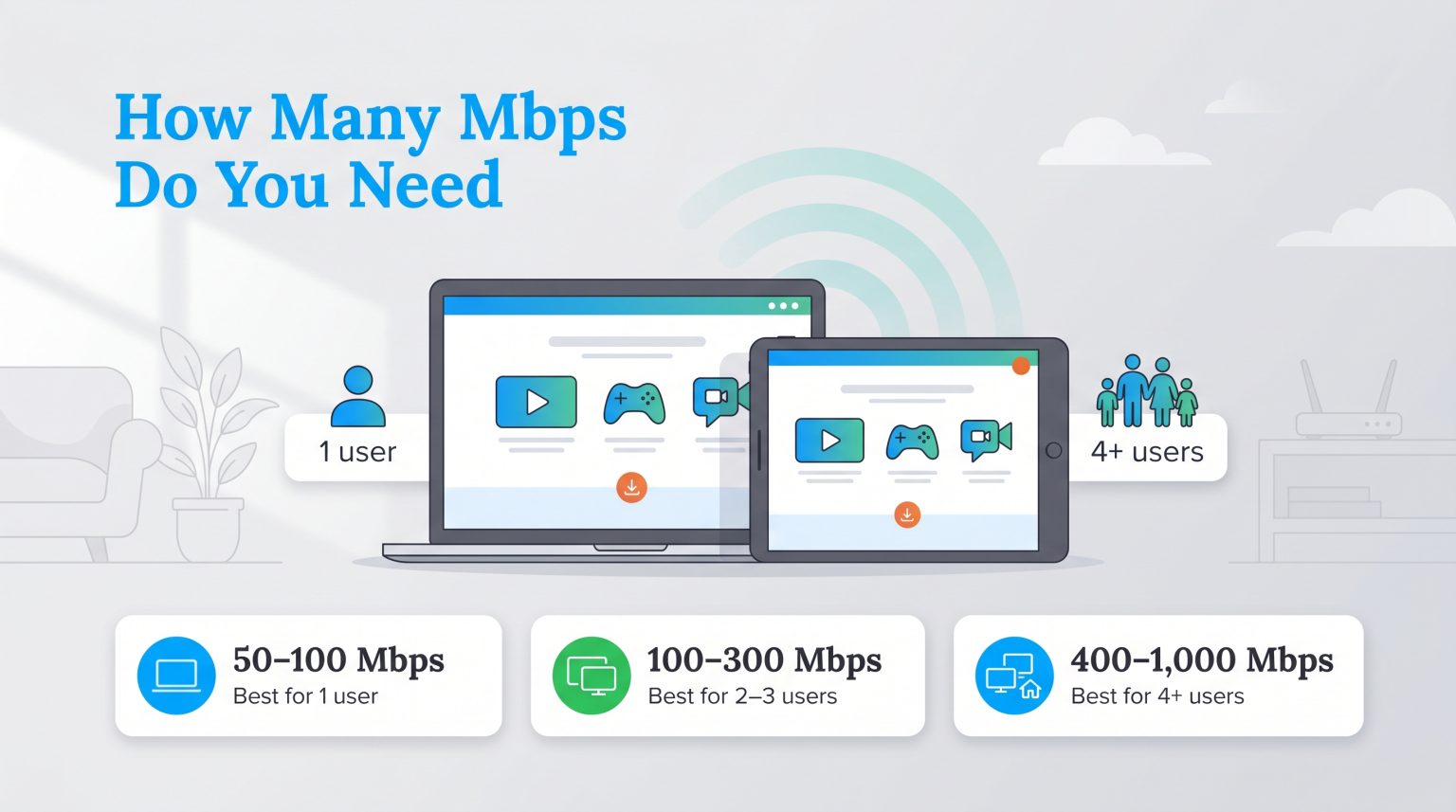
For a single user or a small household with moderate needs (web browsing and 4K streaming), 100 Mbps remains functional. However, for families with multiple remote workers, gamers, or numerous smart home devices, 100 Mbps is now considered the entry-level tier. Most experts recommend at least 300 Mbps for a modern, multi-device household to avoid "bandwidth contention," where one person's download slows down another person's video call.
How does US internet speed compare globally in 2026?
The United States consistently ranks in the top 10–15 countries globally for fixed broadband speeds. While nations like Singapore, Hong Kong, and Chile often report higher peak averages due to their compact geography, the US has made significant strides in 2026 by upgrading its vast, lower-density suburban and rural infrastructure.
Why is my upload speed so much lower than my download speed?
Unless you are on a fiber-optic connection, your speeds are likely "asymmetrical." This is a legacy of how cable and DSL technologies were designed—prioritizing the data coming into the house. While DOCSIS 4.0 has improved this for cable users in 2026, many still see a 10:1 ratio (e.g., 500 Mbps down, 50 Mbps up).
Does the "Average Mbps" include mobile data?
Usually, no. Statistics for the "average internet Mbps" are typically separated into "Fixed Broadband" (home/office) and "Mobile" (cellular). As of 2026, US mobile speeds have also surged, with 5G-Advanced networks providing average mobile download speeds of 150 Mbps, but these are measured independently of home Wi-Fi averages.
How can I accurately test my speed?
To find your actual Mbps, use a reputable tool like the Ookla Speedtest or Fast.com. For the most accurate result, connect a laptop directly to your router with an Ethernet cable to bypass Wi-Fi interference. This provides a "clean" reading of what your ISP is actually delivering to the premises.
Summary of Next Actions
To ensure you are meeting or exceeding the average US internet standards in 2026, first conduct a baseline speed test during peak hours. If your results fall below 100 Mbps download or 20 Mbps upload, contact your ISP to see if a modern "broadband-compliant" plan is available at no extra cost. Finally, evaluate your router; if it is more than four years old, upgrading to a Wi-Fi 6E or Wi-Fi 7 mesh system is the most effective way to translate your ISP’s raw Mbps into a fast, reliable experience throughout your home.
Image Gallery