Navigating PhD Programs in Educational Leadership: A Comprehensive Guide
Pursuing a PhD in Educational Leadership requires a significant investment of time, research focus, and professional commitment, typically balancing advanced theoretical coursework, original dissertation research, and administrative pr...
Pursuing a PhD in Educational Leadership requires a significant investment of time, research focus, and professional commitment, typically balancing advanced theoretical coursework, original dissertation research, and administrative practice. Designed primarily for aspiring superintendents, higher education administrators, university faculty members, and educational policy analysts, these doctoral programs emphasize rigorous quantitative and qualitative research methodologies, organizational theory, and strategic systemic reform. This guide examines prerequisites, program structures, funding strategies, and career outcomes to help prospective scholars navigate their path to a terminal degree.
Contents
Understanding the Landscape of Educational Leadership Doctorates
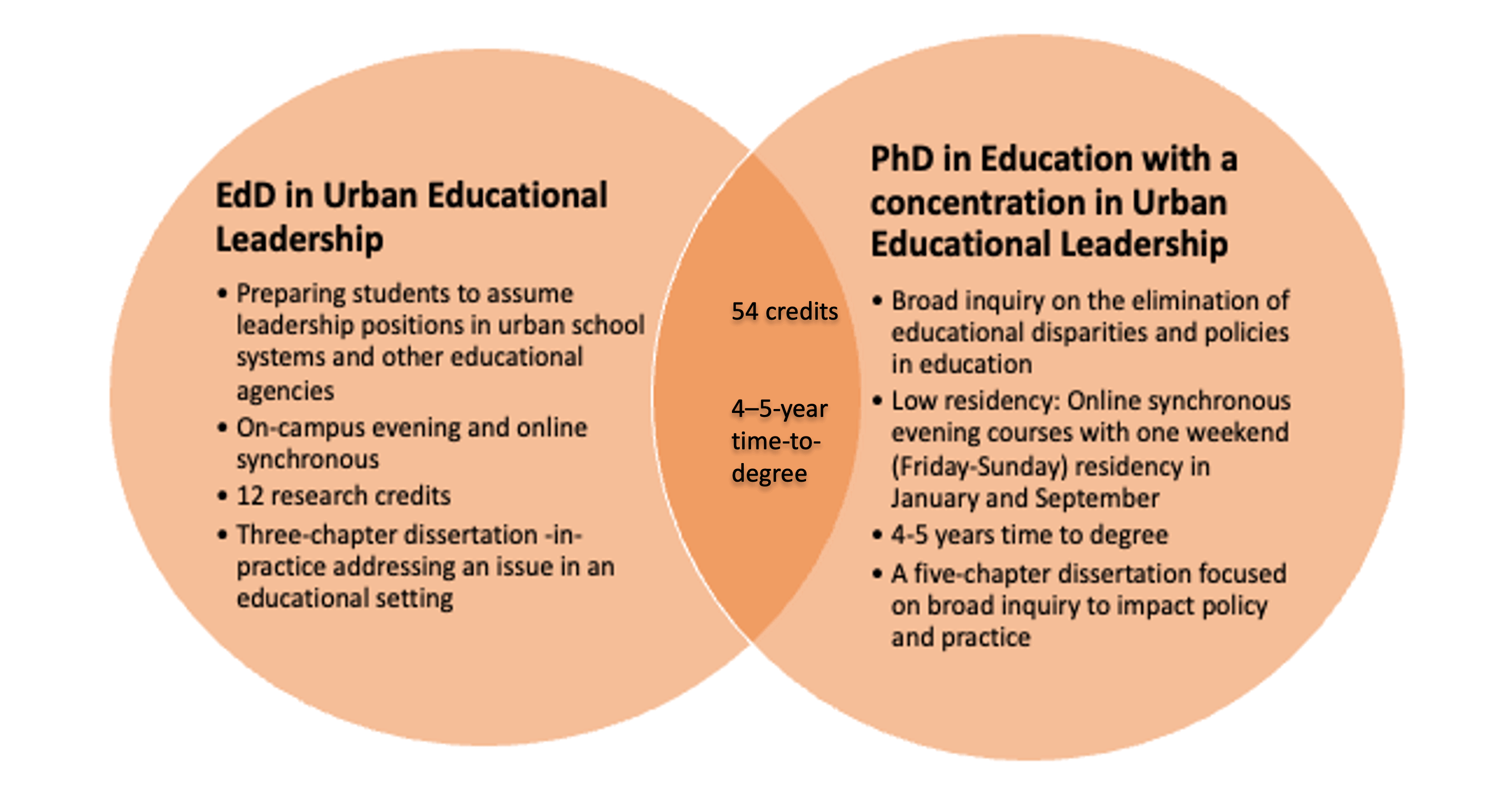
The educational leadership doctoral landscape features two primary terminal degree options: the Doctor of Philosophy (PhD) and the Doctor of Education (EdD). While both represent the highest academic credential attainable in the field, their underlying philosophies, curricular requirements, and ultimate career trajectories differ substantially.
The PhD in Educational Leadership is traditionally structured as a research-intensive academic pathway. It prepares graduates for careers as university professors, senior researchers, and high-level policy analysts. The core curriculum focuses heavily on advanced statistical modeling, qualitative inquiry design, sociological theory, and epistemological frameworks. Scholars in PhD programs spend a considerable portion of their tenure designing and executing original empirical research intended for publication in peer-reviewed academic journals.
Conversely, the EdD is typically positioned as a professional practice degree. Often styled as a "Doctor of Practice," the EdD targets working educational leaders—such as principals, district superintendents, and college vice presidents—who seek to apply research-based solutions to immediate institutional problems. While both degrees require a dissertation, the PhD dissertation must make a substantive theoretical contribution to the academic literature, whereas an EdD dissertation often takes the form of a "dissertation in practice," solving a specific operational challenge within a local school district or university setting.
Core Prerequisites and Admissions Criteria
Gaining admission to a competitive PhD program in educational leadership demands a rigorous portfolio that demonstrates academic excellence, professional leadership capacity, and a clear alignment between the applicant’s research interests and the faculty's expertise. Admissions committees evaluate candidates holistically, weighing quantitative metrics against qualitative indicators of scholarly potential.
Academic Background and Transcripts
Applicants are typically required to hold a master’s degree from a regionally accredited institution, preferably in education, public administration, public policy, or a related social science discipline. Competitive candidates generally maintain a cumulative graduate GPA of 3.5 or higher. Admissions panels look closely at graduate-level coursework in research methods, statistics, and organizational theory to gauge the applicant's readiness for doctoral-level rigor.
Professional Experience
Most educational leadership PhD programs prefer or require candidates to possess substantial professional experience in P-12 education, higher education, or policy organizations. Leadership roles such as department chair, school principal, curriculum coordinator, or institutional researcher provide the foundational context necessary to formulate meaningful research questions and navigate complex institutional structures.
Standardized Testing
While a growing number of universities have adopted test-optional policies for doctoral admissions, some institutions still require or strongly recommend submitting Graduate Record Examination (GRE) scores. When required, competitive programs look for balanced scores across verbal, quantitative, and analytical writing sections, with particular emphasis on critical reading and writing capabilities.
Application Portfolio Components
Beyond transcripts and test scores, the application requires several narrative and evaluative elements:
- Statement of Purpose: A 1,000- to 1,500-word essay outlining the applicant’s professional background, specific research interests, and rationale for pursuing a PhD rather than an EdD.
- Writing Sample: A single-authored academic paper, master’s thesis excerpt, or published article demonstrating the candidate’s ability to synthesize literature, analyze data, and write with scholarly precision.
- Letters of Recommendation: Three confidential letters—typically from tenured or tenure-track university professors and senior administrative supervisors—attesting to the applicant’s intellect, work ethic, and potential for independent research.
- Curriculum Vitae (CV): A comprehensive record of professional appointments, publications, conference presentations, grants, and professional memberships.
Curriculum Structure and Milestones
A traditional PhD in Educational Leadership is structured as a multi-year journey divided into distinct phases: coursework, comprehensive examinations, proposal defense, and dissertation research. Understanding this trajectory helps candidates manage their time and set realistic milestones.
- Phase 1: Advanced Coursework
- Phase 2: Comprehensive Exams
- Phase 3: Proposal Defense
- Phase 4: Dissertation Defense
Advanced Coursework (Years 1–2)
During the initial phase, students complete rigorous seminars exploring organizational theory, educational policy, social justice, and leadership ethics. Alongside these core seminars, students undergo intensive methodological training, mastering both quantitative techniques (such as hierarchical linear modeling, structural equation modeling, and multivariate analysis) and qualitative approaches (such as ethnography, grounded theory, and case study design).
Comprehensive Examinations (End of Year 2 or Early Year 3)
Upon completing coursework, students must pass comprehensive or qualifying examinations. These exams test the candidate's mastery of the core literature in educational leadership and their chosen specialization. Exams may take the form of timed written essays, take-home synthesis papers, or oral defenses administered by a faculty committee. Passing this milestone elevates the student from "doctoral student" to official "doctoral candidate" (often termed All But Dissertation or ABD status).
Dissertation Proposal and Research (Years 3–5+)
The dissertation phase represents the culmination of the PhD journey. The candidate works closely with a primary advisor and a dissertation committee to formulate an original research question. The process begins with a formal proposal defense, where the student outlines their theoretical framework, research design, and data collection strategy. Once approved by the institutional review board (IRB) and the committee, the candidate conducts the research, analyzes the findings, writes the final manuscript, and defends the completed dissertation in an oral examination.
Program Comparison: Delivery Models
Prospective students must choose between different program delivery models, each balancing flexibility, cost, and campus integration differently.
| Program Model | Typical Duration | Flexibility | Primary Funding Sources | Networking & Mentorship |
|---|---|---|---|---|
| Traditional Full-Time | 4 to 5 Years | Low (On-campus cohorts) | Graduate assistantships, tuition waivers, stipends | High (Daily faculty and peer interaction) |
| Part-Time / Hybrid | 5 to 7 Years | High (Blended online and weekend classes) | Employer assistance, personal funds | Moderate (Focused on cohort bonds) |
| Executive / Cohort | 3 to 4 Years | Structured (Fixed pacing, working professionals) | Self-funded or employer-sponsored | High (Peer network of mid-to-senior leaders) |
Funding and Financial Aid Strategies
Financing a terminal degree requires careful planning, as tuition costs and living expenses accumulate rapidly during years of intensive study. Fortunately, multiple avenues exist to offset these costs, particularly for full-time scholars.
Graduate Assistantships
Many research-focused universities offer graduate teaching assistantships (TAs) or research assistantships (RAs) to full-time PhD students. These positions typically include a full or partial tuition waiver, subsidized health insurance, and a modest monthly stipend in exchange for 20 hours per week of service supporting faculty research or undergraduate instruction.
Fellowships and Grants
External funding organizations, private foundations, and professional associations—such as the American Educational Research Association (AERA) and the University Council for Educational Administration (UCEA)—offer targeted fellowships for doctoral researchers. Securing an external fellowship not only covers educational expenses but also enhances a scholar's curriculum vitae.
Employer Tuition Assistance
For working professionals enrolled in part-time or executive programs, local school districts, state departments of education, and higher education institutions often provide tuition reimbursement benefits. Candidates should consult their human resources department to understand service obligations tied to such funding.
Career Outcomes and Professional Paths
Graduating with a PhD in Educational Leadership opens doors to diverse, high-impact roles across the education sector. While many graduates transition into tenure-track faculty positions at research universities, others leverage their methodological and administrative expertise in broader arenas.
PhD in Educational Leadership
- Academia & Research
- K-12 & HE Leadership
- Policy & Consulting
University Professor: Teaching graduate-level courses in educational leadership, mentoring future administrators, and securing grant-funded research.
District Superintendent or Senior Administrator: Leading large school districts, managing multimillion-dollar budgets, and driving systemic reform initiatives.
Higher Education Dean or Vice President: Directing institutional research, managing student affairs, or overseeing academic divisions within colleges and universities.
Education Policy Analyst: Working for think tanks, governmental agencies, or advocacy groups to evaluate legislation and shape public education policy.
Frequently Asked Questions
Can I complete a PhD in Educational Leadership entirely online?
While fully online EdD programs are common, true online PhD programs in educational leadership are rare due to the intensive research and methodological training required. Most legitimate PhD programs require some level of on-campus residency, hybrid seminars, or synchronous online participation to foster rigorous academic discourse.
What is the difference between a PhD and an EdD in leadership?
A PhD focuses primarily on generating new theory through empirical research, preparing graduates for academic and research-intensive careers. An EdD focuses on translating existing research into practical solutions for complex organizational challenges, preparing practitioners for senior administrative roles.
How long does it take to finish a PhD in Educational Leadership?
On average, a full-time PhD program takes between four and five years to complete. Part-time or executive programs typically require five to seven years, largely depending on the time required to complete the dissertation phase.
Is a dissertation required for graduation?
Yes. Every reputable PhD program in educational leadership requires the completion and successful defense of an original dissertation that contributes new knowledge to the field.
What funding is typically available for doctoral students?
Full-time students frequently secure funding through graduate assistantships, tuition waivers, internal university fellowships, and external research grants. Part-time students often rely on employer tuition assistance and personal funds.
Next Steps for Prospective Applicants
Begin your doctoral journey by identifying 3 to 5 university programs whose faculty members share your specific research interests. Review their recent publications, reach out to program coordinators to inquire about funding availability, and begin drafting a clear, compelling statement of purpose that outlines your scholarly vision.
Image Gallery