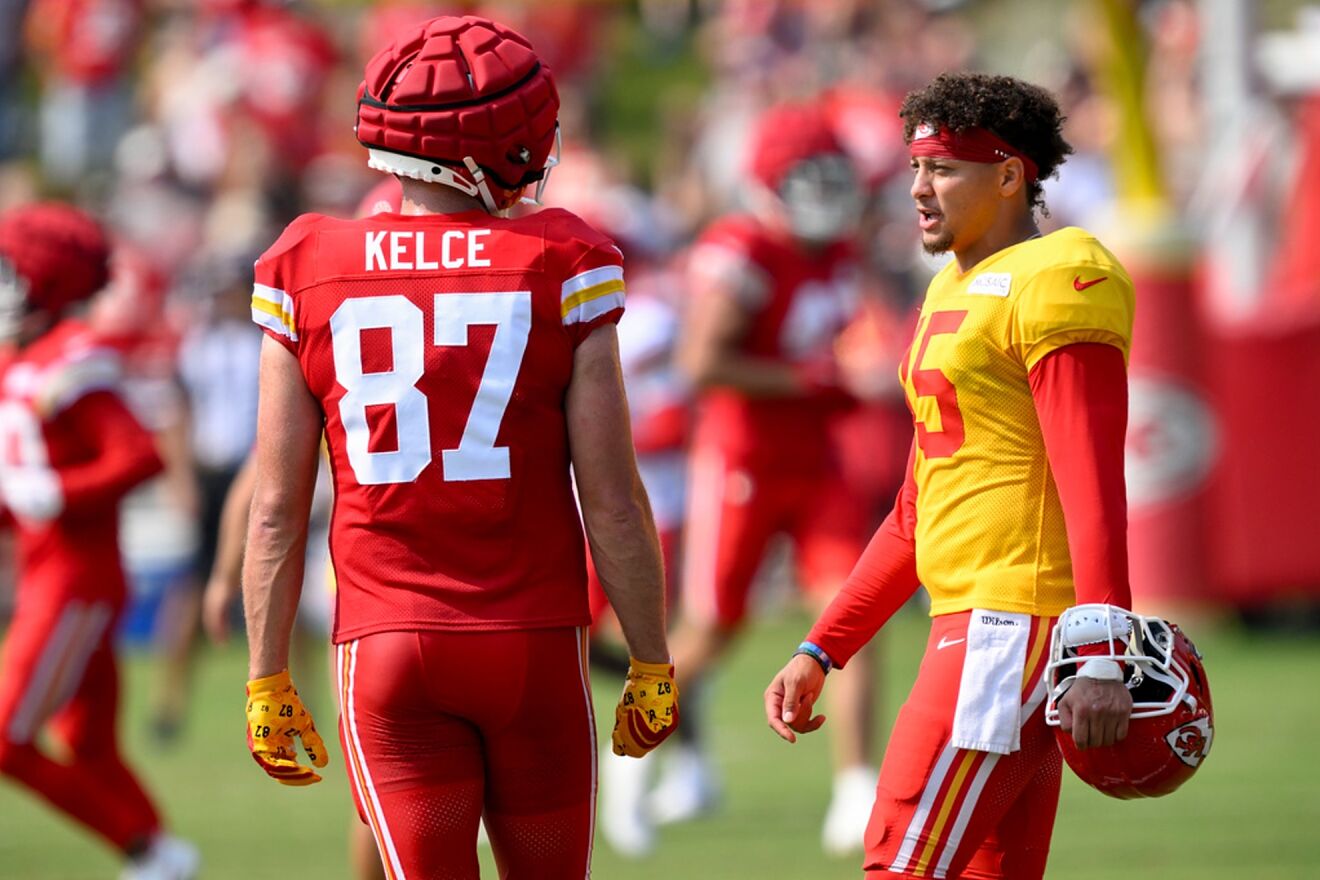
Travis Kelce’s Size Explained for Fans: A Physical Profile of an NFL Titan
Travis Kelce stands as one of the most physically imposing tight ends in the history of the National Football League, with official measurements consistently listed at 6 feet 5 inches tall and a playing weight of approximately 250 poun...
Travis Kelce stands as one of the most physically imposing tight ends in the history of the National Football League, with official measurements consistently listed at 6 feet 5 inches tall and a playing weight of approximately 250 pounds. These dimensions are critical to his role as a versatile weapon, allowing him to maintain the strength required for elite-level blocking against defensive linemen while possessing the reach and speed to create mismatches against defensive backs and linebackers.
Contents
The Physical Architecture of an Elite Tight End
In the NFL, the tight end position requires a unique blend of physical attributes. Unlike wide receivers, who prioritize agility and verticality, or offensive linemen, who prioritize mass and anchor strength, the tight end must function as a hybrid. Travis Kelce’s build is often studied by fans and analysts because he occupies the upper echelon of these requirements.
At 6’5”, Kelce possesses a substantial catch radius. This is a technical term used to describe the area around a player where they can realistically secure a catch. A larger catch radius is essential for a target like Kelce, as it allows him to compensate for less-than-perfect throws and provides a high target point for jump balls in the red zone. His height provides a natural advantage when navigating congested areas of the field, allowing him to extend over shorter defenders to secure the ball.
Weight management for professional athletes is a delicate balance. While Kelce has played around the 250 to 260-pound mark for much of his career, this weight is not merely mass; it is functional muscle density. This muscle mass is essential for "contact balance," or the ability to remain on one's feet after taking a hit from a linebacker or safety. Because the tight end is often the first point of contact in a passing play, the ability to absorb impact and maintain a route trajectory is vital.
Comparing Kelce to NFL Positional Standards
To understand why Kelce’s size is considered ideal, it is helpful to look at how he compares to his peers. The following table illustrates the general range of physical attributes for modern NFL tight ends compared to Kelce’s documented profile.
| Attribute | Typical TE Range | Travis Kelce | Impact on Playstyle |
|---|---|---|---|
| Height | 6'3" – 6'6" | 6'5" | Superior reach and target visibility |
| Weight | 240 – 265 lbs | ~250-255 lbs | Ideal balance of speed and power |
| Arm Length | 32" – 34" | ~33.75" | Ability to shield defenders from the ball |
| Hand Size | 9.5" – 10.5" | ~9.875" | High ball security and grip strength |
This table highlights that while Kelce fits squarely within the professional standard for the position, his consistency in maintaining these metrics over his lengthy career is what separates him from shorter-lived careers.
The Evolution of Size and Athleticism
Since his entry into the NFL in 2013, Kelce’s physical conditioning has evolved to meet the changing demands of the game. Early in his career, tight ends were often utilized primarily as "sixth offensive linemen"—players whose size was used almost exclusively for blocking. As the league moved toward a pass-heavy, spread-offense philosophy, the requirements for the position shifted.
Kelce adapted by maintaining his size while focusing heavily on functional mobility. This includes eccentric training—focused on the lengthening phase of muscle contraction—which helps prevent the injuries that often plague larger players at the professional level. His ability to maintain his frame while sustaining high-intensity movement over the course of a 17-game season is a testament to the rigorous training regimens employed by modern professional athletes.
Why Size Matters: The Mechanics of the Mismatch
The primary goal of an offensive coordinator in the NFL is to create a "mismatch"—a situation where an offensive player has a distinct advantage over their defensive counterpart. Kelce’s size makes him a nightmare for defensive coordinators because he forces them into a difficult decision:
- Defending with a Linebacker: A linebacker is usually built with the strength to handle tight ends but often lacks the lateral quickness to stay with Kelce on complex route trees.
- Defending with a Safety or Cornerback: A defensive back has the speed and agility to stay with Kelce but is usually significantly smaller. Kelce uses his frame to physically box these players out, essentially using his body as a barrier to ensure only he can reach the ball.
This physical leverage is the foundation of his "ability to find the soft spot." Because he is too big for traditional coverage players to jam effectively at the line of scrimmage, he can consistently find space in zone defenses.
Common Misconceptions Regarding NFL Measurements
Fans often encounter discrepancies when looking up player sizes. It is important to distinguish between "combine measurements" and "playing weight."
- Combine Measurements: These are taken during the NFL Scouting Combine before a player is drafted. They are standardized and verified by league officials.
- Playing Weight: This is a dynamic number. An athlete’s weight can fluctuate by 5–10 pounds depending on the week, their hydration levels, or a team’s specific tactical needs for a given game.
When fans see Kelce listed as 250 pounds on one site and 260 pounds on another, both may be accurate for the specific period they were reported. For the purposes of understanding his profile, the official NFL draft measurement (6'5", 250 lbs) remains the most reliable baseline for his structural build.
FAQ: Understanding Kelce’s Physicality
How does Kelce’s height compare to the average NFL player? The average NFL player is approximately 6’2”. At 6’5”, Kelce is significantly taller than the league average, placing him in the upper quartile of NFL height, which is a significant advantage for a pass-catcher.
Does size make him prone to more injuries? While larger athletes face unique stresses on their joints, Kelce has historically maintained high availability. This is generally attributed to an emphasis on flexibility and core stabilization, which allows larger players to absorb impacts more safely.
Has his playing style changed as he has aged? As with many veteran players, Kelce has adjusted his game to rely more on his football IQ and positioning than on pure, raw speed. He uses his size to control space and dictate the terms of the play, allowing him to remain productive into his 30s.
Why are his arm length and hand size important? Arm length (or reach) determines how far a player can extend to snag a pass away from a defender’s reach. Hand size contributes to ball security—ensuring the ball does not slip out during contact with defenders.
Is it difficult for someone of his size to remain quick? Yes. Maintaining agility at 250 pounds is a massive athletic feat. It requires significant fast-twitch muscle fiber development and constant maintenance of his neuromuscular system to ensure that his brain and body can communicate quickly enough to change direction on a dime.
Practical Guidance for Aspiring Athletes
For fans looking to understand the mechanics of size in sports, Kelce serves as an excellent case study on the importance of functional mass. If you are an athlete or a fan interested in strength training, the key lesson from Kelce is that size is only as effective as the coordination behind it. Explosive power—the ability to generate force quickly—is far more relevant to on-field success than raw size or body weight alone.
Focusing on posterior chain strength (glutes, hamstrings, and lower back) while maintaining mobility in the hips and ankles is what allows a player of his stature to move fluidly. Consult with professional trainers or physical therapists if you are interested in developing a regimen focused on athletic longevity and functional strength.
Image Gallery