Understanding Local and Global Issues: Navigating the Interconnected Challenges of 2026
The distinction between local and global issues has blurred as economic, environmental, and technological systems become increasingly interdependent. While local issues affect specific communities and require regional solutions, global...
The distinction between local and global issues has blurred as economic, environmental, and technological systems become increasingly interdependent. While local issues affect specific communities and require regional solutions, global issues represent systemic challenges that transcend borders, requiring international cooperation and synchronized policy frameworks to manage effectively in 2026.
Contents
The Interplay Between Local and Global Systems
To understand the current landscape, one must first recognize the fundamental difference in scale and impact. A local issue—such as the maintenance of a municipal water grid or a regional zoning dispute—is characterized by direct accountability. Local government bodies, such as city councils or district boards, possess the jurisdictional authority to enact policy, allocate budgets, and implement technical solutions. These issues are bounded by geography and legal statutes specific to a municipality or province.
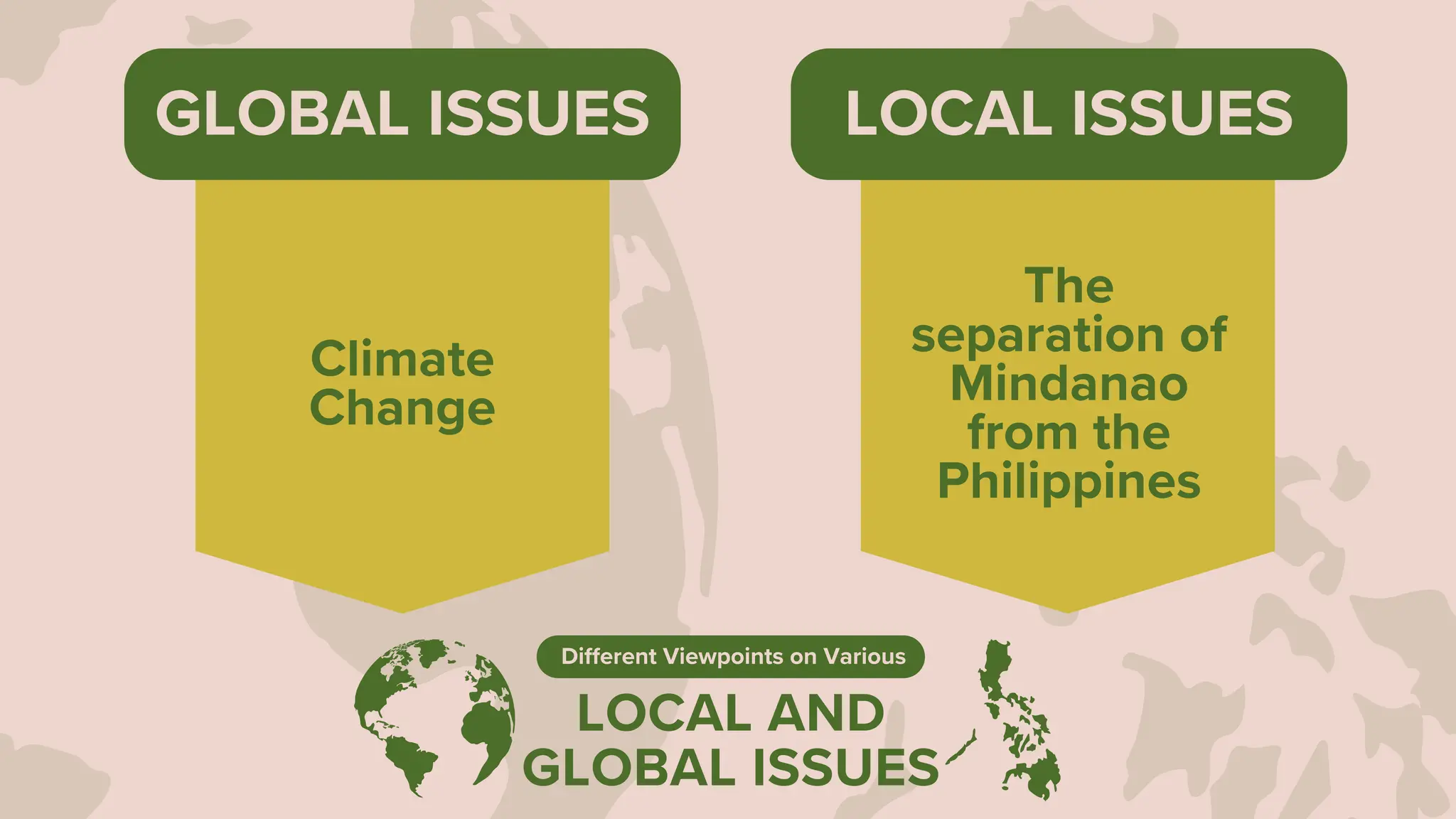
In contrast, global issues, such as climate change mitigation, pandemic preparedness, or international cybersecurity standards, lack a single centralized authority. Instead, these challenges are governed by a complex web of multilateral agreements, non-governmental organizations (NGOs), and transnational treaties. In 2026, the primary challenge for policymakers is that most global issues manifest through localized effects. For example, a global rise in sea levels (a global issue) necessitates urgent coastal infrastructure upgrades (a local issue). The success of global initiatives is often predicated on the efficacy of implementation at the municipal level, creating a feedback loop where neither scale can be effectively managed in isolation.
Categorizing Challenges by Scope and Governance
Effective management of modern crises requires identifying whether a problem is primarily local, global, or a hybrid of both. Determining the scope of a problem dictates the resources required and the stakeholders who must be involved in the resolution process.
| Issue Type | Scope | Governance Mechanism | Primary Stakeholders |
|---|---|---|---|
| Local | Municipal/Regional | City Ordinances, Local Budgeting | Residents, Local Businesses, Municipal Agencies |
| Global | Transnational/Universal | Treaties, International Law | Sovereign States, UN, Global Regulatory Bodies |
| Hybrid | Interconnected | Regional Agreements, Bilateral Treaties | National Governments, Public-Private Partnerships |
The Mechanics of Local Issues
Local issues are defined by proximity and direct feedback. When a community faces a housing affordability crisis, the variables are relatively identifiable: land availability, zoning laws, construction costs, and local tax policy. In 2026, the primary hurdles for local governments remain operational efficiency and funding. Addressing these requires adherence to state or national legal frameworks while navigating the specific demographic and economic realities of the population.
When tackling local issues, practitioners should focus on three phases:
- Assessment: Quantifying the problem through local data, such as public record requests, municipal audits, and community town halls.
- Resource Allocation: Identifying available funding sources, which may include local tax levies, state grants, or public-private infrastructure investment.
- Execution and Oversight: Implementing policies through established local departments, with public transparency requirements to ensure accountability.
The Complexity of Global Issues
Global issues in 2026 are frequently categorized by their transboundary nature, meaning they cannot be contained by any single nation’s legislative power. Climate change, the regulation of Artificial Intelligence (AI) development, and global trade instability are the quintessential examples of these challenges.
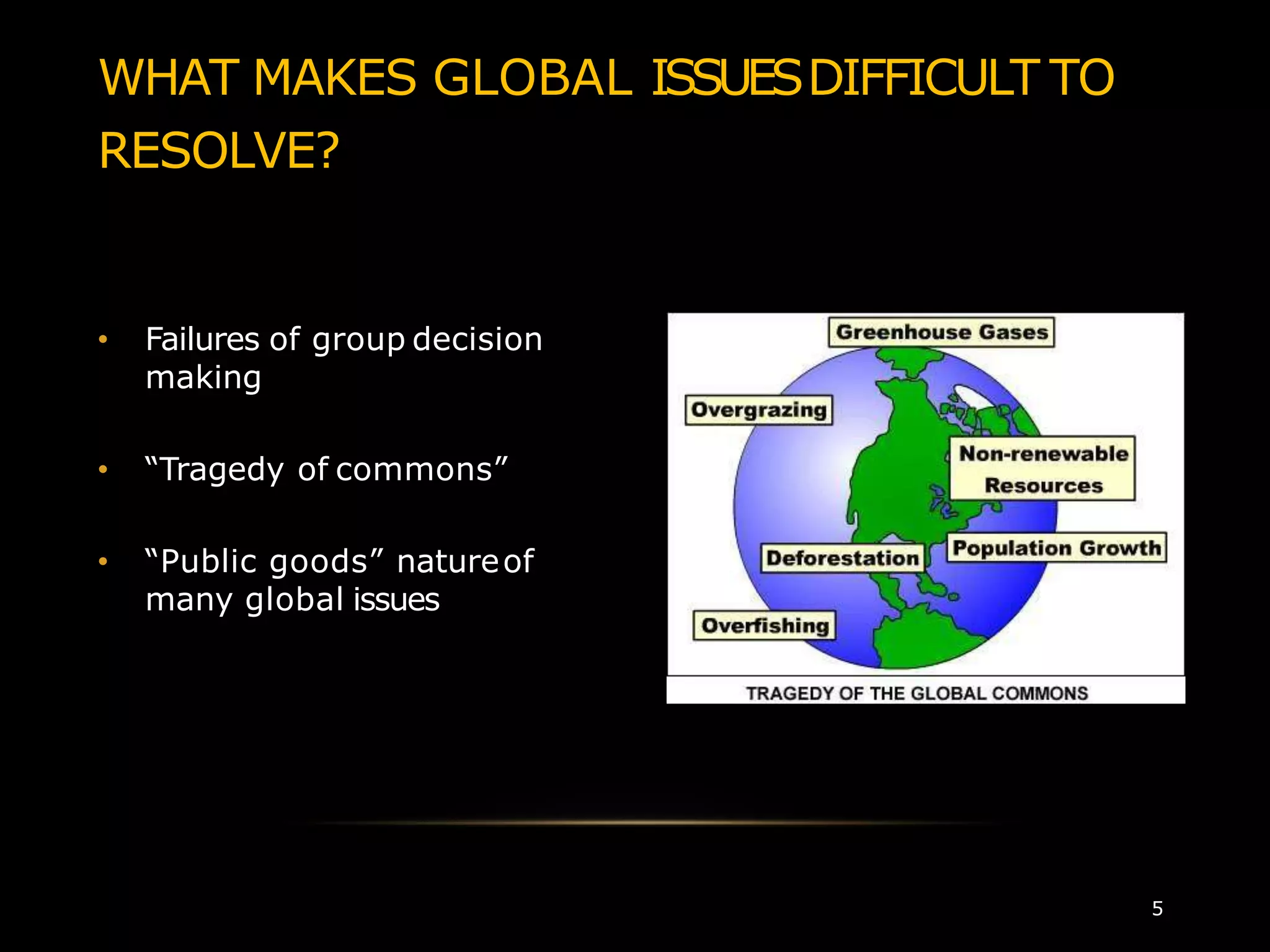
Unlike local problems, global issues are prone to "the tragedy of the commons," where individual nations may prioritize short-term domestic gain over long-term collective stability. Addressing these requires high-level diplomatic negotiation and the creation of standardized metrics that all participating nations agree to track. Without an overarching enforcement mechanism—similar to a global police force—these issues rely heavily on "soft power," economic sanctions, and the alignment of national interests with collective safety.
Strategies for Navigating Hybrid Challenges
The most pressing problems of the current era are hybrid in nature. Economic inflation is a global phenomenon driven by international supply chain pressures, yet it is experienced locally through individual household costs and regional business struggles. Navigating these hybrid issues requires a dual-track strategy:
- Macro-Level Engagement: Participating in or monitoring international discourse, such as the outcomes of global summits or the directives of organizations like the World Trade Organization (WTO) and the World Health Organization (WHO), to anticipate shifts in policy that will eventually trickle down.
- Micro-Level Adaptability: Building resiliency at the community level. For example, businesses that diversify their supply chains reduce their vulnerability to global disruptions, while municipalities that invest in redundant energy systems are better prepared for global environmental shifts.
Prerequisites for Policy and Institutional Success
Whether dealing with local infrastructure or global trade agreements, certain prerequisites must be met to ensure an effective response:
- Evidence-Based Decision Making: Relying on verified data rather than anecdotal evidence is critical. For local issues, this means utilizing local census data and economic reports; for global issues, it means relying on peer-reviewed scientific consensus and international monitoring agency reports.
- Institutional Capacity: A policy is only as effective as the agency responsible for enforcing it. In many regions, the lack of bureaucratic infrastructure remains the greatest impediment to solving both local and global crises.
- Public Engagement: Transparency is necessary to maintain the "social license" to operate. In local contexts, this involves direct democratic participation; in global contexts, this involves public advocacy and digital transparency in how international funds are utilized.
Common Misconceptions
A frequent error in discourse is the "Global-First" fallacy, which assumes that international policies are a panacea for local struggles. While global frameworks provide necessary guardrails, they are often too abstract to address the nuanced reality of a specific community. Conversely, the "Local Isolationist" fallacy assumes that a community can insulate itself from global trends. In a 2026 economic environment, no market is truly closed, and failing to account for global variables—such as international currency fluctuations or global energy price shifts—often leads to local economic collapse.
Frequently Asked Questions
1. Can an issue be simultaneously local and global? Yes. Environmental pollution is the primary example. A local chemical spill is a local issue requiring immediate cleanup, but it is part of the global issue of industrial waste management. Solutions require both immediate local mitigation and long-term adherence to global environmental safety standards.
2. Why do global issues often take longer to resolve? Global issues require consensus among sovereign nations with disparate political systems, economic goals, and cultural values. Reaching an agreement requires diplomatic negotiation, whereas local issues are solved through legislative or administrative mandates within a single jurisdiction.
3. What is the role of technology in bridging these two scales? Technology acts as an information conduit. It allows for the rapid dissemination of best practices from one city to another (scaling local solutions) and enables real-time monitoring of global variables, such as climate sensors or market tracking, that inform local decision-making.
4. How can individuals participate in solving global issues? While individuals cannot directly sign treaties, they can influence global outcomes by participating in the local economy and political process. Consumer choices and local political advocacy contribute to the aggregate demand and policy support that eventually forces national and international institutions to act on global agendas.
5. How should a business prioritize between local and global pressures? Businesses should utilize a "risk-based approach." If a global supply chain disruption threatens the core product, the global issue takes precedence. If local tax hikes or zoning changes threaten the physical location, the local issue becomes the immediate priority. Balance is achieved by maintaining a risk register that ranks threats by their probability and potential impact on operations.
Next Steps for Implementation
To effectively manage challenges, start by conducting a diagnostic audit of the issues currently impacting your specific sphere of influence. Identify which elements of your current difficulties are controllable through local administrative action and which are systemic pressures resulting from global trends. Once categorized, seek partnerships—local coalitions for community issues and industry-specific international associations for global systemic issues—to pool resources and expertise. Establishing a clear, evidence-based plan that acknowledges the limits of your authority is the most reliable way to achieve measurable progress in the current year.
Image Gallery