Uncle Luke Campbell: The Legal, Cultural, and Musical Legacy of Luther Campbell
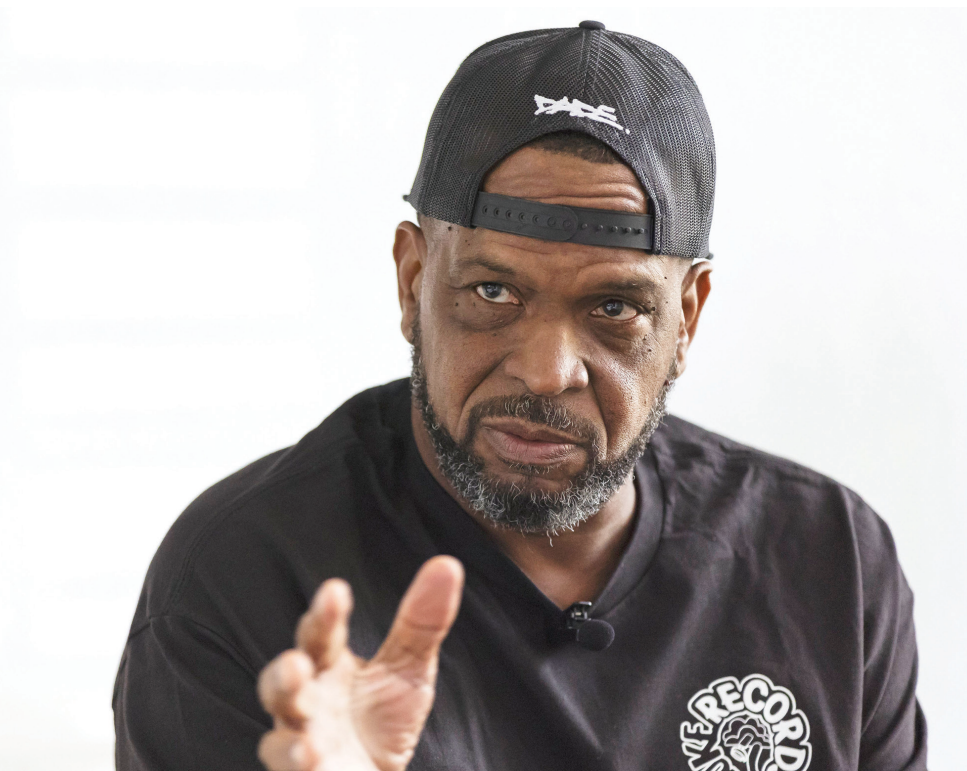
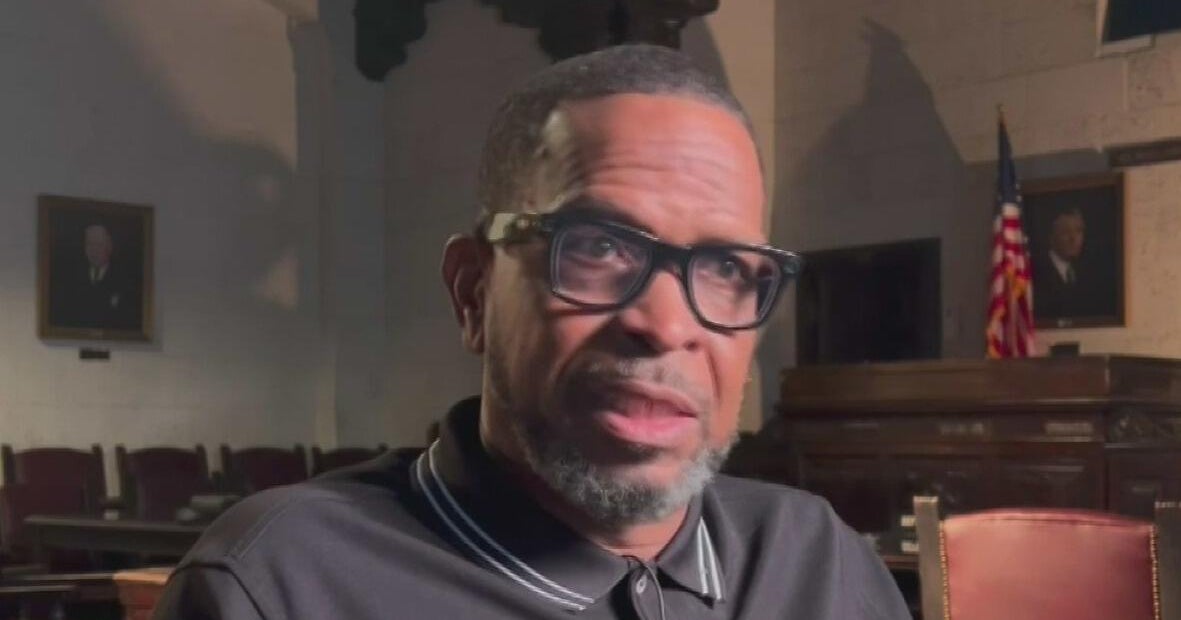
Luther "Uncle Luke" Campbell is an American rapper, record executive, promoter, and community activist best known as the leader of the pioneering hip-hop group 2 Live Crew. Beyond shaping the Miami Bass sound, Campbell played a central...
Luther "Uncle Luke" Campbell is an American rapper, record executive, promoter, and community activist best known as the leader of the pioneering hip-hop group 2 Live Crew. Beyond shaping the Miami Bass sound, Campbell played a central role in landmark legal decisions regarding First Amendment free speech rights and copyright fair use in the United States.
Contents
Who Is Luther "Uncle Luke" Campbell?
Luther Roderick Campbell, born December 22, 1960, in Miami, Florida, emerged in the mid-1980s as one of the most influential figures in Southern hip-hop and independent music distribution. Operating under stage names including Luke Skyywalker and Uncle Luke, Campbell transitioned from a local concert promoter and DJ into a record label founder and front man for 2 Live Crew.
While Campbell's music achieved major commercial success, his broader historical significance stems from his willingness to contest government censorship and defend artistic expression in court. His legal battles reached the U.S. Court of Appeals for the Eleventh Circuit and the Supreme Court of the United States, producing binding judicial precedents that continue to govern free speech, music parody, and copyright law.
Beyond the entertainment industry, Campbell has established a long-standing career as a youth football coach, community organizer in Miami’s Liberty City neighborhood, political commentator, and municipal candidate.
The First Amendment Censorship Battle: As Nasty As They Wanna Be
In 1989, 2 Live Crew released their double-platinum album As Nasty As They Wanna Be. Featuring sexually explicit lyrics and heavy basslines, the album quickly drew the attention of anti-obscenity advocacy groups and South Florida law enforcement agencies.
- Album Released (1989)
- Sheriff Warning & Retailer Injunctions (1990)
- Federal District Court Declares Album Obscene (Skyywalker v. Navarro)
- Band Members Arrested Following Live Performance
- 11th Circuit Court of Appeals Overturns Obscenity Ruling (1992)
The Broward County Injunction and Obscenity Finding
In early 1990, Nick Navarro, the Sheriff of Broward County, Florida, obtained an ex parte advisory opinion from a state circuit judge declaring that As Nasty As They Wanna Be was likely obscene under Florida law. Sheriff’s deputies subsequently visited local record stores, warning store owners that selling the album could result in arrest.
In response, Luke Campbell and his record label filed a federal lawsuit against Sheriff Navarro, alleging unconstitutional prior restraint. In June 1990, Federal District Judge Jose A. Gonzalez Jr. ruled in Skyywalker Records, Inc. v. Navarro (739 F. Supp. 1421) that the album was legally obscene under the three-pronged legal standard set by the U.S. Supreme Court in Miller v. California (1973). This marked the first time a musical recording was judicially declared obscene by a U.S. federal court.
Arrests and Appellate Reversal
Days after the federal district court ruling, members of 2 Live Crew performed songs from the album at an adults-only nightclub in Hollywood, Florida. Campbell and bandmate Chris Wong Won (Fresh Kid Ice) were arrested by Broward County sheriff's deputies on misdemeanor obscenity charges, while a local record store retailer was arrested for selling the recording to an undercover officer.
Campbell appealed the federal court ruling. In May 1992, the U.S. Court of Appeals for the Eleventh Circuit unanimously reversed the district court's obscenity ruling in Luke Records, Inc. v. Navarro (960 F.2d 134). The appellate court held that the trial judge erred because the prosecution failed to present expert evidence demonstrating that the work lacked serious artistic, literary, political, or scientific value under the third prong of the Miller test, whereas Campbell had submitted expert testimony defending the cultural and musical value of Miami Bass music.
The Supreme Court Landmark: Campbell v. Acuff-Rose Music, Inc. (1994)
While fighting obscenity charges, Luther Campbell became involved in a separate legal battle that fundamentally reshaped U.S. copyright law. In 1989, 2 Live Crew recorded a track titled "Pretty Woman," which parodied Roy Orbison's classic 1964 rock hit "Oh, Pretty Woman."
The Copyright Dispute
Campbell’s label initially sought permission and offered to pay licensing fees to Acuff-Rose Music, Inc., which owned the copyright to Orbison’s song. Acuff-Rose denied permission, stating that they did not authorize parodies. Despite the refusal, 2 Live Crew included the song on their album Clean As They Wanna Be, explicitly crediting Orbison and William Dees as the original songwriters.
Acuff-Rose sued Campbell, his bandmates, and Luke Records for copyright infringement. The federal district court ruled in favor of Campbell, finding that the parody qualified as fair use under Section 107 of the Copyright Act of 1976. However, the Sixth Circuit Court of Appeals reversed that decision, concluding that because 2 Live Crew's parody was created for commercial gain, it was presumptively unfair.
The Supreme Court Ruling
Campbell appealed the Sixth Circuit decision to the U.S. Supreme Court. On March 7, 1994, the Supreme Court issued a unanimous landmark decision written by Justice David Souter in Campbell v. Acuff-Rose Music, Inc., 510 U.S. 569 (1994).
The Supreme Court held that:
- Commercial Purpose Is Not Disqualifying: A work's commercial nature does not automatically exclude it from fair use protection.
- Transformative Use: Parody has social value because it provides social commentary by mimicking an original work to create something new. The court emphasized the importance of whether the new work is "transformative."
- Substantiality of Taking: Parodists must be allowed to borrow enough of the original work’s recognizable elements (the "heart" of the work) to conjure up the original in the listener's mind.
- Market Effect: A parody targets a different market than the original; critical mockery does not substitute for the original work in the licensing market for non-parody uses.
This decision established the modern "transformative use" doctrine that forms the foundation for digital media, satire, copyright fair use defense, and creative commentary in contemporary law.
Pioneering Miami Bass and Independent Music Business
Beyond his courtroom legal defense, Luther Campbell was a central architect of independent Southern hip-hop infrastructure. Prior to the national expansion of Southern rap labels like Cash Money Records, No Limit Records, or Quality Control, Campbell built a functional independent production and distribution framework in South Florida.
- Skyywalker Records (Founded by Luther Campbell, 1985)
- Trademark Settlement (1990)
- Renamed: Luke Records
- Distributed Artists & Hits (2 Live Crew, Poison Clan, DJ Chipman)
- Renamed: Luke Records
- Independent Sound
- Miami Bass Subgenre
- Up-Tempo Basslines, Club Sound & Call-Response
- Miami Bass Subgenre
- Trademark Settlement (1990)
Skyywalker Records and Trademark Litigation
In 1985, Campbell established Skyywalker Records. The label functioned as a fully independent operation, managing recording, manufacturing, pressing, and street distribution across Florida and the Southeast.
In 1990, film director George Lucas sued Campbell for trademark infringement over the name "Skyywalker," which Lucas claimed infringed on his Star Wars character Luke Skywalker. Campbell settled out of court, agreeing to pay damages and changing the business name to Luke Records (and modifying his stage name to Uncle Luke).
The Architecture of Miami Bass
Miami Bass is characterized by fast tempos (typically 125 to 140 BPM), heavy Roland TR-808 kick drums, sexual themes, and call-and-response vocals designed for dance clubs and car audio systems. Campbell served as an executive producer and hypeman, curating projects that popularized the subgenre nationally.
Luke Records signed and distributed numerous artists who shaped regional hip-hop, including Poison Clan (featuring JT Money), Trick Daddy (who debuted as "Trick Daddy Dollars" on Campbell’s 1996 album Uncle Luke), and DJ Uncle Al.
Community Leadership, Youth Athletics, and Politics
Parallel to his career in entertainment, Campbell has maintained a prominent role in South Florida civic life, focusing primarily on youth sports and urban community development in Miami's Liberty City neighborhood.
The Liberty City Optimist Club
In 1993, Campbell co-founded the Liberty City Optimist Club, a non-profit youth organization providing academic tutoring and athletic programs for inner-city youth in Miami. The youth football program grew into one of the most competitive pipeline programs for high school, collegiate, and professional American football.
Athletes who developed through Campbell's sports programs in Liberty City include:
- Devonta Freeman (Pro Bowl NFL running back)
- Duke Johnson (NFL running back)
- Teddy Bridgewater (Pro Bowl NFL quarterback)
- Amari Cooper (Pro Bowl NFL wide receiver)
Campbell subsequently served as a head football coach and defensive coordinator at several Miami-area public high schools, including Miami Jackson High School, Miami Northwestern Senior High School, and Miami Edison High School.
Political Campaigns and Media Commentary
In 2011, Campbell entered formal electoral politics by running for Mayor of Miami-Dade County. Running on a platform focused on community revitalization, small business support, police reform, and local tax reform, he finished fourth in a crowded field of eleven candidates, securing over 11% of the total vote.
Campbell has also maintained a presence in regional media as an op-ed columnist for the Miami New Times, writing "Luke's Gospel," a long-running column covering South Florida politics, race relations, college sports, and urban development.
Key Milestones and Legal Precedents Summary
The following table summarizes the key legal disputes, regulatory actions, and cultural milestones associated with Luther "Uncle Luke" Campbell:
| Year | Event / Case Title | Legal or Cultural Issue | Outcome / Historical Impact |
|---|---|---|---|
| 1985 | Founding of Skyywalker Records | Independent music distribution | Created early independent Southern hip-hop label infrastructure. |
| 1990 | Skyywalker Records v. Navarro (739 F. Supp. 1421) | Obscenity declaration under Miller v. California | First federal court ruling declaring a music album legally obscene. |
| 1990 | Lucasfilm Ltd. v. Campbell | Trademark infringement (Star Wars trademark) | Out-of-court settlement; label renamed to Luke Records. |
| 1992 | Luke Records, Inc. v. Navarro (960 F.2d 134) | First Amendment free speech appeal | 11th Circuit overturned obscenity ruling; reinforced evidentiary standards for banning music. |
| 1993 | Founding of Liberty City Optimist Club | Youth athletics & community development | Established academic and athletic youth pipeline in inner-city Miami. |
| 1994 | Campbell v. Acuff-Rose Music, Inc. (510 U.S. 569) | Copyright infringement vs. Fair Use (Parody) | Unanimous Supreme Court ruling establishing commercial parody as protected fair use. |
| 2011 | Miami-Dade Mayoral Campaign | Municipal governance & local policy | Placed 4th out of 11 candidates, earning over 11% of the countywide vote. |
Frequently Asked Questions
What was the legal significance of Campbell v. Acuff-Rose Music, Inc.?
Campbell v. Acuff-Rose Music, Inc. established that a commercial parody can qualify as protected fair use under Section 107 of the U.S. Copyright Act. The Supreme Court ruled unanimously that economic gain does not automatically make a parody unfair, creating the "transformative use" standard widely applied in intellectual property law today.
Was Luther Campbell sent to prison over 2 Live Crew's lyrics?
Luther Campbell and member Chris Wong Won were arrested in June 1990 by Broward County sheriff's deputies after performing songs from As Nasty As They Wanna Be at an adult club. They faced misdemeanor obscenity charges rather than felony imprisonment and were acquitted by a jury in October 1990.
Why did Skyywalker Records change its name to Luke Records?
Director George Lucas sued Luther Campbell in 1990, alleging that the name Skyywalker Records infringed upon his trademarked character Luke Skywalker from the Star Wars franchise. Campbell settled the suit by paying financial compensation and changing the label's name to Luke Records.
How did Luther Campbell influence college and NFL football?
Campbell co-founded the Liberty City Optimist Club in 1993, a youth program in Miami that coached future college stars and NFL players such as Teddy Bridgewater, Devonta Freeman, Duke Johnson, and Amari Cooper. He later served as a high school football coach in South Florida.
How did the 11th Circuit Court of Appeals address the obscenity ruling on As Nasty As They Wanna Be?
The 11th Circuit reversed the trial judge's obscenity ruling in 1992 because the state failed to present expert evidence establishing that the album lacked serious artistic or cultural value under the third prong of the Miller v. California test, while Campbell had provided artistic testimony.
Summary and Key Takeaways
Luther "Uncle Luke" Campbell's career extends across multiple fields in modern American history:
- Legal Trailblazer: Defended constitutional free speech against government censorship and established the landmark Supreme Court precedent for fair use parody (Campbell v. Acuff-Rose Music, Inc.).
- Music Pioneer: Built one of the earliest successful independent Southern rap labels, launching the Miami Bass subgenre and paving the way for independent hip-hop business models.
- Community Leader: Co-founded the Liberty City Optimist Club and coached high school football in South Florida, helping youth access higher education and professional athletic careers.
Researchers, legal professionals, and music historians analyze Campbell's career as a case study in independent media entrepreneurship, judicial interpretations of the First Amendment, and modern copyright jurisprudence.
Image Gallery