How Control System Security Evolves in Industry: From Air Gaps to Autonomous Defense
Control system security has evolved from relying on physical isolation and proprietary protocols to adopting integrated, software-defined architectures. In 2026, the focus has shifted toward zero-trust principles, AI-driven anomaly det...
Control system security has evolved from relying on physical isolation and proprietary protocols to adopting integrated, software-defined architectures. In 2026, the focus has shifted toward zero-trust principles, AI-driven anomaly detection, and strict regulatory compliance, ensuring that interconnected industrial environments remain resilient against sophisticated cyber-physical threats while maintaining high availability.
Contents
The Historical Paradigm: Security by Obscurity
For decades, the industrial sector operated under the assumption that "air-gapped" systems—those physically disconnected from the public internet—were inherently secure. Industrial Control Systems (ICS), such as Programmable Logic Controllers (PLCs) and Supervisory Control and Data Acquisition (SCADA) systems, used proprietary protocols like Modbus or Profibus. These were designed for performance and reliability, not security.
This era was defined by the "Security by Obscurity" mindset. Because the hardware was specialized and the communication languages were not widely understood outside of niche engineering circles, the perceived risk of a remote attack was low. However, this isolation was often illusory. Maintenance laptops, USB drives, and serial connections provided unintended pathways for malware. The turning point arrived with the discovery of Stuxnet in 2010, which proved that even the most isolated high-value targets could be compromised through sophisticated, multi-stage digital attacks targeting the logic of the controllers themselves.
The Era of IT/OT Convergence and the "Purdue" Shift
As the Fourth Industrial Revolution (Industry 4.0) took hold, the traditional boundary between Information Technology (IT) and Operational Technology (OT) began to dissolve. The drive for real-time data analytics, remote monitoring, and supply chain transparency required connecting factory floors to corporate networks and the cloud.
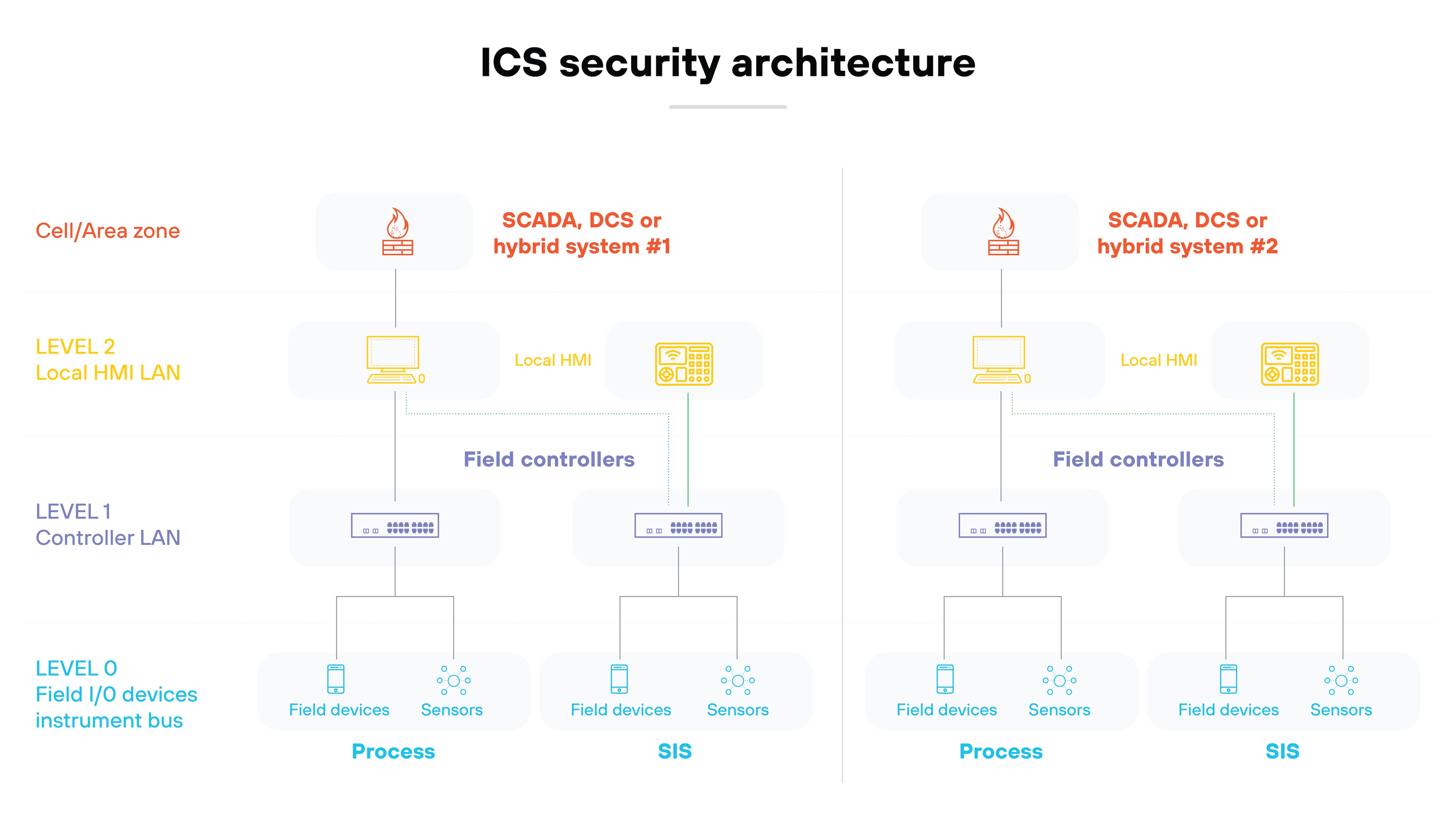
The Purdue Model for Industrial Control Systems, which historically segmented networks into distinct hierarchical levels (Level 0 for sensors up to Level 5 for corporate systems), began to "flatten." This convergence introduced standard IT protocols—like TCP/IP and Ethernet—into the OT environment. While this increased efficiency, it also exposed fragile legacy systems to a wider range of commodity malware and ransomware.
By the early 2020s, high-profile incidents like the attack on the Colonial Pipeline highlighted the systemic risks of interconnected systems. The evolution of security during this period focused on "visibility." Organizations began deploying passive monitoring tools to discover every asset on their network, realizing they could not protect what they could not see.
Modern Technical Drivers: Zero Trust and Hardware-Root-of-Trust
In 2026, the industry has moved beyond simple perimeter defense. The "castle-and-moat" strategy is obsolete because the perimeter no longer exists in a world of edge computing and remote maintenance access. Instead, industrial security now centers on Zero Trust Architecture (ZTA).
Micro-segmentation and Identity
Rather than trusting everything inside a specific VLAN, modern control systems use micro-segmentation. This limits communication to the absolute minimum required for a process to function. For example, a PLC in a bottling plant may only be permitted to talk to its specific Human-Machine Interface (HMI) and a localized data historian, with all other traffic blocked by default. Identity-based access management now extends to machines, where each device must authenticate itself using certificates before it is allowed to join the network.
Hardware-Level Security
The evolution has also reached the silicon level. Modern PLCs and RTUs (Remote Terminal Units) are now manufactured with "Hardware Root of Trust." This ensures that the firmware running on the device has not been tampered with since it left the factory. Secure boot sequences prevent the loading of unauthorized code, addressing the "Triton" or "HatMan" style of attacks that specifically target the safety-instrumented systems (SIS) of industrial plants.
Regulatory Evolution and Global Standards
The landscape of control system security is no longer shaped solely by voluntary best practices. In 2026, stringent regulatory frameworks dictate the minimum security posture for critical infrastructure.
- IEC 62443: This remains the foundational international standard for the security of Industrial Automation and Control Systems (IACS). It provides a structured framework for both manufacturers (ensuring security-by-design) and operators (ensuring secure integration and maintenance).
- NIS2 Directive (EU): With full implementation across Europe, this directive has forced companies in "essential" and "important" sectors to adopt rigorous risk management and incident reporting protocols, with significant financial penalties for non-compliance.
- CISA Performance Goals: In the United States, the Cybersecurity and Infrastructure Security Agency (CISA) has moved from broad guidance to specific, sector-based Performance Goals that emphasize the protection of the "Cross-Sector Cybersecurity Performance Goals" (CPGs).
These regulations have shifted the conversation from "Should we invest in security?" to "How do we prove our compliance to auditors?" This has led to the professionalization of OT security roles, moving them out of the general IT department and into dedicated industrial security teams.
The Role of AI and Autonomous Threat Detection
The most significant shift in 2026 is the integration of Artificial Intelligence (AI) and Machine Learning (ML) into industrial security operations. Because industrial processes are typically repetitive and predictable, they are perfect candidates for ML-based anomaly detection.
Modern security systems establish a "baseline" of normal physical behavior—such as the specific vibration patterns of a turbine or the standard pressure ranges in a pipeline. If a cyberattack attempts to modify the logic of a controller to cause physical damage, the AI detects the deviation in the process data, even if the attack successfully masks its presence from traditional IT monitoring tools.
Furthermore, Autonomous Response systems are becoming common in non-safety-critical segments. These systems can automatically isolate a compromised segment of the network in milliseconds, preventing the lateral movement of ransomware before a human analyst could even open an alert.
Comparative Evolution: Legacy vs. Modern Systems
The following table outlines the fundamental shifts in how control systems are secured in the current industrial landscape.
| Feature | Legacy Approach (Pre-2015) | Modern Approach (2026) |
|---|---|---|
| Primary Defense | Physical Air Gap / Firewalls | Zero Trust / Micro-segmentation |
| Visibility | Asset spreadsheets (Manual) | Real-time automated asset discovery |
| Protocol Focus | Proprietary (Modbus, S7, BACnet) | Secure wrappers (OPC UA, MQTT Sparkplug) |
| Update Frequency | Rarely patched ("If it works, don't touch it") | Managed risk-based patching / Virtual patching |
| Detection Method | Signature-based (known threats) | Behavioral AI / Physics-based anomalies |
| Access Control | Shared passwords / Physical keys | Multi-Factor Authentication (MFA) / PAM |
| Compliance | Voluntary / Industry guidelines | Mandatory legal frameworks (NIS2, RCE) |
Implementation Challenges and Practical Realities
Despite the technological advancements, the evolution of control system security faces significant "brownfield" challenges. Many industrial facilities operate with machinery designed to last 20 to 30 years. Upgrading a 1990s-era PLC to support modern encryption is often physically impossible.
To bridge this gap, industry leaders are using Industrial Security Gateways. These devices sit in front of legacy hardware, acting as a security proxy that encrypts traffic and provides the monitoring capabilities the legacy device lacks. Additionally, the shortage of dual-domain experts—professionals who understand both cybersecurity and industrial engineering—remains a bottleneck for many organizations.
Frequently Asked Questions
Is the air gap still a valid security strategy?
While physical isolation provides a layer of difficulty for attackers, it is no longer considered a complete security strategy. In 2026, the "air gap" is largely seen as a myth because of the necessity of data updates, vendor remote access, and the prevalence of mobile devices in industrial areas. Modern security focuses on "Logical Isolation" through rigorous encryption and access controls rather than just pulling the plug.
How does OT security differ from standard IT security?
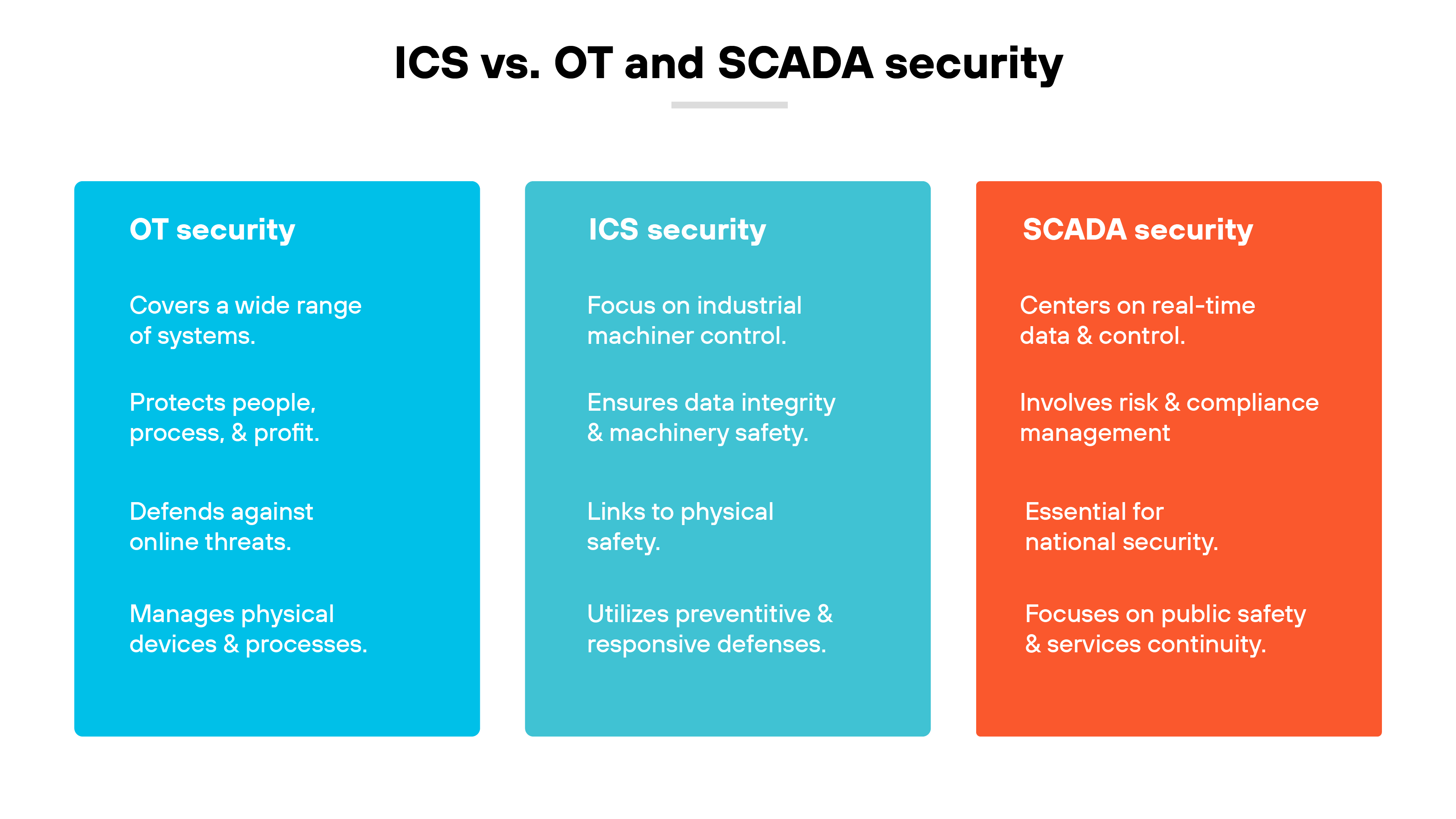
The primary difference lies in the priority of the "CIA triad." In IT, Confidentiality is often the priority. In OT, Availability and Safety are paramount. A security measure that slows down a millisecond-sensitive control loop or causes an emergency shutdown is often considered as dangerous as the cyberattack it was meant to prevent.
What is the first step for a company with legacy control systems?
The first step is always Visibility. You cannot secure what you do not know exists. Using passive network monitoring tools to create an accurate inventory of all PLCs, HMIs, and networked sensors allows an organization to identify the most vulnerable points and prioritize security investments based on actual risk.
Are cloud-based control systems secure?
Cloud integration in 2026 is highly secure when implemented using "Edge-to-Cloud" architectures. Data is typically sent outbound-only from the plant floor to the cloud via secure brokers (like MQTT), preventing direct inbound connections to the control system. This allows for powerful analytics without exposing the controllers to the open internet.
What is "Virtual Patching" in an industrial context?
Virtual patching involves using an Intrusion Prevention System (IPS) to block the exploitation of a known vulnerability at the network level. This is critical for industrial systems where taking a machine offline to apply a firmware patch might not be possible for months or years.
Recommendations for Future-Proofing Industrial Security
To stay ahead of the evolving threat landscape, industrial operators should transition toward a Risk-Based Security Lifecycle. This begins with a thorough risk assessment according to ISA/IEC 62443-3-2 to define "Zones" and "Conduits."
The focus should be on building resilience rather than just prevention. This includes maintaining "gold-copy" backups of PLC logic and HMI configurations that are stored offline, ensuring that even in the event of a total system wipe, the facility can be restored to a known-safe state within hours rather than weeks. Finally, organizations must foster a culture of cooperation between IT and OT teams, breaking down the silos that historically left gaps in the defensive perimeter.
Image Gallery