Why Is Softball Pitching Different Than Baseball? A Complete Technical Comparison
Softball pitching differs from baseball primarily in the delivery motion, the distance to home plate, and the physical characteristics of the ball. While baseball utilizes an overhand or sidearm delivery from an elevated mound, softbal...
Softball pitching differs from baseball primarily in the delivery motion, the distance to home plate, and the physical characteristics of the ball. While baseball utilizes an overhand or sidearm delivery from an elevated mound, softball requires an underhand "windmill" motion performed on a flat surface, creating unique biomechanical demands and flight physics.
Contents
The distinction between softball and baseball pitching is often oversimplified as a mere difference in arm direction. In reality, the two disciplines represent divergent philosophies of physics, physiology, and strategy. As of 2026, advancements in motion-capture technology and high-speed cameras have allowed coaches to refine these differences more than ever, yet the fundamental contrasts established over a century ago remain the cornerstone of both sports. To understand why these two styles of pitching are so distinct, one must examine the biomechanics of the delivery, the spatial constraints of the diamond, and the aerodynamic behavior of the balls themselves.
The Biomechanics of Delivery: Underhand vs. Overhand
The most visible difference is the pitching motion. Baseball pitchers use an overhand or three-quarter arm slot. This motion relies heavily on the "kinetic chain," starting from the legs, moving through the torso, and ending with a high-velocity whip of the arm. Because the arm moves above the shoulder line, it puts significant stress on the Ulnar Collateral Ligament (UCL) and the rotator cuff. This is why "Tommy John" surgeries are prevalent in baseball; the repetitive, high-torque overhead motion is inherently taxing on the human elbow.
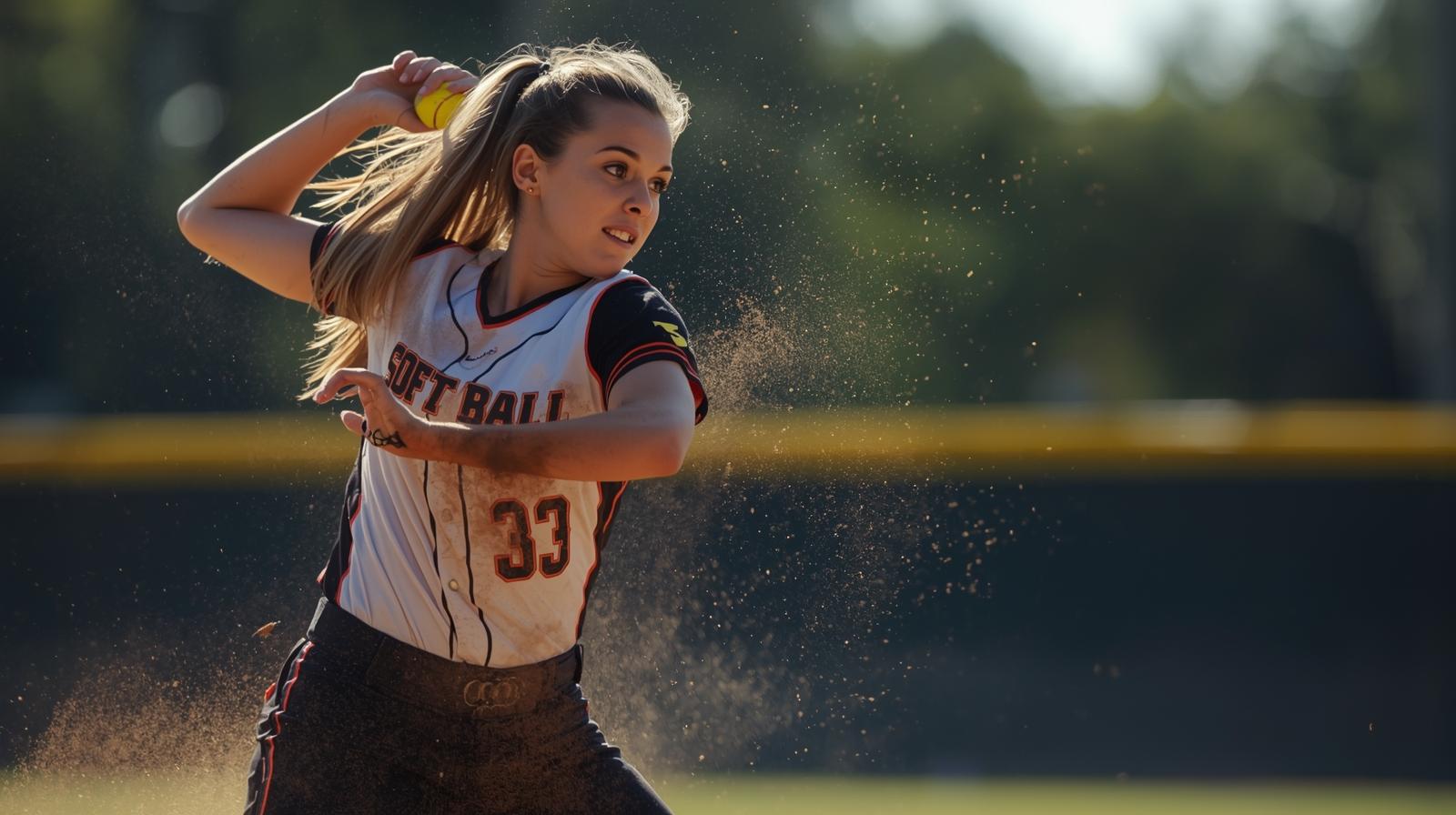
In contrast, fastpitch softball utilizes the windmill motion. The pitcher rotates the arm in a full 360-degree circle, releasing the ball underhand at the hip. From a physiological standpoint, the underhand motion is considered more "anatomically neutral." The shoulder joint is not forced into the same extreme external rotation required by a 95-mph baseball fastball.
Research into pitching biomechanics suggests that while softball pitching still carries injury risks—particularly to the biceps tendon and the lower back due to the "forceful closure" of the arm against the hip—it does not produce the same level of centrifugal stress on the elbow joint. This fundamental difference in stress explains why a softball "ace" can often pitch multiple games in a single weekend, whereas a baseball starter requires four to five days of rest between appearances.
Distance, Velocity, and Reaction Time
One of the most debated aspects of the softball vs. baseball comparison is the reaction time for the hitter. While a Major League Baseball (MLB) pitcher throws from 60 feet, 6 inches, a collegiate or professional softball pitcher throws from only 43 feet.
Although baseball pitchers throw at higher absolute velocities (often exceeding 100 mph compared to the 70-75 mph seen in elite softball), the shorter distance in softball compensates for the lower speed. A 70-mph softball pitch delivered from 43 feet reaches the plate in approximately 0.35 to 0.38 seconds. A 98-mph baseball pitch from 60 feet, 6 inches, reaches the plate in a nearly identical timeframe.
Furthermore, the "release point" in softball is much closer to the batter. Because softball pitchers "leap" or "drag" toward the plate, their actual release point may be as close as 37 feet from the batter. This creates a perceived velocity that rivals or even exceeds that of an elite baseball fastball, forcing hitters to make split-second decisions with almost no margin for error.
The Pitching Surface: The Mound vs. The Circle
The physical environment where the pitcher stands fundamentally alters the mechanics of the pitch. In baseball, the pitcher works from a mound that is 10 inches high. This elevation allows the pitcher to use gravity to their advantage, driving downward toward the plate. This downward angle creates "plane," making it harder for hitters to get the barrel of the bat on the same trajectory as the ball.
Softball is played on a flat surface within a 16-foot diameter "pitching circle." There is no hill to provide gravitational momentum. Instead, softball pitchers must generate all their power through explosive horizontal drive and the "resistance" of their lead leg hitting the ground (the "front side resistance").
The lack of a mound also influences the "break" of the pitches. Baseball pitches generally move on a downward tilt. In softball, because the release point is lower and the surface is flat, pitchers can effectively move the ball upward—a feat that is physically impossible in baseball.
Ball Physics: Size, Weight, and Seam Orientation
The equipment itself dictates the variety of pitches available in each sport.
- The Baseball: Approximately 9 inches in circumference and weighing 5 ounces.
- The Softball: Approximately 12 inches in circumference and weighing between 6.25 and 7 ounces.
The larger surface area of the softball allows for more air resistance and "drag." However, the most significant factor is the seam height and the grip. Because the softball is larger, the pitcher’s fingers have more surface area to manipulate, allowing for extreme spin rates.
In baseball, the primary movement is "drop" or "lateral slide." In softball, the Rise Ball is the most distinctive weapon. By generating high-speed backspin with an underhand release, a softball pitcher can cause the ball to defy gravity and move upward as it approaches the plate. While baseball pitchers can throw "four-seam fastballs" that appear to rise (known as "ride"), the ball is actually just dropping slower than the hitter expects. A true softball rise ball actually gains elevation relative to its initial trajectory.
Pitching Rules and Legal Delivery
The regulatory framework for what constitutes a legal pitch is much more restrictive in softball. According to the USA Softball Rulebook, a pitcher must start with both feet on the pitcher's plate (the rubber). As they deliver, they are allowed to "push off" and drag their pivot foot, but they cannot "re-plant" that foot to gain a second push—a move known as an "illegal pitch" or "crow hopping."
In baseball, the rules focus more on the distinction between the "windup" and the "stretch" positions. Baseball pitchers must maintain contact with the rubber until the ball is released, but they do not face the same "leaping" restrictions found in the fastpitch game. Additionally, the "balk" rule in baseball—where a pitcher makes a deceptive motion to pick off a runner—does not exist in softball in the same way, primarily because runners in softball cannot leave their base until the ball leaves the pitcher's hand.
Comparing Technical Specifications
To better visualize the divergence between these two styles, the following table breaks down the technical measurements and mechanical requirements of each.
| Feature | Fastpitch Softball | Baseball |
|---|---|---|
| Pitching Distance | 43 feet (Pro/College) | 60 feet, 6 inches |
| Delivery Motion | Underhand (Windmill) | Overhand / Sidearm |
| Pitching Surface | Flat Circle | 10-inch Elevated Mound |
| Ball Circumference | 12 inches | 9 inches |
| Typical Max Velocity | 73–77 mph | 98–103 mph |
| Reaction Time | ~0.35 seconds | ~0.38 seconds |
| Primary Movement | Vertical (Rise/Drop) | Horizontal/Downward (Slide/Sink) |
| Recovery Time | Low (Can pitch daily) | High (Requires 4–5 days rest) |
The Strategic Impact of Durability
Because of the "natural" motion mentioned earlier, softball strategy often revolves around a single dominant pitcher. In the NCAA Women's College World Series, it is common to see one pitcher throw every inning of a tournament. This "workhorse" mentality is a byproduct of the underhand delivery's lower impact on the elbow's connective tissue.
Baseball strategy, however, has evolved toward the "bullpen game." Due to the extreme stress of overhand throwing, MLB teams strictly monitor "pitch counts" and "innings pitched." As of 2026, the use of specialized relievers—closers, setup men, and middle relief—is a necessity to preserve the health of the pitching staff. A baseball pitcher throwing 100 pitches is usually finished for the week; a softball pitcher throwing 100 pitches is often just getting started for the day.
Frequently Asked Questions
Why can't baseball pitchers throw a "rise ball"?
A baseball cannot "rise" because of the overhand release point and the ball's weight-to-surface-area ratio. Physics dictates that gravity acts on the baseball immediately upon its downward-sloping release. While a baseball can have "backspin" that keeps it in the air longer (making it look like it's rising), it never actually moves upward from its original path. Softball's underhand release allows the ball to start low and, combined with massive backspin, move toward the top of the strike zone.
Is softball pitching actually faster than baseball pitching?
In terms of pure miles per hour, no. Baseball is significantly faster. However, in terms of "perceived velocity"—how fast the ball feels to the hitter—they are nearly equal. Because the softball pitcher is roughly 17 feet closer to the plate, the hitter has the same amount of time to react to a 70-mph softball as an MLB hitter has to react to a 95-mph fastball.
Why do softball pitchers hit their hip when they throw?
This is a technique called "brush interference" or "hip contact." By brushing the inside of the pitching arm against the hip during the downswing of the windmill circle, the pitcher creates a pivot point. This helps "snap" the wrist at the bottom of the circle, adding significant velocity and spin to the ball. It also helps with the consistency of the release point.
Do softball pitchers get injured as often as baseball pitchers?
While they do not suffer from UCL tears (requiring Tommy John surgery) as frequently as baseball pitchers, softball pitchers are still prone to overuse injuries. Common issues include stress fractures in the ribs, biceps tendonitis, and lower back strain. The repetitive nature of the windmill motion, combined with the high volume of pitches they throw, means they face a different set of orthopedic challenges.
What is a "changeup" in softball compared to baseball?
The goal is the same: to deceive the hitter by looking like a fastball but traveling much slower. However, the grips differ. Baseball pitchers often use a "circle change" to reduce velocity. Softball pitchers often use a "backhand change" or a "flip change," where they literally flip the ball out of the back of their hand or use a stiff wrist to kill the spin, causing the ball to "fall off the table" as it reaches the plate.
Final Practical Summary
The difference between softball and baseball pitching is a combination of geometry and biology. Softball relies on a shorter distance, a flat surface, and an underhand motion that allows for higher frequency and unique vertical ball movement. Baseball relies on elevation, gravity, and overhand torque to generate maximum velocity and downward plane. For athletes transitioning between the two, the most important factor to master is the change in reaction time and the specific spin mechanics required to move the larger or smaller ball effectively.
Image Gallery